

Can Dogs Eat Thyme? Safe Amounts, Health Effects, and What to Avoid
Many dog owners ask can dogs eat thyme because it appears in dog food, homemade treats, and kitchen meals. Dogs can eat thyme, but just a little bit of common thyme. Thyme can be good or bad for dogs depending on the form and amount. This article goes over all of this and more. The goal is to give clear advice without making things more confusing.
Featured Pantry Pick
Simply Organic // Thyme - .78 oz
Loading...
Can Dogs Eat Thyme?
What the Science and Vets Agree On
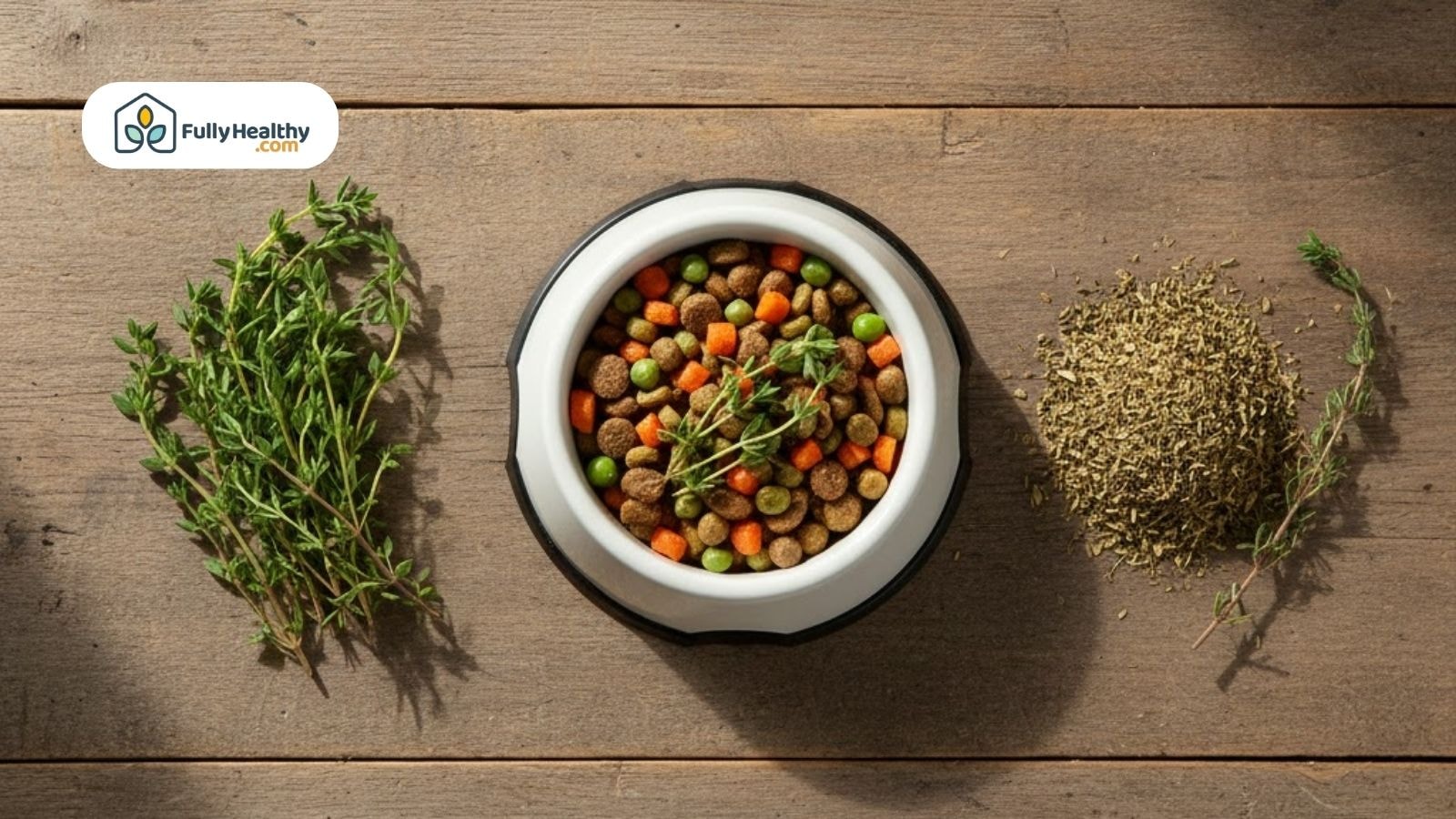
Common thyme, which is called thymus vulgaris in science, is not harmful to dogs when given in small amounts. This makes it clear if dogs can eat thyme. Most dogs do fine with it as long as they only eat small amounts of it and have a balanced diet.
-
Safety classification: Common thyme and garden thyme are listed as non-toxic to dogs by the ASPCA.
-
Herb type: Thyme is a popular herb from the mint family native to the Mediterranean region.
-
Acceptable forms: Fresh or dried thyme is considered safer than thyme oil or thyme essential oil.
-
Digestive tolerance: Most dogs process small amounts through the digestive system without digestive upset.
-
Diet role: Thyme should complement dog food and not replace nutrients in a balanced diet.
When Thyme Can Cause Problems
Problems occur when dogs eat thyme in excessive amounts or when dog owners introduce unsafe forms such as essential oils. Too much thyme can irritate the dog’s digestive system and lead to gastrointestinal upset, digestive distress, or an upset stomach.
-
Overfeeding risk: Large quantities can overwhelm the gastrointestinal tract.
-
Oil danger: Thyme oil and thyme essential oil are highly toxic to dogs.
-
Plant confusion: Spanish thyme is toxic to dogs and must be avoided.
-
Food pairing risk: Thyme mixed with black pepper, cocoa powder, onion, or garlic becomes unsafe.
-
Medical caution: Thyme may affect blood clotting in dogs with health conditions.
How Much Thyme Can a Dog Eat?

Safe Serving Sizes by Dog Size
The dog's size, weight, and health determine how much thyme is safe. Fresh thyme has less concentrated compounds than dried thyme. This means that when you feed thyme to your pet, you need to be careful about how much you give them.
-
Small dogs: A few tiny flecks of fresh thyme mixed into dog’s meals.
-
Medium dogs: A light pinch of fresh herb offered occasionally.
-
Large dogs: A small pinch of fresh thyme or a minimal sprinkle of dried thyme.
-
Dried herb caution: Dried thyme requires smaller portions due to concentration.
-
Frequency rule: Adding thyme should be occasional, not daily.
What to Do If a Dog Eats Too Much Thyme
When garden thyme is around or when homemade dog food leftovers are shared, dogs might eat more thyme than they're supposed to. Thyme usually doesn't poison dogs, but instead affects their digestive systems.
-
Mild symptoms: Upset stomach, gas, loose stool, or reduced appetite.
-
Digestive response: Digestive distress often resolves after removing thyme from dog food.
-
Monitoring step: Observe hydration, energy, and stool quality.
-
Serious signs: Difficulty breathing or repeated vomiting requires veterinary care.
-
Oil exception: These steps do not apply to thyme essential oil or other essential oils.
Does Thyme Stop Dogs Itching?

What Thyme May Help With and What It Will Not
Thyme contains thymol, which has antibacterial properties and anti inflammatory properties that may support general dog’s skin health. This explains interest in thyme for dogs with itchy skin, but evidence does not support it as a cure.
-
Supportive role: Antioxidant properties may contribute to overall dog’s health.
-
Immune link: Thyme may mildly support the immune system.
-
Skin scope: Thyme does not resolve infections or allergic reactions.
-
Digestive link: Digestive health influences skin condition more than herbs alone.
-
Expectation limit: Results vary across most dogs.
When Itching Needs More Than Herbs
Itchy skin that won't go away often means that there is a problem with the digestive system, the immune system, or the gastrointestinal tract. Many herbs are good for your health, but herbs that are safe in small amounts can't treat the causes of illness.
-
Common causes: Allergies, parasites, infections, or dietary imbalance.
-
Diet factor: A balanced diet matters more than adding thyme alone.
-
Digestive issues: Digestive issues may worsen skin symptoms.
-
Joint factor: Joint pain and inflammation can coexist with skin discomfort.
-
Professional care: Veterinary evaluation protects long-term dog’s health.
What Herbs Are Poisonous to Dogs?

Common Herbs and Spices Dogs Should Avoid
Some kitchen and garden herbs are highly toxic to dogs and are often confused with herbs safe for people. Dog owners should understand that dogs eat differently than humans, and exposure to the wrong plants can seriously harm dog’s health.
-
Highly toxic examples: Cocoa powder contains compounds that damage the nervous system and heart.
-
Common kitchen risks: Black pepper can irritate the gastrointestinal tract in dogs.
-
Plant confusion: Spanish thyme is toxic to dogs and should never be offered.
-
Herbal oils: Many herbs become dangerous when concentrated into essential oils.
-
Hidden exposure: Dogs eat unsafe herbs most often through seasoned dog’s meals or scraps.
Herbs Generally Considered Safe in Small Amounts
Many herbs are considered dog-friendly when identified correctly. Herbs safe in small amounts may support a pet’s diet but should never replace dog food or veterinary care.
-
Safe options: Parsley, basil, rosemary, oregano, dill, cilantro, and common thyme.
-
Use rule: Offer fresh herb or dried herb only, and keep it small.
-
Avoid oils: Essential oils like thyme oil and thyme essential oil are not safe for dogs.
-
Start slow: Introducing thyme or other herbs should be gradual to protect digestive health.
-
Stop signs: Vomiting, diarrhea, or an upset stomach means the herb is not working for your pet’s diet.
About FullyHealthy
What FullyHealthy Is
FullyHealthy is an online store that focuses on specialty foods for people with dietary needs. They stress quality sourcing and making ingredients clear.
-
Marketplace focus: Products are selected based on ingredient clarity.
-
Consumer trust: Information is presented clearly for informed decisions.
-
Dietary needs: The platform supports varied nutritional lifestyles.
-
Education role: FullyHealthy provides product details rather than health claims.
-
Responsible use: Products are intended for human consumption only.
Thyme Product We Carry
The Simply Organic Thyme product sold on FullyHealthy contains pure dried thyme intended for cooking and seasoning. It is not marketed as dog food or a supplement for a dog’s diet.
-
Ingredient clarity: The product lists organic dried thyme only.
-
Intended use: Designed for human meals, not pet feeding.
-
Form detail: This is dried thyme, which is more concentrated than fresh thyme.
-
Usage caution: Any adding thyme to dog’s meals should be discussed with a veterinarian.
-
Owner responsibility: Dog owners decide how to incorporate thyme safely.
Final Thoughts
Thyme can offer small health benefits and nutritional benefits when used carefully as a healthy addition to a dog’s meals, but moderation matters. Vitamin c and vitamin a support red blood cells, eye health, and respiratory health, yet introducing thyme too fast may cause adverse reactions, especially in dogs with irritable bowel syndrome. Compared with other herbs, common thyme can be dog friendly in tiny amounts. Always think about your pet’s diet and long-term wellness, and choose safety first for your furry friend.
FAQs
What Is Dog Thyme Used For?
Dog thyme is mentioned for mild nutritional benefits, but it should stay limited to small amounts to avoid adverse reactions.
Is Thyme Safe for a Furry Friend?
A furry friend can handle common thyme in tiny portions, but dog owners should watch for digestive upset.
How to Use Thyme for Dogs?
Introducing thyme means adding a pinch to food only occasionally and never using oils.
Can Dogs Eat Chicken Seasoned With Thyme?
Dogs can eat chicken seasoned with thyme only if it contains no black pepper, cocoa powder, or other unsafe ingredients.
What Is the Healthiest Herb for Dogs?
The healthiest herb for dogs depends on needs, and other herbs may suit some dogs better than thyme.
Leave a comment