

Does Ghee Go Bad? How to Keep It Fresh for Months

Does ghee go bad? Yes, but not quickly. It is clarified butter, which means that the water and milk solids have been taken out. This makes ghee more stable than regular butter. Ghee that hasn't been opened can last up to two years.
Once it's been opened, it usually stays fresh for six to twelve months if it's stored right. Although, it can go bad after a while. How to store ghee and how to tell if it's gone bad are all explained in this article.
Featured Pantry Pick
Ahara Rasa // Traditional Ghee
Loading...
Does Ghee Go Bad?

Ghee is clarified butter made by heating butter until the water and milk solids are removed, leaving pure butterfat. Because of its low moisture content, it has a longer shelf life than regular butter and many dairy products. Still, does ghee go bad? Yes. Even with proper storage, it can spoil over time if exposed to heat, air, or moisture.
How Long Does Ghee Last Unopened?
If you store ghee the right way, it will last longer. If you keep the ghee jar in a cool, dark place the right way, it will last for 12 to 24 months without being opened. It keeps the fat stable and stops bacteria from growing because it doesn't have much water in it.
-
Pantry Storage: Keep the ghee jar at room temperature in a dark place away from direct sunlight.
-
Container Choice: Use an airtight container, ideally glass jars, to protect flavor and freshness.
-
Heat Exposure: Keep it away from the stove or warm areas since heat can accelerate spoilage.
-
Quality Check: Fresh ghee should have a clean aroma and a mild, nutty flavor.
Compared to butter, which has a shorter shelf life, ghee clarified butter stays stable much longer.
How Long Does Ghee Last After Opening?
Once opened, ghee storage becomes more important. Air exposure and dirty utensils can reduce the shelf life of ghee. Opened ghee usually stays fresh for 6–12 months when stored properly. Homemade ghee may have a slightly shorter shelf life, especially if not strained well during preparation.
-
Use A Dry Spoon: Always scoop with a dry spoon to prevent moisture from entering.
-
Seal Tightly: Close the airtight container right after each use.
-
Avoid Contamination: Food crumbs or water can lead to bacterial growth.
-
Stable Temperature: Keep it at room temperature and avoid frequent temperature changes.
What If We Eat Expired Ghee?
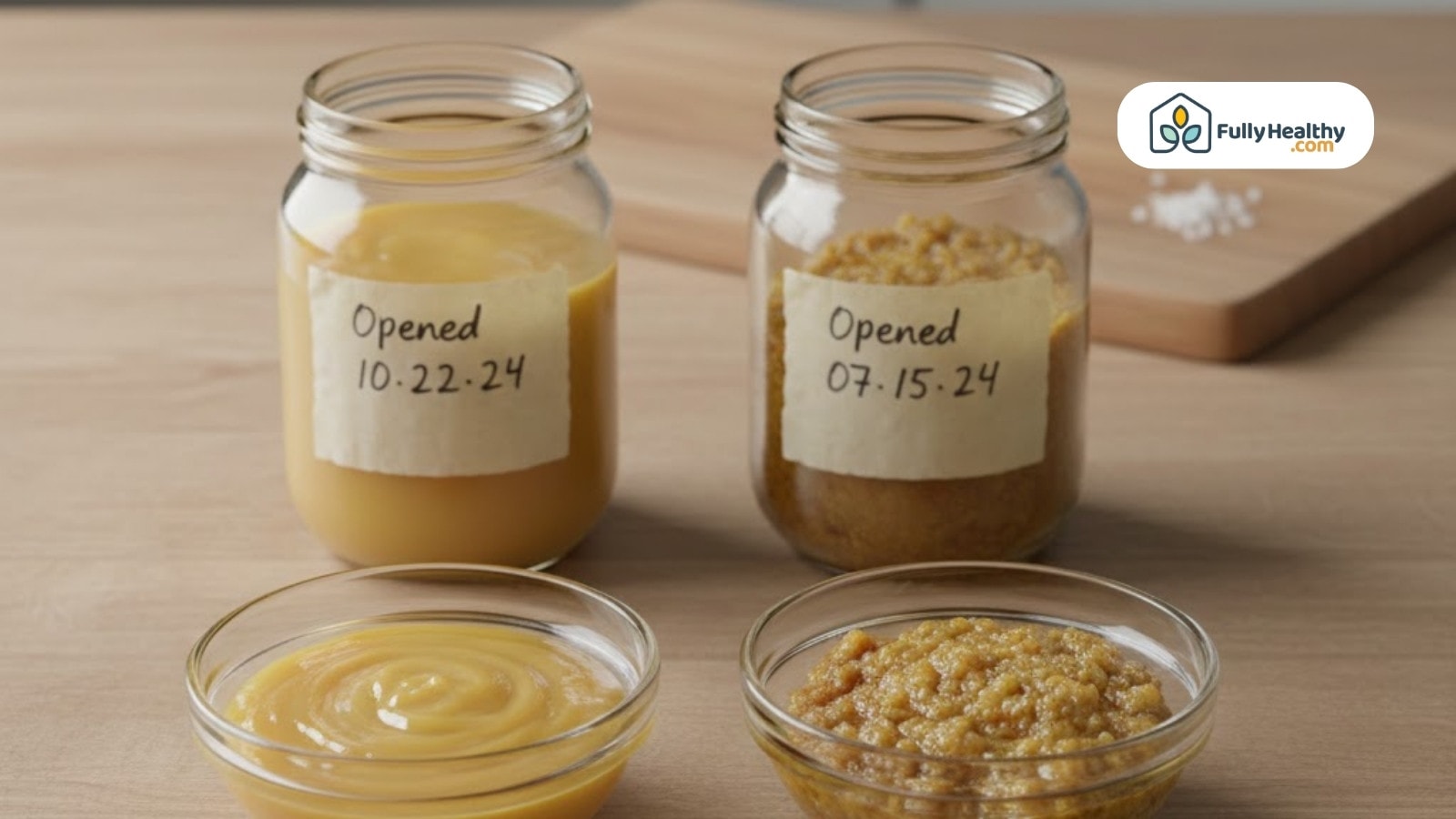
Expired ghee is not always harmful, but spoiled ghee should never be eaten. If ghee has gone bad, it may smell unpleasant or taste bitter. While it may not cause serious illness, it can upset your stomach.
Ghee is popular in Indian cuisine and valued for its health benefits, but safety matters more than taste.
Can Expired Ghee Make You Sick?
If ghee is only past its date but still smells normal, it may just have lower quality. However, spoiled ghee can cause digestive discomfort.
-
Rancid Smell: A sharp or sour smell means the fat has oxidized.
-
Sour Taste: Fresh ghee should never taste bitter or harsh.
-
Visible Mold: Any mold growth means discard it immediately.
-
Texture Changes: A strange or gritty feel can signal spoilage.
How To Tell If Ghee Is Unsafe To Eat
Simple checks can help you know if ghee has gone bad. Always inspect before cooking.
-
Unpleasant Odor: Fresh ghee should smell mild, not sour or strong.
-
Color Changes: A darker or cloudy look may indicate spoilage.
-
Visible Mold: Spots or growth inside the ghee jar are clear warning signs.
-
Off Flavor: If the taste seems unusual, it is safer not to use it.
Should You Refrigerate Ghee After Opening?

Many people wonder if ghee need to be refrigerated. Ghee does not always require refrigeration because it is pure butterfat with low moisture. However, climate plays a big role in ghee shelf life. Heat and humidity can shorten its longer shelf life.
Storing ghee correctly helps it stay fresh for months.
When Room Temperature Storage Is Safe
In cooler climates, ghee can safely stay at room temperature when stored properly.
-
Airtight Container: Protect the ghee from air exposure.
-
Dark Place: Keep it away from direct sunlight to prevent quality loss.
-
Clean Spoon: Always use a clean spoon or dry spoon to avoid contamination.
-
Low Humidity: Moisture can increase the risk of bacterial growth.
When Refrigeration Is A Better Choice
In hot or humid areas, ghee may require refrigeration to protect its shelf life.
-
Warm Kitchens: High heat can accelerate spoilage.
-
High Humidity: Moisture can affect ghee storage and safety.
-
Long-Term Storage: Refrigeration can help ghee stay fresh longer.
-
Extra Preservation: You can freeze ghee if you need extended storage.
Can Bacteria Grow In Ghee?

Ghee is known for its strong shelf stability. During the cooking process, most of the water is removed, which lowers the risk of spoilage. Because of this, ghee doesn't require refrigeration in many homes. When stored under the right storage conditions, it can stay ghee fresh for a long time without going bad quickly.
Why Ghee Resists Bacterial Growth
Bacteria need water to grow. Since ghee contains very little moisture, it creates an unfriendly space for microbial growth. This helps maintain good quality over time.
-
Low Moisture Content: Minimal water reduces the chance of bacterial growth.
-
Proper Storage Conditions: Keeping the jar sealed and away from light protects freshness.
-
Room Temperature Stability: In cool kitchens, ghee fresh can remain safe outside the fridge.
-
Air Protection: Limiting air exposure helps preserve flavor and texture.
When Ghee Can Become Contaminated
Even stable fats can spoil if handled carelessly. Moisture and food particles are the main causes of contamination. Simple habits can help prevent contamination and protect quality. Careful handling is essential to keep ghee safe and usable.
-
Wet Utensils: A damp spoon can introduce moisture and bacteria.
-
Food Crumbs: Leftover food inside the jar can trigger spoilage.
-
Poor Storage Conditions: Exposure to light, heat, or open air lowers good quality.
-
Unsealed Container: Leaving the lid loose increases contact with air.
Why Shop Specialty Pantry Staples At FullyHealthy?
Buying from a trusted store makes it easier to maintain safe storage and long-lasting ingredients. FullyHealthy focuses on specialty foods that support structured diets and careful storage. Choosing the right pantry staples helps them stay fresh longer, whether stored in the refrigerator or pantry.
Featured Pantry Products Available At FullyHealthy
FullyHealthy offers selected products designed for everyday use and stable storage. These items are simple, clean, and easy to keep in good condition.
-
Artisana Raw Cashew Butter 14 oz: Made from organic cashews and suited for specialty diet stages.
-
Artisana Coconut Butter 8 oz: Made from pure coconut and does not require refrigeration, though natural oil separation can happen in cold settings like the fridge.
-
Graza “Sizzle” Extra Virgin Olive Oil 750ml: A cooking oil created for heat and daily kitchen use.
These products are packaged to support storage in a pantry or refrigerator, depending on your home environment.
Who FullyHealthy Is Best For
FullyHealthy works well for shoppers who want clean ingredients and easy access to specialty foods. The platform supports long-term pantry planning and safe handling.
-
Specialty Diet Shoppers: Helpful for people following structured eating plans.
-
Home Cooks: Ideal for stocking a fridge or pantry with reliable essentials.
-
Long-Term Storage Needs: Products suited for keeping quality over a long time.
-
Quality-Focused Buyers: A smart choice for those who value safe storage and freshness.
Final Thoughts
Ghee is one of the most stable cooking fats, but it still needs care. The key to keeping ghee fresh is simple: follow smart storage tips and pay attention to heat, air, and moisture. Even though ghee lasts longer than butter, it can still spoil if not handled well.
Store it in a sealed jar, keep it away from light, and always use clean utensils. These small habits protect flavor and quality. When you understand proper storage tips, you reduce waste and protect your health. In short, ghee can last a long time, but only when you respect proper storage and use practical storage tips every day in your kitchen.
FAQs
What are the best storage tips to keep ghee fresh?
The best storage tips are to seal the jar tightly, keep it away from heat and light, and always use clean utensils.
Does ghee need refrigeration or just good storage tips?
Ghee often does not need refrigeration, but proper storage tips help it stay fresh longer.
How do storage tips prevent ghee from going bad?
Simple storage tips like avoiding moisture and air exposure reduce spoilage risk.
Can poor storage tips ruin ghee quickly?
Yes, ignoring basic storage tips can shorten shelf life and affect taste.
Are storage tips important even for unopened ghee?
Yes, even unopened ghee benefits from correct storage tips to maintain quality.
Leave a comment