

How Long Does Chicken Broth Last in the Fridge? Food Safety Tips
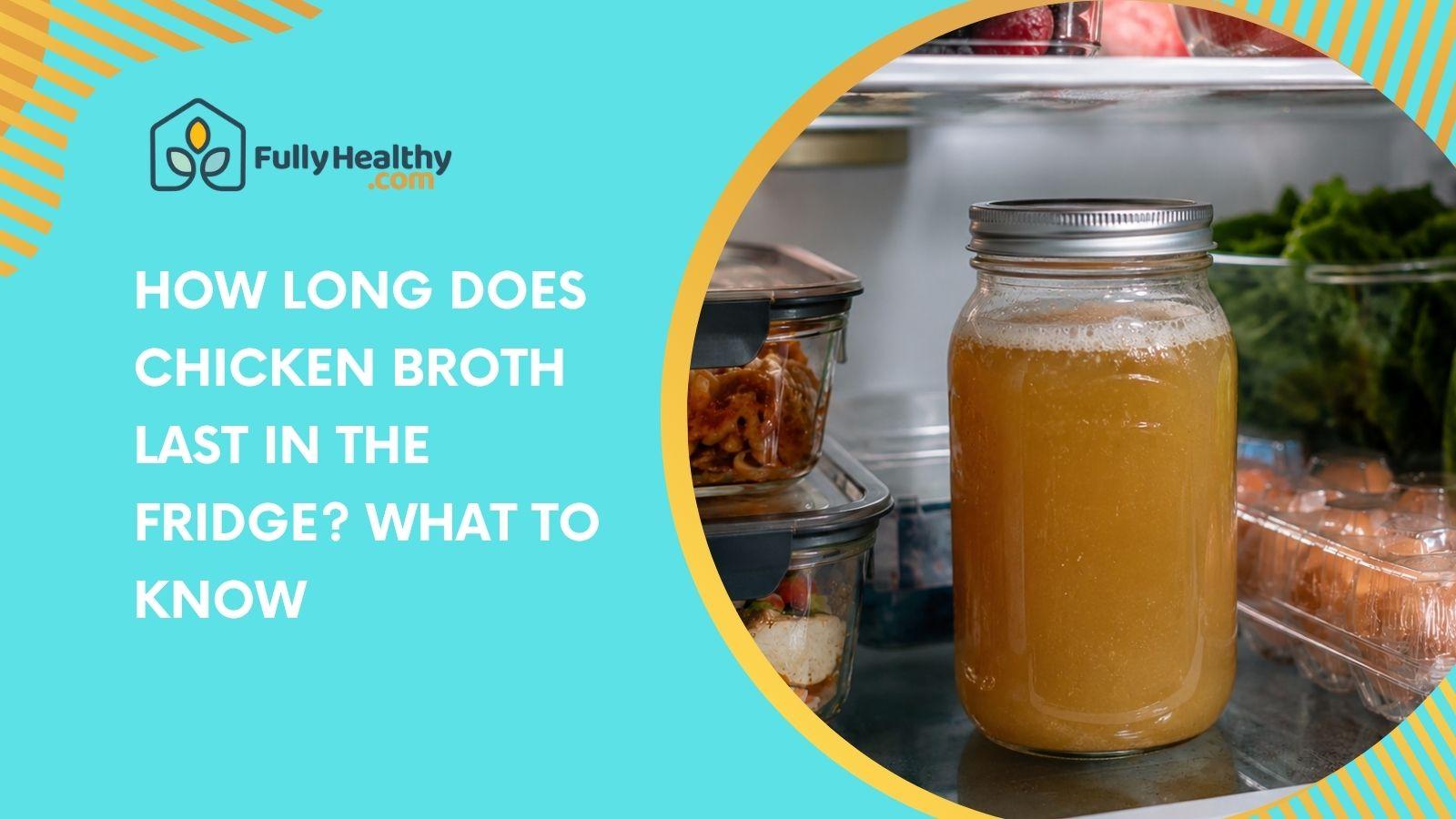
How long does chicken broth last in the fridge? In most cases, opened chicken broth stays safe for about three to four days when stored properly in the refrigerator. Knowing the right storage time can help you avoid food poisoning, reduce food waste, and keep your broth fresh.
This guide explains how long broth lasts, how to spot spoilage, and the best ways to store it.
Featured Pantry Pick
EPIC // Homestyle Savory Chicken Bone Broth - 14 oz
Loading...
How Long Does Chicken Broth Last in the Fridge?
Opened chicken broth generally lasts three to four days in the refrigerator, while unopened store bought chicken broth can stay in the pantry until its expiration date.
Shelf Life of Store-Bought vs. Homemade Chicken Broth
Opened chicken broth generally lasts three to four days in the refrigerator according to USDA guidance, although some manufacturers recommend up to five days after opening. Unopened shelf-stable broth can remain in the pantry until its best-by date.
-
Store bought chicken broth: Unopened, until the expiration date.
-
Opened box: Three to four days in the refrigerator.
-
Homemade chicken broth: Three to four days after cooking.
-
Chicken stock and beef broth: Follow the same storage timeline.
-
Long term storage: Freeze broth if not using within a few days.
Factors That Affect Refrigerated Shelf Life
Temperature, storage methods, and handling habits have the biggest impact on how long broth last in the refrigerator. Proper storage helps maintain flavor while reducing the risk of growing bacteria.
-
Fridge temp: Keep your fridge at or below 40°F (4°C) to slow bacteria growth.
-
Airtight container: Store broth in a sealed container to reduce air exposure and keep other food odors out.
-
Repeated heat: Avoid bringing the same broth to a boil or simmer several times before returning it to the fridge.
-
Cross contamination: Always use a clean spoon when removing liquid from the container.
-
Fat layer: Some traditional homemade broth recipes use a layer of fat for preservation, but freezing is the safer option recommended for long term storage.
How Do You Know When Chicken Broth Has Gone Bad?

Spoiled chicken broth often develops noticeable changes in smell, texture, or appearance, but harmful bacteria are not always visible.
Common Signs of Spoiled Chicken Broth
Most spoiled broth shows clear warning signs before it becomes unsafe to eat. Checking the smell, appearance, and container before using broth can help lower the risk of food poisoning.
-
Smell: Toss broth that smells sour, rotten, or unusually unpleasant.
-
Appearance: Mold, discoloration, or a swollen container are signs the broth should be discarded.
-
Texture: Slimy or thick liquid usually means the broth is no longer safe.
-
Cloudiness: Homemade broth may look cloudy after cooking, but cloudiness alone does not always mean it has spoiled.
-
Container: A leaking box or damaged lid can allow bacteria to enter the broth.
Food Safety Risks Beyond Visible Spoilage
Chicken broth does not always look spoiled when bacteria are present, so storage time is just as important as appearance. If broth has been stored too long in the refrigerator, it is safer to toss it instead of taking the risk.
-
Storage time: Broth kept beyond three to four days has a higher chance of bacterial growth.
-
Food poisoning: Some harmful bacteria produce toxins that cannot be detected by smell or taste.
-
Expiration date: The date on the box applies only to unopened products stored correctly.
-
Room temperature: Never leave broth sitting out for several hours before returning it to the fridge.
-
When in doubt: If you are unsure about the safety of the broth, throw it away.
How Can You Keep Chicken Broth Fresh Longer?
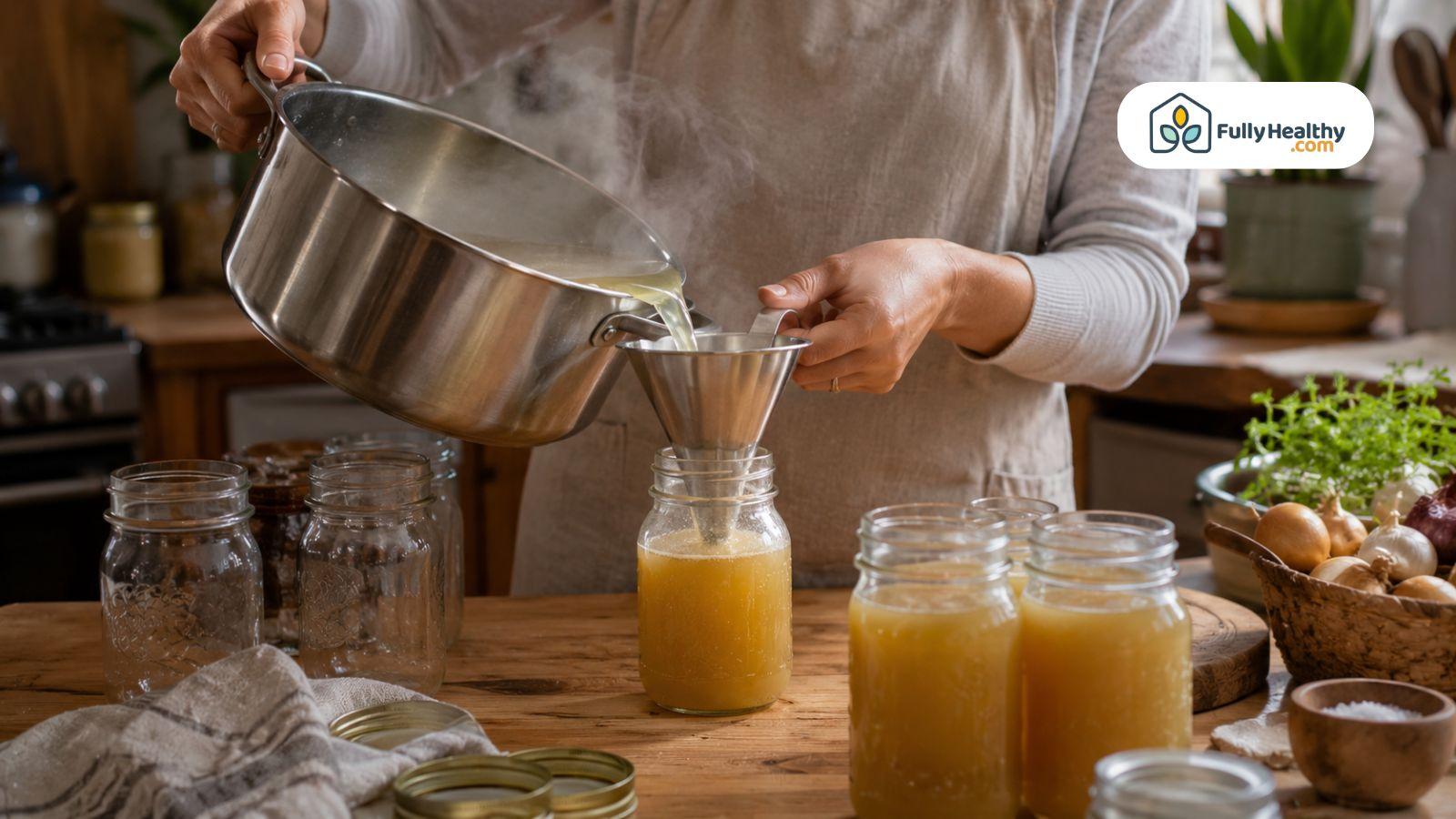
Cooling broth quickly and storing it correctly are the best ways to keep it fresh and reduce waste.
Proper Refrigerator Storage Techniques
Good storage habits help preserve flavor and make broth safer to use in soup, stew, sauces, and other recipes. Cooling the broth before refrigeration also helps maintain food quality.
-
Cool promptly: Divide hot broth into smaller containers so it cools faster.
-
Store properly: Use an airtight container with a tight lid to reduce contamination.
-
Small portions: Keep recipe portions separate so you only open what you need.
-
Avoid overcrowding: Leave space around containers so cold air can circulate in the refrigerator.
-
Label containers: Write the preparation date on each container to track freshness.
Freezing Methods for Longer Storage
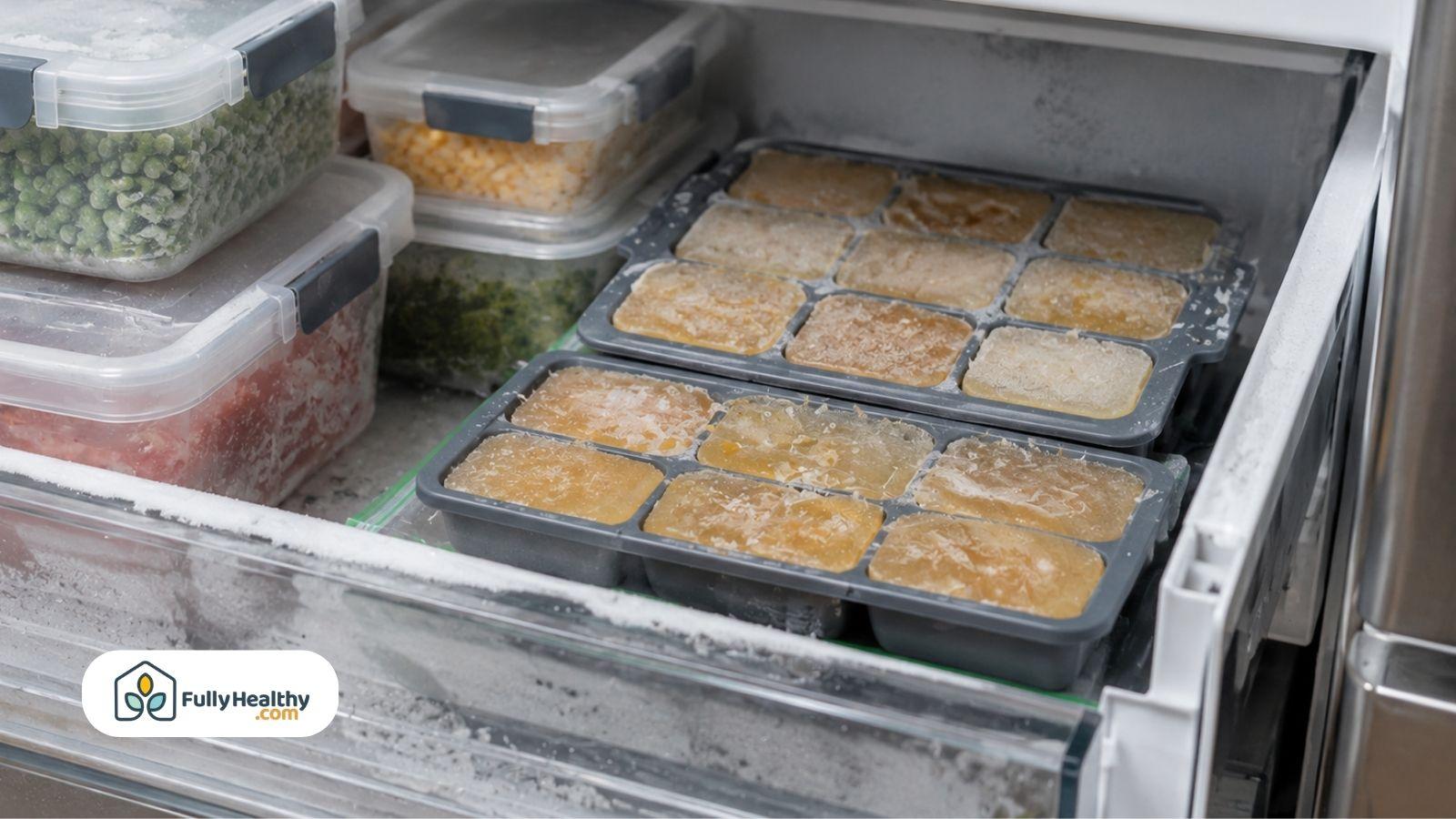
Freezing is the best option if you will not use the broth within a few days. Smaller frozen portions are easier to thaw and help reduce waste.
-
Ice cube trays: Freeze chicken broth in ice cube trays to create chicken broth ice cubes for sauces and quick recipes.
-
Ice tray portions: An ice tray works well for small amounts used during cooking.
-
Freezer bags: Ziploc bags save freezer space when laid flat during freezing.
-
Freezer safe container: Mason jars and freezer safe containers work well if you leave wiggle room for expansion.
-
Freezer burn: Seal containers tightly to help prevent freezer burn and protect the flavor of the broth.
Can You Boil Bacteria Out of Chicken Broth?
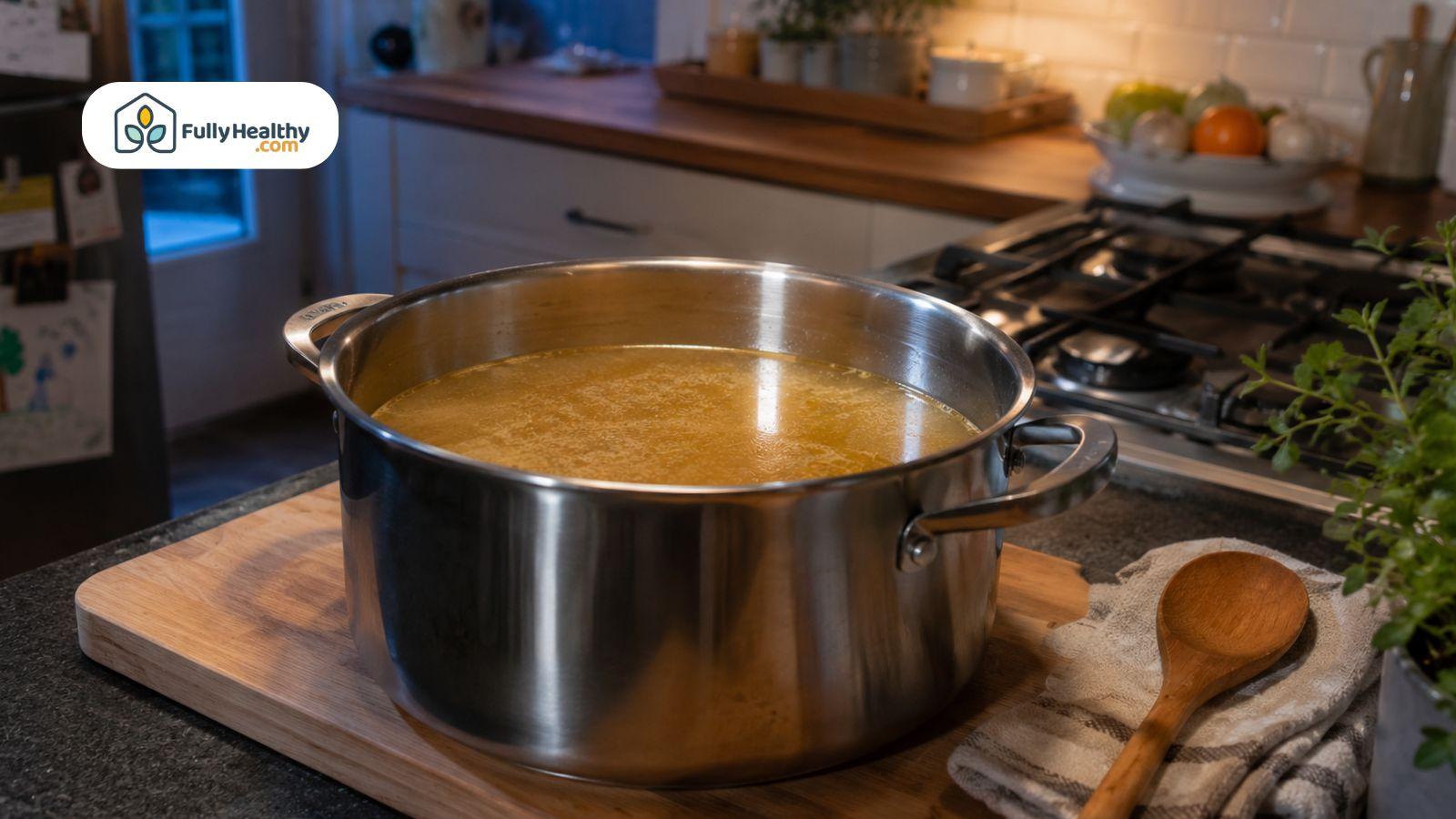
Boiling can kill many bacteria in chicken broth, but it cannot reliably remove harmful toxins that some bacteria leave behind after growing.
What Boiling Can and Cannot Do
Boiling helps destroy many live bacteria, but it does not make spoiled broth safe to eat. Bacterial toxins are harmful substances produced by some bacteria, and they can remain in the broth even after boiling.
-
Boil: Kills many live bacteria during the boiling process.
-
Bacterial toxins: Some toxins can survive high heat.
-
Spoiled broth: Boiling will not restore spoiled food.
-
Food safety: Discard broth with spoilage signs instead of reheating it.
-
Best practice: Use fresh broth that has been stored properly.
When Reheating is No Longer Safe
Reheating is only safe when chicken broth has been stored correctly and is still within the recommended storage time. Broth left at room temperature too long or stored beyond three to four days should be tossed instead of reheated.
-
Room temperature: Discard broth left out for more than two hours.
-
Storage time: Do not keep broth in the refrigerator beyond three to four days.
-
Spoilage signs: Toss broth with a sour smell, mold, or slimy texture.
-
Repeated reheating: Avoid reheating the same broth multiple times.
-
When in doubt: Throw it away instead of risking food poisoning.
Why Choose FullyHealthy
FullyHealthy makes it easy to shop for bone broth and other specialty foods by offering products for a variety of dietary preferences in one convenient place.
Specialty Foods for Dietary Needs
FullyHealthy specializes in allergy-friendly, gluten-free, and specialty pantry products that are carefully selected from trusted brands. The online store makes shopping simple with categories that help you choose products that match your cooking and lifestyle needs.
-
Curated selection: Browse specialty pantry staples in one place.
-
Dietary options: Shop gluten-free, allergy-friendly, and specialty foods.
-
Trusted brands: Choose products from well-known manufacturers.
-
Convenient shopping: Order online and have products delivered to your door.
-
Everyday cooking: Stock your pantry with ingredients for soups, recipes, and more.
Chicken and Beef Bone Broth Products Available
FullyHealthy offers several ready-to-use and instant bone broth options that are convenient for cooking or enjoying on their own. These products provide different flavors and formats to suit everyday meals and quick preparation.
-
Bare Bones Instant Chicken Bone Broth: An instant powdered bone broth that mixes with hot water for a quick, protein-rich drink or cooking base.
-
EPIC Homestyle Savory Chicken Bone Broth: A ready-to-heat chicken bone broth with a rich, savory flavor that works well in soups, stews, and everyday recipes.
-
EPIC Tuscan Style Chicken Bone Broth: A ready-to-use bone broth infused with Tuscan-inspired herbs for added flavor in cooking or sipping.
-
Fond Liquid Light Chicken Bone Broth: A slow-simmered liquid bone broth made for soups, sauces, and other home-cooked meals.
-
Bare Bones Instant Beef Bone Broth: A convenient instant beef bone broth that dissolves quickly in hot water for cooking or sipping.]
Final Thoughts
Understanding how long does chicken broth last in the fridge helps keep meals safe and reduces food waste. Store the remaining broth in an airtight container or canning jars, and refrigerate it promptly after cooking.
If your homemade version or homemade stock has been in the fridge too long, toss it and shop FullyHealthy for convenient bone broth options.
FAQs
Can I use 3 week old chicken broth?
No, chicken broth that has been refrigerated for three weeks is not good in the fridge and should be discarded, even if the remaining broth looks normal.
Can I use broth after 10 days?
No, broth stored in the refrigerator for 10 days exceeds the recommended storage time, so it is safer to toss it instead of eating it.
What are Signs of Spoilage in Stock?
Signs of spoilage in homemade stock include a sour smell, mold, a slimy texture, discoloration, or an unusual appearance, even if it was stored in canning jars or covered with plastic wrap.
Can Homemade Chicken Broth Last a Few Weeks?
No, a homemade version made with onions, carrots, meat, salt, and cooked in a stock pot should not be kept in the refrigerator for a few weeks and should be frozen instead.
Can I Freeze Chicken Broth for Later Recipes?
Yes, you can freeze chicken broth for later recipes. It keeps its best quality in the freezer for about 2 to 3 months when stored properly.
Leave a comment