

How Much Juice In One Orange? Fresh Juice Math
Wondering how much juice in one orange? A medium-sized orange gives about ¼ to ⅓ cup of juice. For a full cup, you may need three or four oranges. The amount of juice depends on its size, ripeness, and how you squeeze it.
This article also covers fresh-squeezed orange juice, blood sugar, heart health, whole oranges vs. juice, and how to choose better options.
How Much Juice In One Orange?
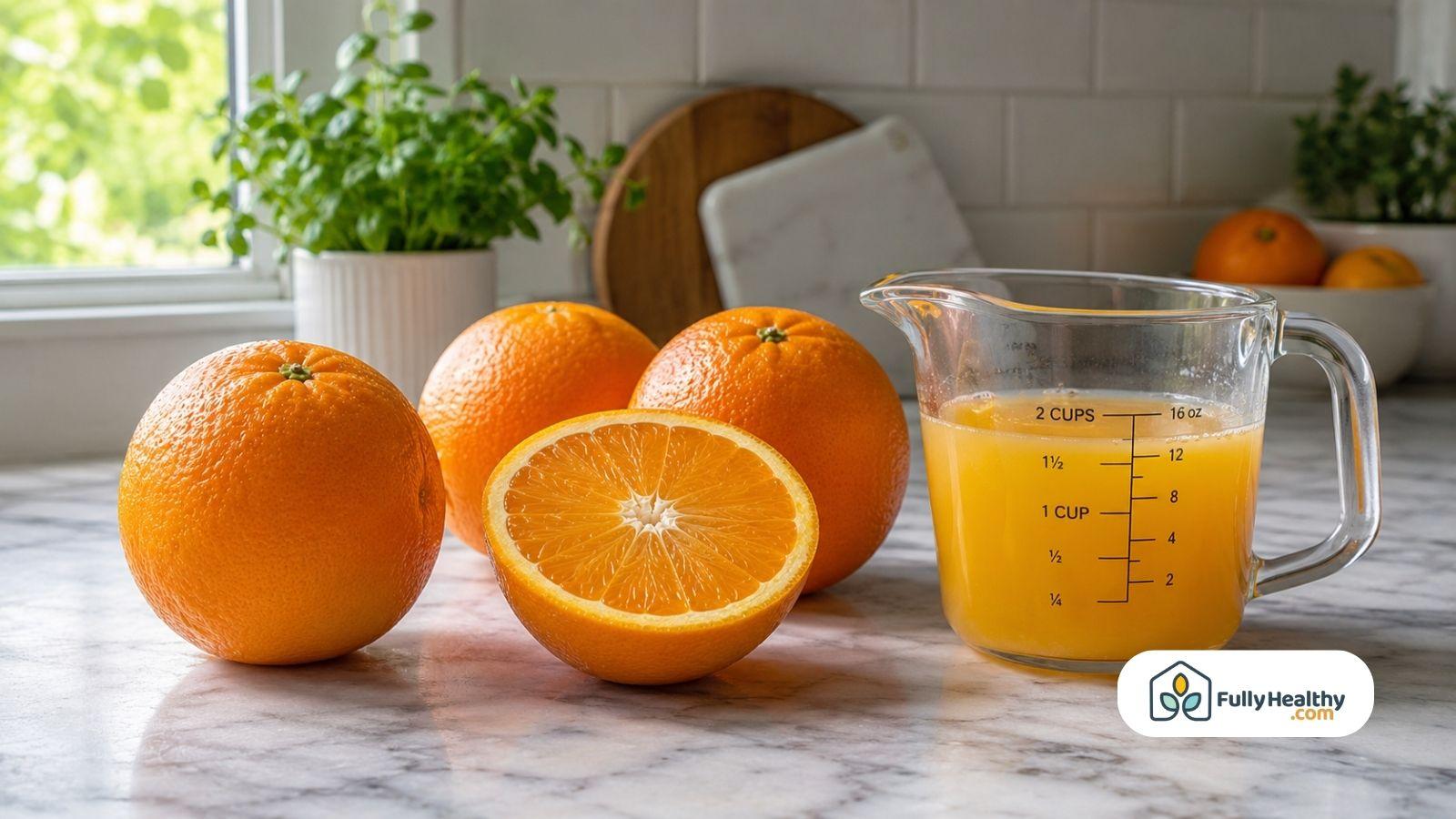
About ¼ to ⅓ cup of fresh orange juice can be made from a medium-sized orange. How much juice an orange has depends on its size, how ripe it is, and the type of orange. A navel orange is sweet but may not give off as much juice as a Valencia orange. Making orange juice right away is the best way to enjoy it.
How Much Juice In One Orange By Average Yield?
It usually takes one orange to make a small amount of fresh juice. Fresh, heavy oranges with thin skins usually yield more juice than old or dried-out oranges.
-
Average Yield: One medium orange usually gives 4 to 5 tablespoons of juice.
-
Best Oranges: Valencia oranges are typically good for delicious juice because they are sweet and juicy.
-
Juicer Tip: Citrus juicers can help you squeeze more liquid than using your hands.
-
Flavor Note: Blood oranges add a deeper color and a sweet-tart taste.
-
Freshness Tip: Drink fresh orange juice soon after squeezing for the best taste.
How Many Oranges Do You Need For One Cup Of Juice?
The number of oranges you need will depend on how big they are. Usually, three to four medium-sized fruits are enough to make one cup of juice.
-
One Cup Rule: You generally need 3 to 4 common oranges for one cup.
-
Smaller Fruit: Mandarin oranges may need more fruit because they are smaller.
-
Larger Citrus: Fresh grapefruit and standard grapefruit usually give more liquid than oranges.
-
Recipe Use: Orange juice conversions help when making cocktails, sauces, or desserts.
-
Extra Flavor: Fresh lemon juice or fresh lime juice can make orange juice taste brighter.
Can Orange Juice Lower Blood Sugar?
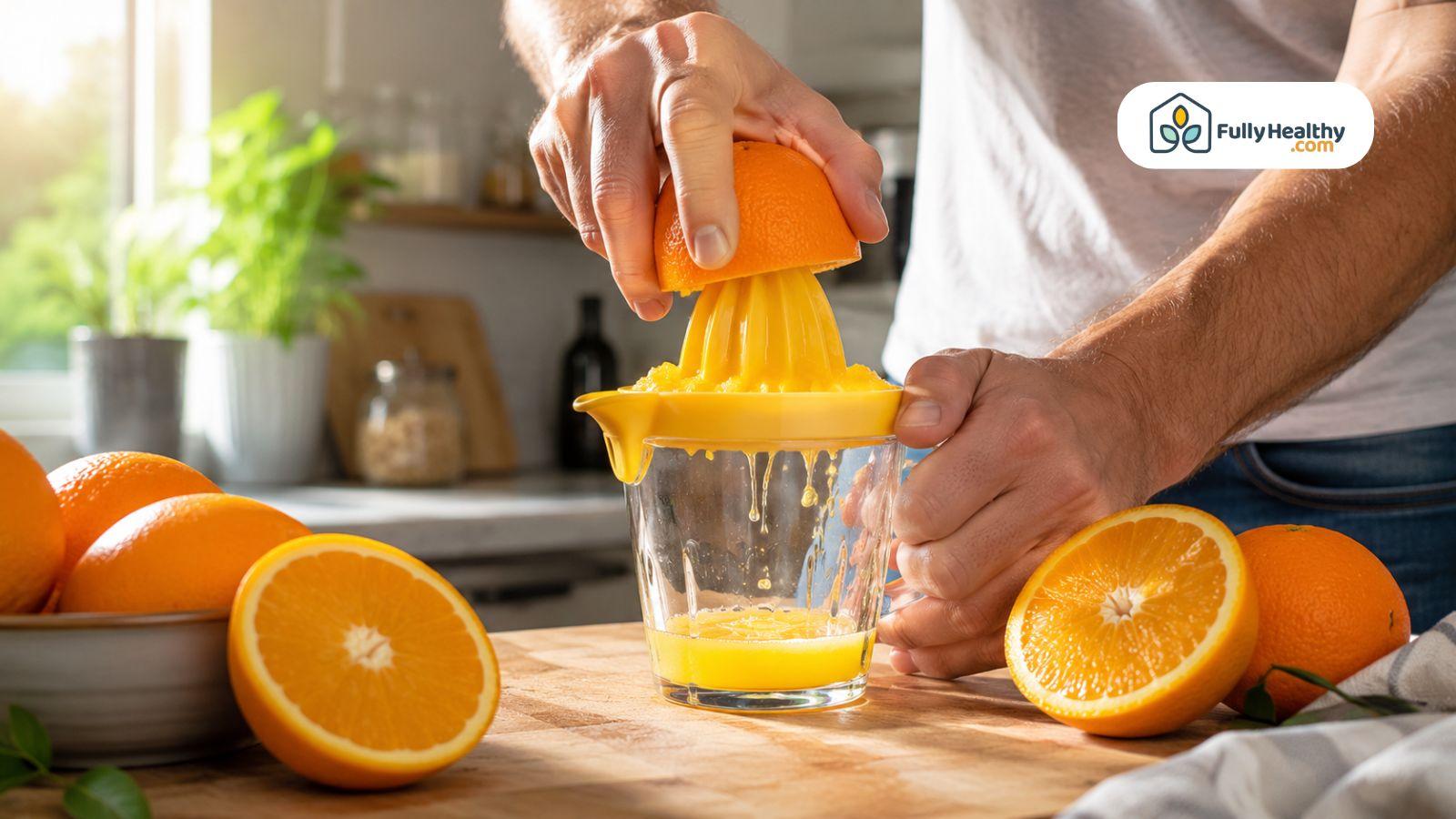
Orange juice is not like medicine for diabetics. Some studies show that drinking small amounts of 100% orange juice might not hurt your blood sugar. Even so, it has natural sugar in it, so the amount you eat is important.
What Studies Suggest About 100% Orange Juice And Glucose
A systematic review/meta-analysis found 100% fruit juice generally was not associated with adverse fasting glucose or insulin in controlled trials, but observational evidence on diabetes risk is mixed.
-
Study Point: Some studies found no major change in fasting glucose or insulin.
-
Better Choice: 100% juice is different from sweetened juice drinks.
-
Serving Size: A small glass is safer than drinking large amounts.
-
Meal Tip: Drink juice with food to help slow sugar absorption.
When Orange Juice May Still Raise Blood Sugar?
According to WebMD, orange juice has a lot of natural sugar. Fiber in whole fruit makes you feel full, so it's usually better.
-
Sugar Warning: One cup of orange juice can have more sugar than eating one orange.
-
Better Option: Eat a fresh orange when you want fiber and fullness.
-
Recipe Tip: Lemon juice conversions and lime juice conversions can help add flavor without much sugar.
-
Citrus Swaps: Convert fresh lemons, convert fresh limes, or convert fresh grapefruits when replacing bottled juice.
Which Juice Is Good For Heart Patients?

People who have heart problems should pick drinks that have more nutrients and less added sugar. While citrus juice can be a healthy part of a diet, it shouldn't be used instead of medical advice. Small amounts of fresh juice from different citrus fruits are best.
Heart-Friendlier Juice Choices To Consider
Low-sodium vegetable-based drinks may be helpful; orange juice is nutrient-rich but not low in natural sugar. You don't need extra sugar when you use fresh lemon, lime, or grapefruit to add flavor.
-
Good Choices: Low-sodium vegetable juice and small servings of 100% orange juice may fit; grapefruit juice should be checked with a clinician because it interacts with some heart medications.
-
Flavor Boost: Quarter lemons or half lemons can brighten drinks and recipes.
-
Grapefruit Note: Grapefruit juice conversions are useful because one grapefruit gives more juice than one lemon or one lime.
-
Preparation Tip: Remove peel and seeds before using a juicer.
What To Avoid In Bottled Juices?
A lot of the bottled juices you can buy at the grocery store have extra sugar in them or are labeled as juice drinks. These are not the same as juice that is 100%.
-
Check Labels: Avoid drinks with added sugar or very little real fruit juice.
-
Watch Portions: Even healthy juice can add calories if you drink too much.
-
Choose Fresh: Fresh juice generally has a better taste than heavily processed drinks.
-
Smart Buying: Pick fresh lemons, fresh limes, fresh grapefruits, or oranges when making juice at home.
Is It Healthier To Drink Orange Juice Or Eat An Orange?
Most of the time, eating an orange is better for you than drinking orange juice. There is more fiber in whole oranges, so they make you feel full longer. You can still eat juice as part of a healthy diet, but only in small amounts.
Whole Oranges Usually Win On Fiber And Fullness
The fiber in whole fruit stays mostly the same. This may help slow down digestion and keep blood sugar from rising too quickly.
-
Fiber Benefit: Whole oranges help you stay full longer than juice.
-
Sugar Control: Eating fruit makes it easier to avoid too much sugar at once.
-
Portion Tip: A pound of oranges can make several juice servings, so measure the desired amount.
-
Best Choice: Seedless oranges are easy to eat, but they still lose fiber when juiced.
When Orange Juice Can Still Fit A Healthy Diet?
Orange juice is a quick way to get vitamin C or a simple way to drink your breakfast. It's important to eat small amounts.
-
Better Option: Choose 100% orange juice with no added sugar.
-
Serving Size: A small glass is usually enough for most adults.
-
Flavor Variety: Other varieties, such as blood oranges or Valencia oranges, can add a sweeter taste.
-
Smart Habit: Drink juice with meals instead of drinking it alone.
What Does Fully Healthy Offer Related To How Much Juice In One Orange?
Fully Healthy might help people figure out how juice stacks up against healthier foods. It can also help people who want foods with healthier ingredients, simple snacks, or foods that are good for diets. Before you buy something, you should always read the label.
How Fully Healthy May Fit Readers Comparing Juice And Healthier Food Choices?
People who want healthier options besides juice may find this site useful. When products meet personal health needs, they can help people eat better.
-
Health Focus: Look for products with simple ingredients and clear nutrition facts.
-
Diet Support: Check whether items fit gluten-free, allergy-friendly, or special diet needs.
-
Better Choices: Whole-food options may help reduce sugary drink habits.
-
Fruit Reminder: Think about how many fruits are used before replacing whole fruit with juice.
Products To Mention Only After Verification
Before they are added, product claims should be checked directly on Fully Healthy. This helps keep readers from being misled.
-
Label Check: Review serving size, sugar, calories, and ingredients.
-
Smart Shopping: Choose products that support your health goals.
-
Taste Note: A bit of natural fruit flavor can help without adding too much sugar.
-
Reader Value: Compare products carefully before using them as juice alternatives.
Final Thoughts
You can plan recipes, servings, and grocery trips better if you know how much juice is in an orange. Depending on the type, size, and level of ripeness of the orange, it can make anywhere from ¼ cup to ⅓ cup of orange juice.
Due to its higher fiber content, eating an orange whole is sometimes better for your health. Carefully choose how much 100% orange juice to use and know how to handle fresh citrus.
FAQs
How many ml is the juice of one orange?
One medium orange usually gives about 60 to 80 ml of juice.
How much juice per one orange?
A medium orange typically produces ¼ to ⅓ cup of fresh juice.
How many ml is a juice serving?
A common adult juice serving is about 120–240 ml, with smaller servings preferred for sugar control.
Can a diabetic eat oranges?
Yes, diabetics can generally eat oranges in moderation because whole oranges contain fiber that helps manage blood sugar.
What are the three worst drinks for blood sugar?
Sugary soda, energy drinks, and sweetened fruit drinks are often considered the worst drinks for blood sugar levels.
Leave a comment