

How to Store Grapes at Home for Longer Shelf Life
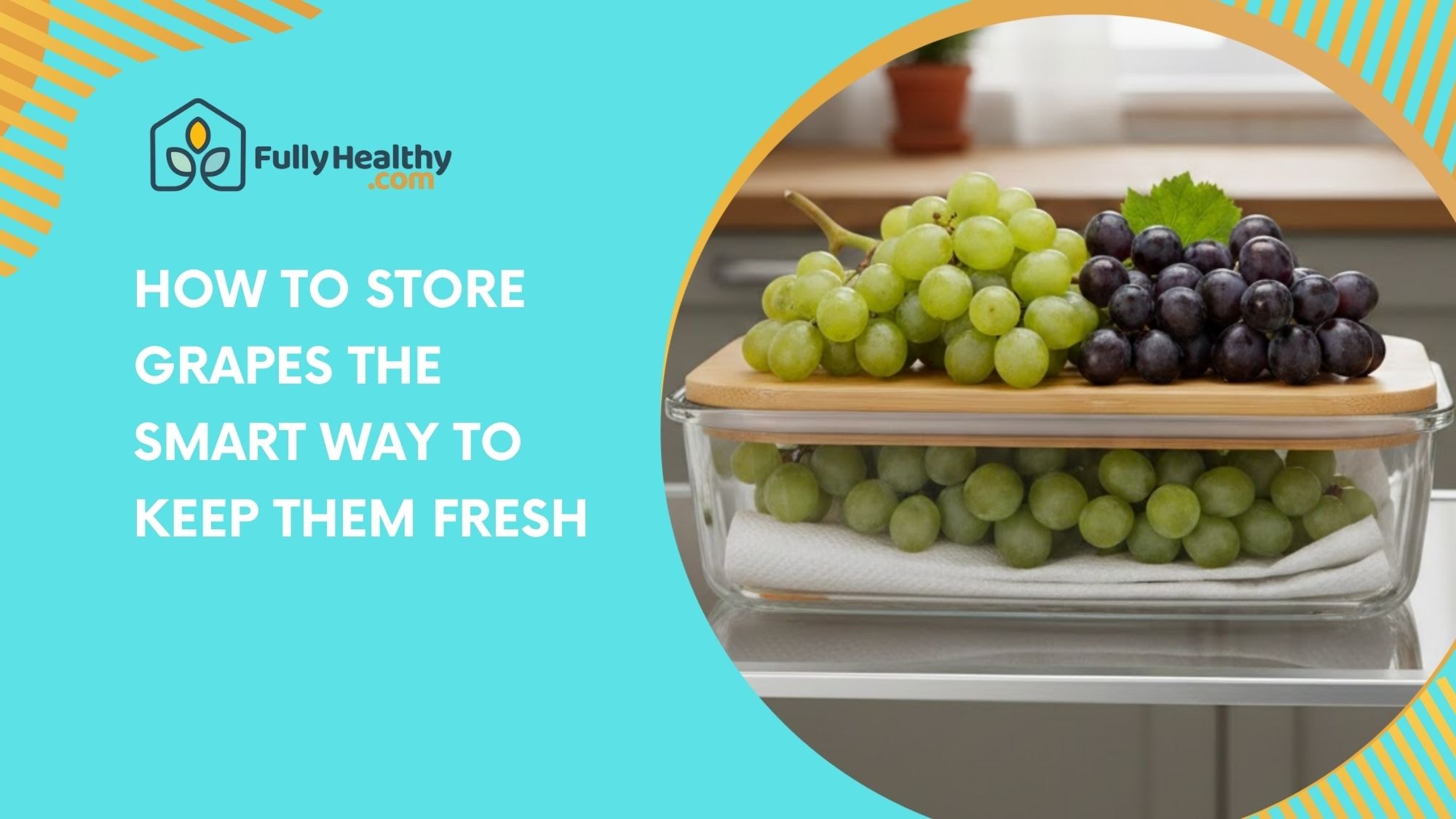
Learning how to store grapes the right way helps keep them fresh, crisp, and delicious for longer. Many people lose grapes early due to moisture, poor airflow, or the wrong container. This article talks about easy ways to store food, like where to put it in the fridge, how long to wash it, and what kinds of containers will keep the taste and texture.
Grapes don't go soft or moldy too quickly if you make a few small changes. They stay clean, firm, and ready to eat.
🍓 Bursting with Flavor – Enjoy Red Raspberry Sweetened Gently with Grape Juice!
How to Store Grapes the Right Way?
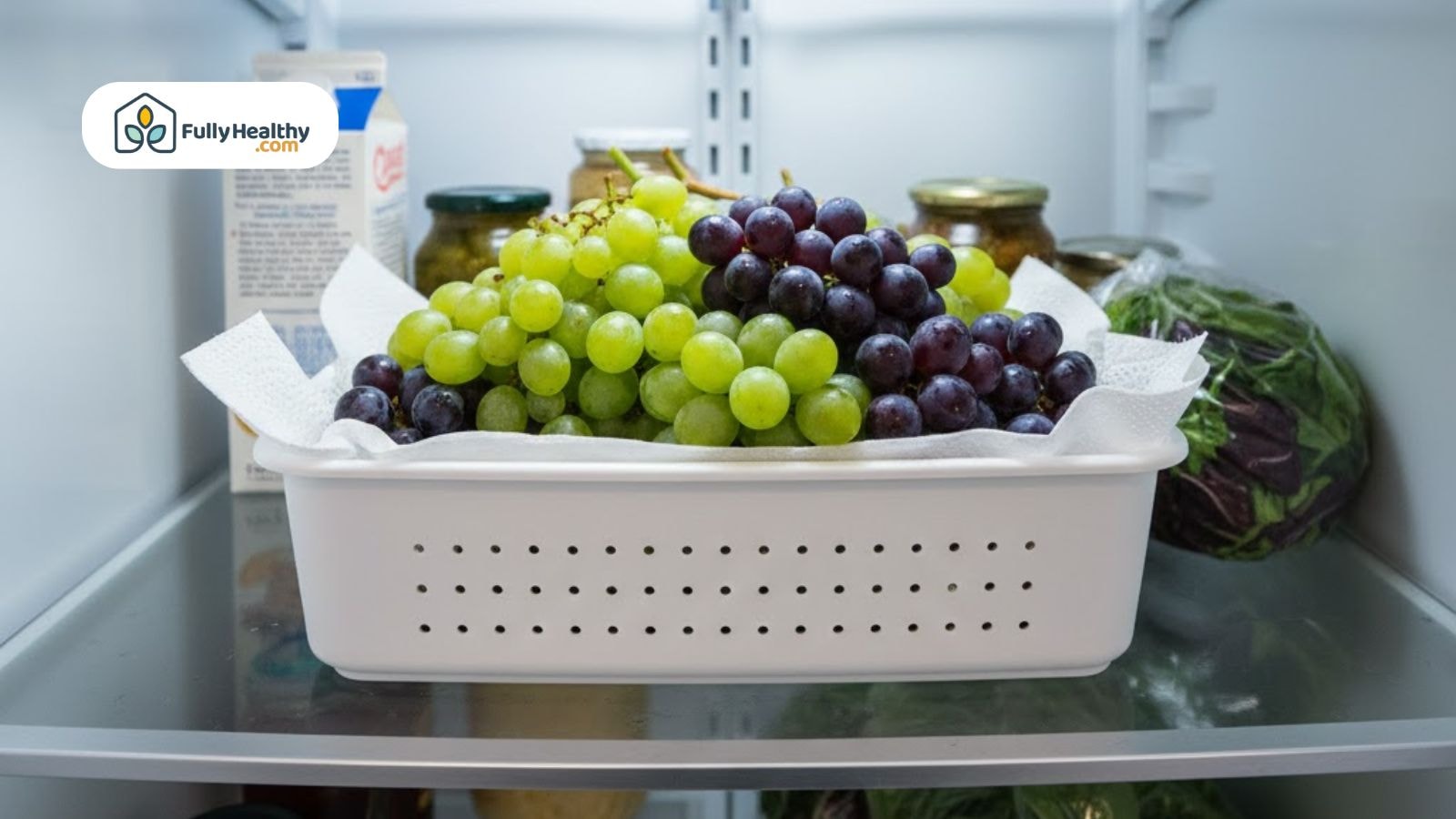
Ideal Temperature, Humidity, And Fridge Placement
Controlling temperature, airflow, and moisture from the moment you bring the grapes home is the first step in knowing how to store them right. It's easy for the skins, stems, and taste of fresh grapes to go bad quickly if they aren't stored properly.
For green, red, and yellow green grapes, keeping them cold and dry helps them keep their natural growth and slows down the spoilage process.
-
Temperature: Store grapes in the refrigerator to slow spoilage and maintain freshness.
-
Humidity: Moderate humidity protects bloom and helps grapes fresh last longer.
-
Placement: Use the crisper drawer to shield grape clusters from temperature swings.
-
Odor control: Keep grapes away from strong-smelling produce to protect flavor.
-
Stem quality: Choose bunches with pliable stems that are firmly attached.
How Long Grapes Last When Stored Correctly
When grapes are stored properly, their shelf life improves significantly compared to counter storage. Moisture exposure, airflow, and handling all affect how long grapes remain fresh. With correct storage, table grapes keep their crisp texture and pleasant flavor for weeks instead of days.
-
Step 1: Store grapes in the fridge immediately. Refrigeration slows spoilage and helps grapes last up to two weeks.
-
Step 2: Keep grapes in clusters. Grape clusters protect the skins and reduce moisture loss compared to loose grapes.
-
Step 3: Limit handling. Less touching prevents bruising and slows breakdown of the fruit.
-
Step 4: Check freshness regularly. Firm berries and green stems show grapes are still fresh.
-
Step 5: Freeze extra grapes. Spread grapes on a baking sheet before freezing so frozen grapes last weeks and work well as ice cubes.
What Is the Best Container To Store Grapes In?
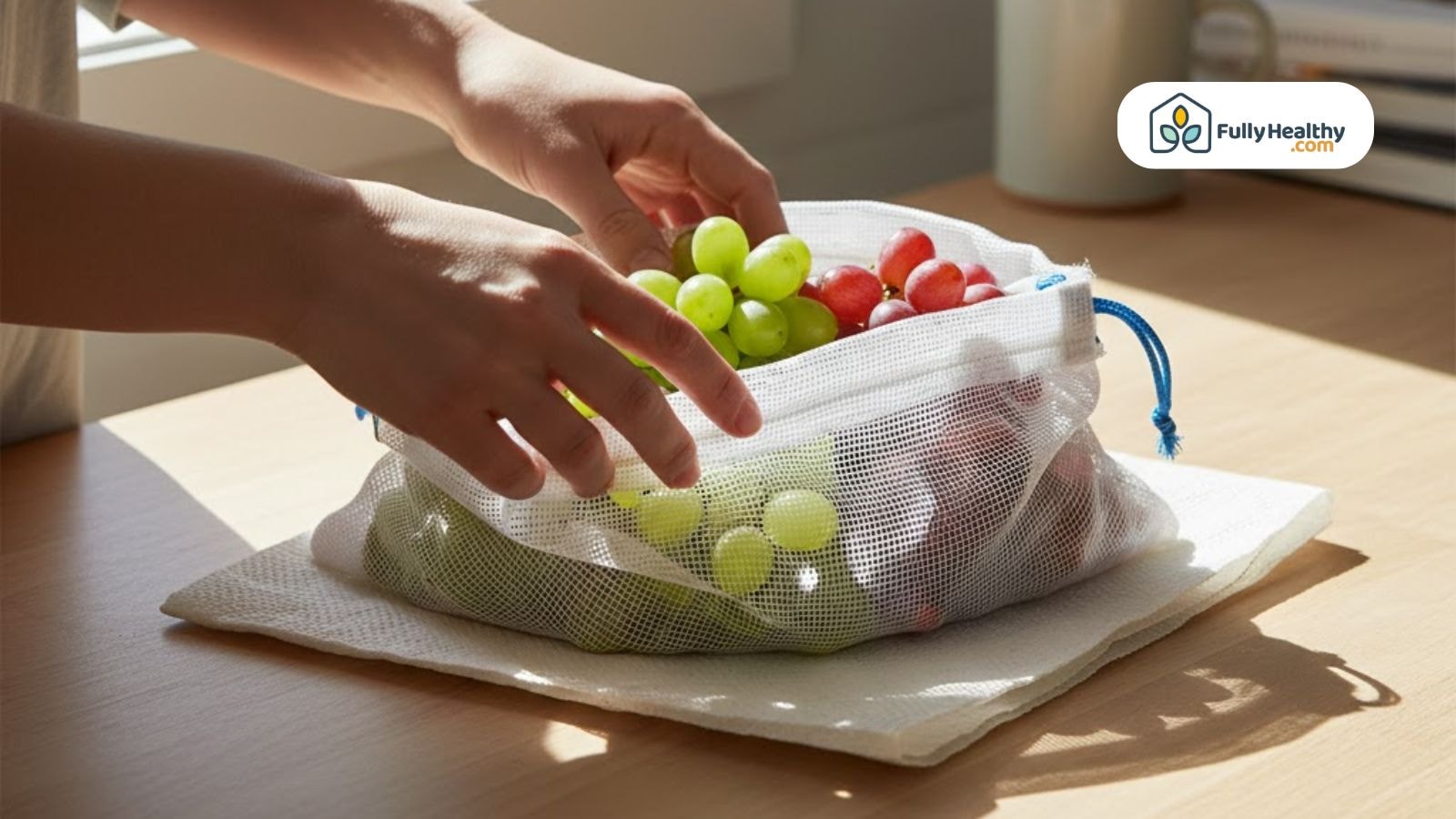
Original Bags, Ventilated Containers, And Colanders
The container you select is very important for keeping grapes fresh. Breathable storage allows moisture to escape while preventing skins from drying out. Using the right container helps store grapes safely without encouraging mold or soft spots.
-
Original packaging: A perforated plastic bag allows airflow while limiting moisture buildup.
-
Ventilated container: A ventilated container works well if the original bag is damaged.
-
Colander method: A colander in the fridge promotes airflow and keeps grapes dry.
-
Moisture control: Paper towels absorb excess moisture inside containers.
-
Cluster storage: Keeping grapes in a bunch preserves freshness and structure.
Containers To Avoid And Why They Cause Spoilage
Even when grapes are in the fridge, some packages keep water in and shorten their shelf life. Sealed spaces keep air from moving through them, which makes grape skins condense. These factors make mold grow faster and soften grapes before they should.
-
Airtight container: An airtight container traps moisture and causes mold.
-
Glass jars: Jars collect condensation that softens grapes quickly.
-
Fruit bowl: A fruit bowl at room temperature shortens shelf life.
-
Plastic wrap: Wrapped grapes sweat and spoil faster.
-
Loose storage: Individual grapes lose freshness faster without cluster protection.
Is It Better To Refrigerate Grapes Or Leave Them Out?
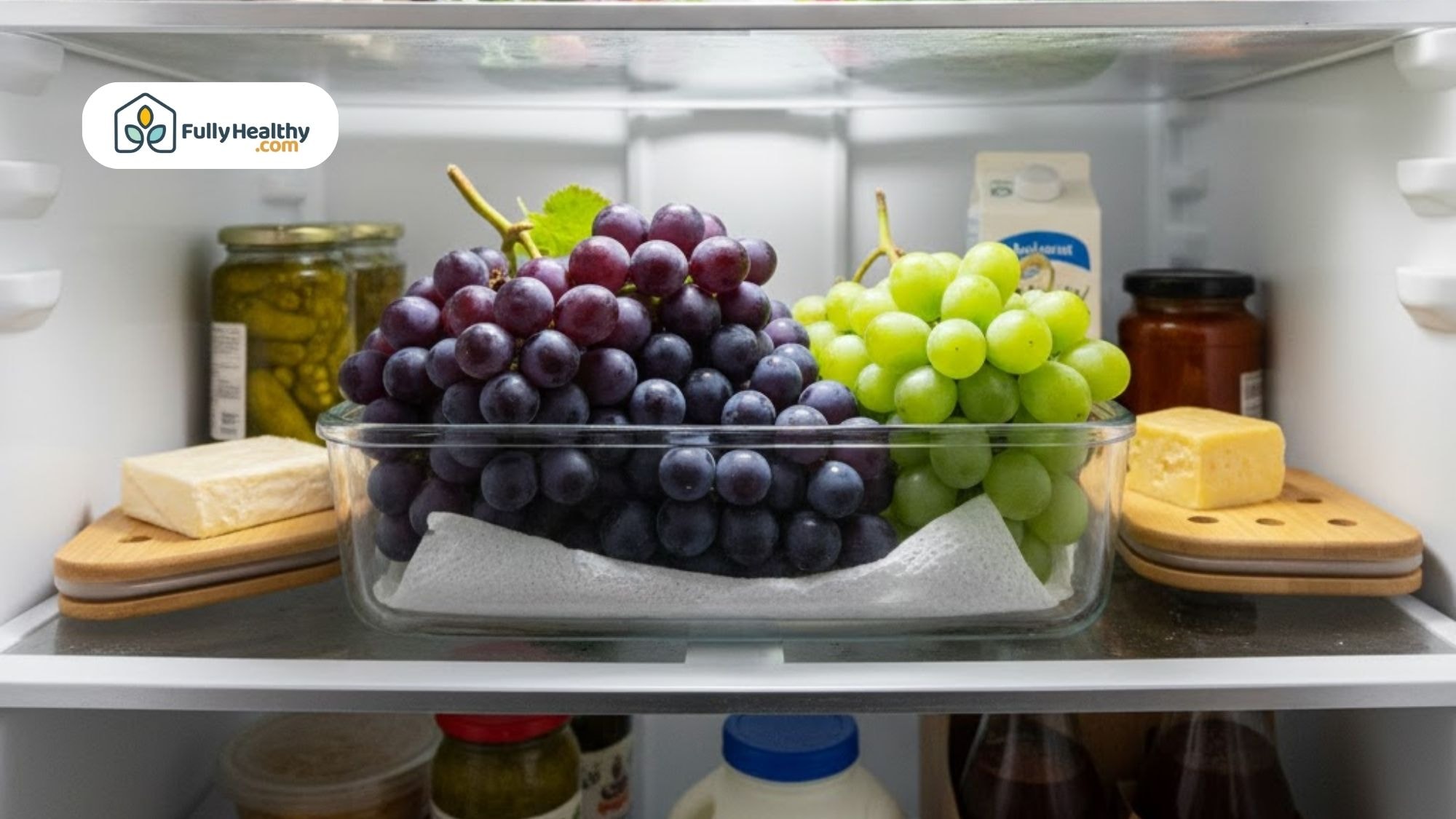
Refrigerator Storage Vs Room Temperature Results
All types and kinds of grapes should be kept in the fridge to keep them fresh. Grapes breathe more slowly when it's cold, which helps keep their skins crisp and their textures hard. When you put them in the fridge, they stay fresh for a lot longer than when you leave them out at room temperature.
-
Refrigeration: Cold storage keeps grapes crisp and fresh longer.
-
Room temperature: Counter storage causes grapes to soften within days.
-
Moisture loss: Refrigeration reduces dehydration and shriveling.
-
Food safety: Cooler temperatures slow bacterial growth on fruit.
-
Quality retention: Refrigerated grapes maintain better freshness.
When Short-Term Counter Storage Makes Sense
Counter storage is only good for short amounts of time and can't take the place of real refrigeration. In these cases, the goal is convenience or instant use rather than long-term storage. As soon as possible, your grapes should go back to being kept cold.
-
Serving time: Grapes can sit out briefly during meals.
-
Ripening: Grapes do not ripen after harvest, so room temperature offers no benefit.
-
Preparation: Short counter time helps grapes reach serving temperature.
-
Cooking use: Grapes used immediately for baking or wine may rest out briefly.
-
Storage return: Unused grapes should return to the fridge promptly.
Should Grapes Be Washed Before Storing?
Why Washing Too Early Speeds Up Spoilage
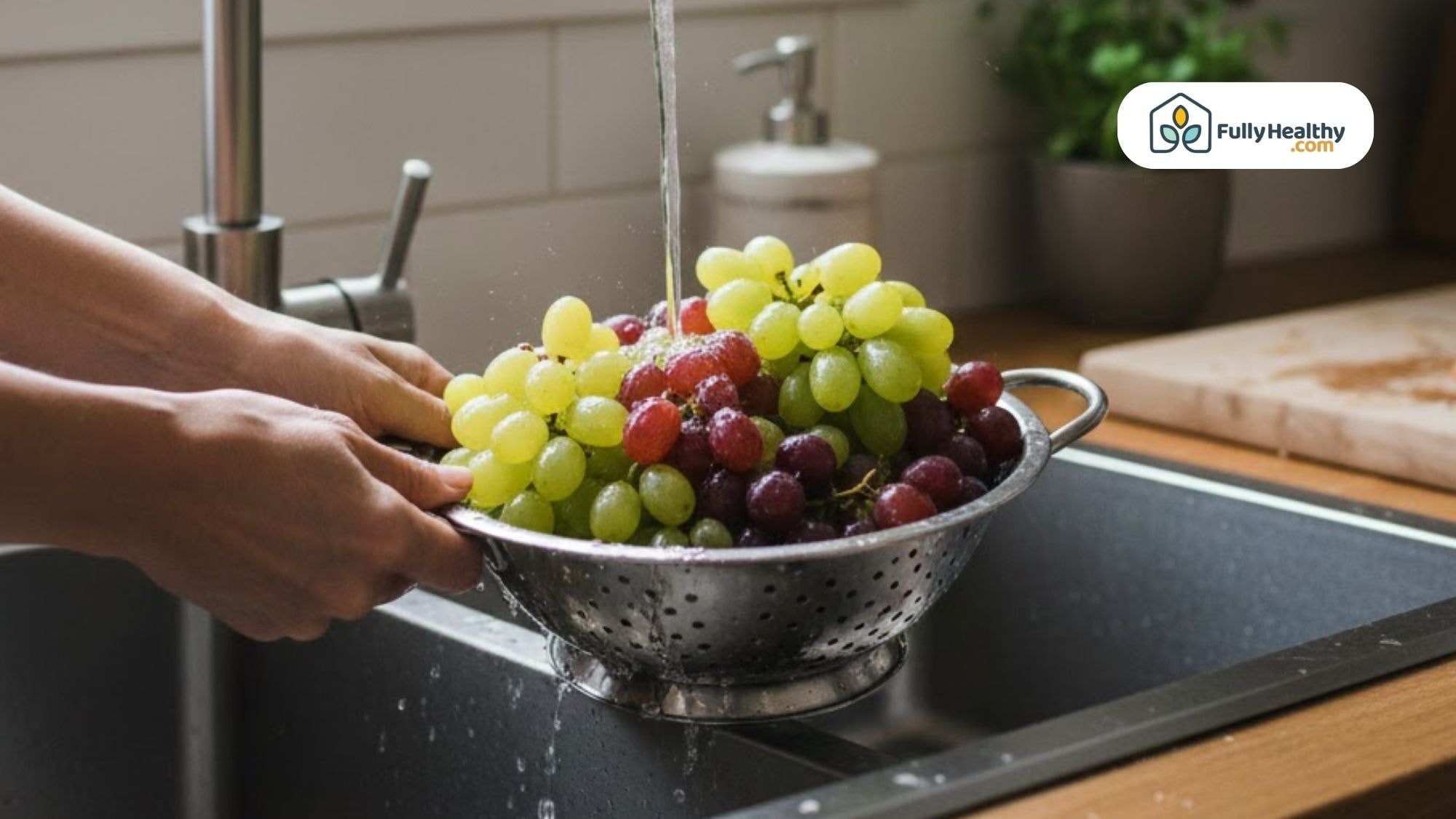
When you wash grapes too early, water gets into them, which shortens their shelf life and makes mold grow. Grapes that haven't been washed keep their natural bloom, which is a thin layer of protection that helps them stay fresh. Taking off this layer before storing makes the skins softer and speeds up the rotting process, even in the fridge.
-
Natural protection: Bloom helps protect grapes from moisture loss and decay.
-
Moisture risk: Washing adds surface water that promotes mold growth.
-
Shelf life impact: Washed grapes spoil faster than unwashed grapes.
-
Texture changes: Excess moisture causes grapes to become soft.
-
Best practice: Store grapes dry and wash only before eating.
The Correct Way To Wash Grapes Before Eating
To keep the quality and safety of the grapes, they should be washed right before serving. The right way to wash gets rid of dirt and residue without hurting the skins or the taste. This method makes grapes safe to eat and keeps them fresh longer.
-
Rinse method: Wash grapes under cool running water just before eating.
-
Handling: Gently rub grape skins to remove surface residue.
-
Drying: Pat dry with paper towels to remove excess moisture.
-
No soaking: Avoid soaking grapes in water or vinegar solutions.
-
Timing: Wash only the amount you plan to eat immediately.
Eating Clean With FullyHealthy
Our Mission And Ingredient Standards
Clean, diet-friendly food made for people with allergies and special nutritional needs is what FullyHealthy is all about. The store puts an emphasis on clear labeling of ingredients, good sourcing, and food that helps people make better choices every day. Products are chosen to fit lives that focus on health rather than restriction.
-
Ingredient focus: Products avoid common allergens and unnecessary additives.
-
Diet support: Options suit gluten-free, dairy-free, and specialty diets.
-
Quality control: Ingredients are selected for consistency and freshness.
-
Transparency: Clear labeling helps shoppers make informed choices.
-
Everyday use: Foods are designed for regular meals and snacks.
Fruit Spreads And Pantry Products We Carry
FullyHealthy offers fruit spreads that include grapes as part of their ingredient profiles, making them a natural complement to fresh food storage habits. They pair well with baked foods and simple meals.
-
St. Dalfour Four Fruits Fruit Spread: Contains grapes blended with other fruits to create a balanced spread for toast, yogurt, and baking.
-
St. Dalfour Ginger And Orange Marmalade Fruit Spread: Includes grapes combined with citrus and ginger for a bright, layered flavor profile.
-
St. Dalfour Heritage Peach Fruit Spread: Uses grapes with peaches to add natural sweetness and smooth texture.
-
St. Dalfour Black Cherry Conserves: Made with grapes and cherries to support depth of flavor in desserts and snacks.
-
St. Dalfour Red Raspberry Conserves: Combines grapes and raspberries to balance sweetness and tartness.
Final Thoughts
Grapes can be kept fresh for a long time by controlling moisture, letting air flow, and treating them in a way that keeps them from going bad. By storing grapes in open bags, keeping them dry, and following a few simple tips, you can make them last longer without losing any of their flavor.
Not taking off the stems too soon and keeping the storage area separate from the bowl are small choices that mean more than most people think. When grapes are kept correctly, even bunches that are only half full stay tasty, fun and interesting to snack on, and ready for you to enjoy without worry.
FAQs
Are Green Grapes Better Stored In The Fridge?
Green grapes stay fresh longer shelf life when kept cold in a perforated bag instead of a bowl with other fruit.
How Should Fresh Grapes Be Stored After Buying?
Fresh grapes should stay unwashed in a perforated bag, not loose grapes, and never mixed with berries or produce.
Will Grapes Last Longer In A Ziploc Bag?
Grapes in an airtight container or Ziploc trap moisture, so a perforated bag is better for all the grapes.
How Do You Keep Grapes Fresh Longer?
To keep grapes fresh longer, store grapes dry, do not remove stems, and avoid leaving them half-used in a fruit bowl.
Is It Better To Store Grapes In A Bag Or Bowl?
A bag works better than a bowl because it preserves grapes fresh, reduces mold, and keeps them delicious.
Leave a comment