

Is Powdered Sugar Gluten Free? Confectioners Sugar Facts
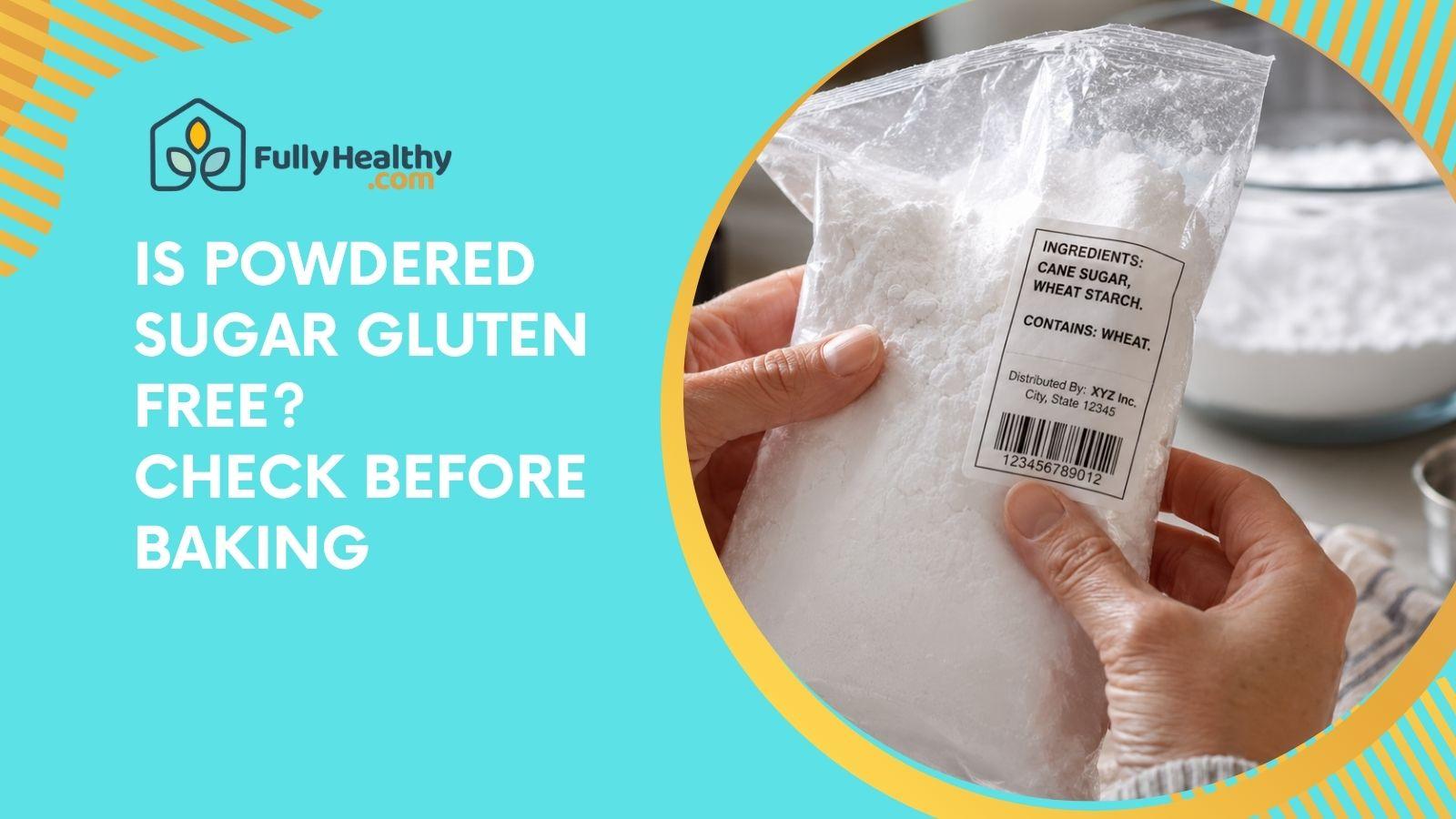
Is powdered sugar gluten free? Yes. Sugar is naturally gluten-free, and most powdered sugar is safe for a gluten-free diet. However, some products may contain wheat starch. Wheat starch is not automatically unsuitable for celiac disease: specially processed wheat starch may be used in foods labeled gluten-free when the finished product meets the applicable gluten limit
This is especially important for people with celiac disease. In this guide, you’ll learn what powdered sugar contains, hidden gluten risks, health facts, safer choices, and what to look for when shopping or baking at home.
Is Powdered Sugar Gluten Free?
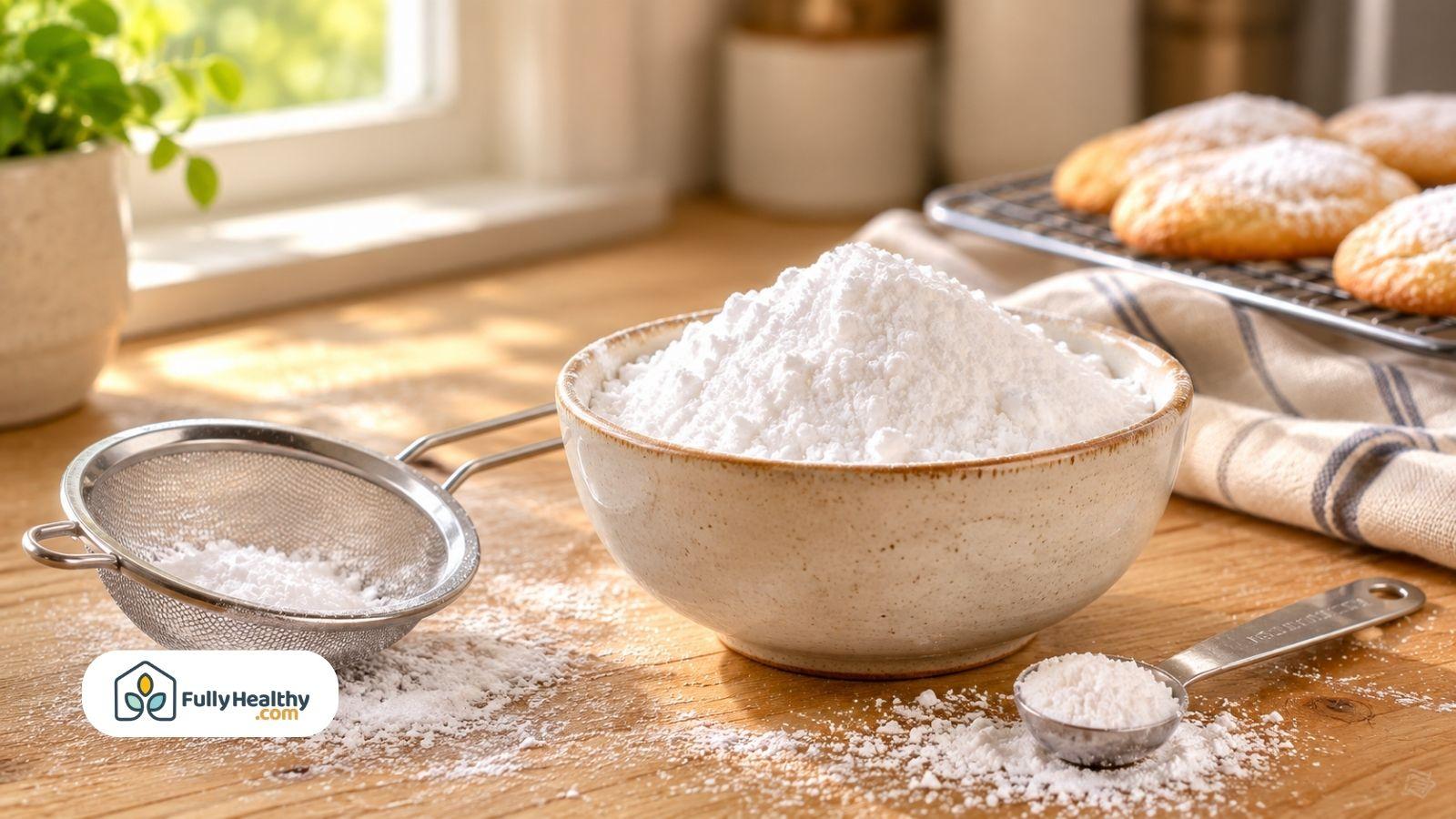
Is powdered sugar gluten free? Yes. Powdered sugar begins as granulated sugar, which is naturally gluten free. Most brands add corn starch or cornstarch to keep the soft powder smooth.
Beyond Celiac notes that rare products may use wheat starch. People with celiac disease or other dietary needs should read labels before they buy.
Why Is Powdered Sugar Usually Gluten-Free?
Confectioners sugar is mainly just sugar ground into a fine texture. Brown sugar is also naturally gluten free. The concern is any ingredient added during processing or packaging.
-
Base ingredient: Granulated sugar naturally contains no gluten.
-
Common uses: The fine powder works well in frosting, whip toppings, desserts, and sprinkling.
-
Simple takeaway: Powdered sugar and confectioners sugar are usually the same product.
Is Powdered Sugar Gluten Free When Starch Is Added?
Starch prevents clumping. Many companies use corn starch, while some foods use tapioca starch. Because a manufacturer can change a formula, current packaging gives better information than an old recipe, online review, or comment.
-
Check the label: Look for the starch source and any wheat or gluten statement.
-
Choose carefully: A product with clear gf or gluten free labeling can make shopping easier for strict dietary needs.
-
Shop smart: Find and review packaging before ordering from Amazon online.
What Is Surprisingly Not Gluten-Free?
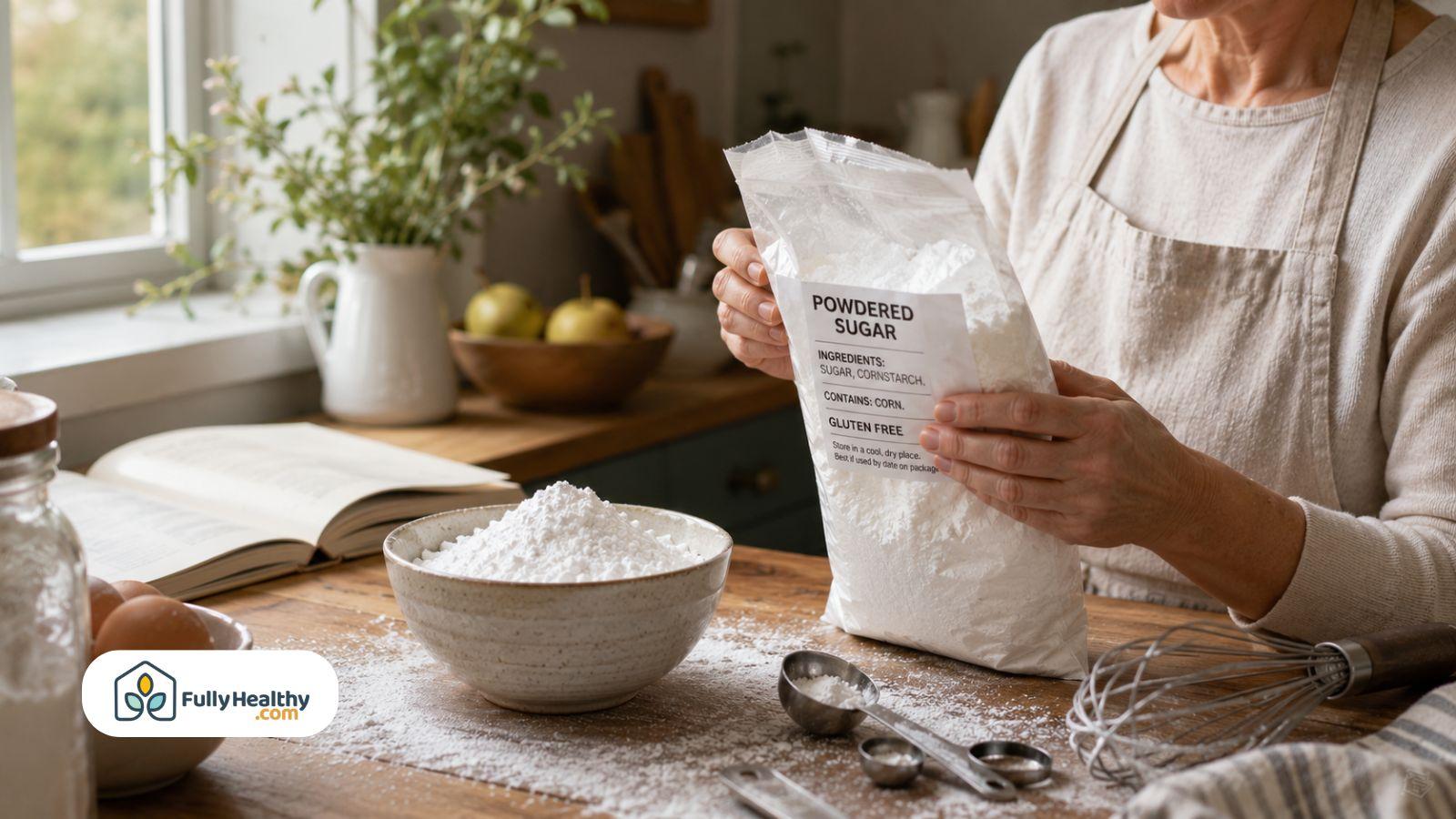
Gluten can appear in foods that seem safe. Good Food explains that coatings, flavorings, binders, and added ingredients can make a food unsuitable for a gluten-free diet. Knowing this helps people make safer choices.
Which Everyday Foods Can Contain Unexpected Wheat or Gluten?
Processed foods may contain wheat for texture, binding, coating, or flavor.
-
Common surprises: Sausages may contain wheat rusk, soy sauce can contain wheat, and dry-roasted nuts may use wheat flour coatings.
-
Other examples: Liquorice, mustard, stock cubes, some chips, and ice-cream cones may contain gluten ingredients.
-
Best habit: Use a community tip, but read packaging before deciding a food is safe.
Why Can Naturally Gluten-Free Foods Still Need a Label Check?
Corn, rice, buckwheat, and plain popcorn can be naturally gluten-free, yet processing may introduce gluten. Good Food notes that some corn flakes contain barley malt extract.
-
Cross-contact risk: Chocolate manufactured on shared equipment with wheat-containing products can be exposed to gluten. Precautionary allergen warnings may appear, but their presence and wording vary, so absence of such a warning should not by itself be interpreted as proof that cross-contact cannot occur.
-
Added flavorings: Rice cakes and popcorn can pick up gluten through seasonings or coatings.
-
Practical step: Create a new account to save reviewed products, but check labels before every purchase.
How Unhealthy Is Powdered Sugar?

Powdered sugar adds sweetness but little protein, fiber, or fat. Relish lists 31.1 calories and 7.8 grams of sugar per tablespoon. The bigger issue is total added sugar over time.
How Much Sugar and Nutrition Does One Tablespoon of Powdered Sugar Contain?
Relish reports 8 grams of carbohydrate, 7.8 grams of sugar, no protein, fat, or fiber, and 0.2 milligrams of sodium.
-
Nutrition view: It provides quick carbohydrate energy but few nutrients.
-
Kitchen role: Its fine texture works well in frosting, glaze, whip mixtures, and decorative sprinkling.
-
Recipe tip: Measure what the recipe needs instead of assuming the powder contains less sugar.
Why Can Eating Too Much Powdered Sugar Be Unhealthy?
High intake of free or added sugars is strongly associated with dental caries and can contribute to excess energy intake and weight gain; high intake—particularly from sugar-sweetened beverages—is also associated with increased risk of type 2 diabetes and cardiovascular disease.
These outcomes should not be presented as inevitable consequences of powdered sugar itself.
-
Moderation matters: Enjoy desserts in sensible portions within balanced dietary habits.
-
Use trusted information: Rely on reviewed health sources instead of company claims when judging health effects.
-
Make informed choices: Compare labels, manufacturer details, and testing information before you buy a product you intended to use often. If you love baking, this simple thing works: view the label first.
Can Celiacs Eat Powdered Sugar?
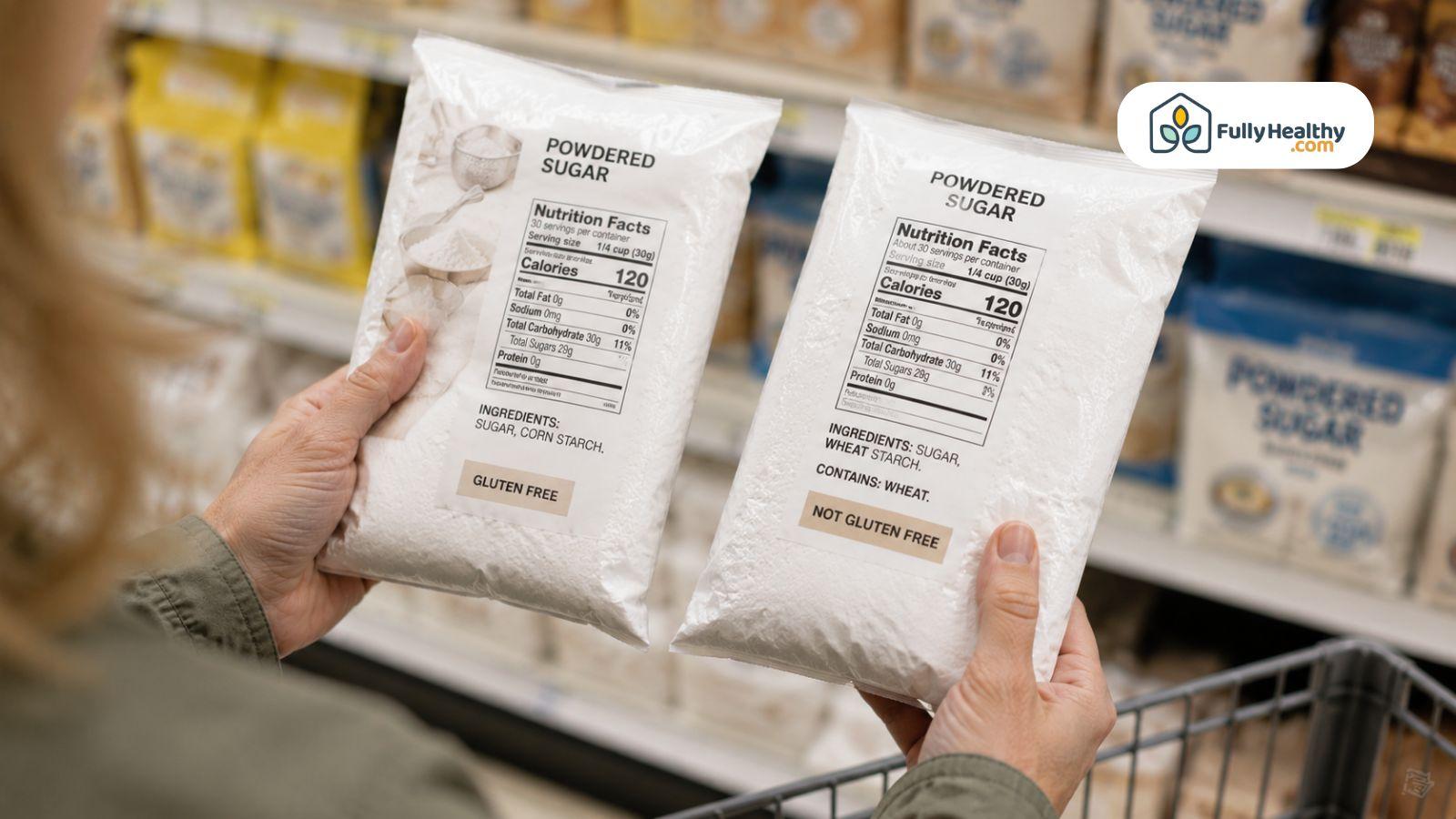
Most people with celiac disease can eat powdered sugar if the specific product is gluten free. Sugar itself does not contain gluten, and granulated sugar is naturally gluten free. However, Beyond Celiac notes that powdered sugar may rarely contain wheat starch. This is why checking the package is important.
Can People With Celiac Disease Eat Powdered Sugar Safely?
Powdered sugar is usually made by grinding granulated sugar into a very fine powder. Many manufacturers add corn starch, also called cornstarch, to help prevent clumping. Tapioca starch can serve a similar purpose in some foods. Because formulas can vary, always check the current ingredient list.
-
Check the ingredients: Check the ingredients and gluten-free labeling. Wheat starch requires additional scrutiny, but appropriately processed wheat starch can meet gluten-free standards; wheat starch should not be described as inherently equivalent to gluten.
-
Read the package: Clear gluten free labeling can make it easier to choose products that match strict dietary needs.
-
Avoid assumptions: Even a familiar brand can change its formula, so check the latest packaging before buying powdered sugar.
Why Should Celiacs Check Powdered Sugar for Wheat Starch?
Beyond Celiac says powdered sugar is usually gluten-free, but rare products may contain wheat starch.
People with celiac disease should verify whether powdered sugar containing wheat starch is specifically labeled gluten-free and complies with the relevant gluten threshold, because gluten contamination—not the mere presence of purified wheat starch—determines suitability for celiac disease.
-
Know the difference: Corn starch and wheat starch come from different sources, so the type of starch listed on the label matters.
-
Check each product: Do not assume all confectioners’ sugar has the same ingredients or manufacturing process.
-
Choose carefully: If you are unsure, look for clear gluten-free labeling and follow guidance that fits your medical needs.
How Can Fully Healthy Help With Gluten-Free and Specialty-Diet Shopping?
Fully Healthy is an online marketplace for people with special dietary needs. Its website highlights AIP, gluten-free, and allergen-free foods. Shoppers can browse categories such as snacks, breakfast, seasonings, bundles, and AIP products. Still, each product should be checked because not every item will suit every diet.
How Can FullyHealthy Make Specialty-Diet Shopping Easier?
FullyHealthy brings many specialty products together in one place. This can save time for shoppers who want to narrow their options based on specific dietary preferences.
-
Browse by need: Use collections such as AIP Elimination, AIP Reintros, Snacks, Breakfast, Bundles, and Seasonings to find relevant products.
-
Check shipping: FullyHealthy advertises free shipping on qualifying orders over $99, with some exceptions.
-
Verify suitability: Read each product page and package details before deciding whether an item meets your gluten-free or other dietary needs.
Which Sugar and Baking Products Can You Find on FullyHealthy?
Verified products include Big Tree Farms Organic Brown Coconut Sugar, Bob’s Red Mill Organic Coconut Sugar, Coombs Family Farms Organic Maple Sugar, and EAT G.A.N.G.S.T.E.R “Cut-Out” Sugar Cookie Mix. These products may be useful for specialty baking, but they should not automatically be treated as direct substitutes for powdered sugar.
-
Sugar options: Coconut sugar and maple sugar may work in recipes where their flavor and texture are suitable.
-
Baking choices: FullyHealthy also lists EAT G.A.N.G.S.T.E.R Banana Bread Mix and Chewy Choconot Brownie Mix.
-
Shop carefully: Product availability, ingredients, and dietary details can change, so review the current listing before purchasing.
Final Thoughts
So, is powdered sugar gluten free? In most cases, yes, because sugar is naturally gluten-free. Still, some products may contain added starch, including rare cases of wheat starch.
If you have celiac disease or follow a strict gluten-free diet, check the ingredient list and gluten-free label before using it. A quick label check can make baking safer and help you choose the right product with confidence.
FAQs
Is Regular Icing Sugar Gluten-Free?
Regular icing sugar, also called powdered or confectioners’ sugar, is usually gluten-free, but you should check the label because some products may contain wheat starch.
Are Eggs High in Gluten?
No, plain eggs are naturally gluten-free, although prepared egg dishes may contain gluten if bread, sauces, seasonings, or other gluten-containing ingredients are added.
What Is Celiac Poo Like?
Celiac disease can cause loose, frequent, pale, greasy, bulky, or strong-smelling stools, but symptoms vary and stool appearance alone cannot diagnose the condition.
What Are 9 Foods That Are Gluten-Free?
Naturally gluten-free foods include eggs, fresh meat, fish, fruits, vegetables, rice, potatoes, corn, and beans when they are plain and free from gluten-containing additives or cross-contact.
What Is the Healthiest Powdered Sugar Substitute?
There is no scientifically established ‘healthiest’ powdered-sugar substitute. Low- or no-calorie sweeteners can reduce added sugar and energy intake when they replace sugar, but long-term health effects differ among sweeteners and remain uncertain for some products; erythritol should not be characterized as intrinsically healthier.
Leave a comment