

What Does Kosher Mean? Everything You Need to Know

What does kosher mean? Kosher describes food that follows Jewish dietary laws, known as kashrut. These rules cover which animals may be eaten, how food is prepared, and why meat and dairy stay separate. Kosher is not the same as halal, and it does not simply mean food was blessed.
Some foods, including regular pasta, may also have special rules during Passover. This guide explains the basics, clears up common myths, and shows how to spot suitable kosher products easily.
What Does Kosher Mean?

The word kosher means “fit” or “proper” under Jewish law. It describes food prepared according to kosher dietary laws. A kosher diet explains which animals may be eaten, how food is handled, and how packaged foods and processed foods should meet kosher guidelines.
What Does Kosher Mean According to Jewish Dietary Laws?
Kosher food follows rules that decide whether a product is considered kosher. These rules cover sourcing, preparation, and storage. Shoppers use kosher certification to confirm products meet recognized standards.
-
Kosher animal: A kosher animal must meet rules. Kosher mammals chew the cud and have split hooves, while kosher birds include accepted species such as chicken and turkey.
-
Kosher meat: Meat and poultry must come from a trained kosher slaughterer and follow kosher slaughtering methods.
-
Kosher symbols: Many packaged foods display kosher signs or kosher symbols to show they are certified kosher.
What Rules Determine Whether Food Is Kosher?
Kosher dietary laws cover more than ingredients. Food must contain only kosher ingredients and use suitable equipment. Plant-based foods can become non kosher food through contact with animal non kosher ingredients or equipment.
-
Pareve foods: These contain neither meat nor dairy products. They may be served with either meat or dairy foods when prepared correctly.
-
Kosher kitchen: Families often use separate cooking utensils, storage areas, and dishes for meat and dairy.
-
Special products: Certain foods, including kosher wine and grape juice, require extra supervision under Jewish law.
Why Can’t Jews Mix Dairy And Meat?

Separating meat and dairy is a key kosher law. The practice comes from the Torah command not to cook a young animal in its mother’s milk. Jewish tradition applies it to meals and kitchens.
Why Does The Torah Prohibit Mixing Meat And Dairy?
The phrase about mother’s milk appears three times in the Torah and supports this separation. The rule is religious, not medical. People who eat kosher avoid eating meat with dairy foods in the same meal.
-
Eating meat: Meat is prepared and served without dairy products.
-
Eating dairy: Dairy is eaten separately, after a waiting period that varies by community.
-
Certain foods: Pareve foods can usually be eaten with either meat or dairy when prepared correctly.
How Do Kosher Kitchens Keep Meat And Dairy Separate?
A kosher kitchen prevents accidental mixing. Separate storage, preparation, and serving items help families follow kosher guidelines and protect food’s kosher status.
-
Cooking utensils: Separate pots, pans, and tools reduce cross-contact.
-
Same utensils: Families do not use the same utensils or same dishes for meat and dairy.
-
Separating meat: Labels, storage areas, and cleaning routines make it easier to eat kosher.
Is Kosher The Same As Halal?
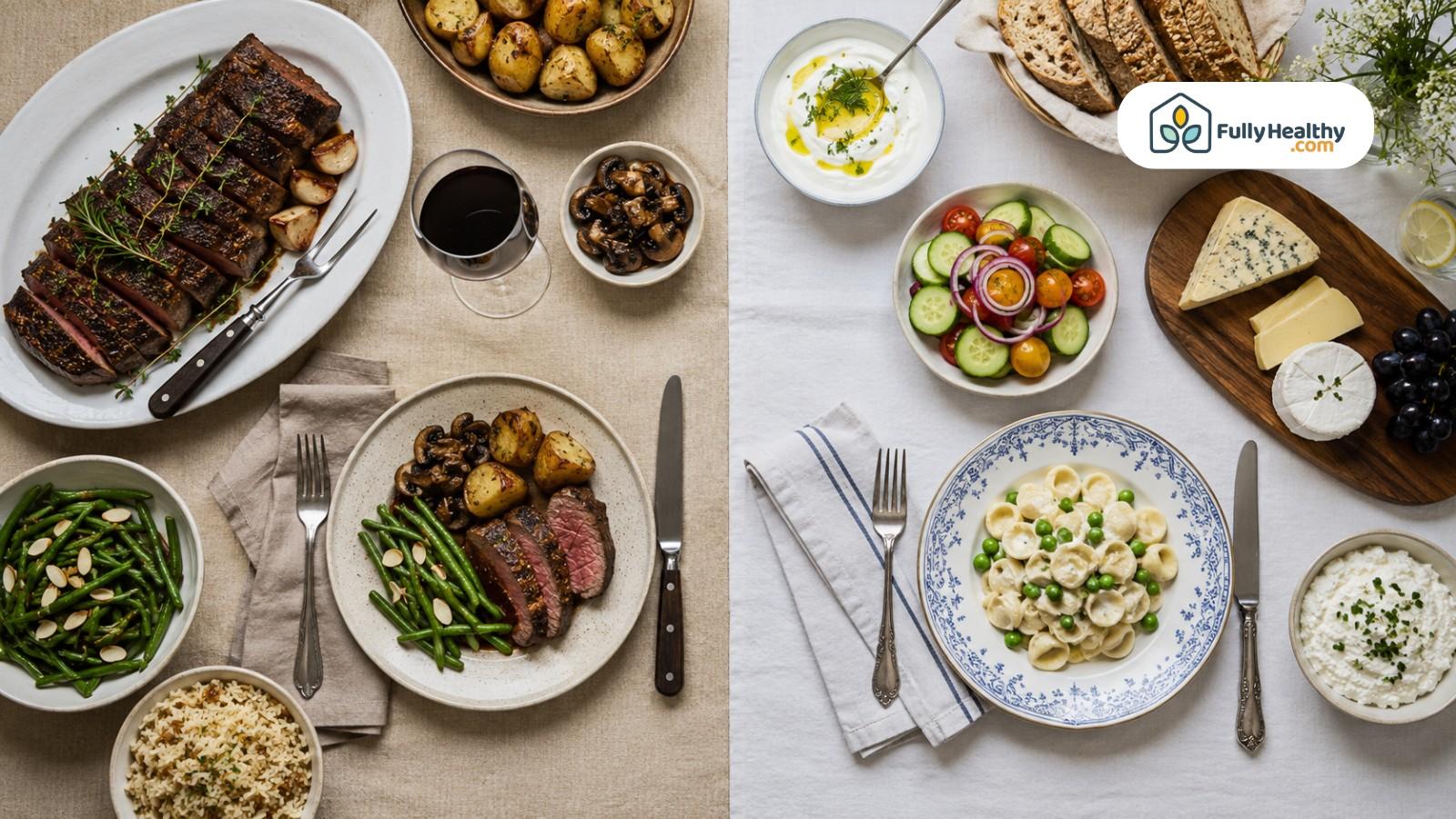
Kosher and halal are religious food systems, but they are not the same. Each has distinct rules and certification. The differences help shoppers choose suitable food.
What Do Kosher And Halal Have In Common?
Both systems guide food preparation, animal slaughter, and product checking. Certification programs help consumers identify approved foods.
-
Kosher certification: Certified kosher products are checked under Jewish food laws.
-
Food preparation: Both systems set rules for handling meat and other ingredients.
-
Consumer guidance: Labels help shoppers find suitable products.
What Are The Biggest Differences Between Kosher And Halal?
One difference: kosher laws require separating meat and dairy, while halal rules do not. Kosher also includes special rules for kosher wine, grape juice, and some processed foods.
-
Dairy rules: Kosher does not allow meat and dairy in the same meal.
-
Certification: Kosher certification uses recognized kosher symbols and inspections.
-
Product choices: Shoppers should check labels because not every packaged food or processed food is considered kosher.
Why Is Pasta Not Kosher for Passover?

Many people think pasta is never kosher, but that is not correct. Regular pasta can be kosher during the year when it follows kosher rules. The main concern is Passover, when Jewish people avoid chametz made from certain grains.
Why Is Regular Pasta Considered Chametz During Passover?
During Passover, wheat, barley, rye, oats, and spelt can become chametz when mixed with water and allowed to rise. Most regular pasta is made from wheat, so it is usually not suitable for Passover. This kosher primer shows that the rule applies to the holiday, not to pasta throughout the entire year.
-
Passover rule: The restriction focuses on grain products, not permitted animals, only poultry, or meat products.
-
Proper supervision: Passover food products need proper supervision to prevent contact with chametz during preparation.
-
Label check: Shoppers should look for a clear “Kosher for Passover” label before buying pasta or other food.
Which Pasta Alternatives Can Be Kosher for Passover?
Some pasta alternatives can be eaten during Passover when they meet the holiday’s strict rules. The ingredient alone is not enough. The product must also be prepared and packed correctly.
-
Alternative ingredients: Pasta made from potatoes or other approved ingredients may be suitable when certified for Passover.
-
Shared equipment: A safe ingredient may become unsuitable if it is processed on non kosher equipment.
-
Certification: Gluten-free does not always mean Kosher for Passover, so check the package for trusted certification.
Where Can FullyHealthy Help You Find Select Kosher Products?
FullyHealthy is an online store for people with different dietary needs. It is not a kosher-only shop, but it carries selected kosher food products along with other specialty items. Not all Jewish people follow the same customs, so each Jewish person should review labels and ask a trusted authority when needed.
How Does FullyHealthy Make Specialty-Diet Shopping Easier?
FullyHealthy brings many specialty products together in one place. This can help shoppers compare ingredients, dietary labels, and product details before buying.
-
Easy browsing: The site groups products by dietary needs, making it easier to find suitable choices.
-
Clear information: Product pages list ingredients and useful dietary details for milk products, meat products, and other food.
-
Extra guidance: Questions about animal rennet, separate utensils, or certification may require advice from an orthodox rabbi.
-
Different customs: Waiting times, such as a half hour or longer, may differ among Jewish communities.
Which Kosher Products Does FullyHealthy Offer?
FullyHealthy lists three kosher products featured in this guide. Each product serves a different purpose, from quick snacking to everyday cooking.
-
Bubbies Kosher Dill Pickle Snacking Chips: These 3.5-ounce pickle chips are listed as OU Kosher Certified, gluten-free, and vegan-friendly.
-
Redmond Real Salt Kosher Sea Salt Pouch: This 16-ounce pouch contains unrefined ancient sea salt and is listed as kosher.
-
Redmond Real Salt Ancient Kosher Sea Salt Shaker: This 10-ounce shaker offers the same type of salt in a smaller, convenient package.
-
Health reminder: Kosher status does not guarantee health benefits. It shows that a product follows Jewish dietary standards. The Hebrew word “kosher” means “fit” or “proper.”
Final Thoughts
Understanding what does kosher mean makes it easier to choose foods that match Jewish dietary laws and avoid common misconceptions. Kosher is more than a list of allowed ingredients. It covers food sourcing, preparation, handling, and certification.
While not all Jewish families follow the same customs, many choose to keep kosher as part of their religious practice and daily life. Reading labels, checking trusted kosher certification, and learning the basic rules can help you make informed decisions when buying food.
Whether you are curious about kosher traditions or shopping for certified products, knowing the basics helps you better understand this long-standing dietary system and confidently select foods that meet your needs.
FAQs
Can fish and birds both be kosher?
Yes. Certain fish and approved domestic species may be kosher, while scavenger birds are not considered kosher under traditional Jewish dietary laws.
Do I have to keep kosher to buy kosher products?
No. Anyone can buy kosher products, although people who keep kosher follow these food rules as part of their religious practice.
Why do kosher products use special packaging?
Many certified products use tamper proof packaging to help protect product integrity after kosher inspection.
Does European legislation make food automatically kosher?
No. European legislation regulates food safety and labeling, but it does not replace kosher certification or religious requirements.
Are all packaged kosher foods prepared the same way?
No. Preparation, certification, ingredients, packaging, and handling can differ, so always check the label even if the product comes from approved domestic species or uses tamper proof packaging.
Leave a comment