

Where Does Almond Nuts Come From? Surprising Facts About Almond Trees
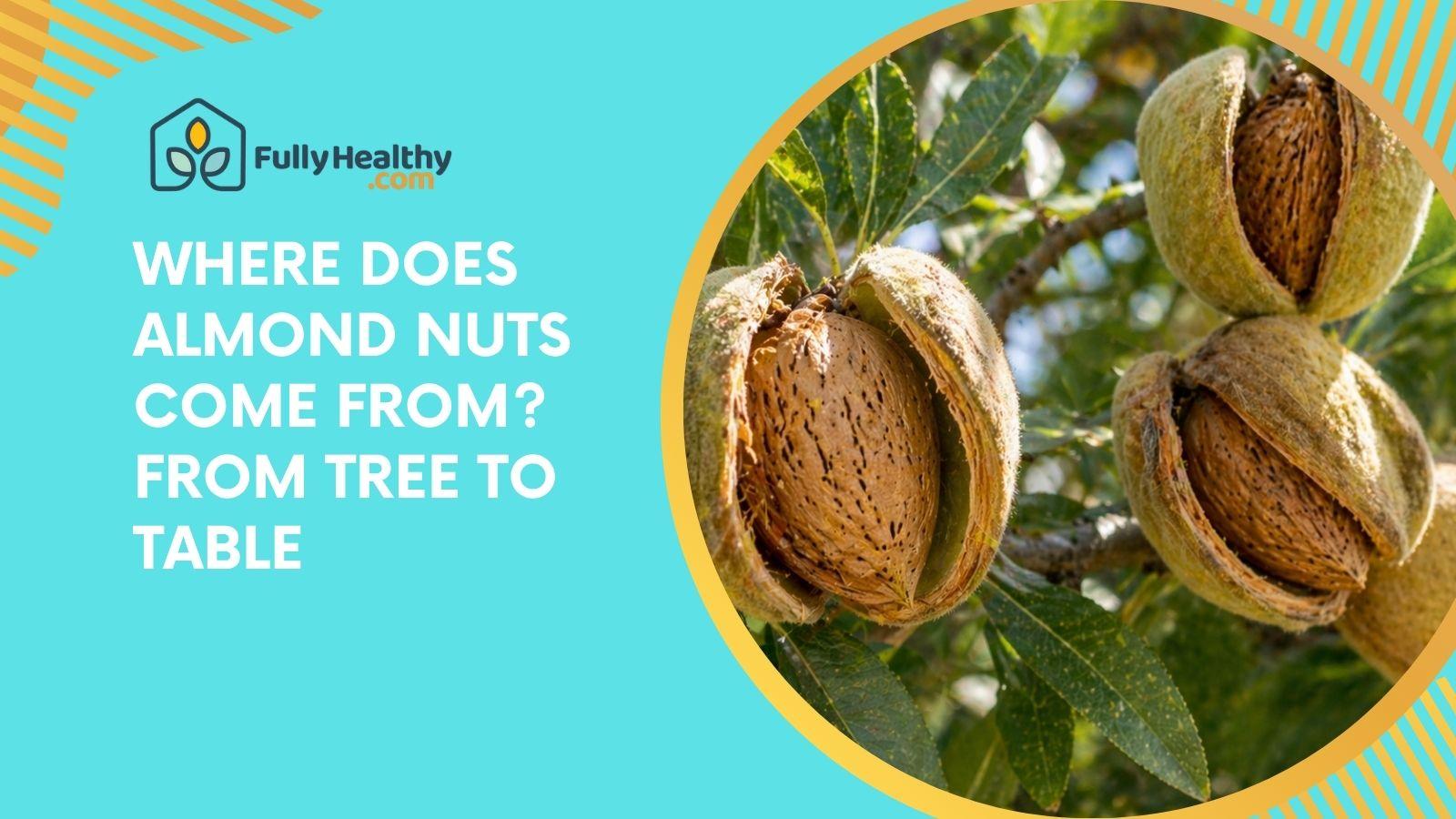
The almond fruit has seeds that are used to make almonds. Almonds are generally understood to have originated in southwestern/central Asia and were later domesticated and spread through the Mediterranean.
From where almonds come, to whether they may help lower triglycerides and whether they can help lower inflammation, this article tells you. Additionally, it contrasts the three healthiest nuts and examines what Fully Healthy has to offer individuals seeking easy, diet-friendly food options and useful grocery choices.
Featured Pantry Pick
Artisana // Raw Almond Butter - 14 oz
Loading...
Where Does Almond Nuts Come From?

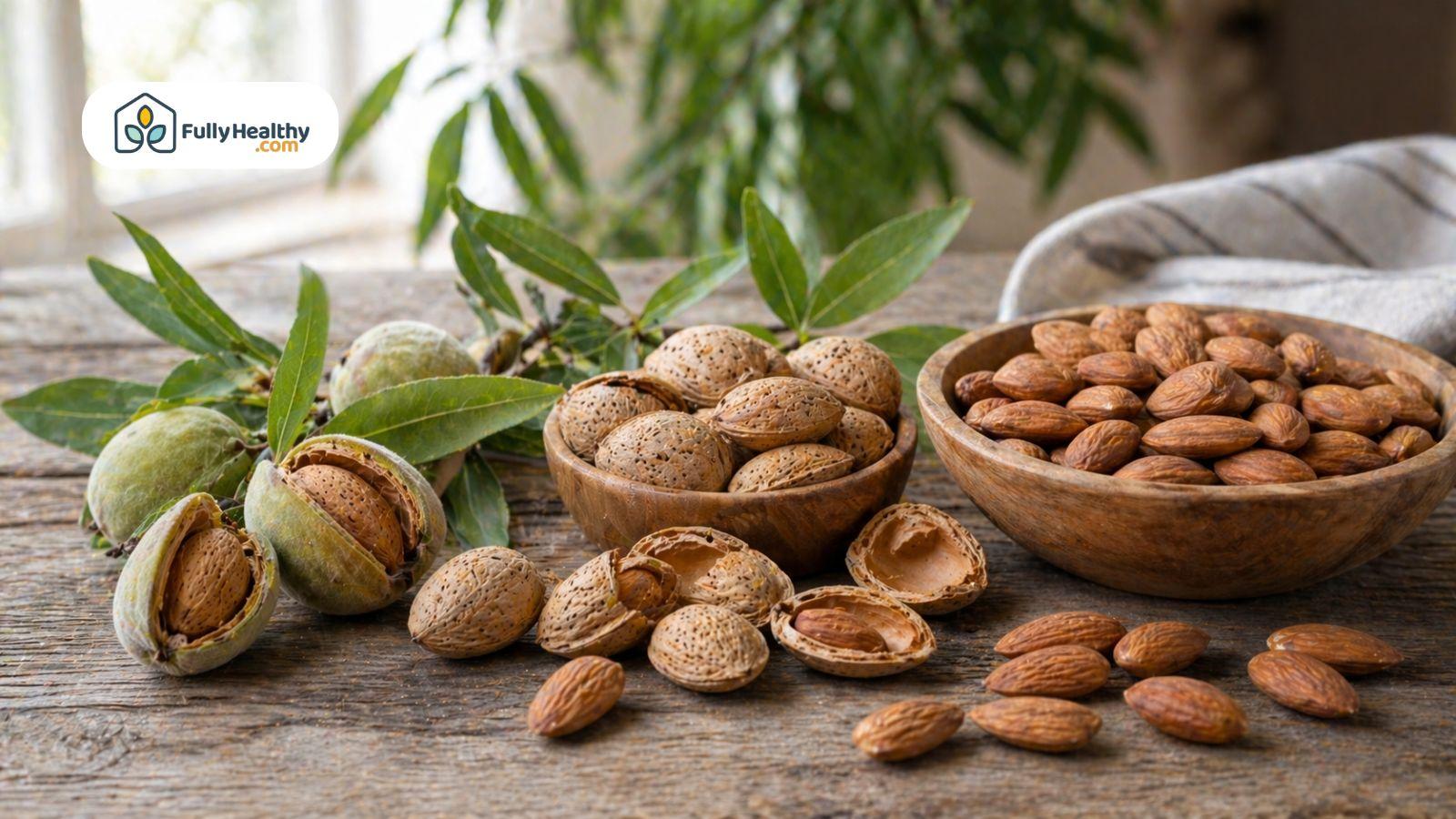
The simple answer to your question about where almond nuts come from is that they come from the Prunus dulcis tree. This tree belongs to the Rose family and the Genus Prunus, which also includes plums, peaches, and other stone fruits. In the world of plants, almonds are not really nuts. The edible almond is the seed inside the fruit of a drupe.
The fruit has a hull surrounding a hard shell, which encloses the edible seed. For many years, almonds were used in many tasty foods, like almond butter and almond milk. Now, they are mostly known as a healthy food source.
Where Does Almond Nuts Come From In Nature And Plant Science
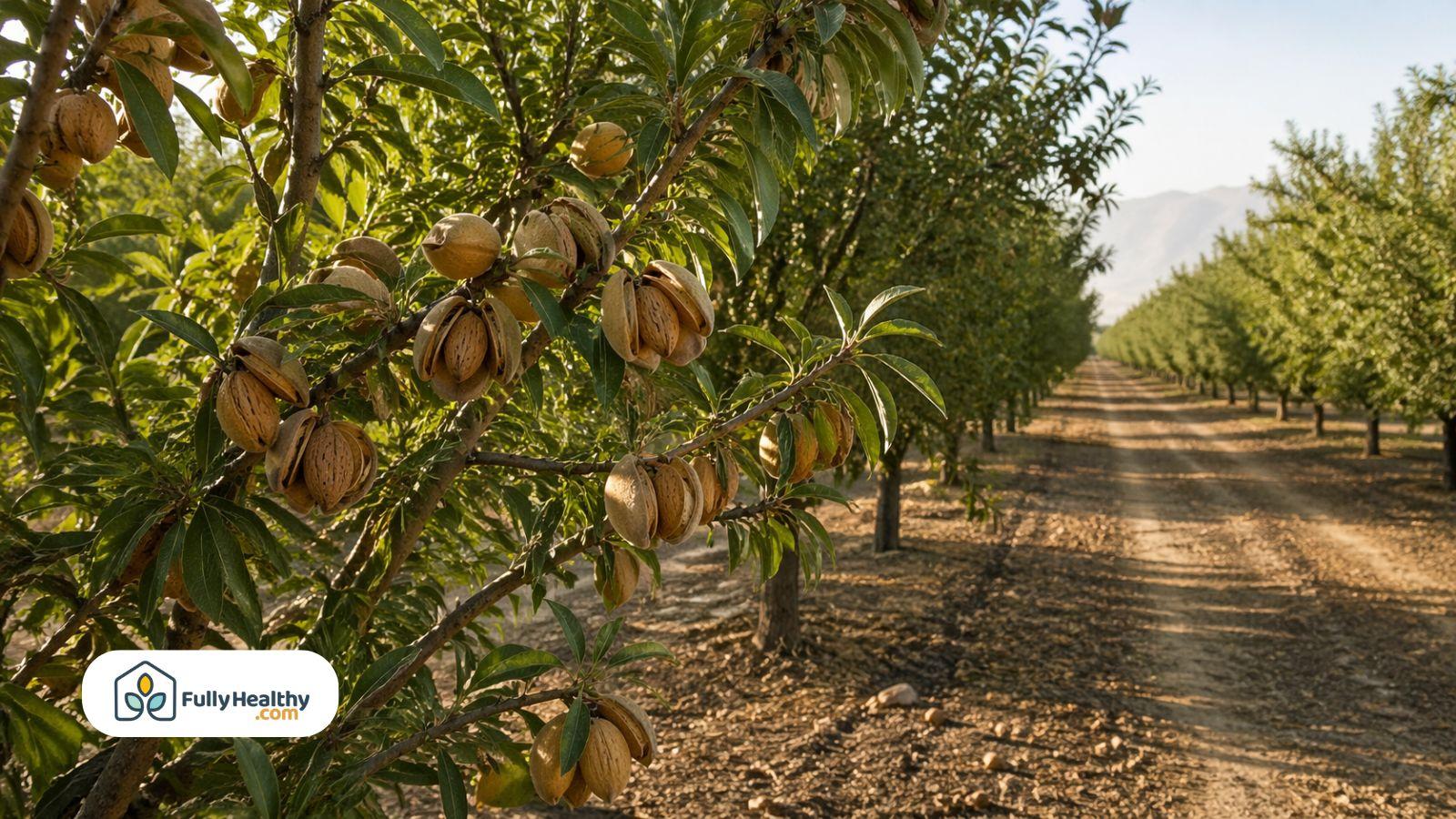
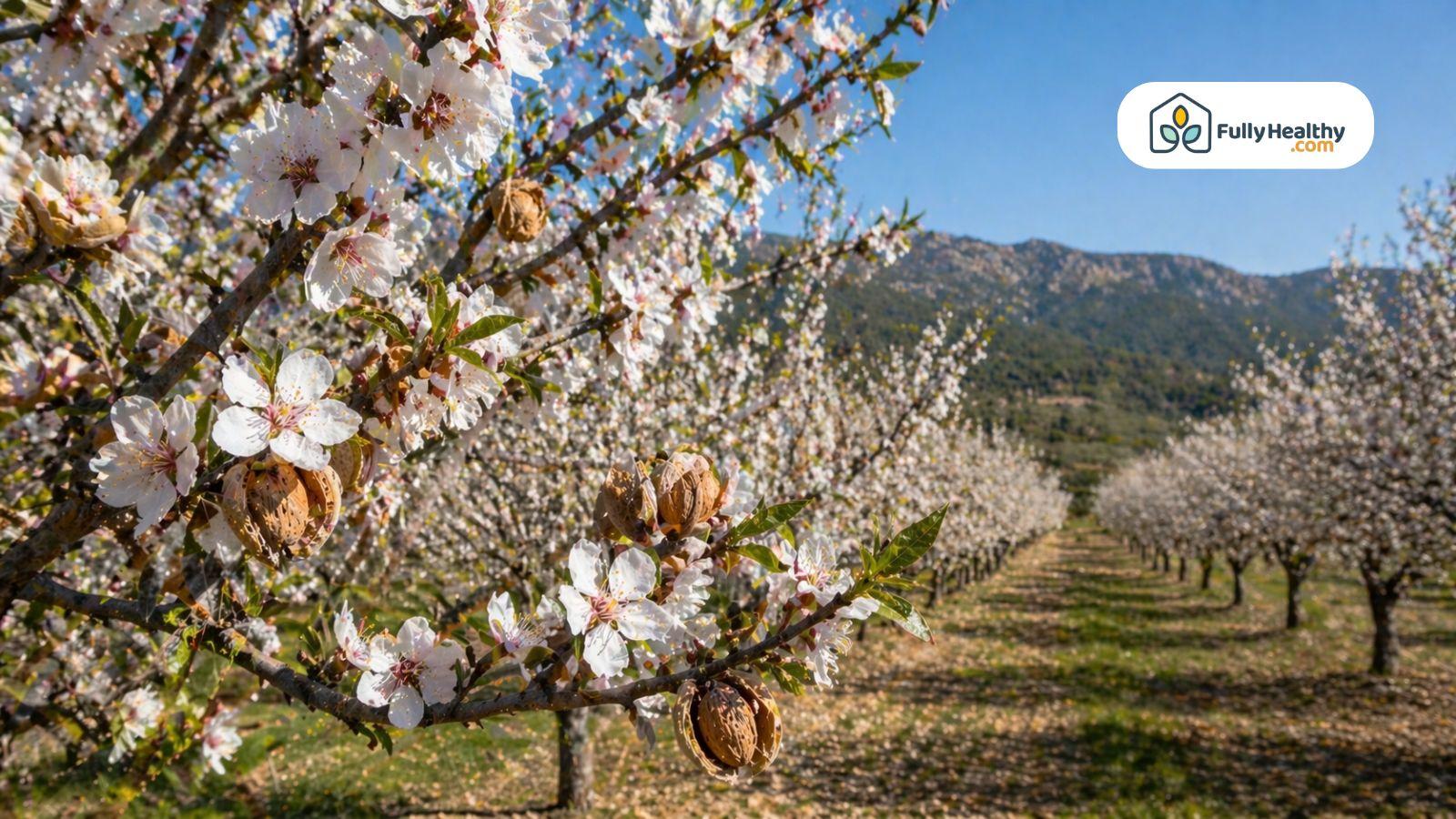
Almond trees do best where it is cool and wet winters, dry and hot in the summer, and has rich soil and full sun. Early in the spring, they bloom with almond blossoms, and farmers pick the crop when the almond harvest starts in early fall.
Most almond fruits contain one seed, though some cultivars can produce double kernels. That's why a single almond is really just one edible seed. The kind that most people eat are the sweet ones. Bitter almonds are not the same, and they are only used in small quantities for certain things.
-
Key Fact: Raw almonds, blanched almonds, shelled almonds, almond flour, almond butter, almond milk, and almond oil all come from sweet almonds.
-
Plant Science: Almond seeds grow inside a fruit, not inside a true nut shell, which is why almonds are classed as a seed inside a fruit.
-
Easy Comparison: The almond fruit is often compared to a peach because both are in the same plant group and both have a hard inner shell.
-
Varieties: Almond varieties can differ in taste, size, and how they are used for human consumption.
How Did Almonds Spread From Asia To Today’s Major Growing Regions
Almonds were first grown in Asia and then spread to the Mediterranean. Growing almonds became a big business over time in places with the right weather. California produces the majority of the global commercial almond supply..
Almond growers, almond orchards, a steady water supply, and sustainable farming practices are all needed for modern almond production. Different parts of the crop are also used in different ways in the almond industry. For example, almond pulp and hull material may be used for livestock feed. This helps farms use their resources better and reduce waste.
-
History: Almonds moved from Asia into the Mediterranean region because the climate there suited the trees well.
-
Climate Needs: To produce almonds well, trees need full sun, rich soil, cool winters, and dry summers.
-
Harvest Season: Almond blossoms usually appear in early spring, while the almond harvest usually happens in early fall.
-
Industry Note: The Almond Board and the US Department help share information about almond production, almond growers, and farm standards.
-
Consumer Tip: When you purchase almonds, many of them may come from California because california almonds dominate much of global supply.
Do Almonds Lower Triglycerides?
One of the most popular nuts for people who want to keep their hearts healthy is almonds. They have a lot of fiber, vitamin E, and healthy fats. Also, they have less saturated fat than a lot of processed snacks. Researchers have found that eating healthy almonds instead of less healthy foods may help keep blood fat levels healthy.
This could affect your weight loss goals or lower your risk of heart disease. Almonds can also help people who are trying to eat gluten-free, especially when used in place of wheat flour in some recipes.
What Does Existing Research Suggest About Almonds And Triglyceride Levels
As part of a healthy diet, almonds may help improve overall lipid profiles, but evidence for lowering triglycerides specifically is mixed. These are a kind of fat that are found in blood. As an easy snack, people can eat raw almonds, steam pasteurized almonds, or almond butter.
People who follow a smart eating plan can eat these foods because they have healthy fats and make people feel full. You can eat almond milk with meals too, but whole almonds usually have more fiber than drinks.
-
Simple Meaning: Triglycerides are fats in the blood that can affect heart health.
-
Main Benefit: Almonds may support better blood fat levels when they replace less healthy snacks.
-
Smart Swap: Almond flour can be used in place of wheat flour in some baking recipes.
-
Food Forms: Raw almonds, almond butter, almond milk, and almond oil all offer different ways to include almonds in daily meals.
What Limits Should The Article Mention When Discussing Almonds And Triglycerides
When writing about this subject, it's important to keep things in check. Nuts can help, but they won't cure you. The amount of food you eat, how active you are, and the other foods you eat during the day can all change the results. In a food processor, you can make almond butter or almond flour.
This can be helpful, but no one meal will make you healthier by itself. Almond milk or oil don't always have as much fiber as whole almonds, so the form is also important.
-
Balanced View: Almonds may help support heart health, but they work best as part of an overall healthy diet.
-
Form Matters: Whole almonds usually provide more fiber than almond milk or almond oil.
-
Portion Tip: Keep almonds in an airtight container so they stay fresh and easy to use.
-
Comparison Note: Almonds can be a smart choice, though some people also enjoy other nuts like macadamia nuts for variety.
Do Almonds Help Reduce Inflammation?
The body may also benefit from almonds in another way. Almonds contain unsaturated fats, vitamin E, fiber, and polyphenols that may influence inflammatory pathways, but clinical evidence shows only modest or inconsistent effects on inflammatory markers.
As a result, a lot of people choose almonds as their first natural food source for easy meals and snacks. They come in many forms and are easy to include in a healthy diet.
Which Studies Support The Idea That Almonds May Reduce Inflammation
Research reviews show that adults may benefit from eating almonds because they may help lower some signs of inflammation. This doesn't mean almonds can cure illness, but it does mean that eating them often as part of a healthy diet may help your health.
Whole almonds retain skin and fiber that may contribute additional nutrients and polyphenols compared with more refined almond products, but ‘better’ depends on the product and dietary context.
-
Research Point: Studies suggest almonds may help lower certain inflammation markers.
-
Practical Tip: Whole almonds may offer more fiber than almond milk or almond oil.
-
Easy Use: Almonds can be added to snacks, breakfast bowls, or salads for simple daily use.
Why Might Almonds Have An Anti-Inflammatory Effect
Their nutrient mix is probably the reason. Almonds have plant compounds that may help protect cells from stress, vitamin E, and healthy fats. This could be why they are often linked to better health. They're simple to prepare, store, and eat with other foods to keep your diet healthy.
-
Nutrient Value: Almonds are a rich source of vitamin e and healthy fats.
-
Meal Idea: Add chopped almonds to yogurt, oats, or salads for more texture and nutrition.
-
Simple Reminder: Almonds can support health, but they work best with a full healthy eating pattern.
What Are The Top 3 Healthiest Nuts?
This question has a lot of people who want a simple answer. There is no scientifically agreed ranking of the ‘top 3 healthiest nuts’; walnuts, almonds, and pistachios are all nutrient-dense options with different strengths. Choosing these nuts is common since they have a good mix of protein, fiber, and healthy fats.
Additionally, it is simple to include them in daily meals. Pistachios may help you control your portions, almonds will make you feel full, and walnuts are notable among commonly eaten nuts for providing alpha-linolenic acid (ALA), a plant omega-3 fatty acid. It's important that this part stays clear, practical, and useful for regular readers.
Why Do Almonds, Pistachios, And Walnuts Often Make The Top-Three List
A lot of people rate these three nuts highly because they are very healthy in small amounts. A lot of people like almonds because they are portable, tasty, and simple to use in many recipes. Since you have to open each shell, pistachios can help you eat more slowly.
Walnuts are valued for the special kind of fat they have. It's not to say that one nut is better than the others; the point is to show why these three are often good choices for a healthy diet.
-
Main Reason: Almonds, pistachios, and walnuts all provide a useful mix of protein, fiber, and unsaturated fats.
-
Almond Advantage: Almonds are filling and work well in snacks, breakfasts, and simple meals.
-
Pistachio Benefit: Pistachios may support better portion control because opening each shell can slow eating.
-
Walnut Strength: Walnuts are known for omega-3 fats, which support heart health.
How Do Almonds Compare With Pistachios And Walnuts In Real-Life Eating
In everyday life, almonds are often the easiest choice for people who are busy. You can put them in breakfast bowls, lunch boxes, and snack jars without any problems. Walnuts have a stronger taste and texture, while pistachios are good for people who want a snack that they can eat more slowly. Also, people should remember that the size of the serving is still important. Nuts, even the healthy ones, should only be eaten in small amounts. A simple comparison helps people choose the best nut for their needs.
-
Everyday Use: Almonds are great for quick snacks and meal add-ins.
-
Eating Style: Pistachios may help slow eating, which can be useful for mindful snacking.
-
Texture Note: Walnuts are softer and richer, while almonds are firmer and pistachios are lighter.
-
Reader Value: The best nut depends on whether the goal is fullness, convenience, or heart-friendly fats.
What Can Fully Healthy Offer Readers Looking For Almond-Friendly And Specialty-Diet Foods?
Fully Healthy is a specialty food store where people can buy foods that are good for their diets. This part should offer a useful and honest link between the site and the main subject. Now that you know where almonds come from, some readers may also want to know how to make shopping for special diets easy. Fully Healthy is not a source for almond science or almond origin, but it is useful for people who want to find food options that meet their needs.
What Does Fully Healthy Offer For Readers Exploring Almond-Related And Specialty-Diet Foods
The products at Fully Healthy are mostly AIP, gluten-free, and good for people with allergies. This makes the site useful for people who want simple pantry items with labels that are easier to read. It can be helpful for people who need to shop for foods that don't go with their diet and want to do so in one place.
-
Site Purpose: Fully Healthy helps shoppers find specialty foods without spending extra time checking many labels.
-
Diet Support: The site is built for people looking for AIP, gluten-free, and allergen-friendly options.
-
Reader Benefit: It offers a practical shopping option for readers who want more convenient food choices.
Which Fully Healthy Products And Collections Are Most Useful For Specialty-Diet Shoppers?
Collections like AIP Elimination, Snacks, Breakfast, Bundles, and Seasonings can be seen on the home page. It also has useful baking mixes and grocery items. You should talk about these products because they show what the site has to offer, but the language should stay the same. Even though the site can help with specialty shopping, it shouldn't be used as proof of where almonds come from.
-
Collections: AIP Elimination, Snacks, Breakfast, Bundles, and Seasonings are highlighted on the homepage.
-
Product Examples: Coconut sugar, maple sugar, maple syrup, cookie mix, banana bread mix, and brownie mix are shown as available items.
-
Important Limit: Fully Healthy is useful for specialty shopping, but it is not an authority on almond origin or almond health research.
Final Thoughts
Knowing where almond nuts come from can help people understand the difference between how almonds were made in the past and how they are made now.
The tree Prunus dulcis is where almonds come from. This tree is thought to have originated in Asia but is now grown in many places, like California. Almonds can be part of a heart-healthy diet and may help improve LDL cholesterol and overall diet quality; effects on inflammation are less consistent.
FAQs
What Happens If I Eat 40 Almonds A Day?
Eating 40 almonds can fit a healthy diet for many people, but it is a calorie-dense serving and tolerance varies by total energy needs and gastrointestinal sensitivity, but too many at once can cause bloating, stomach discomfort, or other digestion issues, so portion control matters more than how shelling almonds refers to removing the hard outer layer.
Can I Eat Almonds If I Have High Cholesterol?
Yes, almonds may help people with high cholesterol because they contain healthier fats, and many edible almonds come from Prunus dulcis (also historically referred to as Prunus amygdalus in older sources).
Is 3 Almonds A Day Enough?
Three almonds provide some nutrients, but most clinical studies on nuts use larger daily servings, often around 28–60 g.
What Is The Best Nut To Lower Cholesterol?
Walnuts and almonds both have evidence supporting favorable effects on blood lipids, but there is no universal scientific ranking for the ‘best’ nut for cholesterol.
Are Almonds A Better Daily Choice Than Other Nuts?
Almonds can be a smart daily option because they are easy to eat, easy to portion, and widely available, though the best nut still depends on your health needs, diet, and serving size.
Leave a comment