

Why Don’t We Eat Turkey Eggs? A Delicious Egg Left Behind
 Photo Credit: Canva Pro
You can eat turkey eggs, and they taste like chicken eggs, but you don't see them in stores very often. Why? Turkeys need more food, lay fewer eggs, and grow up more slowly. Their eggs are more expensive and are mostly used to hatch turkey chicks.
That's why people don't raise turkeys for their eggs. Here's everything you need to know about why we don't eat turkey eggs and if you should.
🦃 Pure Protein, Anytime – Snack Clean with Nick’s Turkey Sticks!
Why Don’t We Eat Turkey Eggs?
 Photo Credit: Canva Pro
Turkey eggs are edible and nutritious, with a taste similar to, though slightly richer than, chicken eggs for most people. Even so, you rarely see them in restaurants or grocery stores. It's not about safety or taste; the main reason is that it's useful.
Since they need more food and space and don't lay eggs as often, turkeys aren't good for egg production in a factory setting. We'll look at why turkey eggs tend to be left off the menu.
Turkeys Lay Fewer Eggs and Mature Slower
Turkeys lay significantly fewer eggs per year than chickens and ducks, making them less viable for egg production. A turkey hen grows up more slowly and lays a lot fewer eggs each year. Therefore, they are not a good choice for farmers who want to raise chickens for eggs.
-
Lower egg count: On average, turkey hens lay about 100 eggs annually, compared to 250–300 for chickens and around 150–200 for many duck breeds, depending on species and environment.
-
Longer maturity time: For chickens, it takes at least 5 months to start laying eggs. For turkeys, it takes at least 7 months.
-
Slower laying cycle: Each turkey lays an egg every 24 to 32 hours, which means there are fewer eggs in total.
High Costs and Low Profitability for Farmers
It costs more and gives you less in return to raise turkeys just for their eggs. The cost of production goes up because they need more space, more food, and stronger housing. This is not the best way to sell a lot of eggs.
-
More food needed: Turkeys need to eat a lot more than chickens do to lay fewer eggs.
-
More space required: Since they are so big, they need much more space and stronger shelters.
-
Higher costs: The cost of feed, housing, and labor doesn't make up for the small number of eggs laid.
-
Not fit for scale: You can raise chickens or ducks for eggs more easily and for less money in a factory.
Why Don't People Sell Turkey Eggs?
 Photo Credit: Canva Pro
You can eat turkey eggs, but most grocery stores won't have a dozen of them. The reason is not health but money. They used to be common, but now they are hard to find because of modern farming needs and low returns.
Historical Demand and Modern Market Realities
Back in the 1800s, people ate turkey eggs a lot more often. But chicken and duck eggs, which hatch faster and cost less, took over the egg market, and turkey eggs stopped being sold.
-
Used in the past: Before factory farming, people ate turkey eggs in their own homes and at restaurants.
-
Disappeared with commercialization: Farmers mostly raised chickens and ducks because they lay eggs more quickly.
-
No longer common: Most people think of turkey eggs as a specialty item rather than a common grocery store item.
Turkeys Are Expensive to Maintain for Egg Production
It costs way too much to keep turkeys for their eggs. The return isn't very high, and the eggs can't compare in price or quantity to chicken or duck eggs.
-
Low return per bird: A turkey hen only lays two eggs a week.
-
More turkeys needed: Farmers would have to keep a lot more turkeys for the same number of eggs.
-
Harder to manage: Turkeys are larger and more challenging to handle than chickens due to their size and, in some cases, more assertive behavior.
-
Not practical for farms: Most farms pick birds that lay more eggs with less food and space.
What Happens to Turkey Eggs?
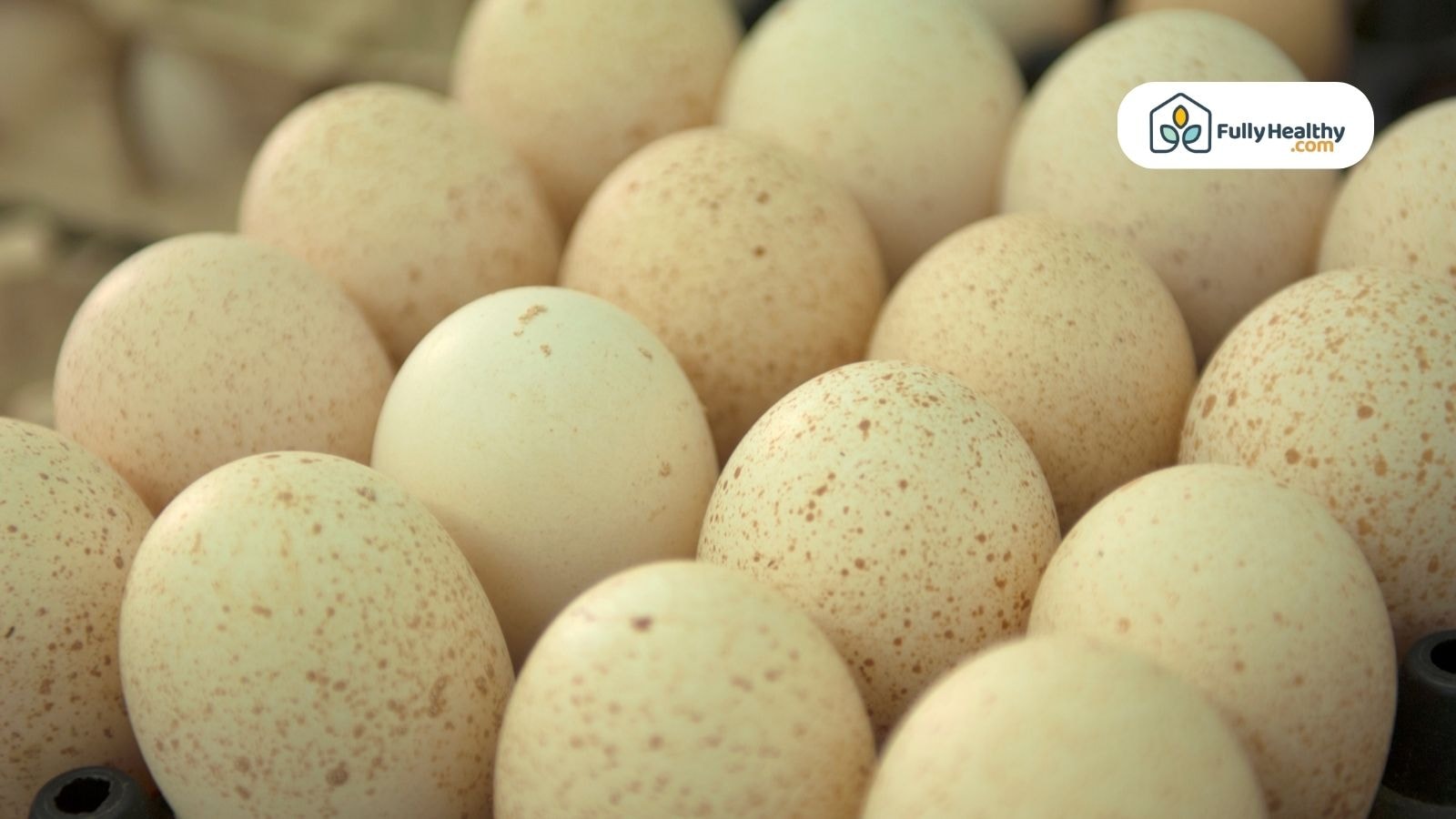 Photo Credit: Canva Pro
What happens to turkey eggs that can be eaten? Most turkey eggs are not consumed but incubated to produce poults for meat production. Actually, almost all turkey eggs are used to hatch more turkeys for meat production, not for consumption.
Most Eggs Are Used for Hatching Poults
Turkey farms are mostly about making meat. To do that, they need a steady supply of poults, which are young turkeys. That means most turkey eggs aren't bought to eat.
-
Hatcheries over kitchens: Instead of being kept, turkey eggs are sent to hatcheries.
-
Used for reproduction: Turkey chicks are kept warm and hatched in incubators.
-
Helps supply meat demand: There will be more meat to sell when there are more babies.
Industrial Focus Is on Meat, Not Eggs
People don't raise turkeys for their eggs; they do it for the meat. Turkeys get big and heavy very quickly, which makes them better for making meat than eggs.
-
Meat is the goal: Most businesses that raise turkeys do so to make meat for meals and holidays.
-
Not bred for eggs: In contrast to chickens, turkeys are not specifically bred to lay eggs.
-
Eggs are a by-product: People see eggs as a way to reproduce, not as food.
-
Focus stays on demand: Since people are more likely to eat turkey than turkey eggs, the business focuses on areas where there is a need.
Are Turkey Eggs Healthier Than Chicken Eggs?
 Photo Credit: Canva Pro
You can eat turkey eggs, chicken eggs, duck eggs, or even quail eggs without getting sick. They're a little bigger and full of good things for you. Still, most people don't commonly eat them. One reason is that they have more cholesterol and fat.
However, when put next to each other, turkey eggs do have a few nutritional benefits that readers who care about their health may find interesting.
Nutrition Showdown: Protein, Fat, and Cholesterol
Turkey eggs have a lot of protein, as well as important nutrients and rich yolks. They do have more fat and cholesterol than chicken eggs, though.
-
More protein per egg: A turkey egg contains approximately 10–11 grams of protein, slightly more than the 6–7 grams typically found in a chicken egg.
-
Higher fat content: There are about 9 grams of fat in each egg, which is more than in most poultry eggs.
-
More cholesterol: Turkey eggs contain significantly more cholesterol, up to twice the amount of chicken eggs, depending on the source.
-
Nutrient-rich yolks: They have more iron, folate, vitamins A and B12, and vitamin B12.
-
Good for many diets: Even though they have a lot of nutrients, turkey eggs can be eaten on some high-protein and low-carb plans.
Size, Taste, and Cooking Differences
Turkey eggs are a bit bigger than chicken eggs and have a thicker shell and thicker membrane. They have a similar flavor, but a slightly stronger one. This makes them good for baking or making a hearty omelet.
-
Slightly bigger than chicken eggs: Turkey eggs are about 90 grams, while chicken eggs are only 50 grams.
-
Thicker shell and membrane: It's harder to break, but it keeps food fresh longer.
-
Similar taste: The taste is mild and somewhat like chicken eggs, but a bit stronger.
-
Useful in dishes: It works well in omelets, baked goods, and meals that are high in protein.
-
Not for quick meals: It takes a longer time to cook and work with.
What Does FullyHealthy.com Say About Turkey Eggs?
FullyHealthy.com is a store that only sells foods that are low in gluten, allergens, and the AIP. It helps people on strict diets by selling items that have been carefully chosen. However, they don't have any turkey eggs at all, and that's not by accident.
Turkey Eggs Are Absent From AIP-Compliant Diet Options
Turkey eggs can be eaten, but they aren't on Fully Healthy's list of foods. This is proof of how uncommon they are in modern food.
-
Not sold on the site: There are no turkey eggs for sale in any diet category.
-
No AIP listing: Most of the eggs on the list come from chickens or ducks, not turkeys.
-
Hard to source: They are hard to find on the market, and suppliers don't sell them.
Demand and Supply Don’t Align With Specialized Diet Retail
Stores like FullyHealthy sell foods that are useful and reliable. Turkey eggs aren't cheap enough, don't come in enough quantities, or are hard to get.
-
High cost, low supply: For a dozen eggs a week, it's not worth the trouble.
-
Tough to raise turkeys: They need more care, food, and space.
-
Focus stays on normal options: It's cheaper and easier to handle chicken and duck eggs.
Final Thoughts
The reasons why don't we eat turkey eggs are basically money, space, and usefulness. For eggs, it's harder to raise turkeys, even though the eggs are tasty and full of protein. Turkeys produce fewer eggs each week, need more food, and inhabit more farmland. The main purpose of most turkey eggs is to hatch turkey babies that will be eaten.
Turkey eggs are less compatible with modern egg-laying systems compared to hen or duck eggs, which are more efficient for mass production. Turkey hens tend to lay more eggs in spring due to natural seasonal reproductive cycles, but most people can't afford to keep all of them alive. Because of this, we now eat turkey instead of eggs, and the rest is history.
FAQs
Why don't we eat ostrich eggs?
Ostrich eggs are eggs and edible like turkey eggs, but the cost, space, and food to raise make them hard for diets and farm sales.
How many times does a turkey lay eggs in a year?
Turkeys lay around 100 eggs per year, about 2 eggs per week, needing more food, more space, and more turkeys to get more eggs.
Why is turkey less popular than chicken?
The answer is cost and space—turkeys need more food, take longer to raise, and are mostly used for meat, not eggs or protein-rich diets.
Why don't we eat goose eggs?
Goose eggs, like duck or turkey eggs, are rich and protein-packed, but hard to raise and cost too much for most farms and diets.
Why can't we eat turkey eggs?
You can eat turkey eggs—they're edible. Turkey eggs are edible and safe, but farms don’t eat turkey eggs because turkeys lay fewer eggs, raising them costs more, and most eggs are used for babies, not for food sales.
Leave a comment