

Are Pears Good for Diabetics? Health Benefits That Matter

Are pears good for diabetics? Yes, for many people with diabetes, pears can be a good choice when consumed in appropriate portions. Pears have a low glycemic index and a lot of fiber, which assists in lowering blood sugar spikes. If you watch your portions, they can be part of a diabetes-friendly diet.
The article talks about how pears affect blood sugar, how they stack up against other fruits, and what research says about which fruits are better for people with diabetes.
💼 Grab & Go — Real Pear Energy for Busy Days!
Are Pears Good for Diabetics?
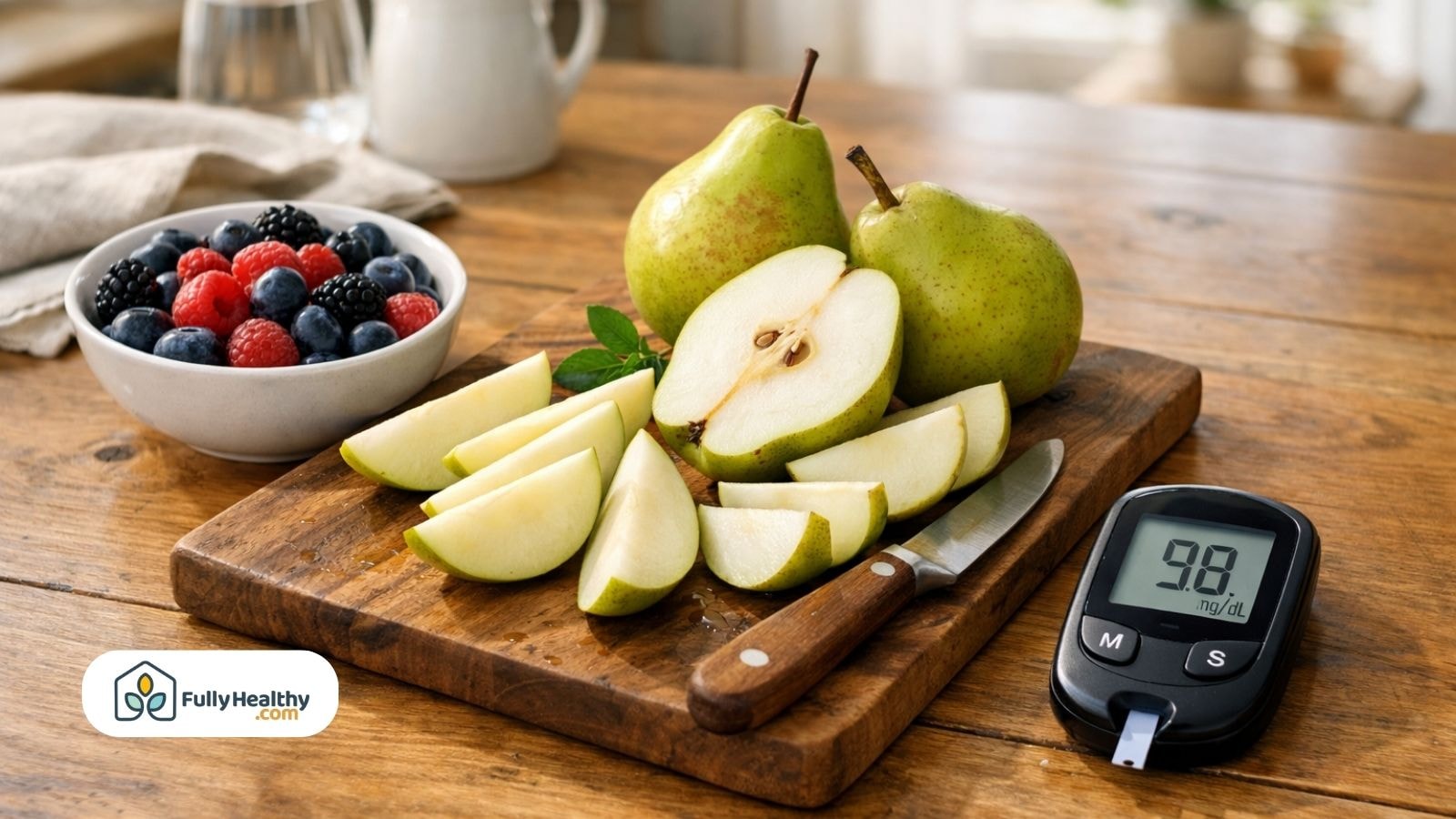
Many people with diabetes should eat pears as a fruit. There is a lot of fiber in fresh pears, and they have a low glycemic index, which helps keep blood sugar levels in check. When eaten in the right amount, pears can help you reach your daily weight goals without making your blood sugar drop or rise quickly.
In addition, they keep people safe while eating fruit and provide important nutrients that are good for overall health.
Nutritional Profile of Pears for Blood Sugar Control
There are many nutritional benefits to pears that help keep blood sugar stable. Fiber, vitamins, and minerals in a medium-sized pear slow down digestion and make insulin work better. Pears contain vitamin C (~7% DV), vitamin K (~6% DV), potassium (~200mg), and various polyphenols that contribute to antioxidant activity. These nutrients help keep you healthy over time and lower your risk of heart disease.
-
Low Glycemic Index GI: Pears are considered low GI foods, helping prevent sudden blood sugar spikes.
-
High Fiber Content: Fiber makes it take longer for the body to absorb sugar and helps control insulin resistance.
-
Essential Nutrients: Pears have antioxidants, vitamins, and minerals that your body needs every day.
Portion Size and Frequency for People With Diabetes
Watch your portions when you eat pears. You can easily fit a medium-sized pear or one cup of sliced fresh pears into your meal plan. It's good to eat pears with protein or grains to slow down digestion.
You can add them to a salad or fruit salad. Picking fresh fruit over dried fruit can help you stay away from too much sugar.
-
Serving Size Awareness: It's best to serve one cup, which is about one medium pear.
-
Whole Fruit Choice: Dry fruit or fruit that has been sugared is not as good as fresh fruit.
-
Daily Diet Balance: Fresh pears help keep blood sugar levels steady.
Do Pears Raise Blood Sugar?

Eating one medium pear generally has a minimal effect on blood sugar due to its low glycemic index. Their fiber content and low glycemic index help sugar enter the bloodstream more slowly.
Fresh fruits have a smaller effect on blood sugar than foods with added sugar. This makes it easier to include pears when managing diabetes.
How Fiber in Pears Affects Glucose Response
One big reason pears are low-GI foods is that they have fiber. It supports your gut health because it has a lot of fiber. This process makes the body better at controlling blood sugar and, over time, makes it more insulin sensitivity.
-
Slower Digestion: Fiber slows down the absorption of glucose.
-
Blood Sugar Stability: Once you eat, pears help keep your blood sugar level steady.
-
Whole Fresh Fruit Intake: Fruit that is whole works better than juice or sweets.
Evidence on Pears and Type 2 Diabetes Risk
Scientific research backs up the health benefits of eating fresh fruit. A nationwide prospective cohort investigation found that eating whole fresh fruit was linked to a lower incident diabetes. According to Guo et al. (2017), higher intake of apples and pears was associated with a reduced risk of type 2 diabetes in prospective cohort studies.
-
Lower Risk: Eating pear regularly may lower the risk of getting diabetes over time.
-
Strong Evidence: Results come from studies of large groups of people.
-
Heart Health Support: Benefits also include lowering the risk of heart disease.
What Is the Best Fruit for a Diabetic?

Many people say that low-GI foods are best, but there isn't just one best fruit for everyone. The American Diabetes Association advises people to pick fruits based on their portion sizes, glycemic index, and how their blood sugar reacts to different fruits.
When you eat fresh fruits the right way, they give you vitamins, minerals, and nutrients that are good for your health.
What Makes a Fruit Diabetes-Friendly
Some things all diabetes-friendly fruits have in common. These foods don't have any added sugar and are high in fiber. When eaten fresh, fruits like apples, Asian pears, prickly pears, and some tropical fruits can be in different glycemic stages.
-
Low GI Focus: Choose fruits that have a low GI score.
-
Nutrient Density: Seek out foods with high vitamins and minerals.
-
Fresh Over Processed: Avoid buying fruit that has been packed in its own juices or syrup.
Fruits Commonly Recommended for Diabetics
When eaten right, many fruits can help people with diabetes. People often say to eat pears, apples, strawberries, and balsam pear. These fruits give you sugar, nutrients, and antioxidants without making your blood sugar too high.
-
Smart Fruit Choices: Berries and pears help keep your energy up.
-
Balanced Meals: Having fruit with protein can help you better control your blood sugar.
-
Long-Term Health: Making smart decisions lowers risk and improves health in general.
What Is the Miracle Fruit for Type 2 Diabetes?
Synsepalum dulcificum, commonly called miracle fruit, alters taste perception but lacks sufficient clinical evidence for glucose regulation in humans. Scientists have studied a tropical plant called Synsepalum dulcificum to see how it might change taste and blood sugar levels.
Diabetes can't be cured or treated with this. Findings from studies only suggest that it might help a little when combined with a healthy eating plan.
What Miracle Fruit Is and Why It Gets Attention
According to miracle fruit, there is a chemical that changes how the tongue tastes sweet things. In response, scientists are looking into whether it can help people eat less sugar. Researchers are still looking into how it might affect insulin resistance and glucose pathways, but there isn't a lot of evidence yet.
-
Research Focus: Insulin response and glucose uptake are the main topics of studies.
-
Taste Effect: It might help people eat less sugar because it makes sour foods taste sweet.
-
Supportive Role: There are studies on it as a way to help people lose weight, not as a medical solution.
Limits of Miracle Fruit for Blood Sugar Management
Compared to whole fruit, miracle fruit is not as good for you. In addition, it doesn't have much fiber or important nutrients. In contrast to most fruits, it does not help digestion or offer long-term health benefits when consumed on its own.
-
Not a Standalone Tool: Diabetes can't be controlled by itself.
-
Limited Nutrition: Miracle fruit is low in fiber and essential nutrients compared to whole fruits like pears or apples.
-
Better Daily Choices: Larger health benefits come from most fruits.
Can Fully Healthy Fit Into a Diabetes-Friendly Diet?
Customers with special dietary needs can shop at Fully Healthy, an online store. The website isn't medical or nutrition advice, but it does help people find foods with basic ingredients. For diabetics, it can make choosing foods easier and lower their risk of eating things with hidden sugars.
How Fully Healthy Supports Diabetes-Friendly Eating
Fully Healthy focuses on clean-label products that don't have any extra ingredients. This can help people make meals that fit with healthy eating routines. When used properly, the platform can help people make healthier food choices and improve their overall health.
-
Clear Labels: Reading and understanding the ingredients is simple.
-
Diet Structure: Organized meal planning can be helped by products.
-
Whole Food Approach: Promotes mindful eating.
Understanding Product Choices and Limitations
Certain Fully Healthy products have natural sweeteners in them. Blood sugar levels are still affected by these, so be careful when using them. Fruits and vegetables that are already cut up should still be eaten because they remain a good source of fiber and nutrients.
-
Moderation Is Key: Using too many sweeteners can make your blood sugar go up.
-
Whole Foods First: Significant amount of nutrition are found in whole fruit.
-
Support Tool Only: With a balanced diet, FullyHealthy works best.
Overall, most fruits are still better for you than specialty foods when you eat them in moderation and as part of a healthy lifestyle.
FInal Thoughts
When eating fresh pears in the right amounts, they can be a smart and healthy choice for people with diabetes. Their high fiber content and low glycemic index help keep blood glucose levels steady and improve health in general. Even though everyone reacts differently, pears can be part of a healthy meal plan for most people. Are pears good for diabetics? The answer depends on how much you eat, what foods you eat them with, and how healthy your eating habits are overall.
FAQS
Which is better for diabetics, apples or pears?
Both apples and pears are good options for diabetics because they are high in fiber and have a low glycemic index when eaten whole.
What two fruits should a diabetic avoid?
Diabetics should limit fruits like ripe bananas and mangoes because they can raise blood sugar more quickly due to higher natural sugar levels.
What are the disadvantages of pears?
Pears can cause digestive discomfort if eaten in large amounts and may raise blood sugar if portions are not controlled.
What foods can diabetics eat freely?
Non-starchy vegetables such as leafy greens, broccoli, and cucumbers can generally be eaten freely because they have minimal impact on blood sugar.
What fruit will not raise blood sugar?
All fruits contain natural sugars and will raise blood glucose to some extent; however, low-GI fruits like berries have a smaller glycemic load (~5-6 for ½ cup).
Leave a comment