

Does Salt Dehydrate You? What Happens to Your Body
Does salt dehydrate you? Not always. Salt contains sodium, an electrolyte that helps your body balance fluids. A salty meal may make you thirsty, but that does not mean you are dehydrated. Problems can happen when you eat too much salt and drink too little water.
Salt may raise blood pressure over time. This article explains how salt affects hydration, when salted water may help, and when to be careful.
Does Salt Dehydrate You?

Many people ask, does salt dehydrate you? Usually, no. Sodium is an essential electrolyte that controls body fluids, nerve function, and muscle contractions.
Still, salt affects hydration based on water intake, activity, health, and sodium intake. Eating salty foods may trigger thirst. Extra sodium helps restore fluid balance primarily when substantial sodium has been lost, such as during prolonged heavy sweating; it does not improve routine hydration for most people.
Why Can Salt Make You Thirsty Without Dehydrating You?
A salty meal can transiently increase plasma osmolality, stimulating thirst and vasopressin release. In healthy people, serum sodium is tightly regulated and may not rise appreciably because water intake and renal sodium excretion compensate. Feeling thirsty after a salty snack does not always mean salt dehydrate the body.
-
Thirst Response: Salt makes you drink water so the body can restore the right balance.
-
Fluid Control: Sodium plays a role in fluid absorption and maintaining fluid balance.
-
Daily Hydration: Plain water is enough for most people to stay hydrated.
Does Salt Dehydrate You Or Help Your Body Retain Water?
Sodium’s role is to manage fluid levels. Sodium is required for extracellular-fluid balance, but consuming additional sodium does not improve hydration in most people unless sodium losses need replacement.
However, too much sodium can cause fluid retention and raise blood pressure, especially with kidney disease or a high-sodium diet.
-
Fluid Retention: Higher sodium intake can increase thirst and transient extracellular-water retention. Clinically significant swelling is more likely when renal, cardiac, hepatic, or vascular regulation is impaired and is not an inevitable response in healthy adults.
-
Balanced Intake: Proper hydration needs enough water and the right amount of sodium.
-
Other Electrolytes: Potassium and other electrolytes work with sodium to control body fluids.
Will Too Much Salt Cause Dehydration?

Too much salt does not always worsen dehydration. High dietary salt generally does not cause dehydration when thirst, kidney function, water access, and drinking behavior are intact.
Hypernatremic dehydration usually reflects inadequate replacement of free-water losses; extreme salt ingestion is a rare separate cause. Heat, illness, and exercise can also change hydration levels.
When Can Excess Sodium Increase Dehydration Risk?
Excess sodium may increase thirst and shift water between tissues. If fluid loss continues without replacement, dehydration becomes more likely. Sweating, vomiting, or diarrhea can disturb sodium balance.
-
Too Much Sodium: A high sodium diet with low water intake may worsen dehydration.
-
Heavy Sweating: Sodium loss may make an electrolyte drink useful.
-
Warning Signs: Fatigue, dizziness, and dark urine are nonspecific and cannot diagnose dehydration by themselves. Hydration assessment should consider fluid losses, body-mass change, urine output, clinical findings, and—when medically indicated—laboratory testing.
How Are Thirst, Water Retention, And Dehydration Different?
Thirst is a signal to drink water. Retaining water means extra fluid stays in tissues. Dehydration means the body lacks enough fluid for its body functions.
-
Thirst: Consuming salt may make you feel thirsty because the body wants water.
-
Fluid Retention: Swelling does not always mean the body has proper hydration.
-
Healthy Balance: To maintain optimal hydration, balance sodium in your diet with water.
Why Is Salt Called The Silent Killer?
Hypertension—not salt—is commonly called a ‘silent killer’ because it is often asymptomatic. Excess sodium intake can raise blood pressure and thereby contribute to cardiovascular and kidney risk.
Over time, it can harm the heart, blood vessels, and kidneys. The concern is long-term salt intake, not one salty meal.
Why Is High Blood Pressure Often Called A Silent Condition?
High blood pressure can develop slowly silently. Regular checks matter. Much salt comes from packaged foods, sauces, breads, and restaurant meals, not only the salt shaker.
-
Hidden Sodium: Processed foods may contain more sodium than expected.
-
Food Choices: Whole foods can lower sodium intake.
-
Smart Habits: Read labels and compare sodium in similar foods daily.
What Long-Term Health Risks Are Linked To Excessive Sodium Intake?
A high sodium diet may raise the risk of heart disease, stroke, and kidney disease. Severe sodium deficiency or hyponatremia can be harmful, but hyponatremia usually reflects excess water relative to body sodium, illness, medications, or abnormal sodium losses—not simply a low-sodium diet in a healthy person.
-
Safe Balance: Consume enough salt for health, but avoid very high sodium intake.
-
Medical Caution: Use salt tablets only when a health professional recommends them.
-
Better Nutrition: Whole foods provide vital nutrients, and choosing minimally processed foods can reduce sodium intake and improve overall nutrient density.
-
Staying Hydrated: Moderate salt, enough water, and healthy foods support proper hydration.
How Much Salt To Add To Water For Hydration?

Most people do not need to add salt to water. A balanced diet usually provides enough sodium to support normal body functions. However, people who exercise for long periods, sweat heavily, or spend time in hot weather may lose more sodium than usual. In these cases, replacing both water and essential electrolytes may support hydration. The goal is to replace what the body loses without taking in more sodium than needed.
When Might Adding Salt To Water Support Hydration?
Salt can help maintain fluid balance after heavy sweating because sodium works with water to support normal hydration. Plain water is absorbed effectively without added electrolytes.
Sodium, and in gastrointestinal rehydration glucose, can improve fluid absorption or retention when substantial fluid and electrolyte losses have occurred. Still, plain water is usually enough for daily hydration when you are not losing large amounts of sweat.
-
Heavy Exercise: Long workouts and endurance activities can increase sweat and sodium loss.
-
Environmental Factors: Hot and humid weather may raise your need for fluids and electrolytes.
-
Essential Electrolytes: Sodium, potassium, and other minerals work together to support hydration, nerves, and muscles.
-
Body Hydrated: Replacing lost fluids after sweating helps keep the body hydrated and supports recovery.
How Much Salt Should You Add Per Liter Of Water?
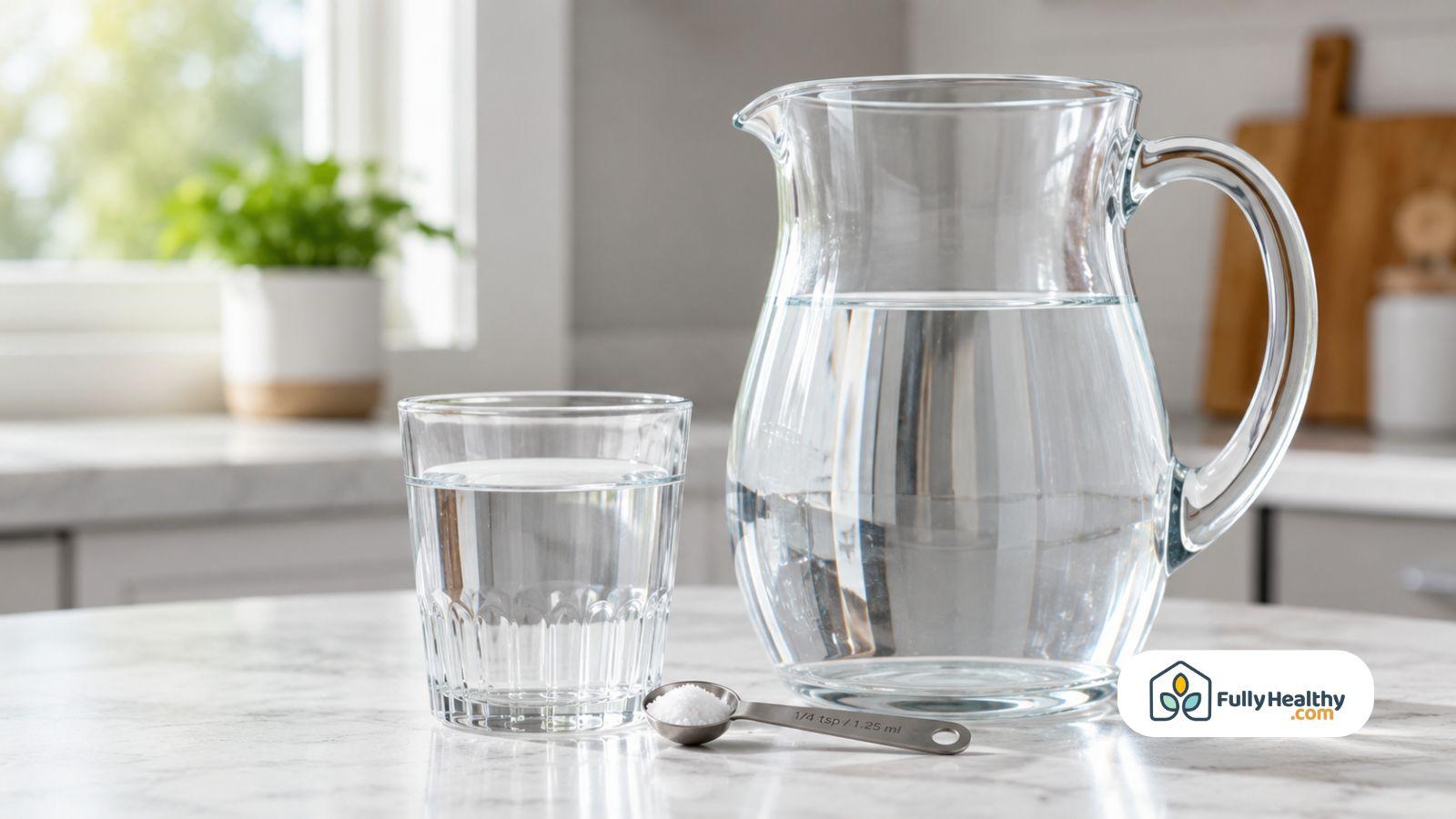
There is no single amount that works for everyone because hydration needs vary. ⅛–¼ teaspoon of table salt per liter supplies approximately 300–600 mg sodium per liter, depending on salt density. Such concentrations may be appropriate for some prolonged, high-sweat activities, but needs should be individualized according to exercise duration, sweat rate, sweat-sodium concentration, diet, and medical status. This mixture should not be presented as a universal hydration recipe.
This amount should only be used when extra sodium replacement is truly needed. It should not become a daily habit. People with high blood pressure or kidney disease should speak with a healthcare professional before adding more salt.
-
How Much Salt: About ⅛ to ¼ teaspoon per liter may help replace sodium lost through heavy sweating.
-
How Much Sodium: Count the sodium in meals, snacks, and drinks before adding extra salt.
-
Enough Sodium: Most people already get enough sodium from their usual diet.
-
Sodium Daily: Keep your total intake within recommended sodium daily limits whenever possible.
-
Low Sodium: People with medically diagnosed low sodium should follow advice from a qualified healthcare provider.
-
Sodium Potassium Pump: This cell process uses sodium and potassium to support nerve signals, muscle movement, and normal cell function.
How Fully Healthy Can Support Your Dietary Needs?
Finding foods that match special dietary needs can take time. FullyHealthy helps make shopping easier by offering products for people following gluten-free, allergen-aware, and Autoimmune Protocol, or AIP, diets. The website groups products into useful categories, making it easier to find suitable pantry items without checking every product from scratch.
How Can Fully Healthy Make Specialty-Diet Shopping Easier?
FullyHealthy focuses on convenience for shoppers with specific dietary needs. The store does not replace medical or nutrition advice, but it can help people find products that fit their eating plan. Its organized categories can also make meal planning faster and less stressful.
-
Simple Shopping: Browse products by AIP, gluten-free, and allergen-aware categories.
-
Clearer Choices: Organized collections help shoppers compare suitable foods more quickly.
-
Essential Nutrients: Choosing a varied range of foods may support a balanced diet with essential nutrients.
-
Time Savings: Filtered categories can reduce the time spent reading unrelated product labels.
Which Verified Fully Healthy Products Can Readers Explore?
FullyHealthy lists several specialty pantry products from recognized brands. Verified options include Big Tree Farms Organic Brown Coconut Sugar, Bob's Red Mill Organic Coconut Sugar, Coombs Family Farms Organic Maple Sugar, Coombs Family Farms Organic Maple Syrup, and EAT G.A.N.G.S.T.E.R. baking mixes. Since stock may change, readers should check the product page before buying.
-
Coconut Sugar: Explore Big Tree Farms Organic Brown Coconut Sugar and Bob's Red Mill Organic Coconut Sugar.
-
Maple Products: Consider Coombs Family Farms Organic Maple Sugar and Organic Maple Syrup.
-
Baking Mixes: Look for EAT G.A.N.G.S.T.E.R. Banana Bread Mix, Cut-Out Sugar Cookie Mix, and Chewy Choconot Brownie Mix.
-
Label Check: Review ingredients, allergen details, and serving sizes before choosing a product.
Final Thoughts
Does salt dehydrate you? In most cases, no. Sodium is essential for maintaining fluid balance, nerve function, and muscle health. However, too much salt without enough water may increase dehydration risk and affect blood pressure over time. Most people can stay hydrated by eating a balanced diet, drinking enough plain water, and keeping sodium intake within recommended limits. If you have a medical condition or heavy sweat loss, talk to a healthcare professional about whether extra sodium or electrolyte replacement may help. Remember, salt help supports hydration only when used in the right amount and in the right situation.
FAQs
What Are The First Signs Of Too Much Salt?
There is no reliable set of ‘first signs’ proving excessive sodium intake. A salty meal may cause thirst or transient water retention, whereas the blood-pressure effects of chronically high sodium intake are usually asymptomatic. If these symptoms continue or become severe, reduce sodium intake, drink water, and speak with your healthcare provider if needed.
Why Do I Feel Dehydrated After Eating Salt?
Eating salty foods increases your body's need for water, which can make you feel thirsty. This does not always mean you are dehydrated. Drinking plain water usually helps restore fluid balance, and salt help supports hydration only when sodium replacement is truly needed.
How Do I Flush Salt Out Of My Body?
Healthy kidneys excrete excess sodium over time; normal thirst-guided fluid intake is generally sufficient. Potassium-rich foods may support blood-pressure control but do not ‘flush out’ sodium and may be unsafe for people with impaired kidney function, hyperkalemia, or potassium-raising medications. Avoid extreme detox methods or drastically cutting out salt unless advised by your healthcare provider.
What Organ Is Damaged By Salt?
Too much sodium over time can place extra strain on the heart, blood vessels, and kidneys, increasing the risk of high blood pressure and kidney disease. Eating a balanced diet and limiting highly processed foods can help reduce these risks.
What Kills You Faster, Sugar Or Salt?
Neither should be viewed as "more dangerous" on its own. Both can affect long-term health when consumed in excess. The healthiest approach is to eat a balanced diet, limit highly processed foods, stay hydrated, and keep both added sugar and sodium within recommended daily amounts.
Leave a comment