

Can Cats Eat Chocolate? Quick Answers Every Cat Owner Needs

Can cats eat chocolate? The short answer is no, chocolate is toxic to cats and can cause serious health problems. Risk depends on the dose relative to body weight and the type of chocolate; darker, high-cocoa products pose much greater risk than tiny exposures to milk or white chocolate.
Chocolate is toxic because cats metabolize methylxanthines (theobromine and caffeine) slowly, allowing these compounds to accumulate and affect the nervous and cardiovascular systems. In this guide, you’ll learn what happens if a cat eats chocolate, how fast symptoms appear, and what to do right away to keep your pet safe.
Featured Baking Pick
Enjoy Life // Semi-Sweet Mini Chocolate Chips - 9 oz
Loading...
Can Cats Eat Chocolate?

Chocolate may look like a harmless sweet treat, but the answer to can cats eat chocolate is a firm no. Chocolate toxicity happens because a cat's system cannot break down certain compounds. Even a small amount can affect a furry feline within a few hours, making this a serious risk every cat owner should understand.
Why Chocolate Is Toxic To Cats
Chocolate contains theobromine and caffeine, which build up in a cat's system and cause harm. These chemicals affect the heart, nerves, and digestion, especially in a smaller feline friend.
-
Theobromine exposure: Found in cocoa powder, dark chocolate, and baking chocolate, this compound overstimulates the nervous system.
-
Higher cocoa content: Baker's chocolate and semi sweet chocolate contain more toxins than milk chocolate or white chocolate.
-
Slow metabolism: A cat's system processes these chemicals slowly, which increases chocolate toxicity risk.
-
All forms are risky: Even chocolate milk or small chocolatey treats can still be harmful.
What Happens If A Cat Eats Chocolate
When chocolate ingestion happens, the body reacts quickly. The effects depend on how much chocolate was eaten, the type, and the cat's weight.
-
Early reactions: Vomiting, diarrhea, and stomach upset may appear within a few hours.
-
Behavior changes: Your curious kitty may seem restless, anxious, or overly active.
-
Physical symptoms: Fast heart rate, tremors, and clear symptoms of chocolate poisoning.
-
Severe cases: Seizures or collapse can happen if a large amount is consumed.
Is It Ok If My Cat Licked A Little Bit Of Chocolate Ice Cream?

A small lick may seem harmless, but it is still unsafe. Even tiny exposure can upset your curious kitty’s stomach and introduce toxins. While it may not always be life-threatening, it is not something a cat owner should ignore.
Small Licks Vs. Dangerous Amounts
The effect depends on how much chocolate and the type involved. A tiny taste of milk chocolate is less toxic than dark chocolate, but there is still risk.
-
Small exposure: May lead to mild stomach upset or slight discomfort.
-
Hidden ingredients: Desserts with cocoa powder or semi sweet chocolate increase the risk.
-
Body size factor: A lower cat's weight makes toxins more dangerous.
-
Close monitoring: Watch for any cat's symptoms after chocolate eaten, even if it seems minor.
Why Ice Cream Makes It Worse For Cats
Chocolate ice cream adds more problems beyond chocolate itself. It includes dairy and sugar, which most cats cannot handle well.
-
Lactose intolerance: Many cats cannot digest dairy, leading to stomach upset.
-
High sugar content: Sugar puts extra stress on a cat's system.
-
Combined effects: Chocolate milk ingredients plus cocoa make symptoms worse.
-
Not a safe treat: Even a small sweet treat can harm your feline friend.
How Long Does It Take For Chocolate To Harm A Cat?

Chocolate poisoning does not always happen instantly, but it can develop quickly. Most cats show signs within a few hours after chocolate ingestion, so fast action is important for any cat owner.
When Symptoms Start Appearing
The timing can vary, but early warning signs often show up fast. Knowing when to act can help protect your furry feline.
-
Typical onset: Clinical signs often begin within 6–12 hours, although earlier onset can occur depending on the product, dose, and whether other ingredients were eaten.
-
Early symptoms: Vomiting, restlessness, and a fast heart rate are common.
-
Digestive issues: Stomach upset and diarrhea are often the first signs.
-
Immediate help: Contact a vet immediately or the pet poison helpline if symptoms appear.
How Long Chocolate Poisoning Lasts
Once symptoms begin, they may last for days depending on severity and treatment.
-
Duration range: Symptoms can continue for 24 to 72 hours.
-
Ongoing care: Monitor your cat's symptoms closely during recovery.
-
Severe cases: Some cats may need care at an emergency vet.
-
Treatment steps: Vets may induce vomiting and give fluids to support recovery.
How Do Vets Treat Chocolate Poisoning In Cats?
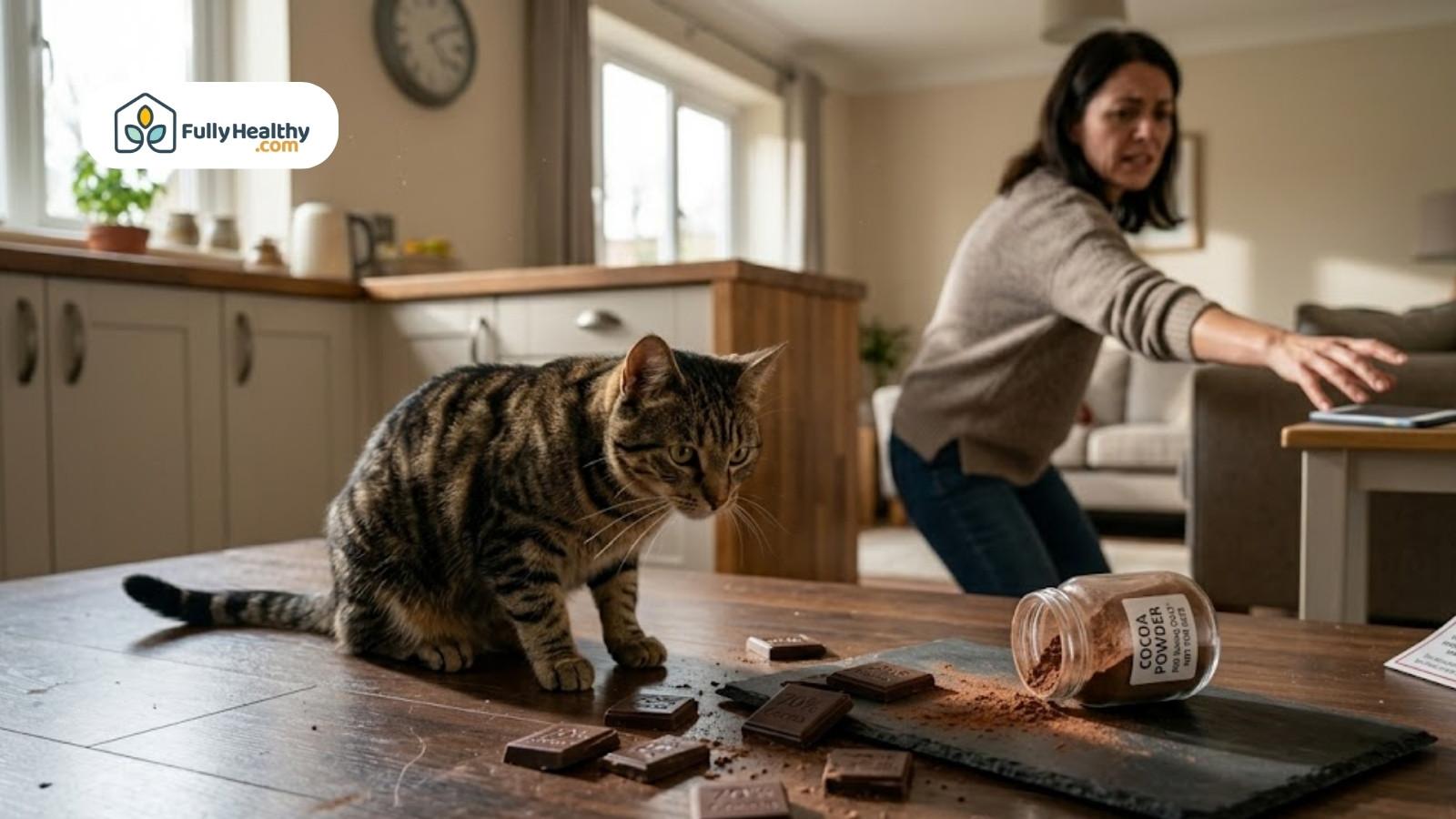
When a cat eats chocolate, quick action is very important. Many cat owners wonder why is chocolate so harmful, and it comes down to how a cat’s body handles toxins. Consuming chocolate can affect the heart and nervous system fast. Treatment depends on the type of chocolate, the amount of chocolate, and how soon veterinary care begins.
Immediate Treatments Used By Veterinarians
Vets act quickly to remove toxins before they spread. Generally speaking, early care can prevent serious problems, even if only a tiny bit was eaten.
-
Removing toxins: Vets may induce vomiting to clear chocolate from the stomach if treated early.
-
Blocking absorption: Activated charcoal is given to stop toxins from entering the bloodstream.
-
Evaluating risk: Chocolate poisoning is reported more often in dogs because they are more likely to eat chocolate, while cats are also vulnerable and should be treated as at risk if exposure occurs.
-
Watching symptoms: Signs like rapid breathing or restlessness help guide the next steps.
Advanced Care And Recovery Process
If symptoms get worse, cats may need more support. This helps the body recover safely after consuming chocolate.
-
Fluid therapy: IV fluids help flush toxins and support vital organs.
-
Medications: Drugs may control tremors, heart issues, or rapid breathing.
-
Ongoing monitoring: Cats are closely watched for changes during recovery.
-
Intensive care: Severe cases may need longer veterinary care and supervision.
What FullyHealthy Can Offer For Chocolate Lovers
While chocolate is unsafe for pets, humans can still enjoy it in better ways. FullyHealthy is an online store that offers clean and diet-friendly food. It helps people find chocolate options made with simple ingredients, but these are still only safe for humans.
Clean-Ingredient Chocolate Treats Available Online
FullyHealthy focuses on products made for humans who want better food choices. These items are designed to be safe, simple, and easy to understand.
-
Special diet support: Products fit gluten-free, allergen-free, and other dietary needs.
-
Simple ingredients: Brands use cleaner ingredients that are easier for humans to enjoy.
-
Wide selection: You can find snacks, baking items, and chocolate-based food in one place.
-
Better options: Helps people enjoy chocolate without extra additives.
Featured Chocolate Products From FullyHealthy
FullyHealthy offers several chocolate treats made for humans. Even though they are cleaner options, they still contain cocoa and are unsafe for pets.
-
Jack’s Paleo Kitchen cookies: Soft cookies made with alternative flours and simple ingredients.
-
Enjoy Life mini chips: Allergy-friendly chocolate chips for baking or snacking.
-
Chocolate chip brookie: A mix of brownie and cookie for a rich dessert experience.
-
Important reminder: These treats are for humans only, and even darker varieties or a small amount of chocolate should never be shared with cats.
Final Thoughts
Chocolate is never safe for your cat, no matter the type of chocolate or amount of chocolate. Even a tiny bit or same amount can still harm a furry feline because the cat’s system cannot process it like humans or dogs. Generally speaking, darker varieties like baking chocolate or cocoa powder are more dangerous than milk chocolate or white chocolate.
Consuming chocolate can quickly lead to serious symptoms, so fast veterinary care is important. Always keep chocolate food away and act fast if exposure happens. Knowing why is chocolate harmful helps every cat owner protect their pet and avoid preventable emergencies.
FAQs
Can cats eat chocolate if it is a tiny bit?
No, even a tiny bit of chocolate ingestion can cause symptoms of chocolate poisoning depending on cat's weight and type of chocolate.
Why is chocolate dangerous for cats but not humans or dogs?
Why is chocolate harmful is because cats process toxins slower than humans and even dogs, making consuming chocolate more dangerous.
How much chocolate is too much for a cat?
How much chocolate depends on cat's weight, type of chocolate like dark chocolate, semi sweet chocolate, or baker's chocolate, and amount of chocolate eaten.
What are the signs of chocolate poisoning in cats?
Signs of chocolate include vomiting, rapid breathing, stomach upset, and other cat's symptoms that may need vet immediately or emergency vet care.
What should I do if my cat eats chocolatey treats or chocolate milk?
Call pet poison helpline or vet immediately, share details like chocolate eaten, type of chocolate, and amount, so they can induce vomiting or give activated charcoal in severe cases.
Leave a comment