

How Much Gram is a Cup of Flour? Baking Measurement Guide
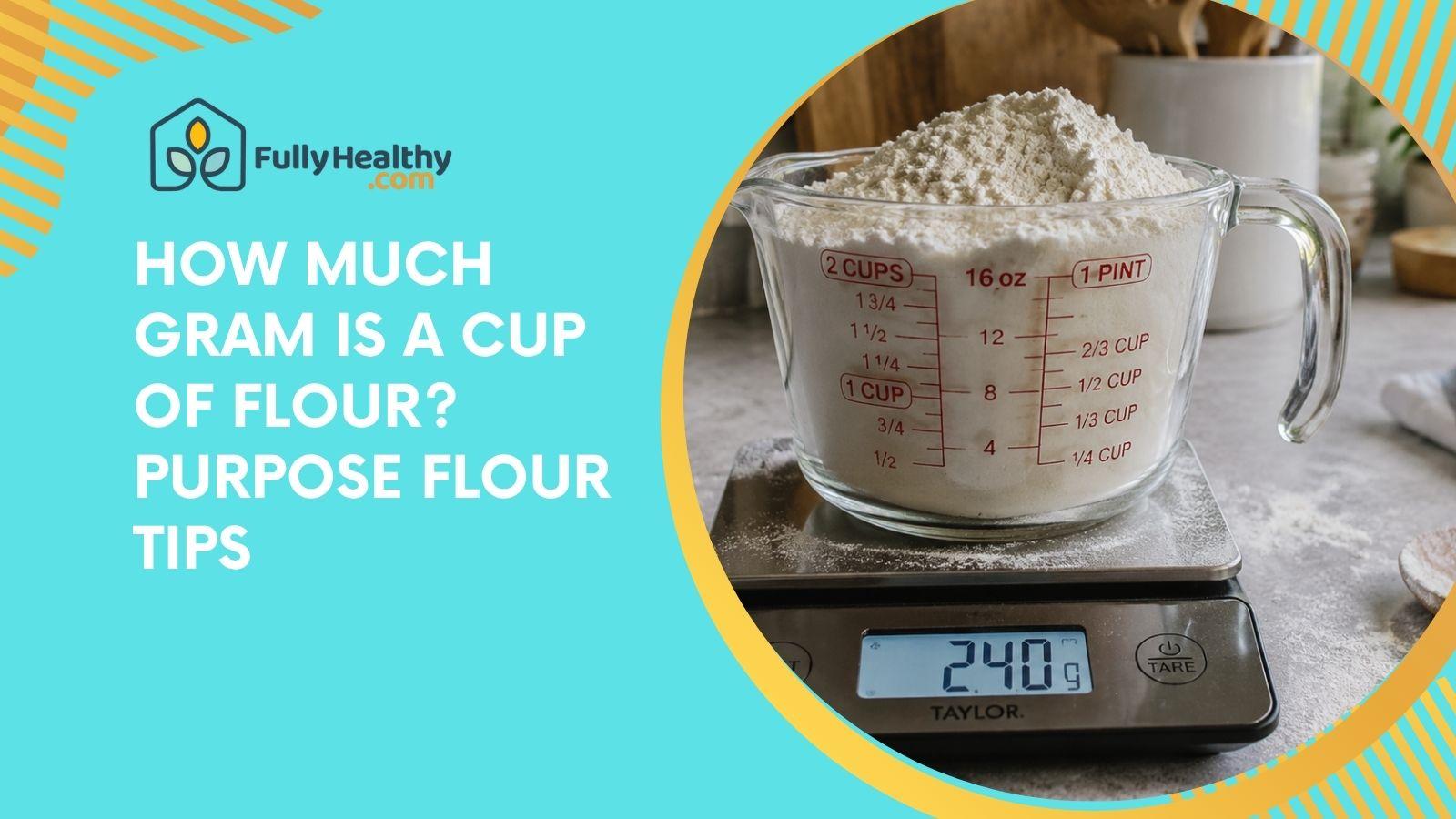
If you are wondering how much gram is a cup of flour, the answer is usually between 120 and 125 grams for all-purpose flour. The exact weight depends on how you measure it. Spooning and leveling give less flour than scooping. This difference matters in baking because small changes affect texture and results.
In this blog, you will learn approximate conversions and how to measure flour correctly for consistent baking every time.
Featured Baking Pick
Bob's Red Mill // Gluten Free 1-to-1 Baking Flour - 44 oz
Loading...
How Much Gram Is A Cup Of Flour?
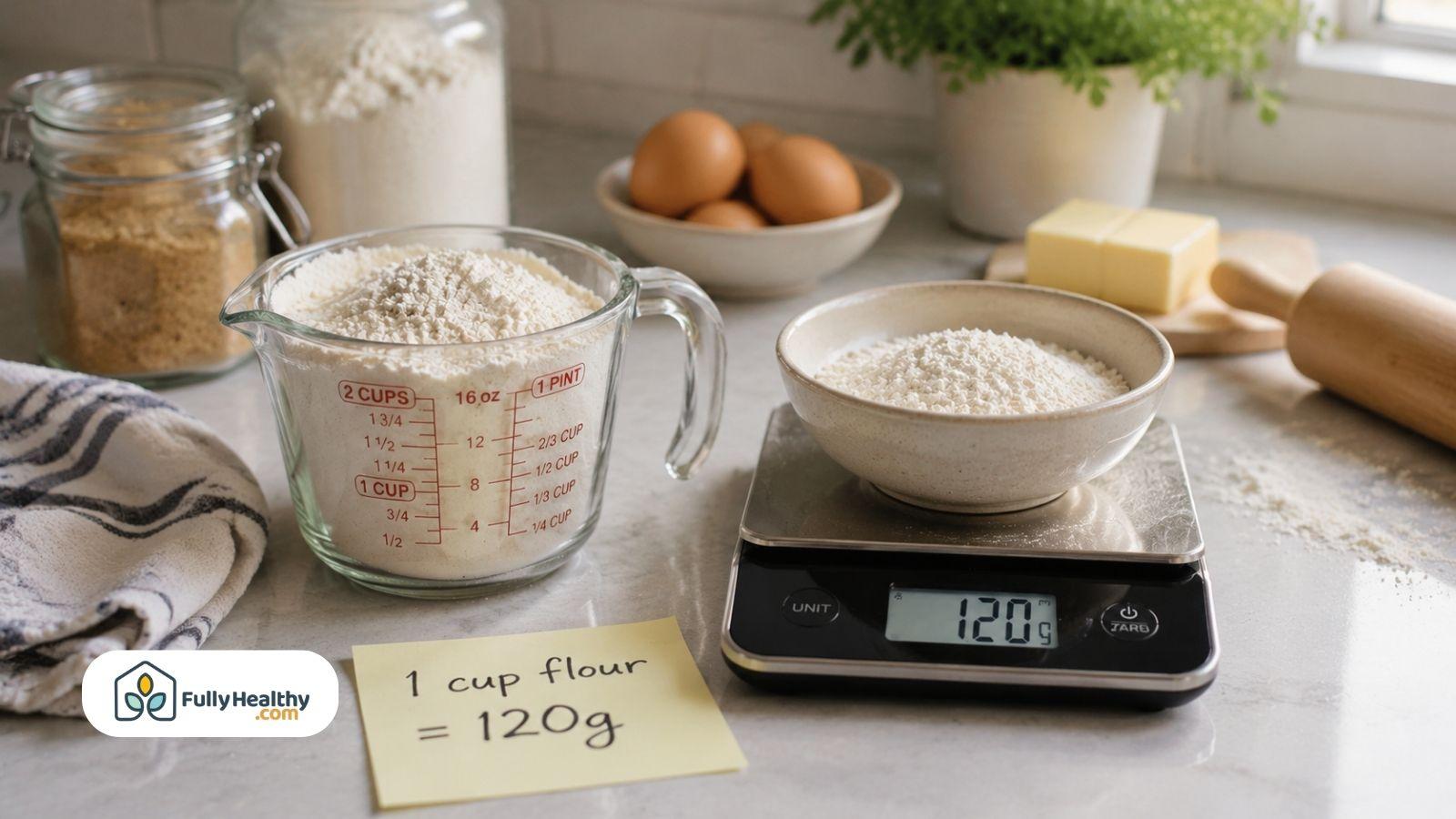
There are different ways and tools to measure, so a cup of flour doesn't always weigh the same amount. Common U.S. baking references usually list 1 cup of spooned-and-leveled all-purpose flour at about 120–125 grams.
This difference changes the outcome of the recipe, especially when baking, where accuracy is important for making cookies, cakes, and other baked goods. If you know how many grams are in a cup of flour, you can get better results every time you follow a recipe.
What Is The Standard Weight Of 1 Cup Of Flour?
One U.S. cup of spooned-and-leveled all-purpose flour usually weighs about 120–125 grams; scooped or packed flour can weigh substantially more. Even though different companies may give slightly different numbers, this is the range that most baking guides agree on for consistent results.
-
Flour Type: All-purpose flour is commonly measured at 120–125 grams per cup.
-
Measuring Method: Spoon-and-level usually gives a lighter, more repeatable volume measure than scooping; weighing on a scale is most accurate.
-
Cup Difference: Measuring cup size and how flour settles changes grams.
-
Baking Purpose: Cakes and cookies need an accurate flour weight for success.
-
Note: Volume and weight are not the same measurement system.
Why Does Flour Weight Change Per Cup?
Measuring flour changes its weight because of how it is handled before baking. When you scoop, tap, or pack flour into a cup, it makes it denser. When you spoon it, it makes it lighter. This is why measurements that aren't always the same can make recipes fail.
-
Scoop Method: Scooping directly from the bag leads to extra flour.
-
Spoon Method: Spoon flour into the measuring cup for better accuracy.
-
Tap Effect: Tapping the cup settles the flour and increases grams.
-
Consistency Issue: Different methods create different baking results.
-
Recipe Impact: Small changes affect cookies, cakes, and dough texture.
How Many Grams Is 1 ⁄ 2 Cup Of Flour?
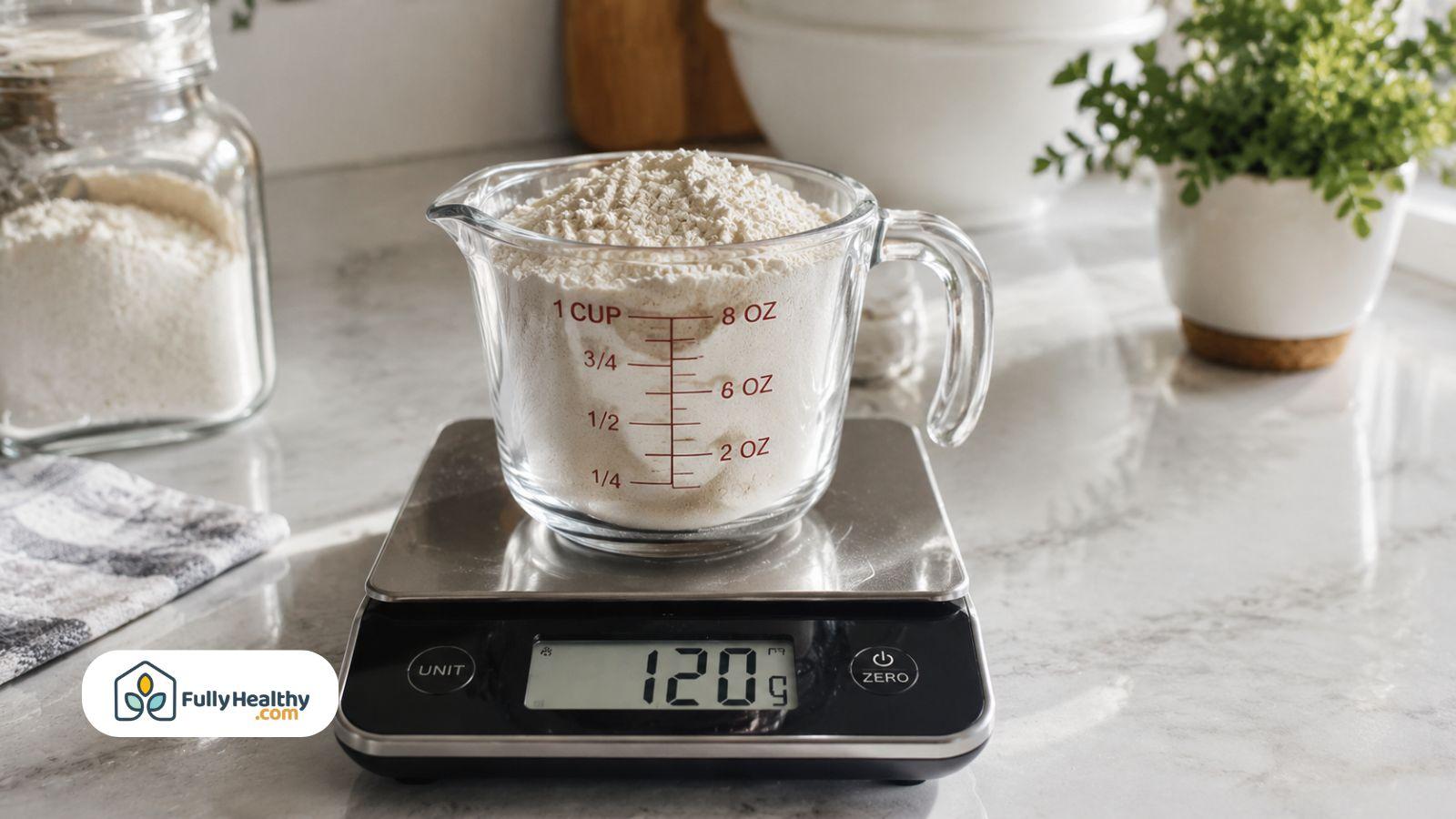
A half-cup of flour is equal to half of the full weight, but the accuracy of the measurement still depends on how it is done. Half a cup of all-purpose flour is about 60–63 grams, depending on the cup standard and measuring method.
This helps you get the same results every time when you bake by scaling recipes or changing the ingredients for smaller batches.
What Is The Gram Equivalent Of 1/2 Cup Flour?
Half a cup of flour is a direct conversion from 1 cup, so the weight is divided equally. This makes it easier to adjust recipes without changing consistency or baking results.
-
Basic Conversion: 1 cup equals 120–125 grams, so half is 60–63 grams.
-
Recipe Scaling: Helps when reducing or increasing recipe size.
-
Measurement Accuracy: Weighing gives better results than volume.
-
Baking Use: Important for cookies and cakes needing balance.
-
Consistency: Keeps texture stable across different batches.
How Does Half Cup Measurement Affect Baking?
Even small changes in flour affect baking outcomes because flour controls structure. Too much flour makes dry baked goods, while too little makes weak dough. This is why measuring flour correctly is important in baking science.
-
Dry Results: Too much flour leads to dry cookies and cakes.
-
Weak Dough: Too little flour affects the structure and rise.
-
Consistency Issue: Uneven measuring changes recipe performance.
-
Scale Use: A kitchen scale improves accuracy and success.
-
Method Matters: A spoon and a level help reduce measurement error.
How Much Is 250 Grams Of Plain Flour?
Two hundred fifty grams of flour is a common baking measurement used in recipes. Using a 120–125 g U.S. cup, 250 g of all-purpose flour is about 2.0–2.1 cups. This makes it easier to understand recipes that use grams instead of cups, especially for consistent baking results.
How Many Cups Is 250 Grams Of Flour?
The conversion of 250 grams of flour depends on the standard weight per cup. Since 1 cup is about 120–125 grams, 250 grams equals roughly 2.0–2.1 cups.
-
Basic Conversion: 250 grams equals about 2 cups of flour.
-
Standard Range: 120–125 grams per cup affects final result.
-
Recipe Accuracy: Weight measurement ensures consistent baking.
-
Tool Use: Scale gives better precision than measuring cup.
-
Example: Used in bread, cookies, and cake recipes.
Why Do 250 Gram Conversions Differ?
Different baking sources use slightly different standards, which causes variation in cup conversion. The difference comes from the measuring method, the flour type, and how it is packed or spooned.
-
Brand Variation: Different flour companies set different weights.
-
Method Difference: A scoop vs. a spoon changes flour density.
-
Volume Issue: Cups measure space, not exact weight.
-
Recipe Style: Cup standards vary by country; a U.S. cup is about 237 mL, while a metric cup is 250 mL, so flour weights can differ.
-
Result Impact: Small changes affect final baking consistency.
How to Measure 1 Cup of Flour?
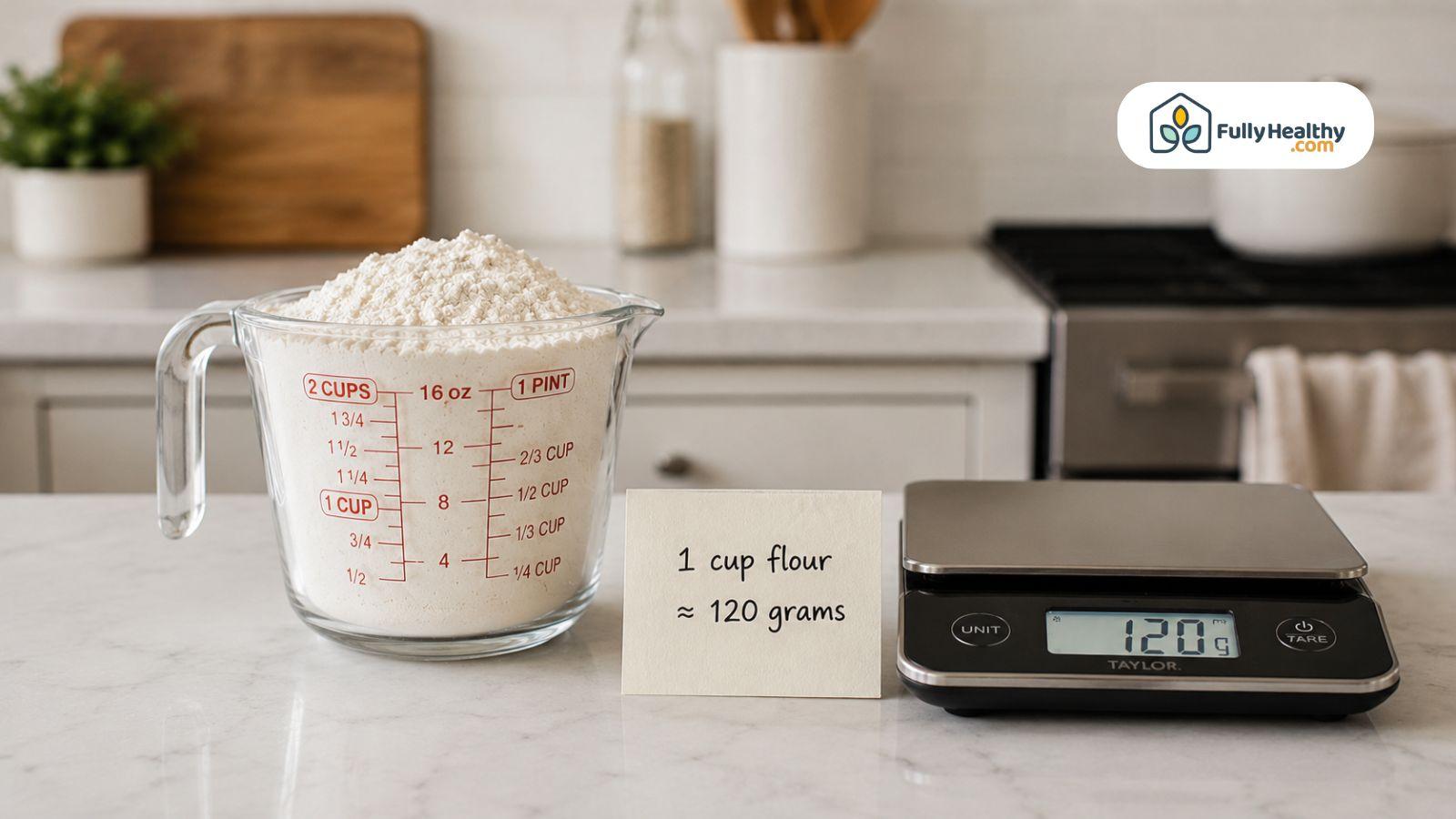
Small mistakes can change the outcome of baking, so it's important to measure flour correctly. When flour isn't measured right, many recipes don't work. The way you measure flour changes how cakes, cookies, and bread feel.
You can get consistent results when you use a measuring cup the right way. Learning how to measure things correctly also helps you follow any recipe or post with baking instructions more accurately.
What Is The Correct Way Of Measuring Flour?
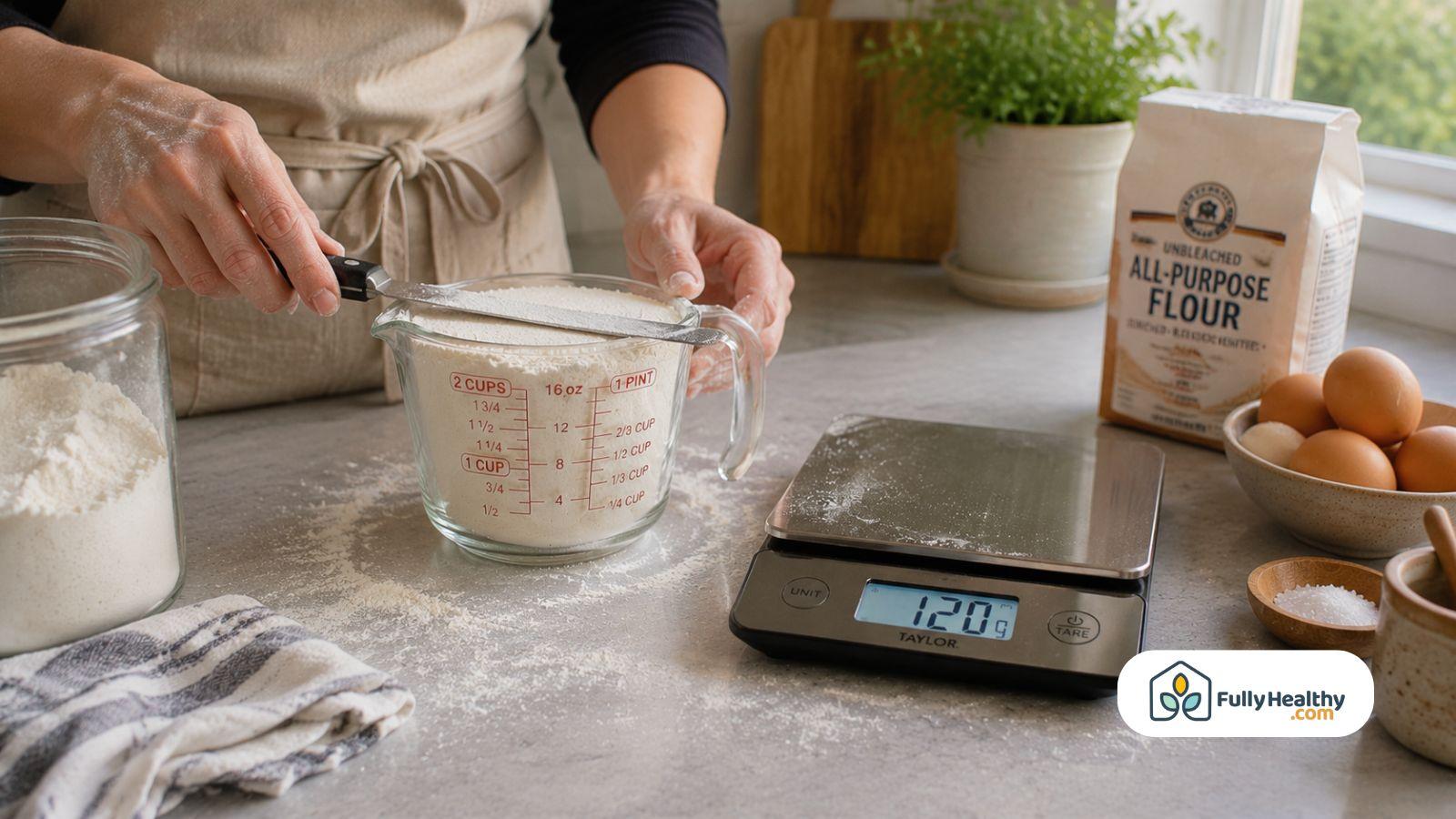
When baking, it's important to use the right way to measure flour. You should use a spoon to fill the measuring cup and then level it off instead of scooping straight from the bag. This keeps you from putting too much flour into the cup and helps recipes more consistently turn out the same.
-
Spoon Method: Spoon flour into the measuring cup for accuracy.
-
Level Method: Use a knife to level the top of the cup.
-
No Scoop: Avoid scooping directly from the flour bag.
-
No Tap: Do not tap the cup or bowl to settle flour.
-
Result: Gives more reliable baking consistency in recipes.
Why Measuring Method Changes Baking Results?
When flour is packed or compressed, its density changes, which means that the way it is measured changes the results of baking. Even small differences can change the structure and texture of dough. Cakes and cookies need the right amount of flour to rise and be soft.
-
Density Change: Packed flour increases the weight per cup.
-
Texture Issue: Too much flour makes dry baked goods.
-
Consistency Loss: Uneven measuring affects recipe success.
-
Baking Impact: Cookies and cakes need an exact balance.
-
Simple Fix: Use a spoon and a level for best results.
What Fully Healthy Can Do For You When Choosing Flour Alternatives?
Fully Healthy is an online marketplace that helps you find specialty baking ingredients when you need gluten-free or allergen-friendly options.
Based on search results for flour products, it offers a variety of grain-free and alternative flours that may replace traditional flour in some recipes, but they are not always 1:1 substitutes. These products still require proper measuring and flour methods to achieve consistent results in baking.
What Flour Products Are Available On FullyHealthy?
Fully Healthy provides several flour alternatives used in baking and cooking. These products are designed for people who follow AIP, gluten-free, or low-allergen diets. Even though they are different from regular all-purpose flour, they are still used in similar recipes and require accurate measuring.
-
Cassava Flour: Otto’s Naturals cassava flour is a grain-free option used for baking and cooking.
-
Coconut Flour: Bob’s Red Mill coconut flour is commonly used in gluten-free baking recipes.
-
Tapioca Flour: Used as a thickener and in baking mixes for texture and structure.
-
Arrowroot Starch: Often used to improve consistency in gluten-free recipes.
-
Almond Flour Mixes: Simple Mills baking mixes use almond flour for cakes, muffins, and bread.
How Do These Flour Alternatives Affect Baking Results?
Different flour alternatives behave differently compared to regular flour, so baking results can change depending on how they are measured. Some absorb more liquid, while others create softer or denser textures. This makes proper measuring very important for success in recipes.
-
Cassava Flour: Cassava flour can behave more similarly to wheat flour than many gluten-free flours, but it lacks gluten and is not always a direct substitute.
-
Coconut Flour: Highly absorbent and requires less quantity per recipe.
-
Almond Flour: Adds moisture and creates softer baked goods.
-
Tapioca Starch: Tapioca starch can improve chewiness, binding, and texture in gluten-free doughs, but it does not provide gluten-like elasticity by itself.
-
Measurement Impact: Incorrect measuring can affect consistency and final baking results.
Final Thoughts
Knowing how much flour to use makes baking more accurate and gives you the same results every time. Use the same method for cup measurements; for grams or ounces, use a kitchen scale. The most accurate way to measure flour is on a kitchen scale, especially when using different brands.
Long-term, learning how to measure things correctly makes it easier to follow recipes and makes cookies, cakes, and other baked goods taste better.
FAQs
Is 1 cup of flour 120g or 150g?
1 cup of flour is usually not 150 g when spooned and leveled, although scooped or packed flour can approach 150 g., and this equals about 4.2 to 4.4 ounces, depending on the measuring method and flour brand.
How many ounces is flour in baking recipes?
Flour weight is often measured in ounces or grams, and 1 cup of spooned-and-leveled all-purpose flour is about 4.2 to 4.4 ounces, depending on consistency and measuring method.
Is it better to weigh or measure flour?
It is better to weigh flour because a scale gives more accurate information and avoids errors caused by scooping or packing in a bowl or measuring cup.
What do 2 cups of flour weigh in grams?
Two cups of flour usually weigh about 240g to 250g, depending on flour type and measuring method, giving more consistent baking results.
How many cups is 400 grams of flour?
400 grams of all-purpose flour is about 3.2 to 3.3 U.S. cups when using 120–125 g per cup, depending on how it is measured, and a video guide can help show the correct method for accuracy.
Leave a comment