

Does Salt Make Water Boil Faster? What Science Really Says
Does salt make water boil faster? You know, not in a good way. Salt does not make water more likely to boil. Dissolved salt lowers water’s vapor pressure and slightly raises its boiling temperature. When cooking pasta, vegetables, and grains, chefs mostly add salt to make the food taste better.
Use less water, cover the pot, and place it on the burner to get the water boiling faster. In simple language, this article talks about the science, the effects of cooking, and some tips.
Does Salt Make Water Boil Faster?
Many people ask, does salt make water boil faster, but the simple answer is no. Adding salt changes the boiling point of water, yet the effect is very small in everyday cooking.
Salt raises the boiling point, which means the water must reach a slightly higher temperature before it boils. This old wives tale continues because the difference is hard to notice in a normal kitchen.
Does Salt Make Water Boil Faster In Everyday Cooking?
Adding salt to water does not make it boil faster in a useful way. Pure water usually reaches its boiling point before salt water because dissolved salt causes boiling point elevation. Salt water may have a lower heat capacity, but it also has a higher boiling point.
Whether salted water reaches boiling sooner depends on salt concentration, total solution mass, heat capacity, heat input, and the elevated boiling point. At typical culinary concentrations, the timing difference is negligible, and plain water generally reaches its boiling point slightly sooner.
At sea level, normal atmospheric pressure is approximately 1 atmosphere. Boiling time and temperature change with atmospheric pressure, particularly at higher elevations. Simply making food cook faster is not enough.
-
Key Fact: Salt increases the boiling point instead of helping water boil sooner.
-
Simple Science: Water molecules need enough energy to enter the gas phase and become water vapor.
-
Practical Tip: Using less water usually helps a pot of water boil faster than adding salt.
Why Does Salt Raise The Boiling Point Without Saving Time?
When salt crystals dissolve, they separate into salt ions. These ions change the water solution and lower its vapor pressure.
This means the solution must reach a higher temperature before its vapor pressure equals the surrounding pressure and sustained boiling occurs. Bubbles can form below the boiling point through dissolved-gas release or localized nucleation.
Although salt water may not be able to hold as much heat as fresh water, the difference is not big enough to give fresh water a big speed advantage. At ordinary cooking concentrations, both the reduction in heat capacity and the boiling-point elevation are small; neither produces a meaningful change in boiling time.
-
Important Point: More salt raises the boiling point even further.
-
Useful Example: Twenty percent saltwater behaves very differently from normal pasta water.
-
Reader Takeaway: The idea that salt water boils faster is mostly a wives' tale, not a useful cooking fact.
Why Do Chefs Add Salt To Boiling Water?
Chefs mostly add salt to boiling water to make it taste better. It's a common way to cook grains, vegetables, potatoes, and pasta. Not to cut down on the time it takes to boil, but to season the food as it cooks.
Why Do Chefs Add Salt Instead Of Trying To Boil Faster?
Salt in the cooking water seasons pasta as water and dissolved ions penetrate its hydrated outer layers; ‘from the inside’ overstates how uniformly salt is distributed through the pasta. This can improve the overall taste more evenly than adding salt only after cooking.
How much salt to use depends on the recipe, the amount of water, and personal taste. People following a low-sodium diet should use less salt.
-
Main Reason: Salt improves flavor while the food cooks.
-
Helpful Reminder: Bring water to a rolling boil before adding pasta.
-
Smart Choice: Use less salt when the sauce, broth, or cheese is already salty.
How Can Salted Water Affect Pasta And Other Food?
Salted water can improve the taste of pasta and vegetables, but it does not make them cook much faster. The boiling temperature only rises slightly, so the cooking time stays almost the same.
For pasta, stirring during the first few minutes is more useful than relying on salt to prevent sticking.
-
Cooking Tip: Stir the pasta early to separate the pieces.
-
Best Practice: Use enough water so pasta can move freely in the pot.
-
Clear Answer: Salt improves taste, but it does not greatly shorten cooking time.
How Do You Make Water Boil Faster?
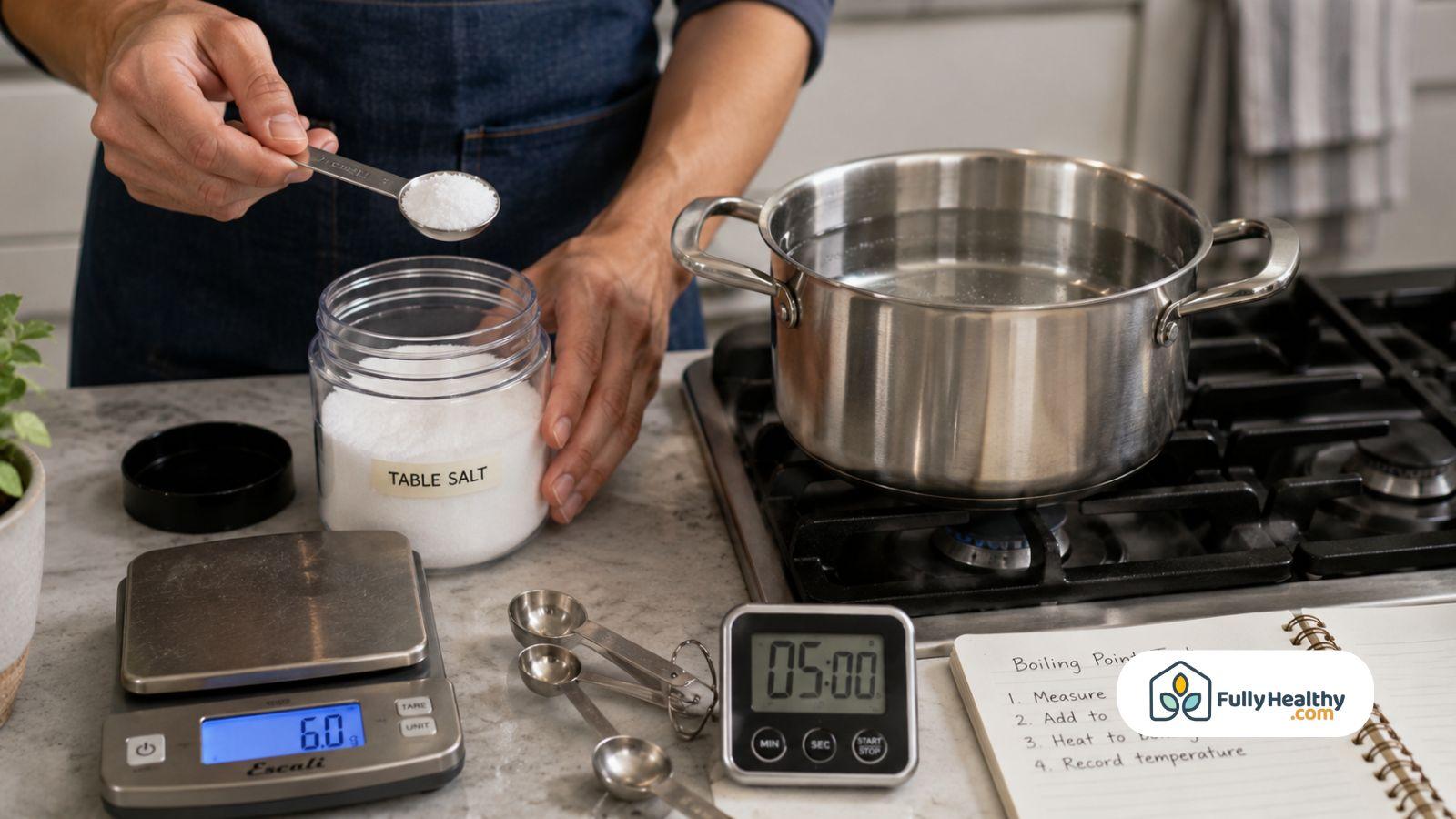
Use easy tricks that keep heat in and use less energy to get water to boil faster. Adding salt or baking soda doesn't work as well as these steps.
How Can You Heat Water More Efficiently?
Use only the amount of water you need and cover the pot with a lid. A lid keeps more heat inside and reduces energy loss. A pot heats faster only when its base matches the burner and efficiently captures the burner’s heat.
A wider pot is not inherently faster and may increase evaporative and convective heat loss. An electric kettle is often a fast and efficient choice for heating water.
-
Efficiency Tip: A covered pot keeps heat from escaping.
-
Kitchen Tip: Match the pot size to the burner.
-
Energy Saver: Less water needs less energy to reach the boiling point.
Which Methods Really Help Water Boil Faster?
The best methods are simple and reliable. Use steady heat, the right cookware, and the correct amount of water. These steps help increase the temperature faster without wasting energy.
-
Best Method: Use a flat-bottomed pot that closely matches the burner size and makes good thermal contact. Cleanliness alone does not materially improve boiling speed unless residue interferes with contact or heat transfer.
-
Quick Option: An electric kettle can make water boil faster for small amounts.
-
Final Advice: Good equipment and less water make the biggest difference.
What Will Happen If You Add Salt To Boiling Water?

Adding salt to boiling water changes how the water behaves, but the effect is very small. Salt does not create a significant difference in normal cooking because the water must reach a slightly higher temperature before it keeps boiling.
Some people think salt makes water hotter faster, but the science shows that more energy is needed to reach the new boiling point.
Under otherwise identical kitchen conditions and typical salt concentrations, plain water generally reaches its lower boiling point slightly sooner, but this outcome is not universal because salt also changes heat capacity and solution mass.
What Happens To The Temperature When Salt Is Added To Boiling Water?
When salt dissolves, it spreads through the water and changes how the water molecules behave. Salt water has a lower specific heat than pure water, which means it needs slightly less heat to raise its temperature. However, salt also raises the boiling point. This means you must increase the saltwater's temperature before it can boil again.
In most kitchens, the difference is too small to notice. The heat needed and energy needed are only slightly different from those of plain water.
-
Key Point: Salt raises the boiling point, so the water must reach a higher temperature before it boils.
-
Simple Science: Salt does not create a lower temperature for boiling.
-
Easy Comparison: If equal initial masses receive equal heating power under identical conditions, typical lightly salted water generally reaches boiling at nearly the same time or slightly later; the result depends on concentration, heat capacity, heat loss, and boiling-point elevation.
-
Practical Takeaway: Salt does not make water boil sooner in any useful way.
What Happens To Flavor And Cooking Results After Salt Is Added?
Salt's main benefit is taste, not speed. Even while pasta, vegetables, and other foods are cooking, salt can be used to season them. A little more heat may be added to the boiling water, but not enough to make the food cook much faster.
Salt dissolves readily in both hot and boiling water. Adding it after boiling begins is not necessary for even dissolution; stirring is sufficient.
-
Flavor Benefit: Salt seasons food during cooking instead of only on the surface.
-
Cooking Tip: Add salt carefully to hot water to avoid splashing.
-
Best Practice: Use salt for taste, not to make water hotter faster.
-
Clear Answer: The temperature change does not create a significant difference in cooking time.
How Can Fully Healthy Support Your Specialty-Diet Needs?
Fully Healthy is an online store where people can find foods that are good for special diets. It has foods for people on the Autoimmune Protocol, gluten-free diets, and diets that are careful with allergens. The website makes it easier for shoppers to find what they need without having to go to a lot of stores.
How Can Fully Healthy Help You Shop For Specialty-Diet Foods?
Fully Healthy organizes products by category and Autoimmune Protocol stage. This makes it easier to find foods that match specific dietary needs. Shoppers can browse AIP Elimination products and AIP Reintroduction Stages 1 through 4.
-
Shopping Benefit: The website reduces the time spent checking multiple stores.
-
Useful Filters: Shoppers can browse by AIP stage and product type.
-
Available Categories: The site includes snacks, breakfast foods, seasonings, sweets, bundles, personal care, and health and wellness products.
-
Important Reminder: Always check the latest ingredient and allergen details before buying.
Which Confirmed Fully Healthy Products Can You Explore?
Fully Healthy offers several confirmed pantry items and baking products. These products may support specialty diets, but they do not affect how quickly water boils.
-
Coconut Sweeteners: Big Tree Farms Organic Brown Coconut Sugar and Bob’s Red Mill Organic Coconut Sugar.
-
Maple Products: Coombs Family Farms Organic Maple Sugar and Coombs Family Farms Organic Maple Syrup.
-
Date Sweetener: Date Lady Date Sugar may be available depending on current stock.
-
Baking Mixes: EAT G.A.N.G.S.T.E.R. Cut-Out Sugar Cookie Mix, Banana Bread Mix, and Chewy Choconot Brownie Mix.
-
Shopping Advice: Check each product page for current stock, ingredients, and dietary labels.
Final Thoughts
Does salt make water boil faster? In normal cooking, the answer is no. Because salt makes things boil hotter, the water needs to get a little warmer before it starts to boil. Even though it's not enough of a difference to really notice, salt is still an important part of making pasta, vegetables, and other foods taste better.
Using a smaller volume of water, covering the pot with a lid, or using an efficient electric kettle can reduce heating time. Knowing how boiling works scientifically will help you cook better and stay away from common kitchen myths.
FAQs
Does Water Boil Quicker Without Salt?
Yes. Pure water usually reaches its boiling point slightly sooner than salted water because adding salt raises the boiling point, although the difference is very small in normal cooking.
Why Do You Have To Wait 30 Minutes After Boiling Water?
You usually do not need to wait 30 minutes after boiling water. If the water is being disinfected, allow it to cool naturally before drinking or storing it in a clean, covered container.
What Is The Healthiest Way To Boil Water?
Use potable water and clean equipment. Prolonged boiling is usually unnecessary and can concentrate nonvolatile dissolved substances as water evaporates, but it does not inherently make otherwise safe water unhealthy. Store any leftover boiled water in a clean container.
What Are The Side Effects Of Adding Salt To Water?
Adding salt to water mainly changes its boiling point and seasons food. However, using too much salt can increase the sodium content of your meal, which may not be suitable for people following a low-sodium diet.
Can Fungus Be Killed By Boiling?
Boiling inactivates most waterborne vegetative fungi and many other pathogens, but heat-resistant spores may require more severe treatment, and preformed fungal toxins may not be destroyed. Boiling does not reliably remove nonvolatile chemical contaminants and may concentrate them; some volatile compounds may be partly reduced, while many heat-stable toxins can remain.
Leave a comment