
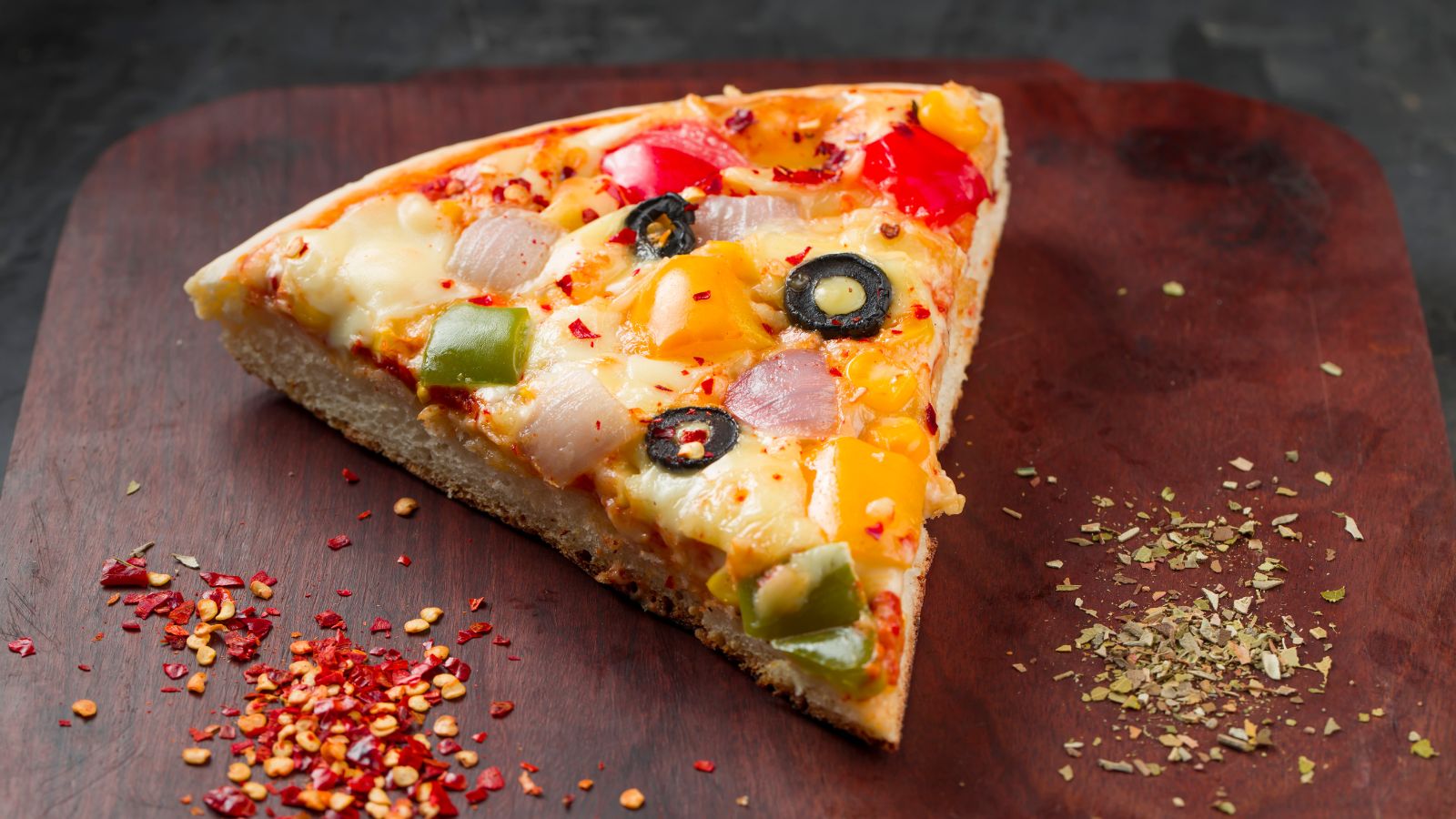
How Many Calories Is a Slice of Pizza? Get the Full Breakdown

People all over the world love pizza, but a lot of them want to know how many calories are in a slice? The answer changes depending on the slice size, toppings, and crust.
About 200 to 400 calories are in a typical slice. This article talks about how many calories are in different kinds of pizza, how they fit into a diet, and how to make smart and healthy choices. Do some research before you eat your next slice.
🍕 Make AIP Pizza Night Easy – Click Here to Get This Flatbread Mix!
How Many Calories Is a Slice of Pizza?

The number of calories in a pizza slice depends on the toppings, the type of crust, and the size of the serving. Most slices have between 200 and 400 calories. You can eat pizza without feeling bad about it if you know what affects your calorie intake.
Average Calorie Count by Pizza Type
There are different amounts of calories in each type of pizza. This is mostly because of the crust and toppings.
-
Cheese pizza: Has about 200–300 calories per slice.
-
Meat toppings: Pepperoni, sausage, and bacon can raise calories to 300–450 per slice.
-
Deep dish and stuffed crust: These are heavier and can go beyond 500 calories per slice.
Factors That Affect Pizza Calories
There are different amounts of calories in each type of pizza. This is mostly because of the crust and toppings.
-
Crust type: Thin crust pizza has fewer calories than regular or stuffed crust.
-
Toppings: Processed meats like pepperoni or sausage can add 50–150 calories more per slice compared to vegetable toppings.
-
Sauce and cheese: Alfredo sauce can add over 100 extra calories per slice compared to tomato sauce, and extra cheese can raise fat content significantly, adding 50–100 more calories.
-
Portion size: A larger slice has more calories, even if the ingredients are the same.
Is 2 Slices of Pizza Bad for a Diet?

If you don't eat too much, two slices of pizza is fine. The most important thing is how many calories you eat during the day. If you watch how much you eat, even a couple of slices can be part of a healthy diet.
Portion Control vs. Overeating
You don't need to give up pizza. Just watch out for what and how much you eat.
-
Practice portion control: Stick to one or two slices, not half a pizza.
-
Balance your meal: Add a side of vegetables or a small salad.
-
Pick smart crusts: Choose thin crust over deep dish or stuffed crust.
-
Avoid calorie overload: Skip extra cheese and processed meats like sausage or pepperoni.
Real People and Pizza Diets
Others have lost weight while still enjoying pizza by picking healthier foods.
-
Track your calories: Knowing your daily calorie intake helps with weight goals.
-
Choose better toppings: Use vegetables like onions and bell peppers instead of meat.
-
Limit frequency: Eat pizza occasionally, not every day.
Is One Slice of Pizza OK on a Diet?

If you are on a diet, yes, one slice is fine. It's even better if you eat other healthy foods with it. It gives your body the carbs, protein, and fats it needs. Just watch out for the ingredients.
What One Slice Offers Nutritionally
Being smart about what you choose can make a single slice a good source of nutrients.
-
Cheese: Adds protein and calcium to your diet.
-
Vegetables: Toppings like bell peppers and onions offer fiber and vitamins.
-
Carbs: Regular crust has carbs; whole wheat crust gives you more fiber.
-
Calories: One slice with simple toppings usually has fewer calories.
Healthier Choices for a Guilt-Free Slice
Your healthy eating plan can still include pizza if you make a few changes.
-
Use vegetable toppings: Go for bell peppers, mushrooms, or onions.
-
Stick with thin crust pizza: It has fewer calories than thicker options.
-
Avoid processed meats: Say no to bacon, sausage, and pepperoni.
-
Try whole wheat crust: It’s more filling and better for digestion.
Which Pizza Is Lowest in Calories?

If you get a thin crust or put vegetables on top of your pizza, it will have fewer calories than other pizzas. In order to enjoy pizza without going over your calorie goals, you need to pick the right slice.
Lowest-Calorie Options from Popular Chains
Some fast food chains have lighter pizza options if you want to eat out but still want to watch your weight. Most of the time, these have less dough, fewer toppings, or more vegetables.
-
Pizza Hut Thin ‘N Crispy Veggie Lover: Approximately 130–160 calories per slice, depending on size and preparation.
-
Domino’s Thin Crust with Spinach and Mushrooms: Roughly 130–150 calories per slice.
-
Little Caesars Thin Crust Cheese Pizza: Typically 250–300 calories per slice depending on cut and size
These pizzas are great if you want something tasty but lower in calorie content.
How to Order a Healthier Pizza
It's easy to make pizza healthier by changing a few things. What goes on top and how it's made are the first things that matter.
-
Pick thin crust: It uses less dough, which means fewer calories.
-
Skip processed meats: Sausage and pepperoni add more calories and fat.
-
Add vegetables: Toppings like bell peppers and onions are full of flavor and low in calories.
-
Go light on cheese: Ask for less cheese or avoid extra cheese to cut fat.
Healthy Pizza Alternatives from FullyHealthy
People who have to follow certain diets should choose FullyHealthy. They sell gluten-free, AIP-friendly, and healthy pizza dough mixes that are made with pure ingredients. This mix lets you eat pizza without feeling bad about it.
AIP-Friendly Pizza Crust Mixes
FullHealthy has pizza crusts that are made to fit your needs if you want to bake at home.
-
AiPeazy Pizza Crust Mix: Made with tigernut flour, perfect for AIP diets.
-
Legit Bread Pizza & Pretzel Mix: Makes both pizza and soft pretzels.
-
EAT G.A.N.G.S.T.E.R Flatbread Mix: Free from top allergens and fully plant-based.
Why FullyHealthy Is a Smart Choice
It's possible to eat better with FullyHealthy without giving up pizza.
-
Clean ingredients: No junk, just real food.
-
Saves time: Easy-to-make mixes for busy days.
-
Supports your diet: Great for AIP, gluten-free, and Paleo lifestyles.
Final Thoughts
Pizza can fit into your diet if you make smart choices. One slice of cheese pizza or even two slices with vegetable toppings won’t ruin your calorie intake. Go for thin crust pizza if you want fewer calories, and skip the extra cheese or stuffed crust.
Use whole wheat dough at home, or save time with options from FullyHealthy. Enjoy your pizza and stay balanced with portion control and healthy ingredients.
FAQs
How many calories is a slice of pepperoni pizza?
A slice of pepperoni pizza has more calories than cheese pizza. It usually has 300–450 depending on dough, crust, portion size, and if there’s extra cheese.
Can I eat pizza and still lose weight?
Yes. Use portion control. Eat one slice with vegetables like bell peppers, onions, or spinach. Choose thin crust pizza or whole wheat to save on calories.
What’s the healthiest pizza topping?
Vegetables like bell peppers, onions, and mushrooms. These have fewer calories than sausage, bacon, or other processed meats. Also use less cheese and skip alfredo sauce.
Is cauliflower crust always healthier?
Cauliflower crusts vary widely in calories; some commercial versions include cheese and oils, making them comparable or even higher in calories than thin wheat crusts.
How do I make pizza healthier at home?
Use thin crust pizza or make your own dough with whole wheat. Add vegetable toppings, skip extra cheese, avoid stuffed crust, and don’t use processed meats or alfredo sauce. Save leftovers for the next day.
Leave a comment