

How Many Carbs Is In Grapes and Why Portion Size Matters
How many carbs is in grapes depends on the serving size, but one cup of fresh grapes contains about 27-29 grams of carbohydrates. Grapes have more sugar than many other fruits, which can change your blood sugar levels. This article talks about how many carbs are in grapes, how they fit into low-carb diets, and how the amount eaten affects the diet.
Featured Pantry Pick
St. Dalfour // Four Fruits Fruit Spread - 10 oz
Loading...
How Many Carbs Is In Grapes?

Carbs In Grapes By Serving Size (½ Cup, 1 Cup, Per Gram)
Many nutrition databases use different gram standards, so the number of carbs in grapes varies. This is because "cup" is based on weight rather than volume. The amount of water in fresh grapes changes the total amount of carbs in a cup.
-
½ cup: Contains approximately 13 to 14 grams of carbohydrates per serving.
-
One cup: Provides between 27 and 29 grams of carbs depending on gram weight.
-
Per gram: Supplies about 0.17 grams of carbohydrates per gram of grapes.
Total Carbs vs Net Carbs vs Sugar In Grapes
Grapes have natural sugars, fiber, and other compounds that make up their total carbohydrates. Net carbs, on the other hand, take out fiber, which is normally low in whole grapes. For most people who are watching their blood sugar levels, net carbs are close to total carbs.
-
Total carbs: Come mainly from natural sugars found in fresh fruit.
-
Net carbs: Stay close to total carbs due to low fiber content.
-
Sugar: Makes up most carbohydrates and affects insulin levels.
Can I Eat Grapes On A Low Carb Diet?
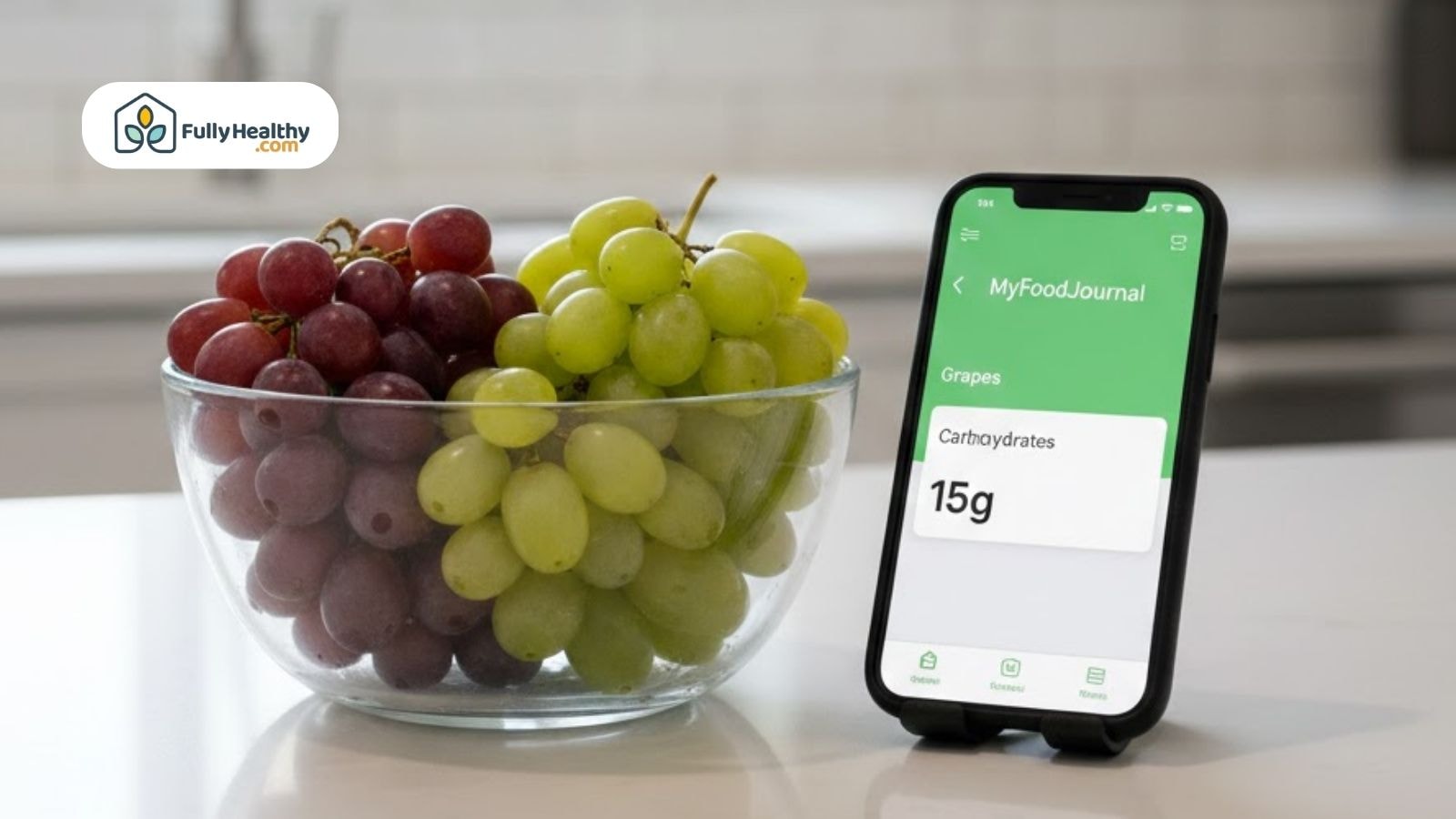
Why Grapes Are Usually Limited On Keto Diets
On ketogenic diets, grapes are usually off limits because they have a lot of carbs per serving compared to other fruits. One cup of grapes has most of the daily carbohydrate limit that you need to stay in ketosis.
-
Higher sugar content: Natural sugars raise insulin levels quickly.
-
Carbohydrates per serving: Exceed typical keto targets even in small portions.
-
Glycemic index: Moderate values still impact blood sugar management.
-
Glycemic load: Adds up fast due to sugar concentration.
-
Juice form: Grape juice is avoided due to lack of fiber and higher sugar density.
When Grapes Fit Into A Low Carb Eating Plan
Grapes can be part of a low-carb diet as long as they are eaten in small amounts and with protein or fat to keep blood sugar levels steady. Most people feel better when they eat fresh grapes with foods that help control blood sugar and insulin levels.
-
Moderate low carb diets: Allow limited portions of fresh grapes without exceeding daily carbohydrates.
-
Meal pairing: Works better with foods like chicken salad, nuts, or protein-rich meals.
-
Portion sizes: Smaller servings reduce spikes in blood sugar and insulin resistance.
-
Whole grapes: Are preferred over grape juice for slower digestion.
-
Fresh fruit choice: Grapes can be rotated with lower carb fruits to balance carb content.
Which Color Grapes Are Best For Weight Loss?

Red vs Green vs Black Grapes: Nutrition Differences
Each serving of red, green, or black grapes has about the same amount of calories, carbs, fiber, and minerals. There are more antioxidants like resveratrol in red and black grapes, which makes them stand out. Resveratrol is good for your heart and blood flow.
-
Red grapes: Higher in resveratrol, which supports heart health and blood flow.
-
Green grapes: Similar carb content with lower antioxidant levels.
-
Black grapes: Rich in antioxidants with anti inflammatory properties.
-
Calories: Nearly the same across grape varieties.
-
Carb content: Similar carbohydrates and natural sugars per cup.
Do Grape Colors Affect Hunger Or Fat Loss?
Grape color doesn't have a big effect on insulin levels, hunger, or fat loss. How much weight you lose depends more on how often you eat and how much you eat overall than on the color of the grapes.
-
Portion sizes: Larger servings raise blood sugar levels regardless of color.
-
Eating grapes: Whole grapes are better than juice for appetite control.
-
Blood sugar management: Similar responses across green, red, and black grapes.
-
Fat loss: Influenced by total calories and carbohydrates, not color.
-
Older adults: Benefit most from mindful portions and balanced meals.
Which Fruit Is Lowest In Carbs?

Lowest Carb Fruits Ranked From Lowest To Highest
A lot of fruits, especially those that are higher in fiber and lower in sugar, have fewer carbs than grapes. Berries, avocados, and grapes are always ranked lower on low carb fruit lists than grapes.
-
Olives: Extremely low carbohydrates and high fat.
-
Avocados: Low carbs, high fiber, and supportive of heart health.
-
Raspberries: Low sugar and rich in antioxidants.
-
Blackberries: Provide fiber with moderate carbs.
-
Strawberries: Lower carb option among sweet fruits.
-
Grapes: Higher carbs compared to berries and avocados.
How Grapes Compare To Other Common Fruits
Grapes aren't as good for low-carb diets as berries, apples, and some citrus fruits because they have more carbs per serving. They taste sweet because they have natural sugars in them instead of fiber, which raises blood sugar more quickly.
-
Compared to berries: Grapes contain nearly double the carbs per cup.
-
Compared to apples: Similar sugar but less fiber.
-
Compared to bananas: Slightly lower carbs but still high for low carb diets.
-
Compared to citrus fruits: Higher sugar and glycemic load.
-
Fresh fruit choice: Grapes rank mid to high for carb density among fruits.
About FullyHealthy
What FullyHealthy Stands For
FullyHealthy's main goal is to make speciality diet foods available by using clear ingredients and easy-to-find sources. The platform helps people with health problems like high cholesterol, high blood pressure, and high blood sugar make smart food choices.
-
Ingredient transparency: Clear labeling and simple formulations.
-
Diet support: Options suitable for many dietary needs.
-
Consumer trust: Emphasis on quality foods and responsible sourcing.
-
Access: Convenient availability of specialty products online.
-
Healthy diet: Encourages balanced eating habits.
Fruit-Based Products Available On FullyHealthy
FullyHealthy offers fruit-based jams and spreads that are made without refined sugar and rely on the sweetness of fruits like grapes instead. With these products, you can enjoy fruit flavors while still watching your carbs, sugar, and portion sizes for a healthy diet.
-
St. Dalfour Four Fruits Fruit Spread: Made with blended fruit juice concentrates instead of refined sugar.
-
St. Dalfour Ginger and Orange Marmalade Fruit Spread: Combines citrus sweetness with ginger using fruit-based ingredients.
-
St. Dalfour Heritage Peach Fruit Spread: Uses peach juice concentrates for natural sweetness and smooth texture.
-
St. Dalfour Black Cherry Conserves: Provides rich cherry flavor without refined sugar additions.
-
St. Dalfour Red Raspberry Conserves: Offers tart raspberry taste supported by fruit juice sweetness.
Final Thoughts
Grapes look simple, but they have more to offer than just sugar and carbs. Vitamin C, vitamin K, and antioxidants found in fresh grapes help lower the risk of heart disease, keep blood clotting, boost the immune system, keep your brain healthy, and protect your eyes from age-related macular degeneration.
Grapes without seeds are easy to eat and go with a lot of meals, but it's still important to watch your portion sizes. Pay attention, enjoy them wisely, and choose the ones that are best for your body.
FAQs
Are fresh grapes good for the body?
Fresh grapes support the immune system, cognitive function, blood clotting, and eye health while offering vitamin c, vitamin k, antioxidants, and a high water content.
Are green grapes healthier than other grapes?
Green grapes provide health benefits similar to red wine compounds and other grapes, supporting heart disease risk, immune system function, and overall nutrition.
What health benefits do grapes offer?
Health benefits of grapes include support for heart disease prevention, cognitive function, eye health, age related macular degeneration, and immune system balance.
How many carbs are in 10 big grapes?
How many carbs are in 10 big grapes depends on size, but they contain sugar, carbohydrates, and natural sweetness similar to seedless grapes.
How many carbs are in 12 seedless grapes?
How many carbs are in 12 seedless grapes varies by grape size, but seedless varieties still provide carbohydrates, antioxidants, vitamin c, and nutrients.
Leave a comment