

How to Thicken Pasta Sauce? Easy Fixes That Really Work
Watery pasta sauce is easy to fix with the right method. You can simmer it longer, add tomato paste, use a small amount of starch, or mix in cheese for extra body. The best choice depends on the sauce and how quickly you need results.
This blog explains how to thicken pasta sauce, fix watery pasta, use Italian methods, speed up thickening, and choose suitable products from FullyHealthy with confidence at home.
How to Thicken Pasta Sauce?
Learning how to thicken pasta sauce is easier when you understand why the sauce is thin. The best method depends on the recipe, the ingredients you have, and how quickly you need to serve the pasta. Some methods remove excess liquid, while others add body with simple pantry ingredients. Start with the gentlest option first so the flavor stays balanced and the texture remains smooth.
How Can You Thicken Pasta Sauce by Reducing It Naturally?
The easiest way to thicken tomato sauce is to simmer it uncovered until the extra liquid can evaporate. As the sauce reduces, the tomatoes develop a deeper, concentrated flavor. Reduction concentrates existing flavors but may also intensify acidity, sweetness, saltiness, bitterness, and cooked-tomato flavors.
Maintain a gentle, uncovered simmer and stir more frequently as the sauce thickens; the appropriate burner setting depends on the pan and batch size. Stir occasionally so the sauce does not stick to the bottom of the pot or saucepan. This method works well for homemade tomato sauce and spaghetti sauce.
-
Use a Wide Pan: A wide saucepan exposes more liquid to the heat, which helps the sauce reduce faster.
-
Leave the Lid Off: A lid traps steam, so keeping it off allows excess liquid to evaporate.
-
Stir Occasionally: Stir every few minutes to help the sauce cook evenly and prevent sticking.
-
Add Salt Later: Wait before adding salt because longer cooking makes the seasoning and flavor stronger.
-
Check the Texture: The sauce is thick enough when it reaches the consistency appropriate for the dish; coating the back of a spoon is only a general test and may indicate an overly thick tomato sauce.
Which Ingredients Can Thicken Pasta Sauce Quickly?
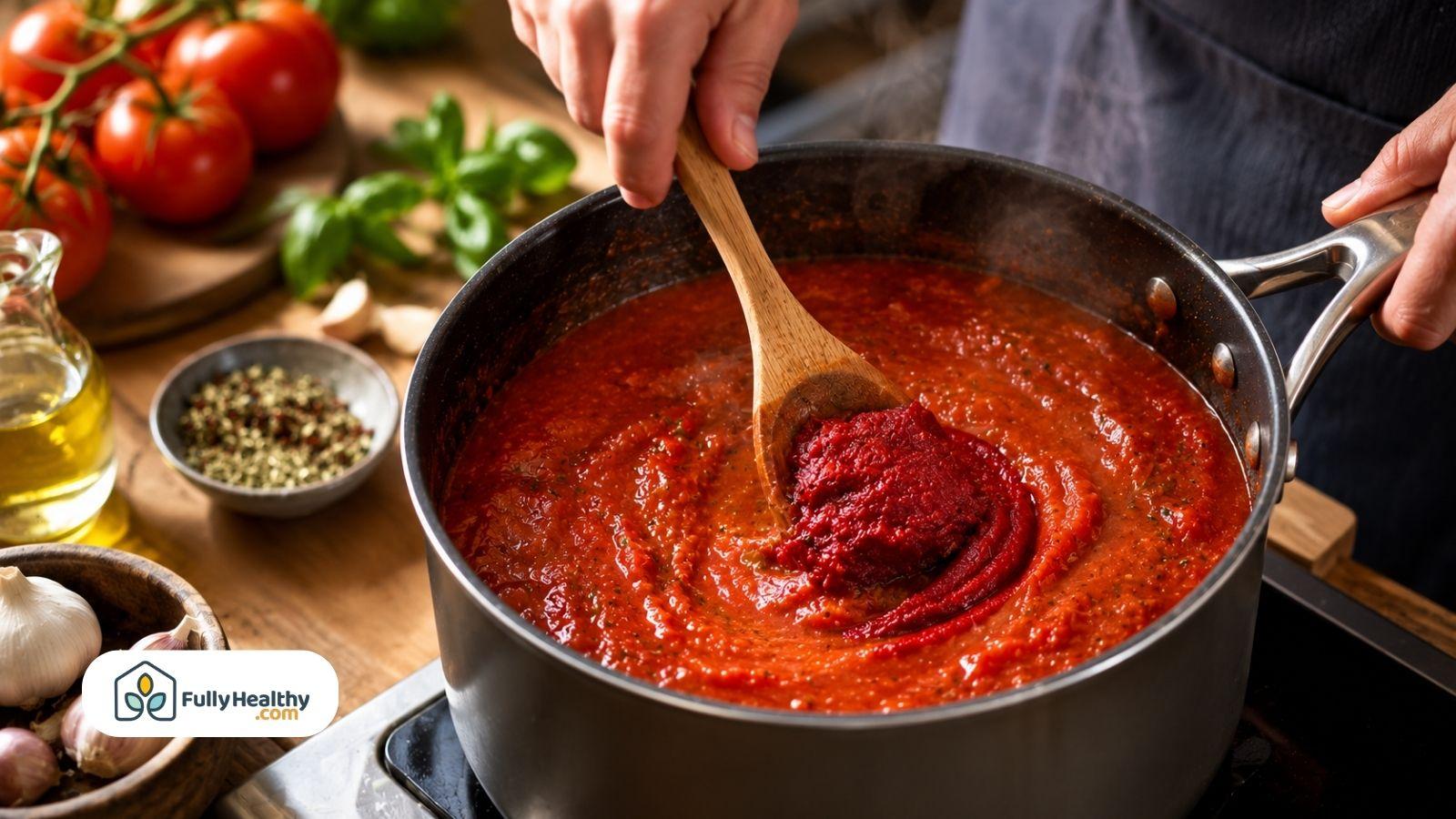
Sometimes you need a quick fix instead of waiting for the sauce to simmer longer. Tomato paste is one of the best ways to thicken tomato-based sauces because it adds concentrated tomatoes without extra liquid. Add tomato paste one spoonful at a time, then stir and taste before adding more. You can also use a cornstarch slurry or starch slurry made with corn starch and cold water.
-
Tomato Paste: Add tomato paste slowly so the sauce does not become too sweet or too strong.
-
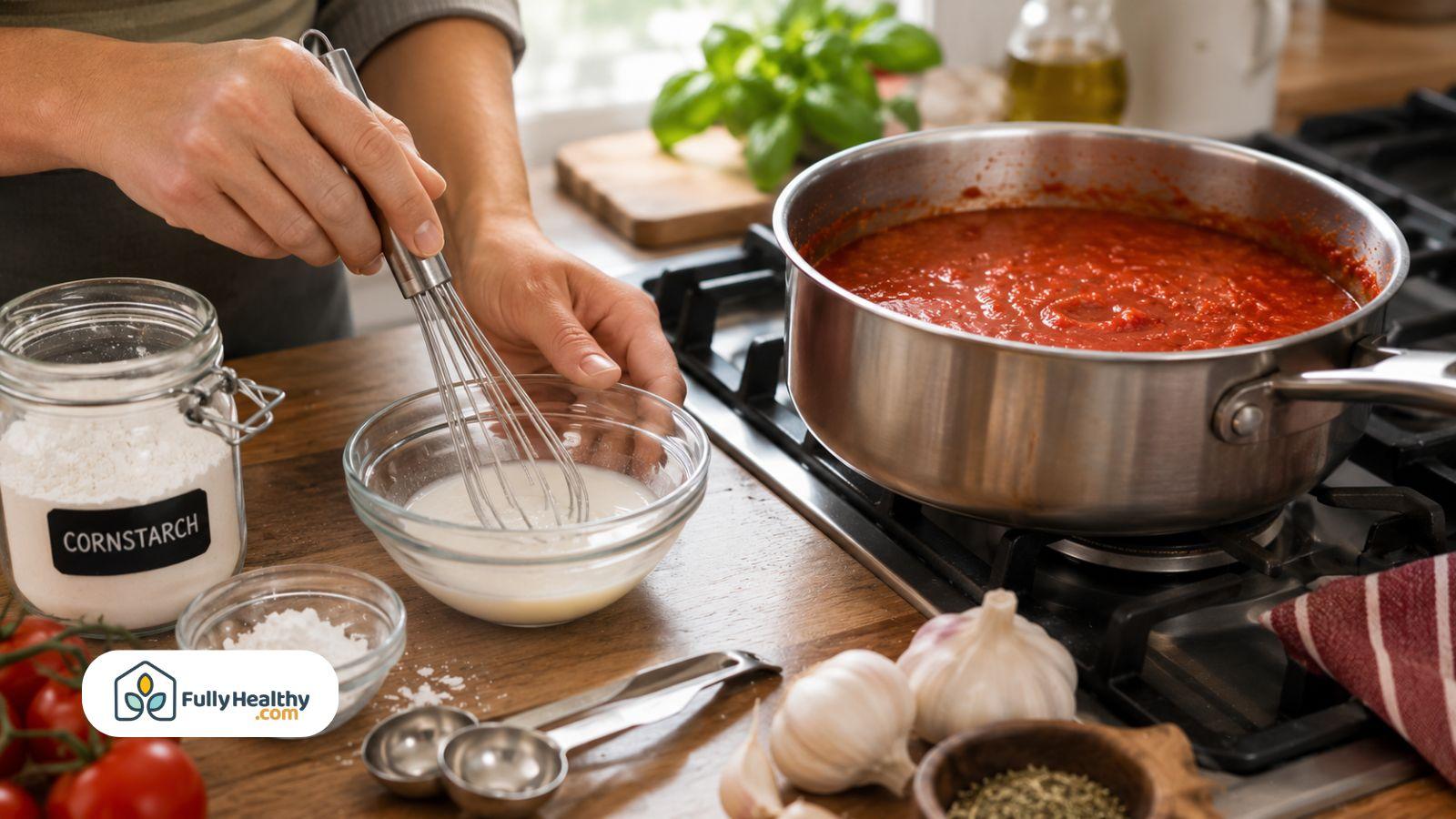
Cornstarch Slurry: Mix equal parts cornstarch and cold water, then add the slurry gradually to the simmering sauce. Begin with about 1 teaspoon of cornstarch per cup of sauce and increase only as needed.
-
Flour: Flour is best incorporated as a cooked roux or blended thoroughly with cold liquid before heating; the sauce must simmer long enough to gelatinize the starch and remove the raw-flour taste.
-
Heavy Cream: Heavy cream adds fat and richness but may initially thin a sauce; it thickens primarily when reduced or when its fat is incorporated into a stable emulsion.
-
Cheese: Finely grated hard cheese can increase viscosity when incorporated gradually at low heat, but excessive heat may cause proteins to clump and fat to separate.
How to Fix Pasta That Is Too Watery?
Watery pasta is often caused by too much pasta water, juicy fresh tomatoes, or ingredients that release moisture as they cook. Before adding starch, first find the source of the liquid. Fixing the cause helps protect the flavor and prevents the pasta sauce from becoming too thick or gummy.
Why Does Pasta Become Too Watery?
A runny sauce has a high proportion of free water relative to dissolved solids, suspended particles, starch, proteins, or emulsified fat.
Fresh tomatoes, vegetables, and too much starchy water can all create a thin consistency. Chicken, soups, cream, or other liquid ingredients can also make the sauce watery if too much is added.
-
Fresh Tomatoes: Fresh tomatoes contain a lot of water, so they may need extra cooking time.
-
Pasta Water: Add only a small amount because too much can make the sauce runny.
-
Vegetables: Mushrooms, spinach, and zucchini release liquid while they cook.
-
Cooking Time: Let the sauce simmer longer so the extra moisture can evaporate.
-
Heat Level: Use medium heat to reduce the liquid without scorching the sauce.
How Can You Fix Watery Pasta Without Overcooking It?
Place the pasta and sauce in the same pan and toss them together over gentle heat. Finishing pasta briefly in the sauce promotes surface starch release, evaporation, and emulsification; only limited sauce is absorbed during this short cooking period.
Butter, cheese, or egg yolks can also improve consistency in the right recipe. Avoid cooking for too long because the pasta may become soft before the sauce thickens.
-
Toss the Pasta: Toss the pasta with the sauce so the coating becomes even.
-
Add Butter: Whisking butter into the sauce can create a smoother, more viscous emulsion, but simply melting butter into it may cause oil separation rather than thickening.
-
Use Egg Yolks Carefully: Egg yolks should be mixed with some warm liquid and incorporated away from strong direct heat; keep the sauce below a simmer to reduce curdling. Tempering is useful but does not eliminate the risk of scrambling.
-
Whisk Gently: Whisk the sauce slowly to create a smooth texture.
-
Let It Sit: A brief rest may increase apparent thickness as the sauce cools and starch continues binding water, but excessive resting can make pasta sticky or cause it to absorb too much sauce.
How Do Italians Thicken Pasta Sauce?
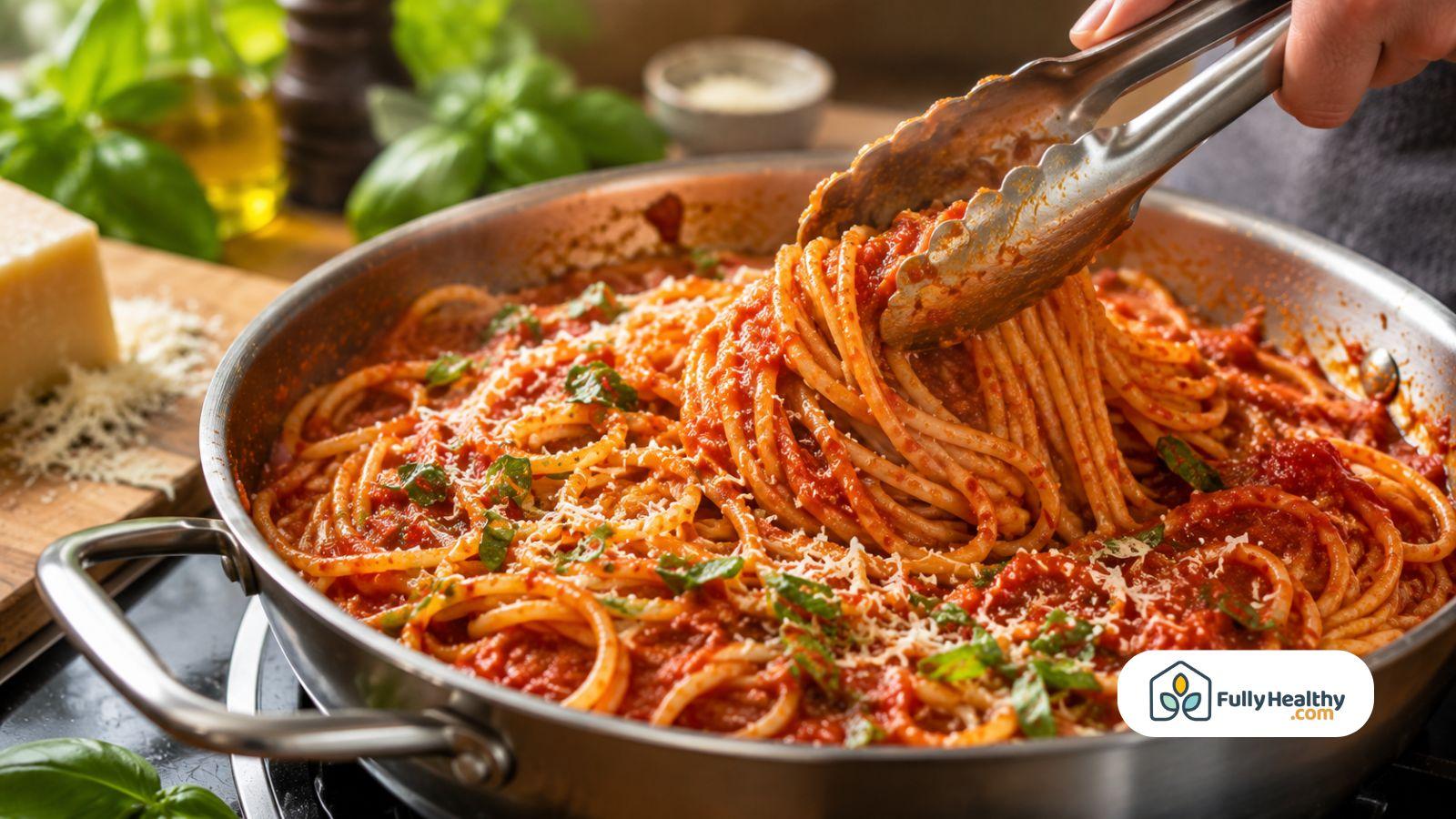
Many traditional Italian pasta sauces rely on reduction, emulsification, cheese, eggs, or starch released from pasta; methods vary substantially by region and recipe. They focus on the natural taste of tomatoes, olive oil, cheese, and seasoning. Slow cooking helps the sauce develop a rich flavor and smooth consistency without making it heavy.
How Do Italian Cooks Thicken Sauce Through Reduction?
Some tomato-based Italian sauces are thickened through simmering, while other traditional sauces depend on emulsification, eggs, cheese, bread, puréed ingredients, or brief cooking.
As the sauce reduces, the flavor becomes deeper and more balanced. Keep the sauce over medium heat and stir occasionally. Avoid using very high heat because it may burn the sauce before the liquid has time to evaporate.
-
Use Olive Oil: Olive oil adds richness but thickens an aqueous sauce only when dispersed as a stable emulsion with water and other emulsifying or stabilizing components.
-
Simmer Slowly: Slow cooking builds concentrated flavor and removes excess liquid.
-
Watch the Pot: Stir the sauce often enough to stop it from sticking.
-
Use a Wide Pan: A wider pan helps the sauce reduce in less time.
-
Choose the Best Method: Reduction keeps the natural taste of tomato based sauces.
Which Traditional Ingredients Can Add Body to Italian Pasta Sauce?
Italian recipes may use tomato paste, cheese, bread, egg yolks, or a small amount of pasta water to improve texture. Each ingredient should match the sauce and support its flavor. The goal is to create a thick sauce that still tastes fresh, smooth, and balanced.
-
Tomato Paste: Tomato paste adds body and a stronger tomato flavor without adding more liquid.
-
Cheese: Finely grated cheese adds richness and can help thicken spaghetti sauce.
-
Pasta Water: Pasta water can support emulsification and adhesion because it contains dispersed starch, but it initially adds water and should be added gradually while the sauce is vigorously mixed and reduced.
-
Egg Yolks: Egg yolks add a creamy texture to sauces such as carbonara.
-
Seasoning: Adjust the salt and seasoning only after the sauce reaches the right consistency.
How to Speed Up Sauce Thickening?
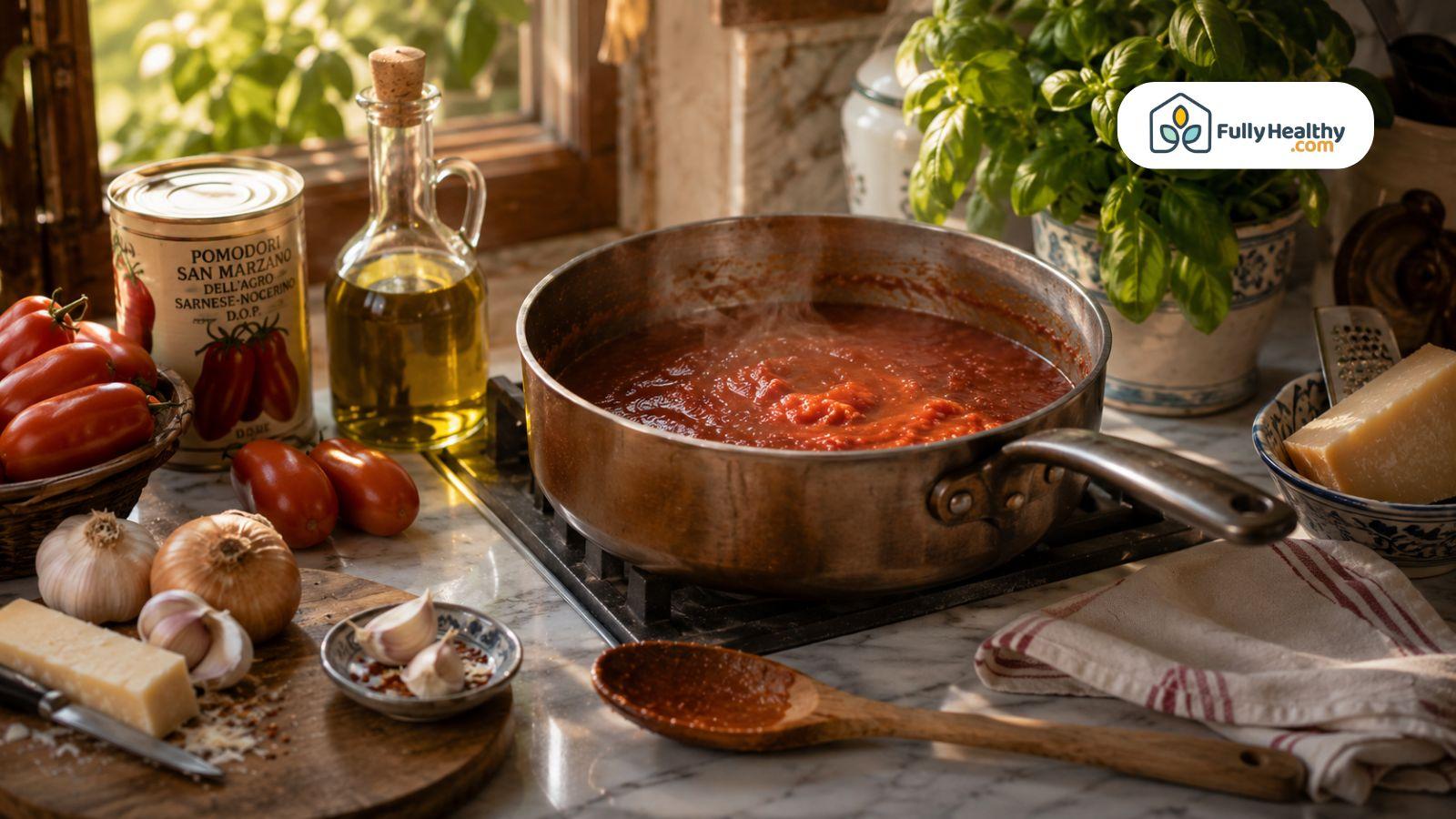
A thin sauce can delay dinner, but a few simple methods can help it thicken faster. The best approach depends on the type of sauce and the time available. You can speed up evaporation, add a suitable thickener, or adjust the cooking method. These cooking tips help improve texture without making the sauce heavy, lumpy, or too strong.
How Can You Make Sauce Reduce Faster?
Reduction is a reliable ingredient-free thickening method, but it can overconcentrate salt, acidity, sweetness, and heat-sensitive flavors if carried too far.
To make it work faster, use a wide pan and keep the sauce uncovered. A larger surface area helps moisture escape more quickly. Keep the heat steady and stir from time to time so the sauce does not burn.
-
Use a Wide Pan: A wide pan exposes more of the sauce to the air, which helps water evaporate faster.
-
Leave the Pan Uncovered: Keeping the lid off allows steam to escape instead of falling back into the sauce.
-
Use Medium Heat: Medium heat supports steady reduction without scorching the bottom of the pan.
-
Stir Occasionally: Stirring helps the sauce cook evenly and prevents it from sticking.
-
Taste After Reducing: Reduction makes flavors stronger, so check the seasoning before serving.
-
Divide Large Batches: Splitting the sauce between two pans can reduce cooking time.
Which Fast Thickener Works Best in an Emergency?
A quick thickener is useful when you do not have enough time to reduce the sauce naturally. Cornstarch slurry works well because it thickens within minutes. Tomato paste is often better for tomato-based recipes because it adds body and a deeper tomato taste. The right choice depends on the recipe, so avoid using one method for every other sauce.
-
Use a Cornstarch Slurry: Mix cornstarch with cold water before adding it to prevent lumps.
-
Add Tomato Paste Slowly: Stir in small amounts and check the texture before adding more.
-
Match the Thickener to the Sauce: Use tomato paste for tomato sauce and starch for sauces that need a neutral thickener.
-
Avoid Using Too Much: Too much thickener can make the sauce gummy or overly dense.
-
Blend Only When Needed: Blend the sauce only when a smooth texture suits the recipe.
-
Stop at the Right Texture: Remove the sauce from the heat once it reaches the desired thickness.
How Can Fully Healthy Help You Find Specialty-Diet Products?
Fully Healthy is an online store that focuses on specialty-diet foods. It helps people find products for gluten-free, allergen-aware, and Autoimmune Protocol diets in one place. The website can save shoppers time by organizing products into clear categories. Customers should still read each label carefully because ingredients, certifications, and availability may change.
Product listings, formulations, certifications, and availability must be verified directly from current product pages immediately before publication.
How Can Fully Healthy Help You Shop for Specialty-Diet Foods?
Fully Healthy makes it easier to browse foods based on specific dietary needs. Instead of checking several stores, shoppers can compare products on one website. This can be helpful for people who follow AIP, gluten-free, or allergen-aware diets and want a simpler way to review ingredients.
-
Shop by Diet: Use category pages to find products that match specific dietary needs.
-
Save Shopping Time: Browse several specialty brands in one online marketplace.
-
Check Ingredients: Review product details before buying to confirm that an item suits your diet.
-
Compare Options: Look at similar products before choosing the best fit.
-
Explore Specialty Brands: Discover brands that focus on restricted or allergen-aware diets.
-
Confirm Current Details: Check the latest label and product page because formulas may change.
Which Verified Fully Healthy Products Should Be Mentioned?
The supplied FullyHealthy homepage showed several products that can be named with confidence. These products are examples of items sold by FullyHealthy, but they should not be described as pasta sauce thickeners. Only verified products should be included to keep the information accurate and useful.
-
Big Tree Farms Organic Brown Coconut Sugar: A verified specialty sweetener listed on FullyHealthy.
-
Bob's Red Mill Organic Coconut Sugar: A pantry sweetener shown on the website.
-
Coombs Family Farms Organic Maple Sugar: A maple-based sweetener listed on the homepage.
-
Coombs Family Farms Organic Maple Syrup: A verified syrup product sold through FullyHealthy.
-
Date Lady Date Sugar: A date-based sweetener available on the site.
-
EAT G.A.N.G.S.T.E.R Baking Mixes: Specialty baking mixes designed for customers with dietary restrictions.
-
Use Products Appropriately: Do not present these items as ingredients for thickening pasta sauce unless a recipe specifically calls for them.
Final Thoughts
Learning how to thicken pasta sauce is easier when you choose the right method for your recipe. Simmering the sauce is the most natural option, while tomato paste, a cornstarch slurry, cheese, or heavy cream can provide a faster solution when needed.
Always add thickeners little by little and taste as you go. With these simple techniques, you can turn a thin, watery sauce into a rich, flavorful pasta dish every time.
FAQs
Is It Better to Thicken a Sauce With Flour or Cornstarch?
Cornstarch generally produces greater thickening per unit mass and a more translucent or glossy sauce, whereas wheat flour produces a more opaque sauce and requires longer cooking; texture also depends on concentration, acidity, temperature, and cooking time.
How Do You Thicken Sauce When It Is Too Watery?
The best option is to simmer the sauce uncovered so the excess liquid evaporates, or use tomato paste or a cornstarch slurry if you need a quicker fix.
What Can I Put in My Pasta to Make It Thicker?
Reserved pasta water can improve emulsification and sauce adhesion but does not directly thicken every sauce; add it gradually and continue tossing or reducing.
How Do Chefs Thicken a Sauce?
Chefs often reduce the sauce over medium heat first, then use ingredients such as tomato paste, roux, butter, or a starch slurry depending on the type of sauce they are preparing.
How Do You Thicken Pasta Sauce Without Flour or Cornstarch?
You can thicken pasta sauce by simmering it longer, adding tomato paste, mixing in grated cheese, or using puréed white beans for a naturally thicker texture.
Leave a comment