

Is Risotto Gluten-Free? What’s Safe and What to Check
Is risotto gluten-free? Yes, traditional versions are generally safe because rice does not contain gluten. The main concern comes from broth, seasonings, toppings, and cross contact during preparation. If you enjoy this creamy Italian dish, knowing what goes into it can help you make better choices.
Ahead, learn about common ingredients, the best rice varieties, possible hidden sources to watch for, and how risotto compares with plain rice.
Is Risotto Gluten-Free?
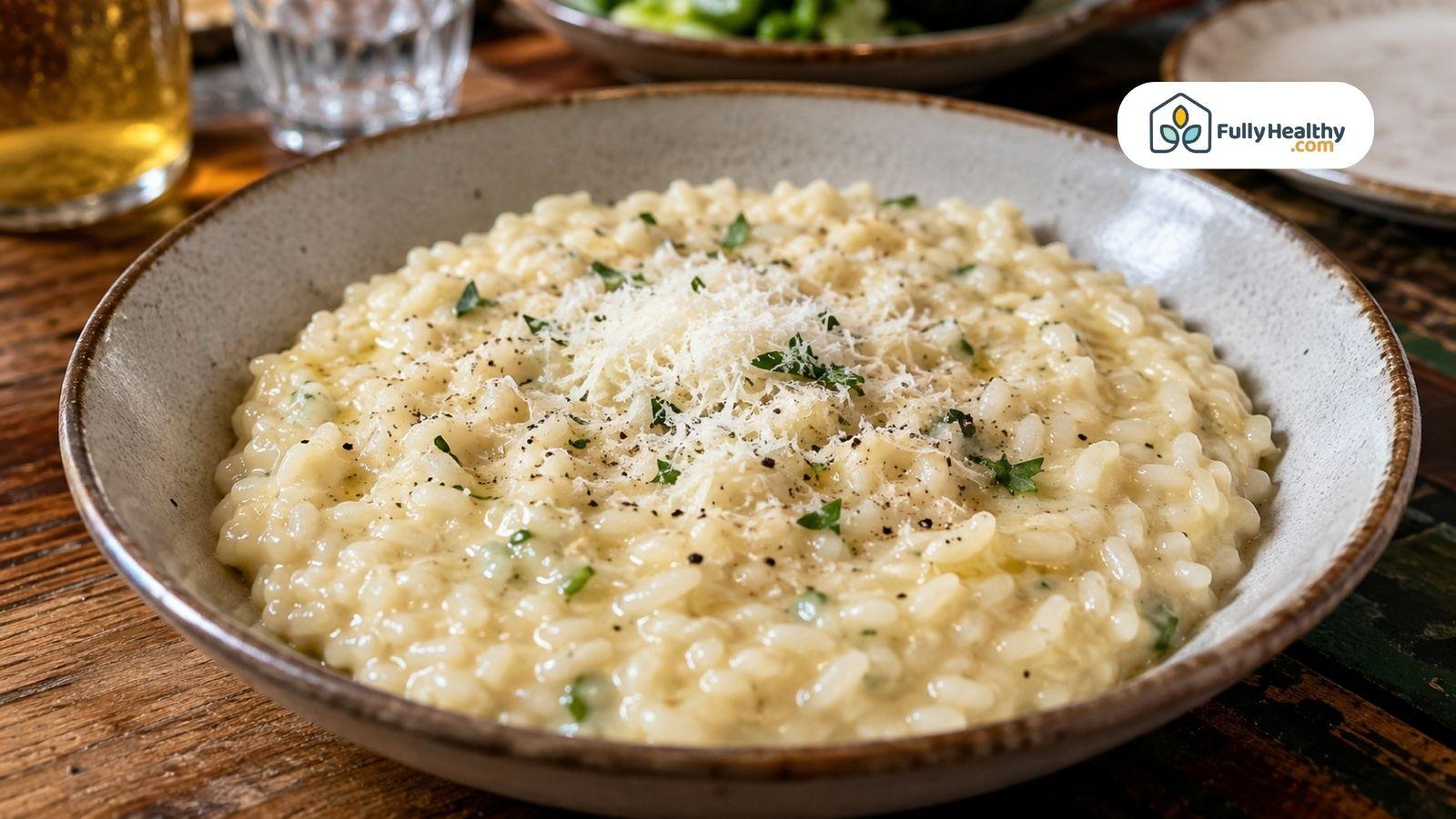
Risotto can be gluten-free, but the complete recipe determines its safety. Traditional risotto starts with naturally gluten-free rice, while broth, seasonings, mix-ins, and cross contact may introduce gluten.
Traditional Risotto and Gluten-Free Basics
Yes, traditional risotto is gluten-free when every ingredient used is free from gluten. Arborio rice and other common risotto varieties naturally contain no wheat, barley, or gluten, so checking the added ingredients matters.
-
Rice: Arborio rice is naturally gluten-free and has a high starch content.
-
Broth: Check chicken broth, chicken stock, and vegetable broth for gluten containing ingredients.
-
Fat: Butter and olive oil are naturally gluten-free cooking fats.
-
Flavor: White wine, parmesan cheese, garlic, black pepper, and fresh herbs add flavor.
-
Labels: People with celiac disease should prioritize products labeled gluten-free.
Hidden Gluten and Cross-Contact Risks
Hidden gluten usually comes from added ingredients rather than the rice itself. Cross-contamination by consumers, can also happen when risotto touches shared cookware, utensils, surfaces, or ingredients used for foods containing gluten.
-
Bouillon: Some stocks and bouillon products require careful label checking.
-
Grains: Barley, farro, and couscous contain gluten.
-
Toppings: Breadcrumbs and prepared sauces may contain wheat.
-
Cross Contact: Shared pans, utensils, and surfaces can transfer gluten.
-
Restaurants: Ask about ingredients and preparation when ordering risotto.
What is Risotto Made Of?
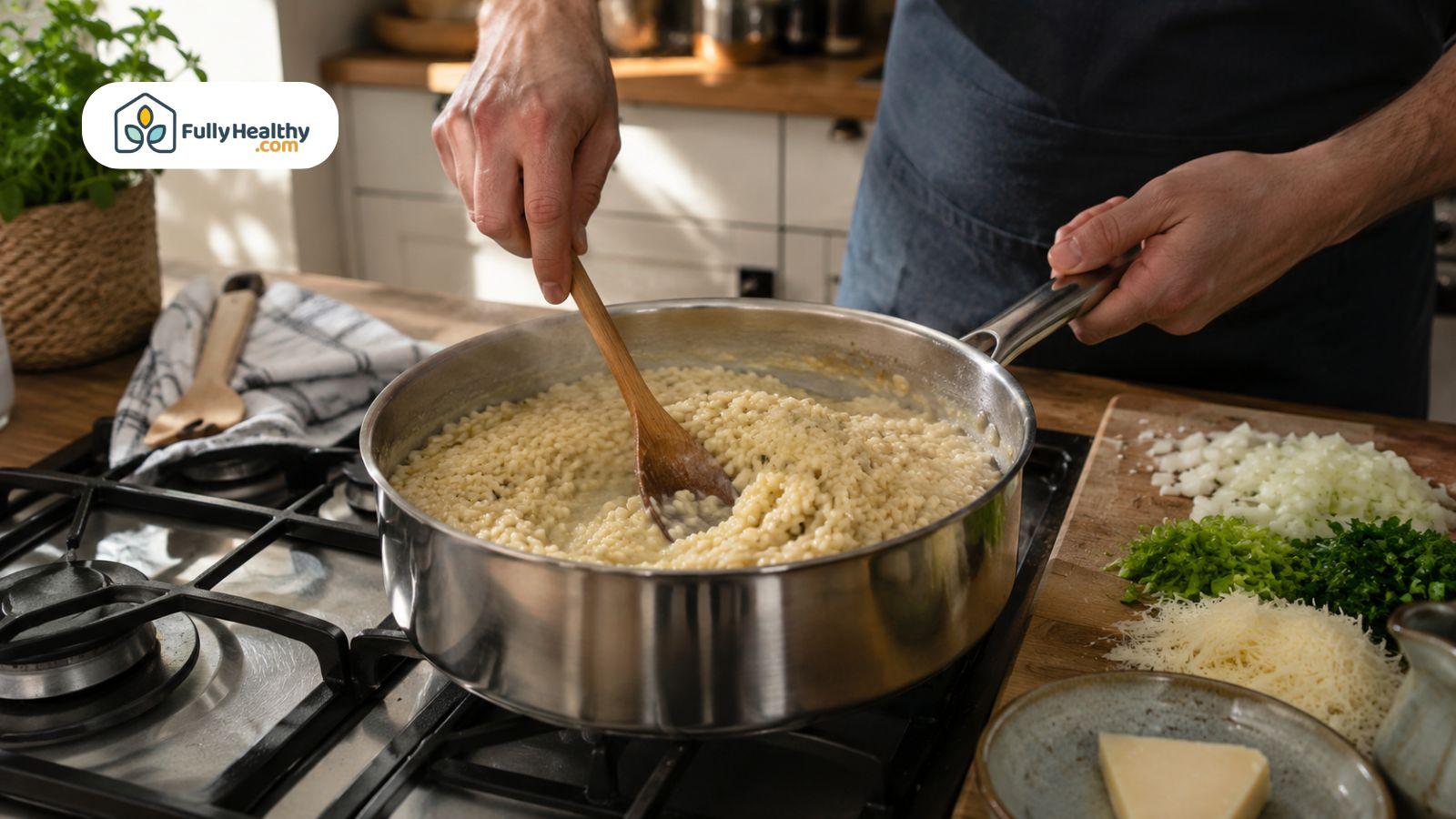
Risotto is made by slowly cooking starchy rice with hot broth until creamy. A classic risotto recipe uses simple ingredients, but vegetables, herbs, meat, seafood, and cheese can create different versions.
Classic Risotto Ingredients
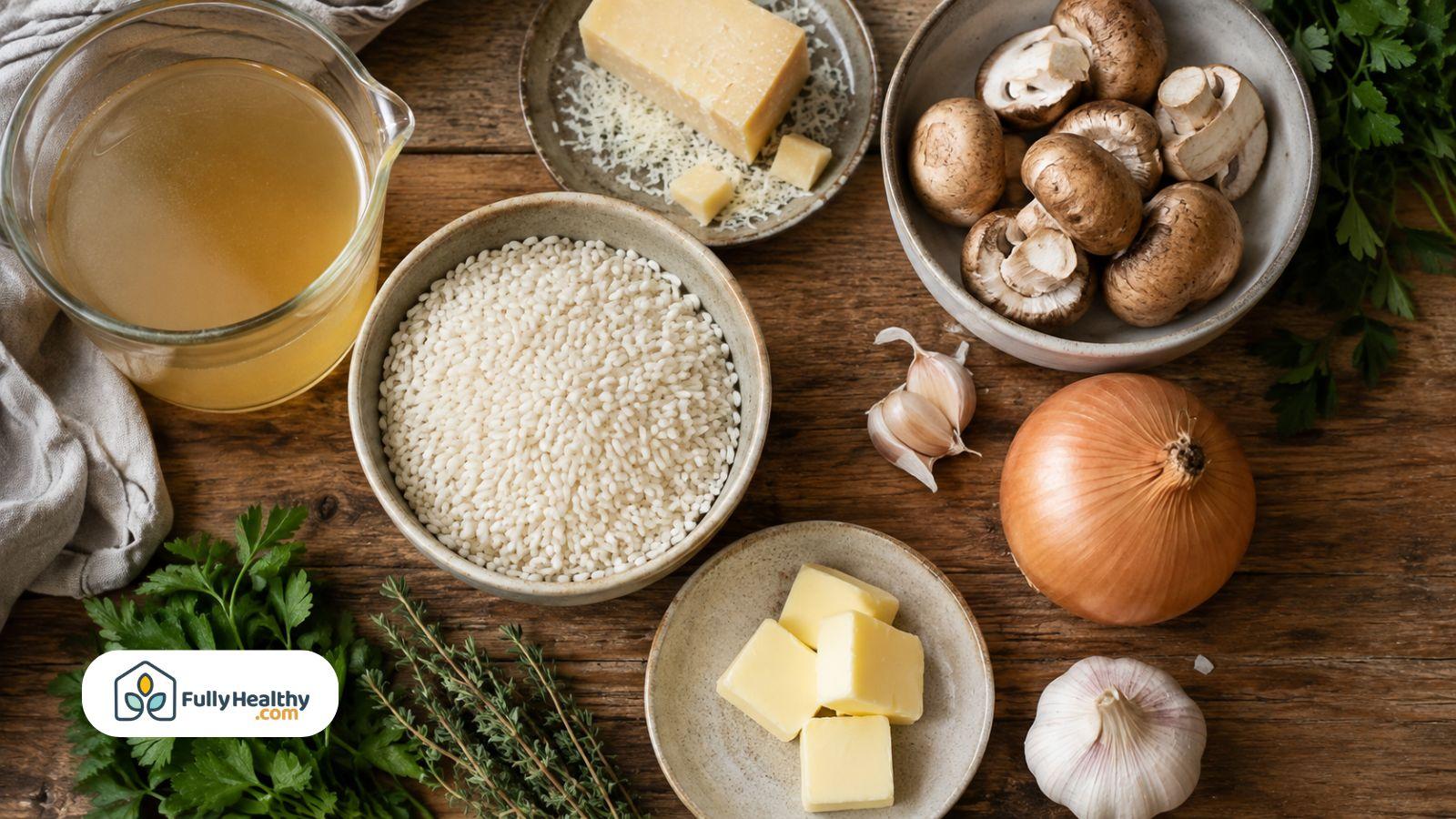
Classic risotto combines arborio or carnaroli rice with broth, fat, and aromatics such as onion or shallots. White wine and parmesan are common additions, while vegetables, peas, mushrooms, or protein can turn the dish into a full meal.
-
Rice: Arborio and carnaroli rice create a naturally creamy consistency.
-
Broth: Hot broth gradually cooks and flavors the rice.
-
Aromatics: Onion, shallots, and garlic build the flavor base.
-
Fat: Butter or olive oil is commonly used for cooking.
-
Extras: Parmesan, parsley, peas, vegetables, or protein complete the meal.
Ingredients That Require a Gluten-Free Check
Broth, stock, bouillon, sauces, seasonings, and prepared toppings deserve careful checking. Plain rice, vegetables, butter, olive oil, and fresh herbs are naturally gluten-free, but processed products can contain gluten or face cross contact.
-
Stock: Check chicken stock and vegetable broth labels carefully.
-
Seasonings: Prepared blends and sauces may contain gluten.
-
Wine: White wine is commonly added to a risotto recipe.
-
Cheese: Plain parmesan cheese is naturally gluten-free.
-
Variations: Vegetarian or dairy free does not automatically mean gluten-free.
What Rice is Best for Gluten-Free Risotto?
Arborio, Carnaroli, and Vialone Nano are good choices for gluten-free risotto because plain rice is naturally gluten-free. Their main differences involve starch, texture, liquid absorption, and how well the grains maintain their shape.
Arborio Rice for Gluten-Free Risotto
Arborio rice is a popular choice for gluten-free risotto because its high starch content produces a creamy texture. It readily absorbs broth and releases starch during cooking, although overcooking can make arborio too soft.
-
Texture: Arborio creates a creamy exterior with a firm center.
-
Starch: High starch content thickens risotto without flour.
-
Toast: Briefly toast the rice in butter or olive oil.
-
Cook: Add hot broth gradually and stir frequently.
-
Finish: Add parmesan and herbs, then serve immediately.
Arborio, Carnaroli, and Vialone Nano Compared
All three rice varieties can make delicious gluten-free risotto, but they behave differently during cooking. Arborio becomes especially creamy, Carnaroli holds its structure well, and Vialone Nano readily absorbs liquid and flavor.
-
Arborio: Widely available, starchy, and creamy.
-
Carnaroli: Holds its shape and resists overcooking better.
-
Vialone Nano: Absorbs broth well and creates a looser texture.
-
Gluten: All three are naturally gluten-free when plain.
-
Safety: Choose rice labeled gluten-free when cross contact is a concern.
Is Risotto Healthier Than Rice?
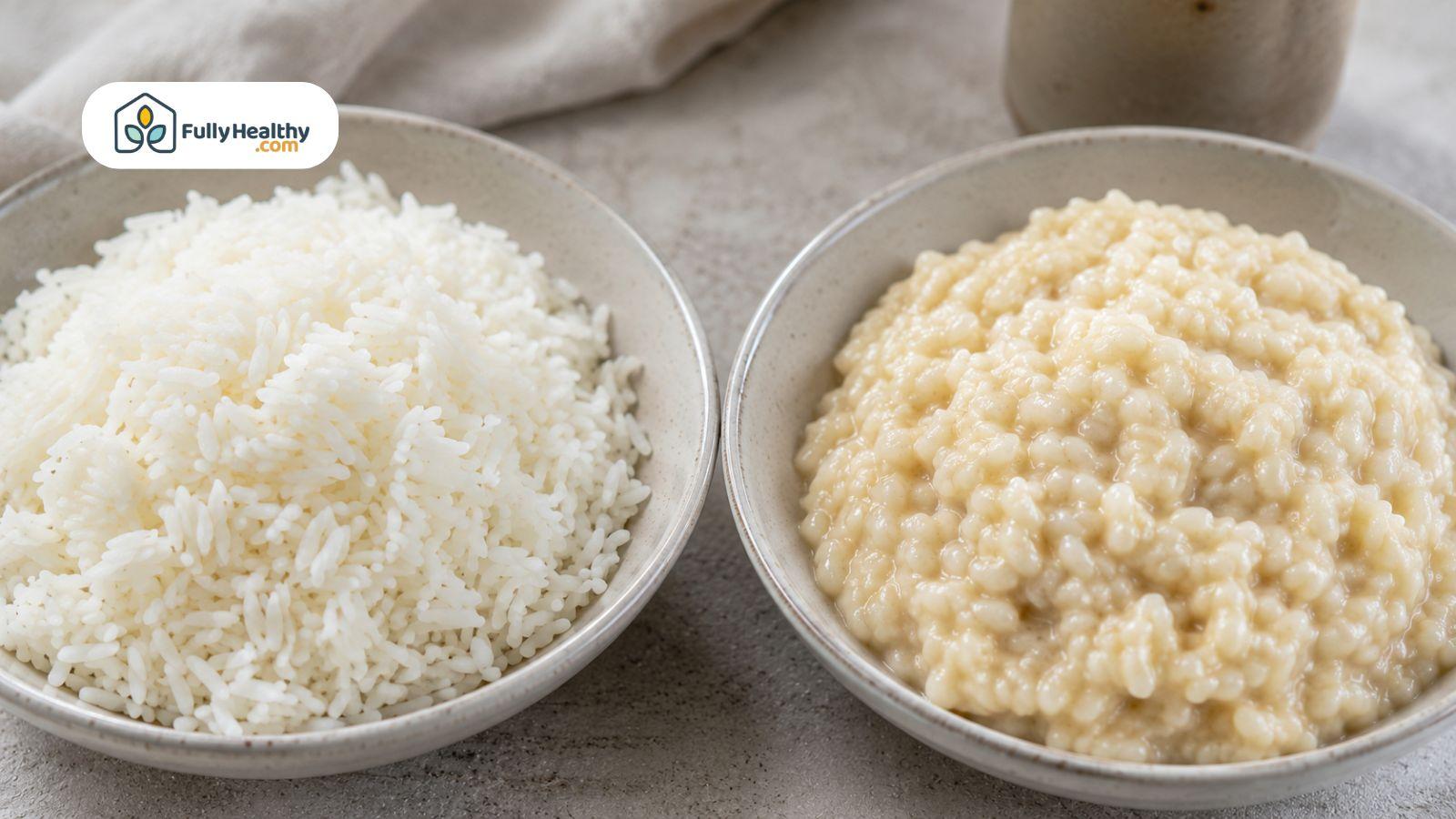
Risotto and plain rice can both fit into a balanced meal, but their nutrition differs because risotto includes extra ingredients. Butter, cheese, broth, vegetables, and protein can change its calories, saturated fat, sodium, and overall nutritional value.
Risotto vs. Plain Rice
Risotto is a prepared dish, while rice is the grain used to make it. Unlike plain cooked rice, traditional risotto combines rice with broth, fat, cheese, wine, and other ingredients that create its creamy texture and richer flavor.
-
Preparation: Plain rice is usually cooked in water, while risotto calls for broth and additional ingredients.
-
Texture: Risotto is creamy, while plain rice has separate cooked grains.
-
Fat: Butter, oil, and parmesan can increase the fat content.
-
Protein: Cheese, beef, seafood, or other protein can make risotto more filling.
-
Comparison: Pasta is different because it is commonly made from wheat, while risotto uses rice.
Calories, Protein, Fat, Fiber, and Sodium
Risotto is not automatically healthier or less healthy than plain rice because its nutrition depends on the recipe and serving size. Cheese and butter can increase saturated fat, while vegetables, peas, herbs, and protein can add nutrients and make it a more complete meal.
-
Calories: Added butter, cheese, and oil can increase calories.
-
Protein: Parmesan, meat, or seafood can raise the protein content.
-
Fat: Butter and parmesan can contribute saturated fat.
-
Fiber: Vegetables and peas can add fiber to the dish.
-
Sodium: Broth, chicken stock, and parmesan may increase sodium.
Where Can You Shop for Gluten-Free Pantry Foods?
FullyHealthy offers specialty foods for people following different dietary approaches and looking for pantry alternatives. Its online selection includes products for gluten-free, AIP, Paleo, Low-FODMAP, keto, and vegan eating preferences.
FullyHealthy and Specialty Diet Shopping
FullyHealthy organizes food around dietary needs, making it easier to shop for ingredients that match specific eating preferences. Gluten-free shoppers can browse pantry foods alongside products suited to AIP, Paleo, Low-FODMAP, keto, vegetarian, and vegan lifestyles.
-
Gluten-Free: Shop foods specifically presented for gluten-free diets.
-
AIP: Browse products suitable for an Autoimmune Protocol approach.
-
Paleo: Pantry options are available for Paleo-style eating.
-
Low-FODMAP: The store includes products for this dietary preference.
-
Vegan: Plant-based options are available across different food categories.
Gluten-Free Products and Pantry Picks
FullyHealthy offers pantry staples that can make gluten-free cooking easier. For risotto, a few ingredients can add creaminess, acidity, or savory flavor, while other gluten-free products are useful additions to your pantry.
For Your Risotto:
-
Pan's Teriyaki Mushroom Jerky: A mushroom-based option for adding savory flavor and texture.
-
Native Forest Organic Coconut Milk: A creamy alternative that works well in dairy free risotto.
-
Napa Valley Naturals Champagne Vinegar: Adds a touch of acidity that can brighten a rich risotto.
More Gluten-Free Pantry Picks:
-
Base Culture Gluten Free Sourdough Bread: A gluten-free bread option for toast, sandwiches, or serving alongside meals.
-
The Wizard's Organic Gluten Free Vegan Worcestershire: A gluten-free, vegan pantry sauce that adds savory depth to everyday cooking.
Final Thoughts
Risotto is a comforting rice dish that can fit a gluten-free diet when its ingredients are checked carefully. You can cook it in an instant pot, medium saucepan, or dutch oven over medium heat, then season with salt.
More recipes may use white wine vinegar or call for half the usual amount of another acidic ingredient. Check labels, prevent cross contact, and enjoy a creamy bowl that fits your dietary needs.
FAQs
What is Surprisingly Not Gluten-Free?
Foods such as soy sauce, malt vinegar, bouillon, seasoned meats, gravies, and certain sauces can surprisingly contain gluten, so always check the label.
Can Celiacs Eat Arborio Rice?
Yes, people with celiac disease can eat plain arborio rice because rice is naturally gluten-free, but choosing a certified product can reduce cross-contact concerns.
What Condiments are Not Gluten-Free?
Condiments containing wheat, barley, malt, regular soy sauce, or certain thickeners may not be gluten-free, so the ingredient label should always be checked.
What is the Best Cheese for Risotto?
Parmigiano-Reggiano is a classic cheese for risotto. It melts smoothly and adds a rich, nutty flavor and creamy texture.
Is Risotto Healthier Than Pasta?
Neither is automatically healthier, since nutrition depends on ingredients and portions, although risotto is rice-based while traditional pasta is generally made from wheat.
Leave a comment