

What Does Non-GMO Mean? A Simple Guide to Food Labels
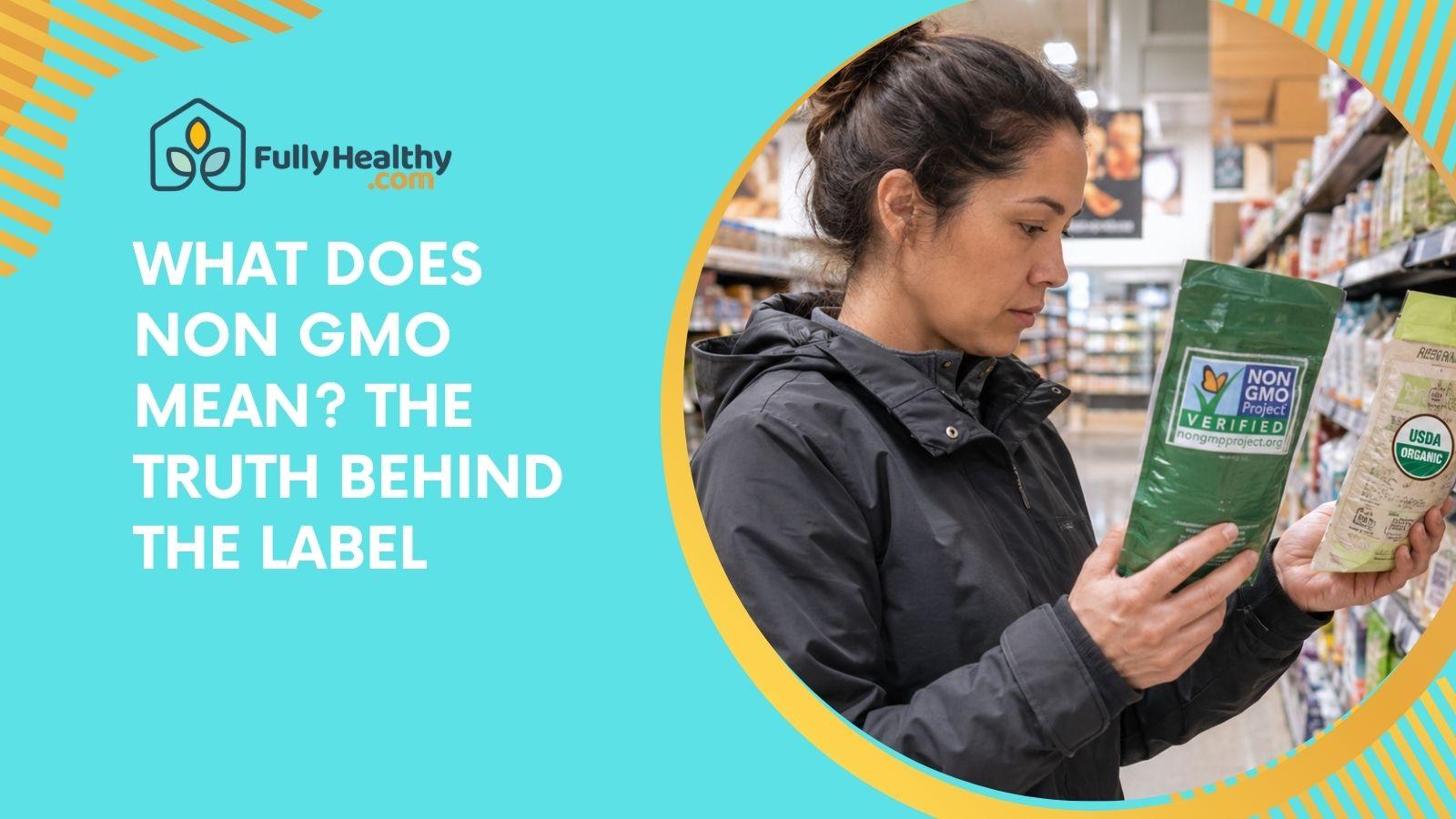
What does non-GMO mean? It generally means the product was produced according to standards intended to exclude genetically engineered ingredients; it does not necessarily guarantee zero trace presence. GMO stands for genetically modified organism. Non-GMO does not mean organic, healthier, or free from pesticides. Both GMO and non-GMO foods can be safe and nutritious.
The best choice depends on the product, its ingredients, and your needs. This guide explains the labels, health facts, differences, and how FullyHealthy may help you shop.
What Does Non-GMO Mean?
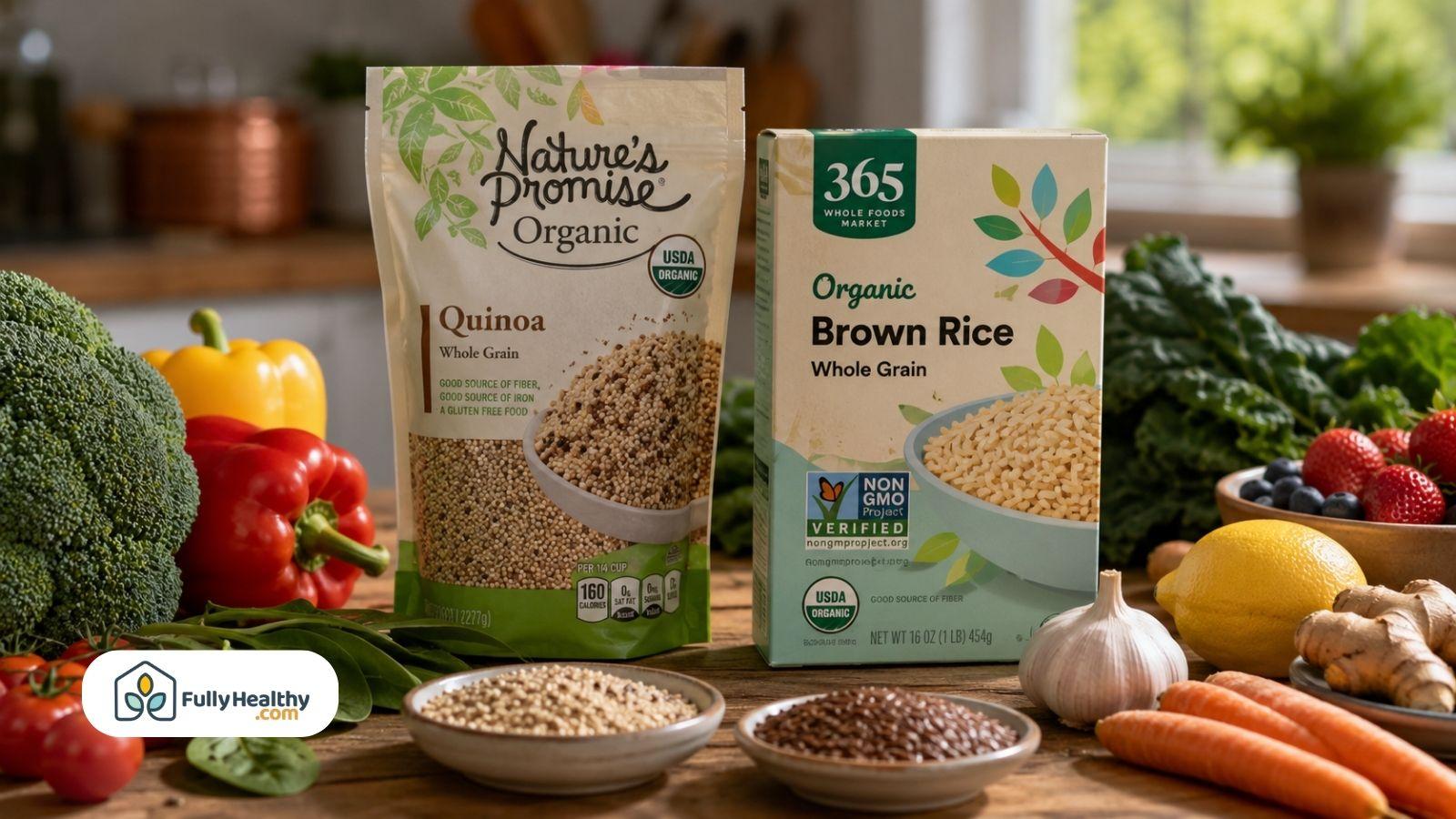
Many shoppers ask, what does non-GMO mean on food labels. A non-GMO claim indicates that the manufacturer or certifier followed defined GMO-avoidance criteria, which vary among labels. However, non-GMO does not always mean certified organic, healthier, or fully GMO-free.
What Does Non-GMO Mean on a Food Label?
A non-GMO label tells shoppers that the finished product follows standards designed to avoid genetically engineered ingredients. Programs like Non-GMO Project Verified review the supply chain and test high-risk ingredients. Non GMO project verification focuses on GMO avoidance, not organic production.
-
Non-GMO Project: Reviews sources and test results.
-
High Risk Ingredients: Often include corn, soy, sugar beets, and soy lecithin.
-
Supply Chain: Requires controls to reduce GMO contamination.
-
Food Labels: Should be checked with ingredient lists.
Is Non-GMO the Same as Organic?
No. Organic and non-GMO are related, but different. USDA Organic rules ban genetically modified ingredients and also cover farming practices, fertilizers, pesticides, and animal feed. The USDA organic label and USDA certified organic label cover more than a non-GMO claim.
-
Certified Organic: Covers organic farming.
-
USDA Organic: Restricts synthetic fertilizers, sewage sludge, and most synthetic pesticides.
-
Organic Products: Must meet rules before using the certified organic label.
-
Yearly Inspections: Help organic producers maintain organic certification.
What Does GMO Stand For?
GMO stands for genetically modified organism. A GMO can be a plant, animal, or microorganism whose genetic code has been changed through genetic engineering. Genetic engineering uses laboratory techniques to introduce, remove, or alter genetic material, whereas selective breeding changes populations by choosing organisms with desired inherited traits; both can alter DNA across generations.
What Does the Term GMO Mean?
The term GMO means scientists intentionally change an organism’s genes. Genetically modified organisms are used in agriculture and medicine. Most widely cultivated genetically engineered crops have been developed for herbicide tolerance, insect resistance, or combinations of these traits; disease-resistance traits exist but are less prevalent commercially.
-
Genetically Engineered: Describes organisms changed through biotechnology.
-
Genetic Code: Contains instructions for growth.
-
GMO Foods: May contain ingredients from approved modified crops.
-
Other Crops: Can also be changed.
How Does Genetic Engineering Change an Organism?
Genetic engineering techniques let scientists add, remove, or adjust genes. Major GMO crops include corn, soy, and sugar beets. They often appear in packaged foods and animal feed.
-
Major GMO Crops: Corn, soy, and sugar beets are common examples.
-
Certain Herbicides: Some crops can tolerate specific weed killers.
-
Finished Product: Modified ingredients may appear in oils and sweeteners.
-
GMO Seeds: Are developed to produce selected traits.
What Is Better, GMO or Non-GMO?
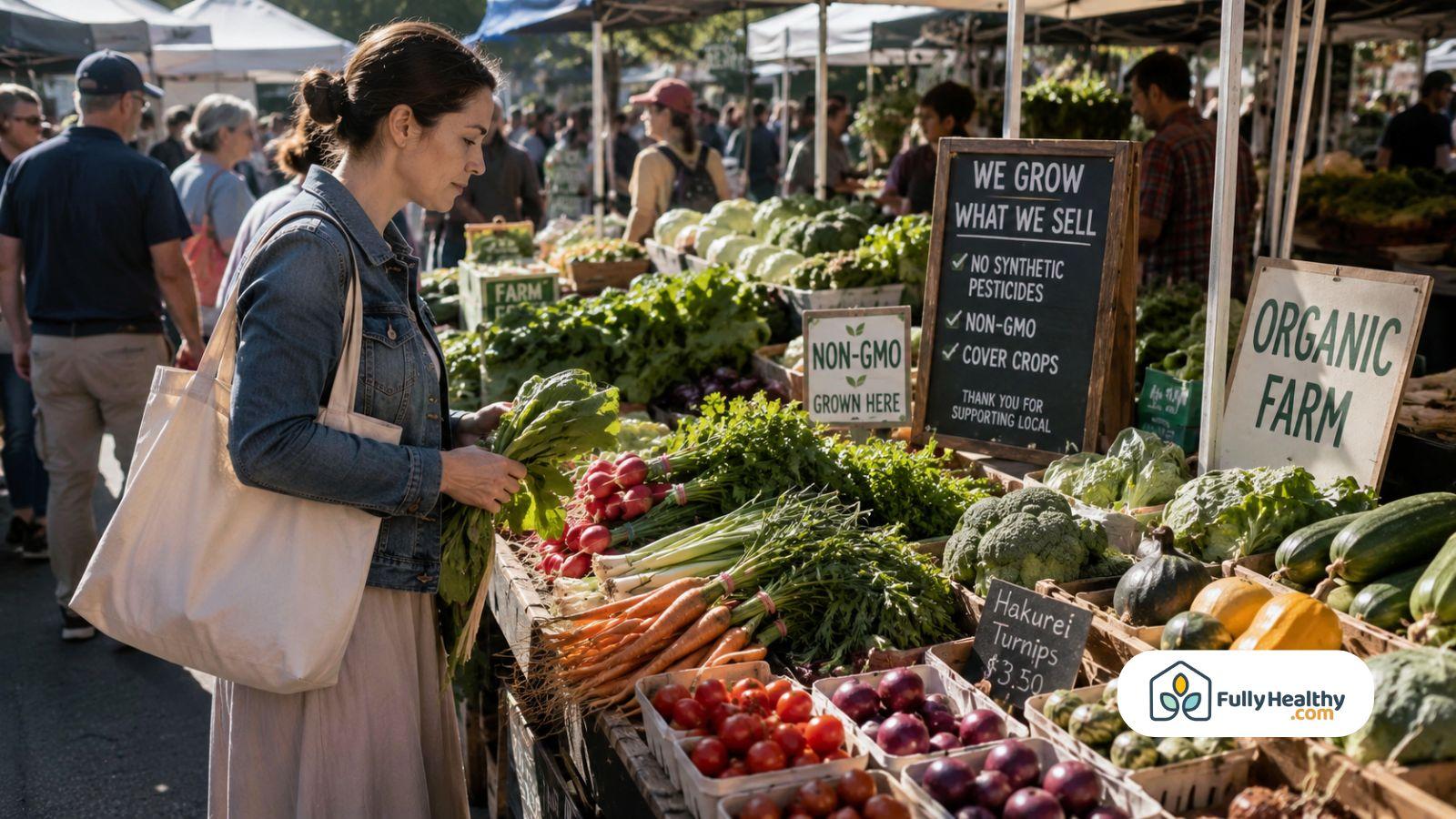
There is no single winner in the GMO vs non GMO debate. The better choice depends on your budget, values, and needs.
Is GMO or Non-GMO Food Healthier?
Research does not show that non-GMO foods are always healthier than GMO foods. Nutrition depends more on the food and its ingredients.
-
Organic Foods: Can still be high in sugar, salt, or fat.
-
Non-GMO Products: Are not automatically more nutritious.
-
Organic Apple: Organic and conventional apples generally provide similar core nutrients, although studies sometimes find differences in particular compounds or pesticide residues; evidence does not establish a consistent overall nutritional advantage.
-
Grocery Store Shelves: Compare options using nutrition facts.
What Are the Main Benefits and Concerns of GMO Foods?
Some genetically engineered traits can reduce crop losses, insecticide use, or production costs and may increase effective yields, but results depend on the crop, trait, pest pressure, location, and farming system.
Some shoppers still worry about GMO contamination and pesticides. Choosing organic foods, non-GMO ingredients, or non-organic foods depends on personal priorities. Readers should compare nutrition facts, ingredients, certifications, price, and personal dietary needs before choosing. A trusted label can guide decisions, but it should never replace a review of the complete product.
-
Organic Producers: Follow rules for organic farming and approved inputs.
-
Non-GMO Farming Practices: Focus on limiting contact with modified crops.
-
Avoid GMOs: Look for trusted certification and clear product labels.
-
NSF International: May appear as an independent certification body.
Are Non-GMO Foods Healthy?
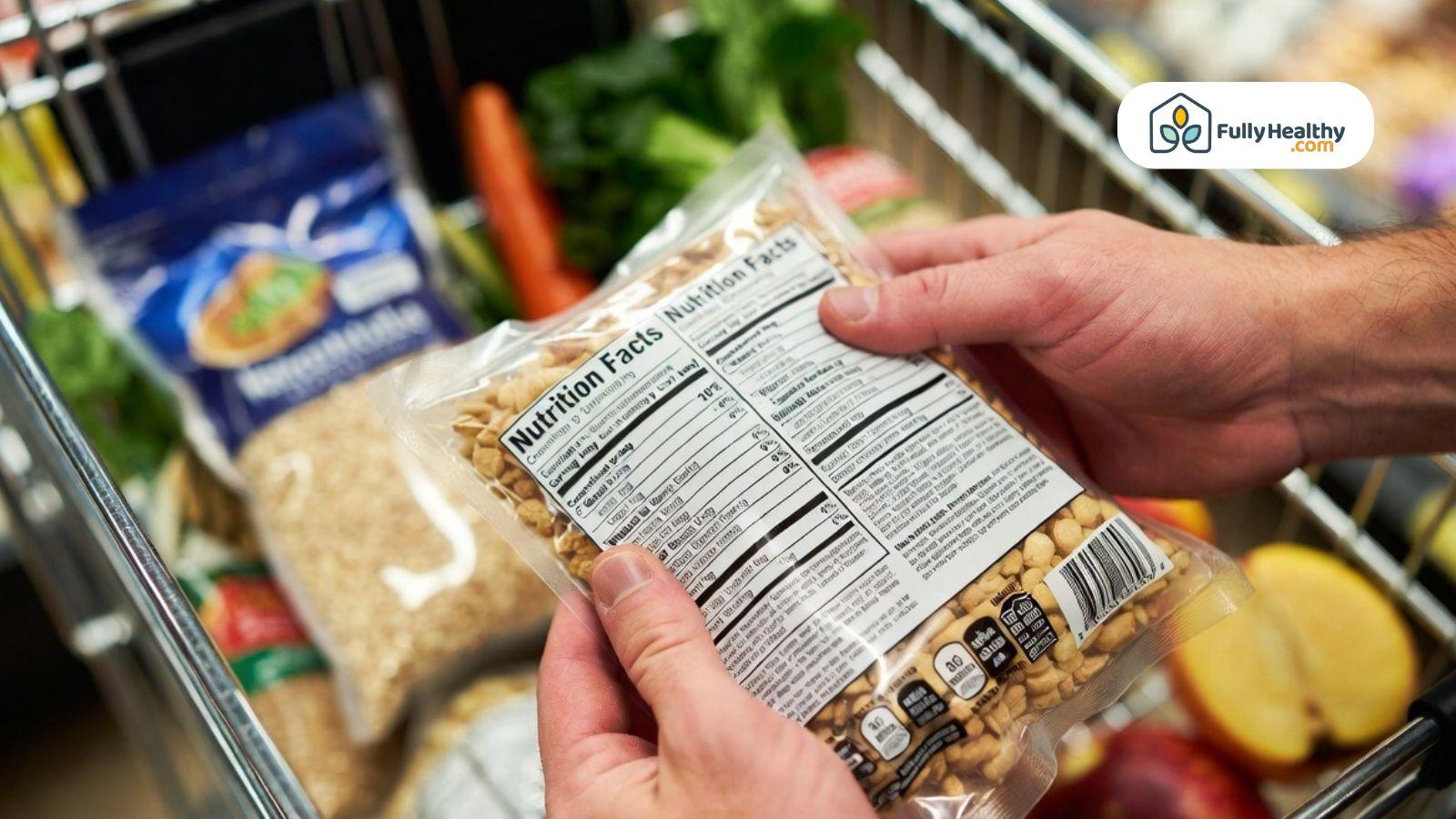
A non-GMO label may look healthier, but that is not always true. The label explains how certain ingredients were produced. It does not describe full nutrition. A healthy choice depends on ingredients, serving size, and overall diet. Understanding these key distinctions helps shoppers choose wisely.
Does a Non-GMO Label Mean a Food Is Healthy?
A non-GMO label does not guarantee that a food is low in sugar, sodium, calories, or unhealthy fats. A snack can be non-GMO and still be highly processed. Shoppers should read the Nutrition Facts panel and ingredient list.
-
Nutrition Facts: Check calories, added sugar, sodium, fiber, protein, and saturated fat.
-
Ingredient List: Choose foods with useful nutrients and ingredients that fit your needs.
-
Key Distinctions: Non-GMO describes production methods, while healthy describes nutritional value.
-
Consumer Demand: Interest in clear labels has pushed brands to share more details.
How Can You Tell Whether a Non-GMO Food Is Nutritious?
Judge the whole product, not just the label. Compare similar foods and choose the best option. Organic crops and conventional crops can both provide vitamins, minerals, and fiber. The best choice depends on the food itself.
-
Organic Crops: These can be nutritious, but the organic label does not prove better nutrition.
-
Chemical Fertilizers: Organic standards restrict their use, but this does not automatically improve nutrients.
-
Healthy Choice: Focus on whole foods, balanced meals, reasonable portions, and variety.
-
Gold Standard: Read the ingredient list and Nutrition Facts panel to compare products.
How Can Fully Healthy Help You?
Shopping for specialty foods can be difficult with allergies, sensitivities, or a strict eating plan. Fully Healthy brings choices into one store and organizes them by dietary need. It can save time for AIP, gluten-free, or allergen-aware shoppers.
How Can FullyHealthy Help You Shop for Specialized Dietary Needs?
Fully Healthy groups products into AIP Elimination, AIP Reintros, Snacks, Breakfast, Seasonings, Bundles, Personal Care, and Health & Wellness. These categories reduce the time spent searching stores. Still, shoppers should review each product page to ensure compliance with dietary rules.
-
Specialty Collections: Narrow your search by diet, meal type, or product need.
-
Easy Comparison: Organized listings simplify reviews of brands and ingredients.
-
Ensure Compliance: Check ingredients, allergen statements, and certifications before buying.
-
Convenience: A focused marketplace simplifies specialty shopping.
Which Products Can You Find on FullyHealthy?
FullyHealthy lists specialty sweeteners and baking mixes. Confirmed products include Big Tree Farms Organic Brown Coconut Sugar, Bob’s Red Mill Organic Coconut Sugar, Coombs Family Farm Organic Maple Sugar, Coombs Family Farm Organic Maple Syrup, Date Lady Date Sugar, and EAT G.A.N.G.S.T.E.R baking mixes.
-
Sweeteners: Choices include coconut sugar, maple sugar, maple syrup, and date sugar.
-
Baking Mixes: Options include Cut-Out Sugar Cookie Mix, Banana Bread Mix, and Chewy Choconot Brownie Mix.
-
Product Review: Check ingredients and certifications because formulas and stock can change.
-
Smart Shopping: Choose products that match your diet, budget, taste, and cooking plans.
Final Thoughts
Understanding what does non GMO mean makes it easier to shop with confidence. A non-GMO label shows that a product avoids genetically modified organisms, but it does not always mean it is certified organic or healthier.
Compare food labels, ingredients, and nutrition facts before buying. Whether you choose organic and non-GMO or conventional food, the best option is one that fits your health goals, budget, and lifestyle.
FAQs
What are the 5 examples of GMO?
Common examples of major GMO crops include corn, soy, sugar beets, canola, and cotton, which are used in many packaged foods, animal feed, and everyday ingredients.
How can I tell if a food is Non-GMO?
Look for a credible, independently verified non-GMO certification. An ingredient list alone cannot establish GMO status because genetically engineered and non-engineered ingredients generally have the same names, and highly refined ingredients may contain little or no detectable modified DNA or protein.
Why do people eat non-GMOs?
Many people choose non-GMO foods because of personal preferences, consumer demand, or support for non gmo farming practices and GMO avoidance, even though approved GMO foods are considered safe by major health organizations.
Are GMOs 100% safe?
No food can be described as 100% risk-free, but genetically engineered foods are subject to premarket safety assessment under regulatory systems that differ by country. In the United States, developers generally participate in the FDA’s premarket biotechnology-consultation process, while additional mandatory oversight may apply through USDA and EPA, depending on the product and trait.
Current evidence has not identified greater human-health risks from commercially available genetically engineered foods than from comparable conventional foods, although safety conclusions apply to assessed products rather than to genetic engineering as an undifferentiated category.
Can you be Non-GMO but not organic?
Yes. A product can be non-GMO without being certified organic because non-GMO focuses on avoiding genetically engineered ingredients, while USDA Organic and the USDA Certified Organic label also cover organic production, farming practices, synthetic pesticides, synthetic fertilizers, and organic certification.
Leave a comment