

What’s the Difference Between Bread Flour and All-Purpose Flour? Choose The Right One
The answer is protein. Bread flour has more protein, so it builds stronger gluten and gives bread more chew, height, and structure. All-purpose flour has less protein, making it softer and more flexible for cookies, cakes, muffins, and everyday baking.
In this guide, you’ll learn when to use each flour, when swapping works, and how the choice changes your dough and final bake for better, more reliable results today.
Featured Baking Pick
Bob's Red Mill // Gluten Free 1-to-1 Baking Flour - 44 oz
Loading...
What’s the Difference Between Bread Flour and All-Purpose Flour?
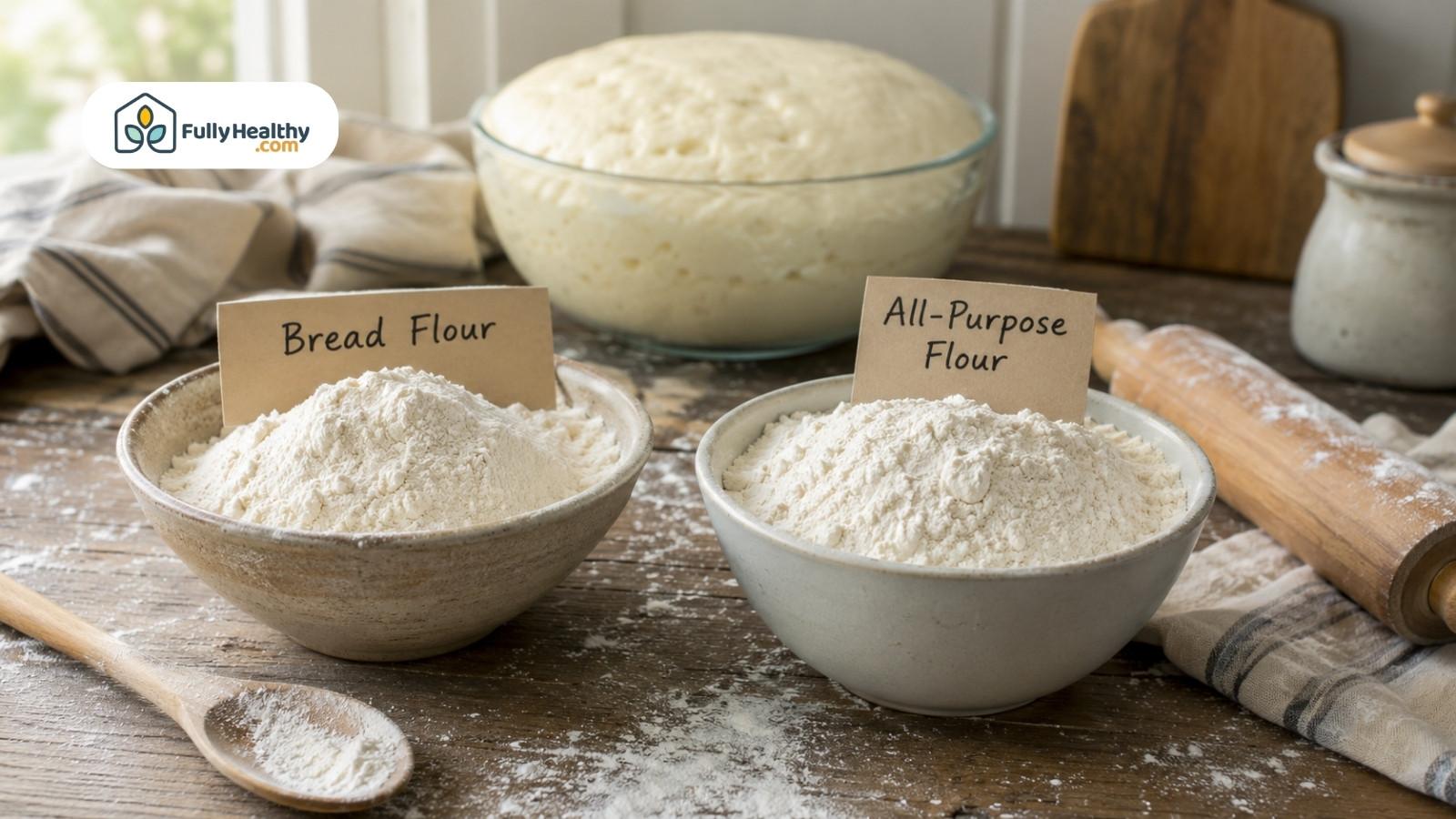
Bread flour vs all-purpose flour mainly comes down to protein content. All-purpose flour has about 10–12% protein, while bread flour contains about 12-13% protein. King Arthur AP flour is about 11.7%, so some brands sit near the higher end. This small gap changes gluten development, water absorption, and the final texture of baked goods.
How Does Protein Change Flour?
Bread flour typically works better for baking bread because it is a higher protein flour. When wheat flour mixes with water, it forms wheat gluten. This gives dough strength and helps trap gas from yeast or a sourdough starter.
-
Protein: More protein helps build stronger dough for bread recipes, sourdough bread, pita bread, and pizza dough.
-
Texture: Bread flour can create chewier bread with a chewier texture because it develops more gluten.
-
Best Use: Use it for bread baking, bread making, no knead bread, and bread machine recipes.
Why Does Bread Flour Absorb More Water?
Bread flour absorbs more water than all-purpose flour because stronger gluten can hold more moisture. All-purpose flour absorbs less water than bread flour, so dough made with AP flour may feel softer or wetter. This is why the two flours do not always act the same.
-
Dough Feel: Bread flour dough is usually stronger, while AP flour dough can feel softer and looser.
-
Recipe Balance: If a recipe calls for bread flour, using AP flour may change the dough texture.
-
Flour Control: Add more flour only if the dough is too wet after mixing and resting.
Could I Substitute All-Purpose Flour for Bread Flour?
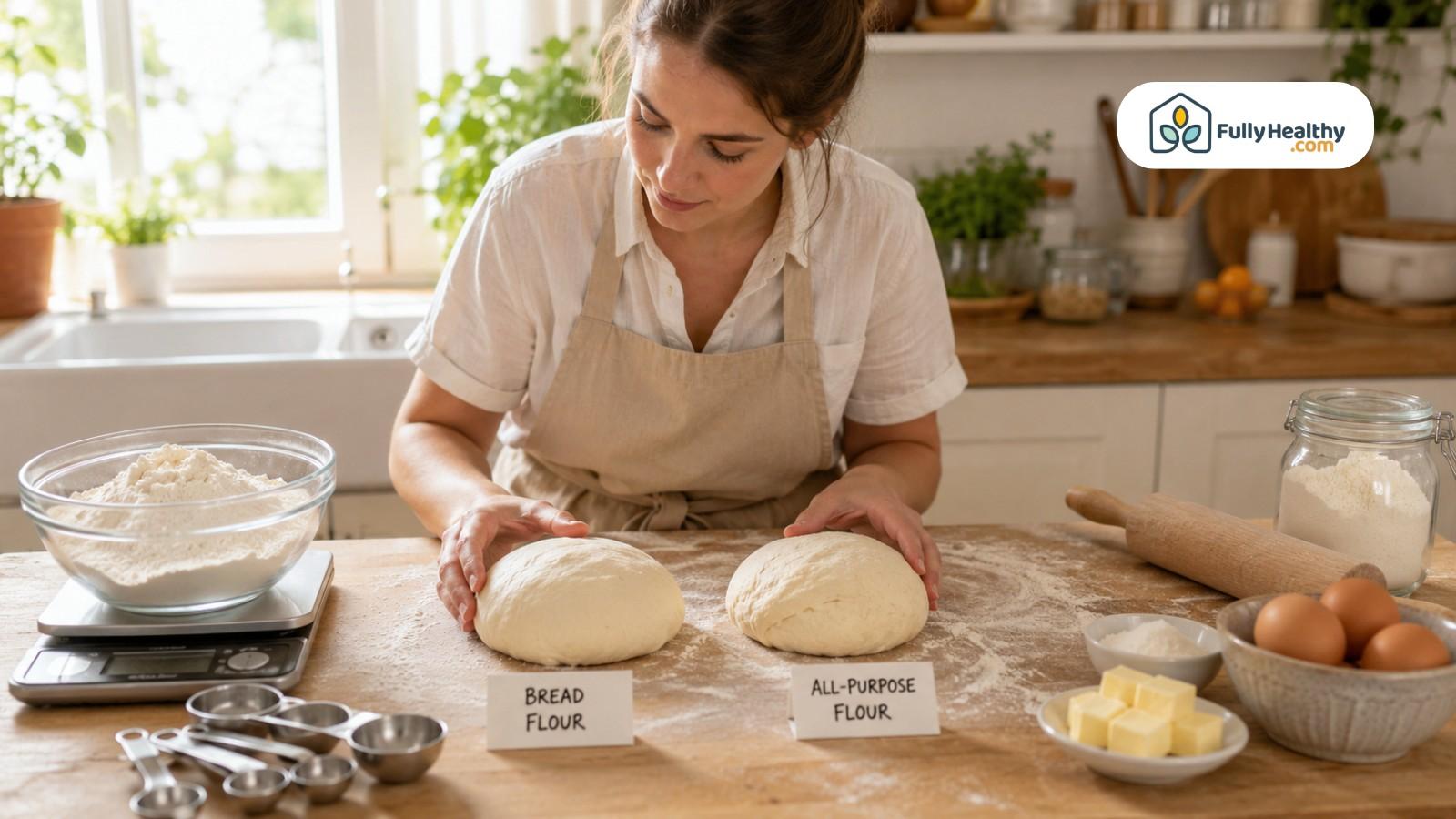
Yes, you can substitute bread flour with all-purpose flour in many bread recipes. If you have never bought bread flour, AP flour can still help you make fresh bread at home. The loaf may be softer, shorter, and less chewy because all-purpose flour has about 10-11.7% protein.
When Is All-Purpose Flour Safe To Use?
All-purpose flour works well for simple homemade bread, soft rolls, and pita bread. It is not always best for sourdough bread or pizza dough that needs strong structure. Still, it can work when you want to bake your own bread with basic pantry flour.
-
Easy Swaps: Use AP flour in simple bread recipes that do not need a very chewy crust.
-
Softer Results: Expect softer baked goods with less chew than strong bread flour.
-
Flour Choice: Avoid cake flour for yeast bread because it is one of the lower protein flours.
How Should You Adjust Water?
Reduce water by 15-30g when substituting all-purpose for bread flour. This matters because all-purpose flour absorbs less water than bread flour. Start with less liquid, then add a little more only if the dough feels dry.
-
Hydration: Begin with less water so the dough does not become too sticky.
-
Gluten Support: Adding vital wheat gluten can help improve dough strength.
-
Pantry Note: Vital wheat gluten can help, but it will not make every flour called bread flour.
What Happens If You Bake With Bread Flour Instead Of All-Purpose Flour?
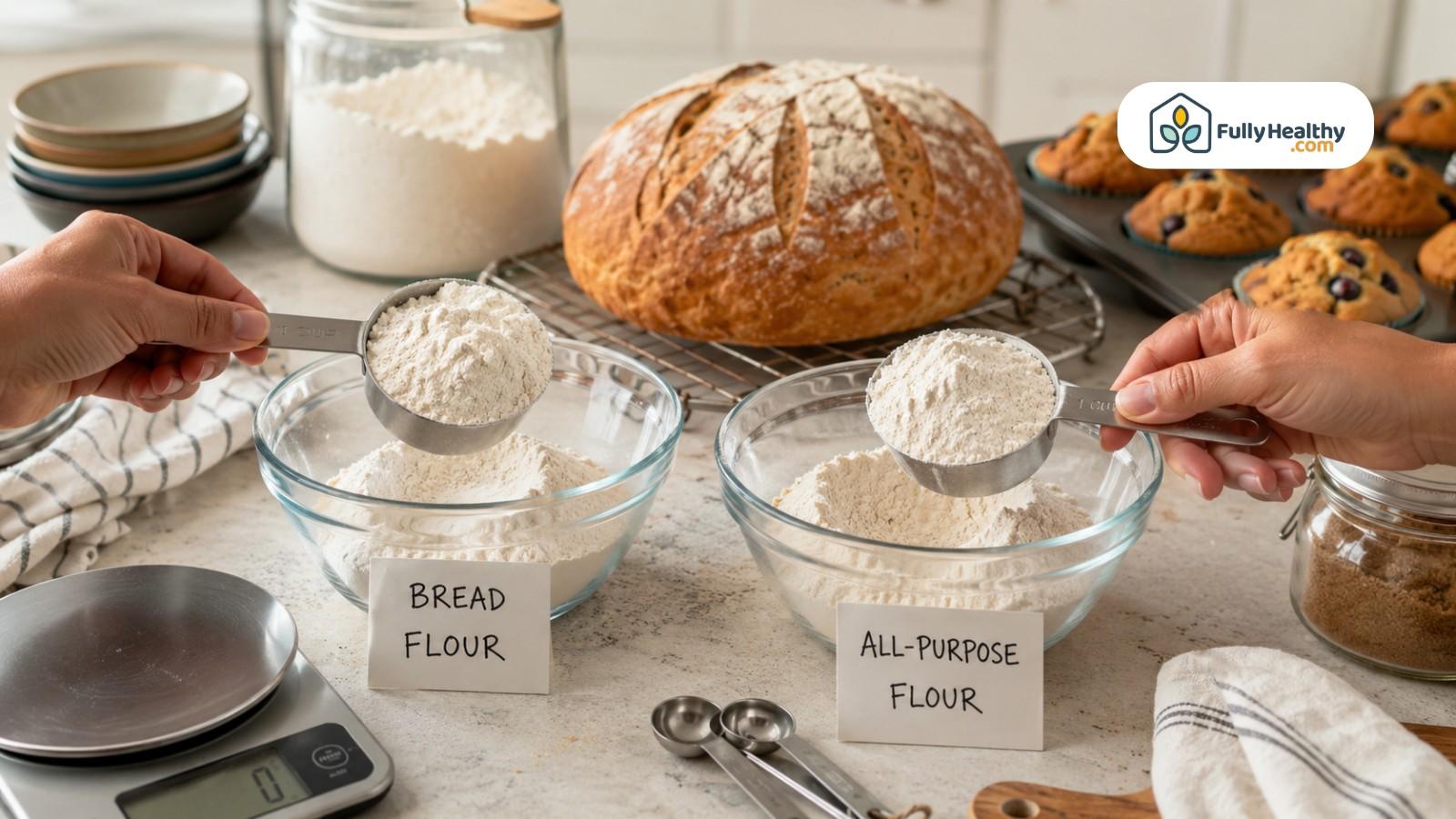
Using bread flour instead of all-purpose flour can make baked goods stronger, chewier, and firmer. This helps when baking bread, but it can be a problem for tender baked goods. Bread flour vs softer grain flours matters because each flour gives a different result.
Will Bread Flour Make Tender Bakes Tough?
Bread flour can make cakes, muffins, pancakes, and quick breads too firm. These recipes need less gluten development to stay soft. Tender baked goods often work better with all-purpose flour, cake flour, baking soda, or bleached flour when the recipe needs a lighter crumb.
-
Better Choice: Use cake flour or all-purpose flour for soft cakes and muffins.
-
Mixing Tip: Mix gently because too much mixing can make the batter tough.
-
Texture Goal: Choose lower protein flours when you want a soft and tender bite.
When Can Bread Flour Improve Chewy Breads?
Bread flour can improve pizza dough, focaccia, baguettes, and sourdough bread because these need stretch and strength. Whole wheat flour and specialty flours made from wheat berries or other grain flours may need extra water. They absorb more liquid than white flour.
-
Best Fit: Use bread flour for chewy crusts, open crumbs, and stronger dough.
-
Whole Grains: Whole wheat flour may need more water because it absorbs more moisture.
-
Final Tip: For flour vs all purpose choices, match the flour to the texture you want.
What Happens If I Make Bread With All-Purpose Flour?
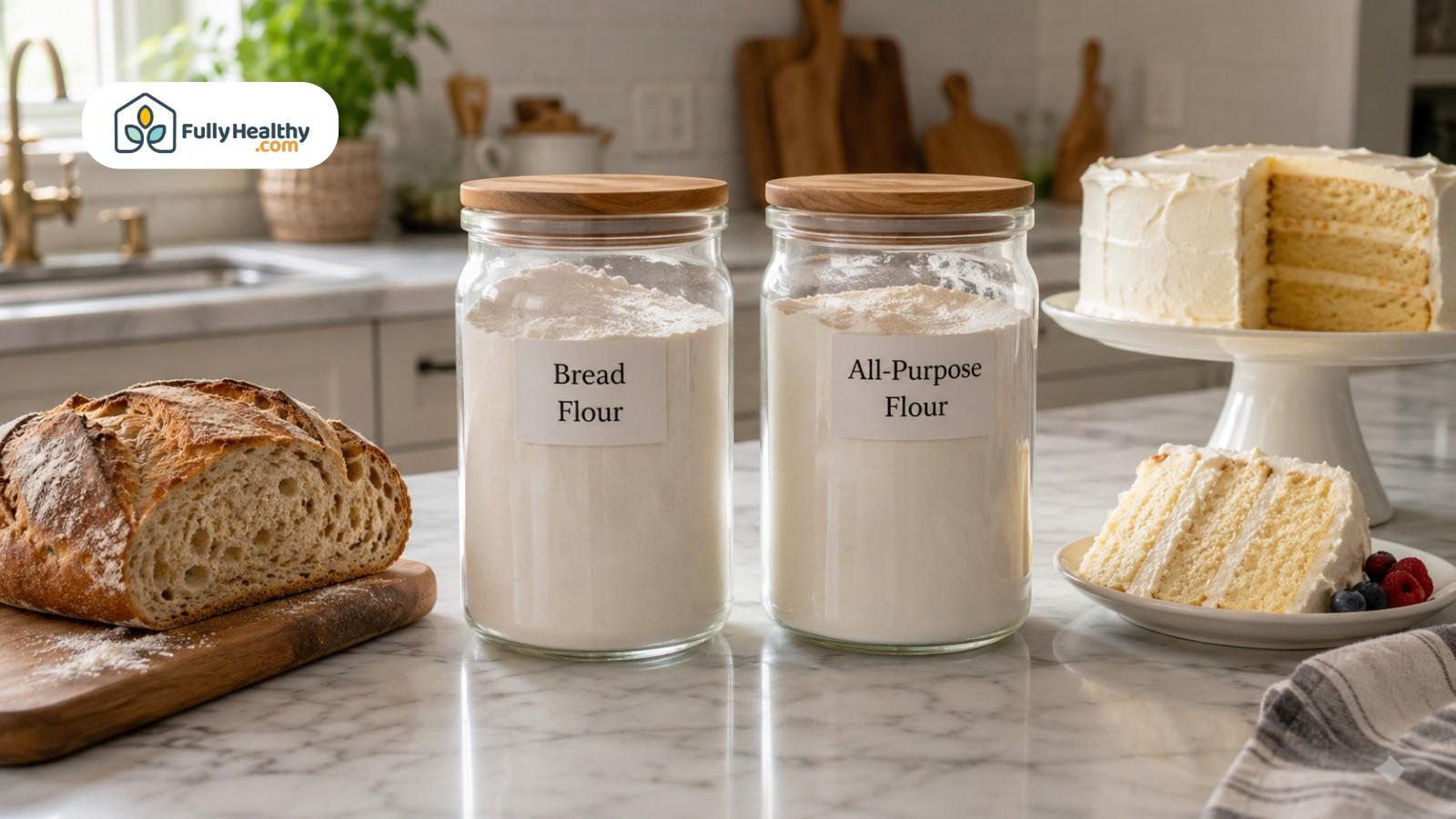
All-purpose flour can still make good homemade bread, especially if you are just getting started baking. It is a regular flour made for general baking, so it works in many simple bread recipes. The key differences are rise, chew, and structure because its protein percentage is lower than bread flour.
Can All-Purpose Flour Still Make A Good Homemade Loaf?
Yes, all-purpose flour can make a good loaf. The bread may be softer and less chewy, but it can still taste fresh and satisfying. The right flour depends on the recipe and the texture you want.
-
Pantry Fit: Use all-purpose flour for sandwich bread, soft rolls, and beginner-friendly no-knead bread.
-
Texture Note: It may not hold gas bubbles as strongly as flour with higher protein content.
-
Smart Tip: Use the same amount first, then adjust the water or flour by feel.
Why Can Bread Made With All-Purpose Flour Turn Out Softer Or Tighter?
All-purpose flour has less protein, so it may form gluten more gently. This can make the dough less stretchy and less airy. If you wonder how much gluten matters, it affects height, chew, and crumb.
-
Softer Crumb: Soft wheat flour and lower-protein blends can create a more tender texture.
-
Less Strength: Bread flour gives better gluten development for chewy artisan loaves.
-
Helpful Upgrade: A bread book or Bob’s Red Mill guide may suggest adding gluten for stronger dough.
How Can FullyHealthy Help With Flour Alternatives And Baking Mixes?
FullyHealthy can help readers find specialty baking options when wheat flour is not the ideal flour. This section should not claim these products work like strong bread flour. Instead, show how they support special diets, quick baking, and smarter pantry choices.
Which FullyHealthy Products Can Support Gluten-Free Or Specialty Baking?
FullyHealthy offers baking products for readers who want simple specialty options. These are not the best flour for every bread recipe, but they can help with gluten-free, grain-free, and quick-bake needs.
-
AiPeazy Flatbread Pizza Crust Mix With Tigernut Flour: Choose this for quick flatbread-style pizza crusts.
-
Otto’s Naturals Cassava Flour 2 lb: Use this for grain-free baking when a recipe calls for cassava flour.
-
Simple Mills Pumpkin Muffin & Bread Almond Flour Mix 9 oz: Pick this for soft pumpkin muffins or quick bread.
How Should Readers Choose Between Tigernut, Cassava, And Almond Flour Mixes?
Choose based on the bake you want, not only the flour name. Professional bakers match flour to texture, diet needs, and structure. These mixes can make baking easier while keeping choices simple.
-
Tigernut Mix: Choose it when you want a quick crust with a specialty flour base.
-
Cassava Flour: Use it when you need a grain-free flour for a specific recipe.
-
Almond Flour Mix: Choose it for sweet, soft bakes and happy baking.
Final Thoughts
Knowing what's the difference between bread flour and all purpose flour helps you choose the right flour before mixing dough or batter. Bread flour has more protein, so you can substitute bread flour for all-purpose flour when you want stronger structure and more chew.
Substituting bread flour for all-purpose can increase chewiness, especially in pizza, bagels, and rustic loaves. All-purpose flour is softer and more flexible, but using all-purpose flour in bread recipes may yield denser results because it has less gluten strength.
Substituting all-purpose flour for bread flour affects texture, rise, and bite. Still, all-purpose flour produces a tender and delicate texture, making it best for cookies, cakes, and pastries. Choose based on your recipe goal and texture needs.
FAQs
Can I Use Bread Flour Instead Of All-Purpose Flour?
Yes, you can substitute bread flour for all-purpose flour, but it may make baked goods chewier and firmer.
What Happens If I Use All-Purpose Flour In Bread Recipes?
Using all-purpose flour in bread recipes may yield denser results because it has less protein than bread flour.
Does Substituting All-Purpose Flour For Bread Flour Change Texture?
Yes, substituting all-purpose flour for bread flour affects texture, rise, chewiness, and the final crumb.
Which Flour Is Better For Cookies, Cakes, And Pastries?
All-purpose flour is best for cookies, cakes, and pastries because it produces a tender and delicate texture.
Why Does Bread Flour Make Baked Goods Chewier?
Bread flour has more protein, so substituting bread flour for all-purpose can increase chewiness and structure.
Leave a comment