

Are Waffles Healthy? What Your Breakfast Is Really Serving

Are waffles healthy? Traditional waffles are often high in refined carbs, added sugar, and fat, so they are not the healthiest breakfast on their own. However, better ingredients can change that. Whole grains, protein, fresh fruit, and smarter toppings can improve your waffles. Here’s what to know before your next breakfast.
Are Waffles Healthy?

Traditional waffles are not typically the healthiest breakfast choice because they often combine refined carbohydrates, added sugar, and fat with little fiber. However, their nutrition changes based on the recipe, serving size, and toppings.
Traditional Waffles and Their Nutritional Profile
Traditional waffles made with refined flour tend to be low in fiber, while their protein, sugar, and fat content varies by recipe and serving size. Refined grains are also generally digested more quickly than fiber-rich whole grains, which can lead to a faster rise in blood sugar.
For reference, a 75-gram plain waffle prepared from a standard recipe provides approximately:
-
Calories: About 218 calories per waffle.
-
Carbs: Around 25 grams of carbohydrates.
-
Fat: About 11 grams of total fat.
-
Protein: Around 6 grams of protein.
-
Fiber: Very little dietary fiber.
Toppings Can Change the Health Impact
Your toppings can easily make or break a waffle breakfast. Loading up on syrup, butter, and sweet spreads adds extra sugar, calories, and fat. A study notes that fats, oils, and sweets can be high in calories and are best used in smaller amounts. For better balance, try fresh fruit, Greek yogurt, nuts, seeds, or nut butter.
-
Fresh fruit: Adds sweetness, fiber, and useful nutrients.
-
Greek yogurt: Provides more protein and a creamy topping.
-
Nut butter: Adds protein and fat to the meal.
-
Maple syrup: Keep portions moderate to limit added sweetness.
-
Butter: Smaller servings help control calories and saturated fat.
Are Waffles Good for Weight Loss?

Waffles can fit into a weight loss diet, but they are not a weight-loss food by themselves. What matters more is how much you eat, what goes on top, and how the meal fits into your daily calorie needs.
Portion Size and Calorie Intake
You can still enjoy waffles while losing weight. One standard waffle can be a reasonable starting portion, then build the meal with fruit and a protein source such as eggs or Greek yogurt. Keep butter, syrup, and other calorie-heavy toppings modest.
-
Serving size: Stick to a portion that fits your calorie needs.
-
Calories: Remember that toppings count toward the total.
-
Added sugar: Choose low sugar options when possible.
-
Toppings: Keep butter and syrup portions small.
-
Balance: Build the rest of the meal with nutritious foods.
Protein and Fiber for a More Filling Meal
Protein and fiber help make waffles more filling and can provide sustained energy through the morning. High protein waffles are one option, or you can add eggs, Greek yogurt, nuts, or nut butter. Whole grains, oats, and fresh fruit can bring more fiber to the meal.
-
Eggs: One large egg provides about 6 grams of protein.
-
Greek yogurt: A ½-cup serving can provide around 10 grams of protein.
-
Nut butter: Two tablespoons provide roughly 7 grams of protein.
-
Oats: A ½-cup serving provides about 4 grams of fiber.
-
Fruit: Berries can add roughly 3 to 4 grams of fiber per cup.
How Can You Make Waffles Healthier?
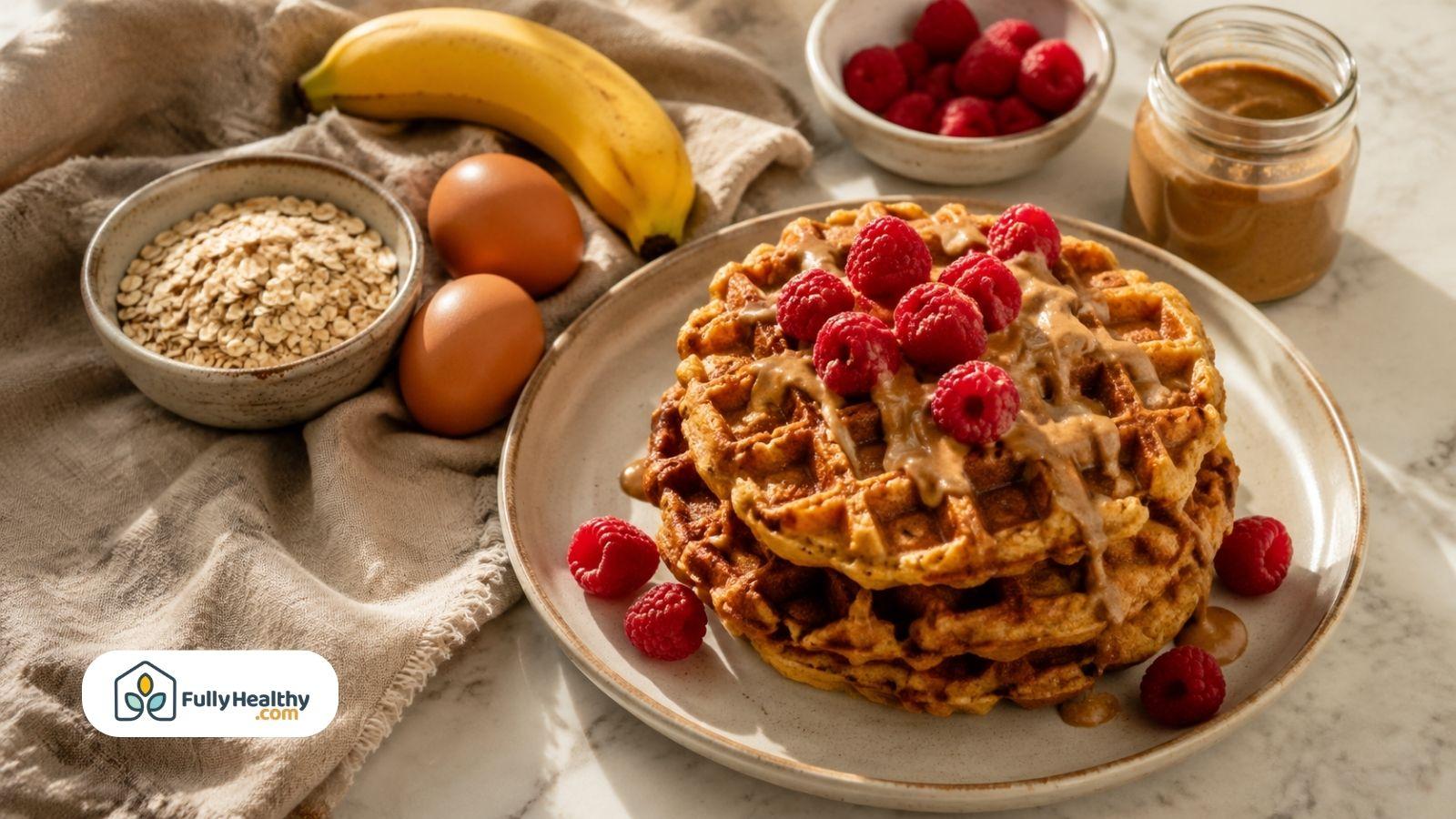
You can make waffles healthier by using whole-grain flour, adding more protein and fiber, and cutting back on added sugar and excess fat. Simple ingredient swaps can improve the nutrition while keeping the familiar taste and texture of waffles.
Whole-Grain and Alternative Flour Options
Start by swapping some or all of the refined white flour for a more nutritious option. Whole wheat flour and oats add whole grains and more fiber, while buckwheat, almond, cassava, and coconut flour give you more choices for gluten free recipes. Just keep in mind that each flour can change how the batter cooks in a waffle iron.
-
Whole wheat flour: Adds more fiber and whole grains.
-
Buckwheat flour: Naturally gluten free and rich in nutrients.
-
Oats: Add whole grains and extra fiber.
-
Almond flour: Adds protein and healthy fats.
-
Cassava flour: A grain-free option with a mild taste.
Simple Ingredient Swaps at Home
You do not need to change the whole recipe to make better waffles. Cut back on added sugar, add protein with eggs or Greek yogurt, and choose your cooking fat carefully. For dairy free or vegan waffles, plant milk and egg substitutes can work well in many recipes.
-
Sugar: Use less when fruit already adds sweetness.
-
Protein: Add eggs, Greek yogurt, or a high protein mix.
-
Milk: Use dairy or unsweetened plant milk.
-
Fat: Use butter, coconut oil, or vegetable oil in moderation.
-
Leftovers: Reheat frozen waffles in a toaster or air fryer.
Make Healthier Waffles with FullyHealthy
FullyHealthy makes it easier to shop for pantry staples that match specific dietary needs. Its selection includes products for gluten-free, dairy-free, vegan, Paleo, AIP, and other specialty diets.
Shop Specialty Foods at FullyHealthy
FullyHealthy is an online marketplace focused on foods for people following specialty diets or looking for alternatives to conventional pantry products. Shoppers can browse baking mixes, snacks, sauces, condiments, and other food while filtering products based on dietary preferences and ingredients.
-
Specialty diets: Shop options for gluten-free, Paleo, AIP, and other diets.
-
Dietary needs: Browse dairy-free, grain-free, and other specialty products.
-
Pantry foods: Choose from baking, breakfast, snacks, sauces, and staples.
-
Convenience: Shop specialty brands together in one online marketplace.
-
Choices: Compare ingredients and nutrition facts before selecting products.
Pancake and Waffle Mixes From FullyHealthy
FullyHealthy carries several pancake and waffle mixes that use alternatives to traditional refined wheat flour. Options include cassava, tigernut, almond, coconut, and protein-based mixes, giving shoppers different choices for gluten free, dairy free, vegan waffles, and protein waffles.
-
EAT G.A.N.G.S.T.E.R. Pancake and Waffle Mix: Uses cassava, tigernut, and coconut-based ingredients.
-
Luv & Yum Original Pancake & Waffle Mix: A vegan mix made with cassava and tigernut flour.
-
Simple Mills Pancake & Waffle Almond Flour Mix: Made with almond flour and coconut flour.
-
Luv & Yum Protein Pancake & Waffle Mix: Provides about 6 grams of protein per serving.
-
AiPeazy Tigernut Waffle & Pancake Mix: Combines tigernuts with tapioca flour.
Final Thoughts
Traditional waffles can be high in refined carbs, added sugar, and fat, but healthier ingredients and portions can improve the meal. Choosing low sugar recipes, checking nutrition facts, and adding protein or fruit may also help reduce blood sugar spikes.
Healthy options like whole grains, Greek yogurt, and strawberries add valuable nutrients. Learn how to cook waffles that fit your needs and enjoy breakfast with better balance.
FAQs
Are Waffles Okay to Eat on a Diet?
Yes, waffles can fit into a diet if they are high in protein and paired with balanced, nutrient-rich ingredients.
Is Waffle a Junk Food?
Waffles are not automatically junk food, but traditional versions can be high in refined carbs, sugar, and fat.
Is It Okay to Eat Waffles Once a Week?
Yes, eating waffles once a week is generally fine as part of a balanced diet, especially when you keep portions and sugary toppings moderate.
What Is Healthier, a Pancake or a Waffle?
Pancakes are generally the lighter choice because traditional waffles typically contain more fat and calories to create their crisp texture.
Are Frozen Waffles Healthy for Breakfast?
Frozen waffles are not typically a balanced breakfast on their own, but healthier options with whole grains, more protein, more fiber, and less added sugar can be better choices.
Leave a comment