

Can You Eat the Shells of Sunflower Seeds? The Truth About Swallowing the Hulls
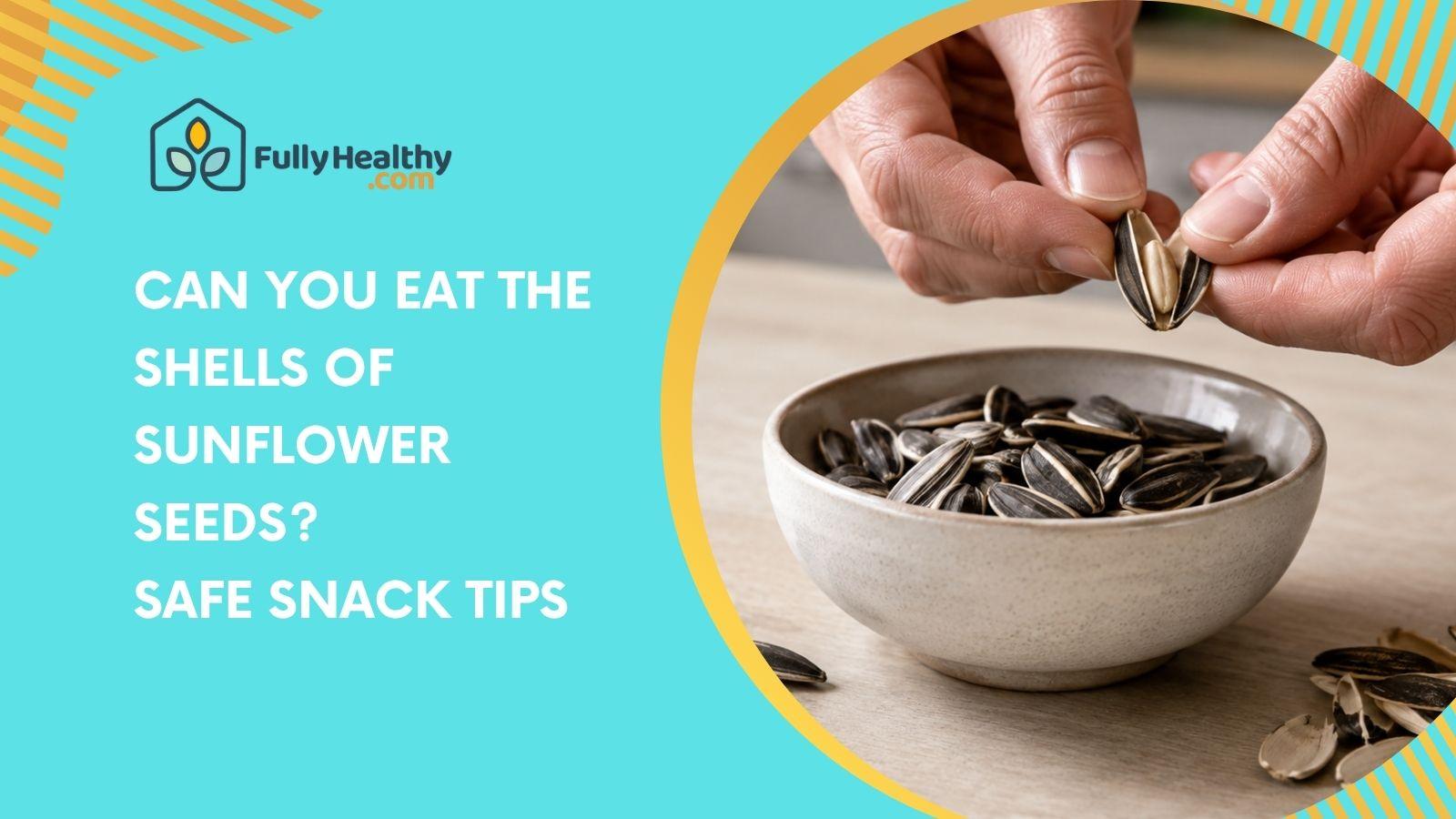
Can you eat the shells of sunflower seeds? It is not recommended because the shells are tough, sharp, and difficult for the body to digest. A swallowed piece is usually harmless, but larger amounts may cause digestive problems. Here is what everyone should know about sunflower seed shells and kernels.
Can You Eat Sunflower Seed Shells?
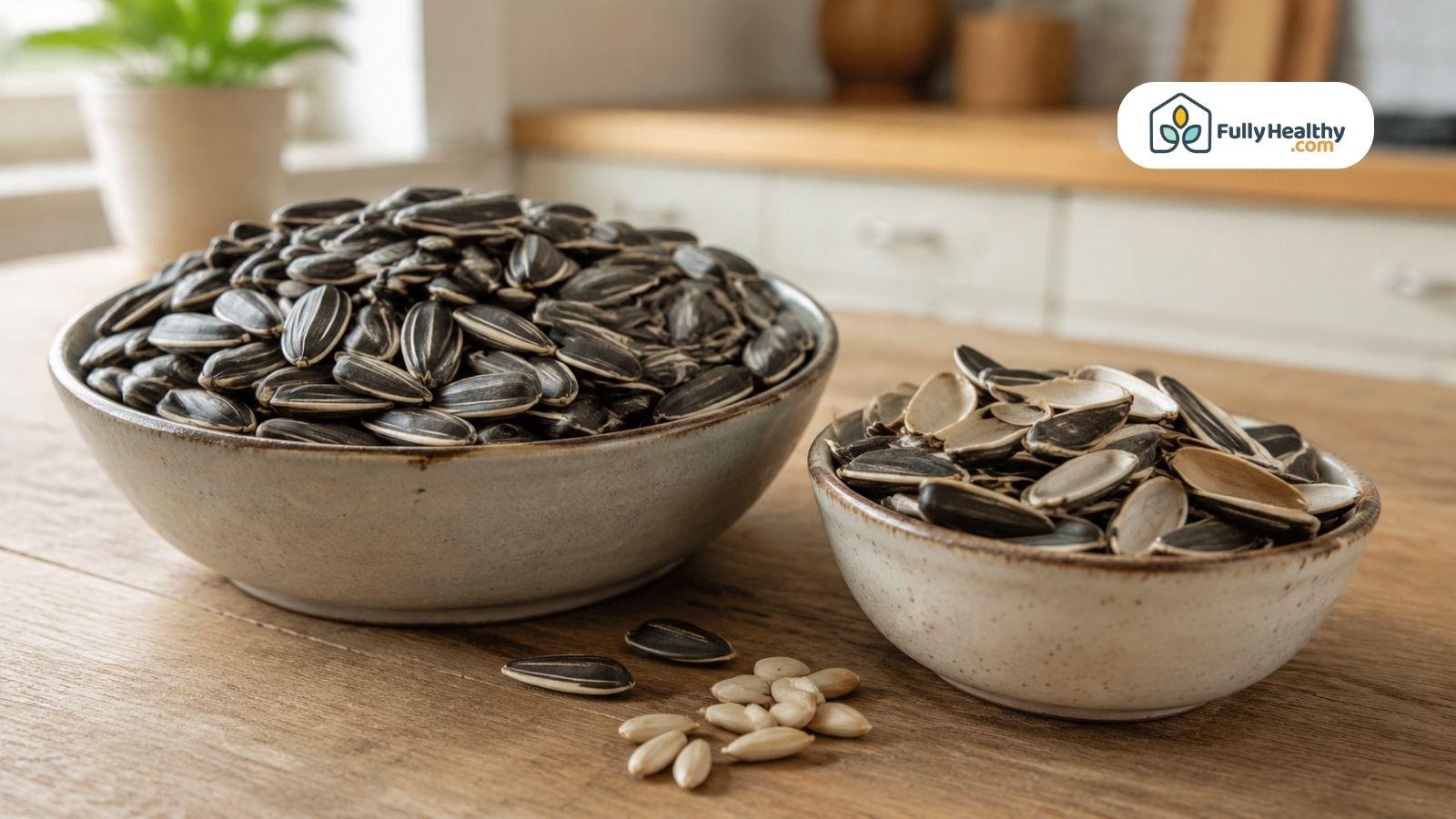
No, eating sunflower seed shells is not recommended because they cannot be properly digested by your body. Swallowing the shells may also cause irritation, constipation, or a digestive blockage.
Why Sunflower Seed Shells Are Not Edible
The striped shell, also called the hull, contains cellulose, hemicellulose, and lignin. Human digestive enzymes cannot break down these fibers completely. Although the hull surrounds food, it serves as protective packaging for the softer kernel rather than as an edible part of the seed.
-
Edible part: Crack the hull, remove it, and eat only the soft sunflower kernel.
-
Indigestible fibers: Lignin largely resists digestion, while intestinal microbes may ferment a limited amount of cellulose.
-
Sharp texture: Broken hulls may develop rough edges that can scrape the digestive tract.
-
Limited value: Sunflower shells provide little nutritional value compared with the nutrient-rich kernel.
-
Safer option: Shelled kernels provide the edible portion without requiring you to handle sharp hull pieces.
Accidental Swallowing and Possible Complications
Accidentally swallowing a small piece of sunflower shell is usually not harmful. Concern rises when someone deliberately eats several shells because the pieces remain tough as they move through the digestive system.
Their sharp edges may puncture the throat or esophagus, which is the tube that moves food from the mouth to the stomach.
-
Small accident: One tiny fragment presents less concern than repeatedly swallowing whole shells.
-
Throat irritation: A jagged piece may scratch the throat or cause discomfort while swallowing.
-
Constipation: Consuming numerous shells can contribute to a tightly packed mass that makes bowel movements painful or difficult.
-
Bezoar: Indigestible fragments can gather into a firm mass inside the digestive system.
-
Bowel impaction: A large blockage may require treatment from a qualified medical professional.
What is the Difference Between Sunflower Shells and Kernels?
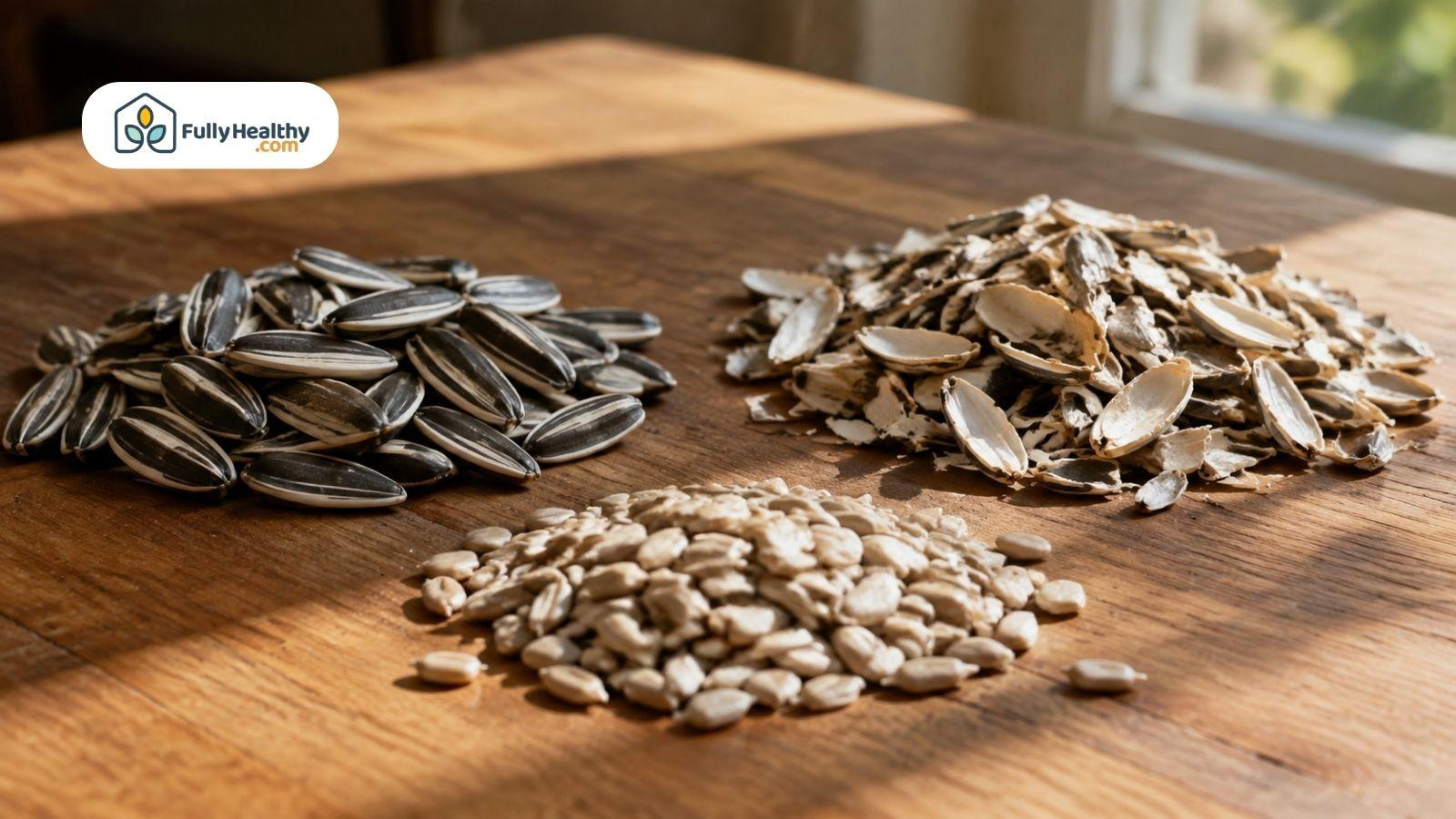
The shell is the hard, fibrous outer covering that protects the seed, while the kernel is the soft, edible interior. The kernel contains the protein, healthy fats, vitamins, and minerals associated with sunflower seeds.
Tough Outer Hull and Edible Inner Kernel
The hull is the hard, striped covering that protects a sunflower seed and helps it remain intact before germination.
The kernel, sometimes called the meat, is the tan, oval interior with a soft texture and slightly buttery taste. Sunflower seeds come from the dried center of Helianthus annuus L., and intact seeds sold as snacks contain both parts.
-
Sunflower hull: This firm outer layer protects the kernel from physical damage.
-
Sunflower kernel: This soft inner portion is the part intended for human consumption.
-
In-shell seeds: These products retain their hulls and must be cracked before eating.
-
Shelled kernels: Mechanical processing removes the hull before the product reaches the package.
-
Seasoned seeds: Roasting and added flavor change the taste but do not soften indigestible fibers.
Nutrients Found in Sunflower Kernels
Sunflower kernels contain healthy fats, protein, fiber, vitamins, and minerals. A one-ounce, or 28-gram, serving has about 165 calories, 5 grams of protein, 14 grams of fat, 7 grams of carbohydrates, and 3 grams of fiber.
-
Vitamin E: Helps protect cells from damage and supports immune health.
-
Selenium: Supports thyroid function and the body’s antioxidant defenses.
-
Phosphorus: Helps maintain strong bones, teeth, and normal cell function.
-
Manganese: Supports metabolism, bone formation, and healing.
-
Other nutrients: Kernels contain vitamin B5, folate, and linoleic acid.
How Should You Eat and Dispose of Sunflower Seed Shells?
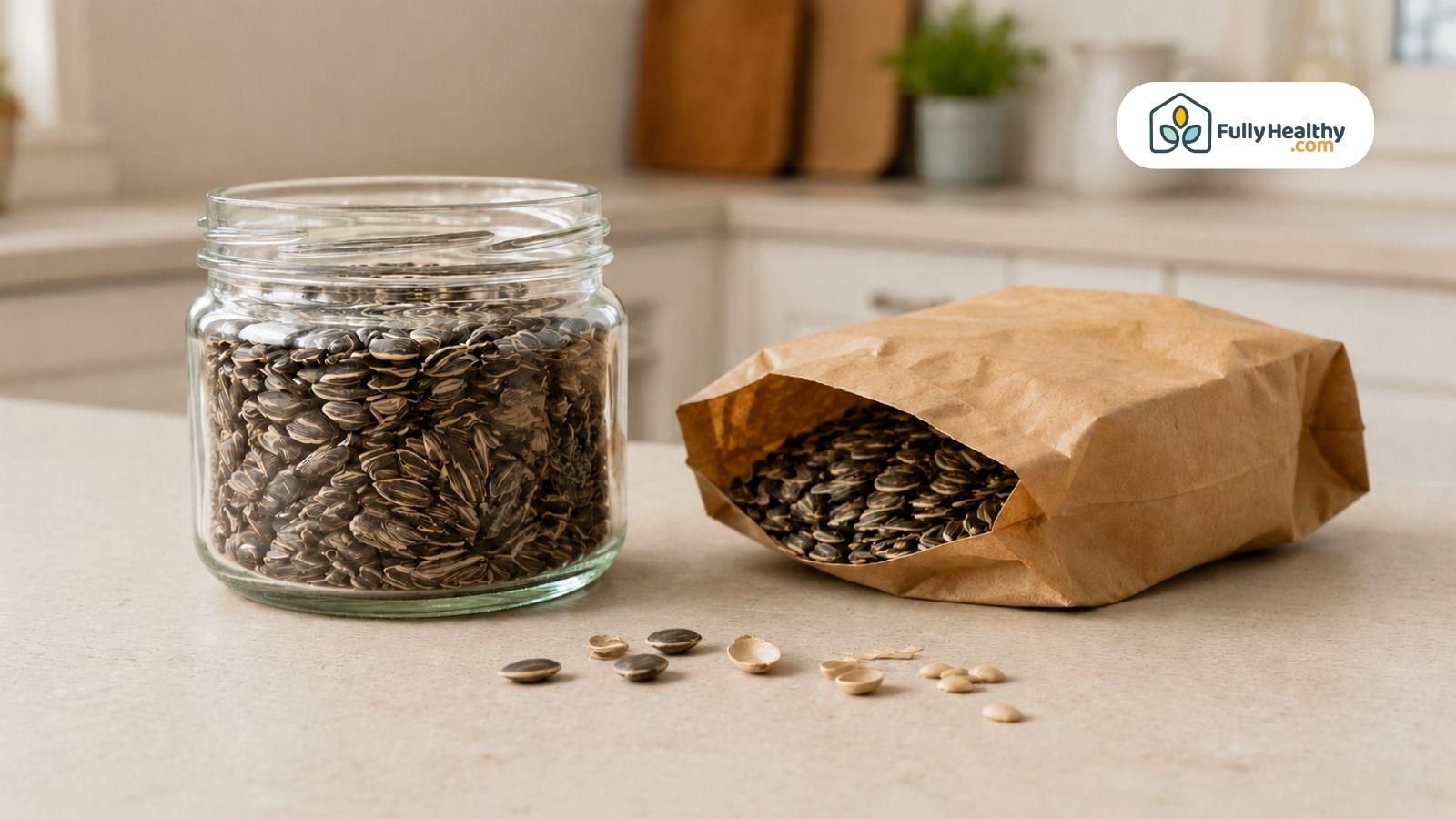
Crack the hull gently, separate it from the kernel, eat the kernel, and discard the shell without swallowing it. Clean hulls may have non-food uses, but salted or flavored shells are usually better placed in household waste.
Safe Method for Eating In-Shell Seeds
Place one seed lengthwise between your front teeth and apply gentle pressure until the hull cracks. Use your tongue to separate the kernel, eat it, and remove the empty shell from your mouth.
Handle one seed at a time, avoid crushing the hull into small fragments, and keep a bowl or napkin nearby for discarded shells. Choose shelled kernels if cracking or swallowing feels difficult.
-
Position carefully: Hold the seed lengthwise between your teeth before applying light pressure.
-
Crack gently: Open the hull without grinding it into numerous sharp fragments.
-
Separate completely: Use your tongue to distinguish the soft kernel from hard shell pieces.
-
Discard promptly: Remove the empty hull before placing another seed in your mouth.
-
Choose kernels: Ready-to-eat kernels offer a practical option for children and people with swallowing difficulties.
Practical Uses for Discarded Shells
Clean, unseasoned sunflower hulls may serve as garden mulch, helping cover soil and limit light around weeds. Commercial processors can also convert hulls into fuel pellets, fiberboard, or animal roughage.
Snack shells containing salt, oil, or flavoring may be unsuitable around plants, pets, and wildlife, so ordinary household waste is the safer choice when appropriate reuse cannot be confirmed.
-
Garden mulch: Unseasoned hulls may help cover soil and limit weed growth.
-
Fuel pellets: Industrial facilities can compress dry sunflower hulls into a usable fuel source.
-
Fiberboard: Manufacturers may incorporate processed hull fibers into certain building materials.
-
Animal roughage: Ground hulls have industrial uses in feed for poultry and ruminants.
-
Household waste: Discard salted or flavored shells when safe reuse is not practical.
Shop Specialty-Diet Snacks at FullyHealthy
FullyHealthy is an online marketplace for foods suited to specialized diets, including AIP, Paleo, gluten-free, keto, vegan, and low-FODMAP. Its product pages provide ingredients and dietary details that help shoppers compare snacks before purchasing.
About FullyHealthy
FullyHealthy brings specialty-diet foods from different brands into one marketplace. Shoppers can browse by diet, brand, or department, including snacks, sweets, breakfast foods, baking mixes, seasonings, and pantry products.
-
Diet categories: Available sections include AIP, Paleo, gluten-free, keto, vegan, and low-FODMAP foods.
-
Product departments: Shoppers can browse snacks, breakfast foods, sweets, sauces, seasonings, and baking products.
-
Brand selection: The marketplace works with smaller brands focused on specialty-diet foods.
-
Ingredient details: Individual pages list ingredients and product-specific information for comparison.
-
Allergen review: Customers should check each label because dietary categories do not cover every sensitivity.
Sunflower Seed Products and Snack Alternatives
FullyHealthy offers products containing sunflower seeds or sunflower seed butter, along with other seed-based snacks. These products use edible kernels or seed butter, not indigestible sunflower hulls.
-
Jack’s Paleo Kitchen Sunflower Seed Butter Cookies: Soft Paleo cookies made with sunflower seed butter, coconut flour, arrowroot flour, and sweet potato flour.
-
Base Culture Gluten-Free 7 Nut and Seed Bread: Gluten-free bread containing raw sunflower seeds, flaxseed, chia seeds, hemp hearts, pecans, and pumpkin seeds.
-
Let Me Snack Popped Water Lily Seeds, Barbecue: Crunchy popped water lily seeds coated with a smoky, tangy barbecue seasoning.
-
Let Me Snack Popped Water Lily Seeds, Mint Masala: Popped water lily seeds featuring a fresh mint flavor combined with savory masala seasoning.
-
Let Me Snack Popped Water Lily Seeds, Cacao Clouds: Light popped water lily seeds with cacao flavor for a sweeter seed-based snack.
Final Thoughts
Sunflower seeds can be a tasty snack, but only the kernel is meant to be eaten. The outer shells from whole sunflower seeds are tough, sharp, and difficult to digest, so discard them after cracking. Shelled sunflower seeds offer a crunchy texture, nutty flavor, and healthy benefits without the unwanted hull.
Although each seed comes from the sunflower plant, its protective covering is not food. Enjoy the kernels and keep the shells out of your stomach.
FAQs
Are Sunflower Seed Shells Good for Your Stomach?
No, sunflower seed shells may irritate your digestive tract and contribute to constipation or blockage.
What Happens if You Accidentally Swallow a Sunflower Seed Shell?
One small shell usually passes naturally, but seek medical help for severe pain, vomiting, or persistent constipation.
Can Stomach Acid Break Down Sunflower Seed Shells?
No, stomach acid cannot fully break down the tough cellulose and lignin fibers in sunflower seed shells.
How to Clean Up Sunflower Seed Shells?
To clean sunflower seed shells from the ground, use a rake on grass or a broom on hard surfaces, then throw them away.
What to Do With Sunflower Seed Shells?
Discard salted shells, while clean, untreated shells may be composted slowly or used as garden mulch.
Leave a comment