

Can You Freeze Sourdough Bread? What Actually Works
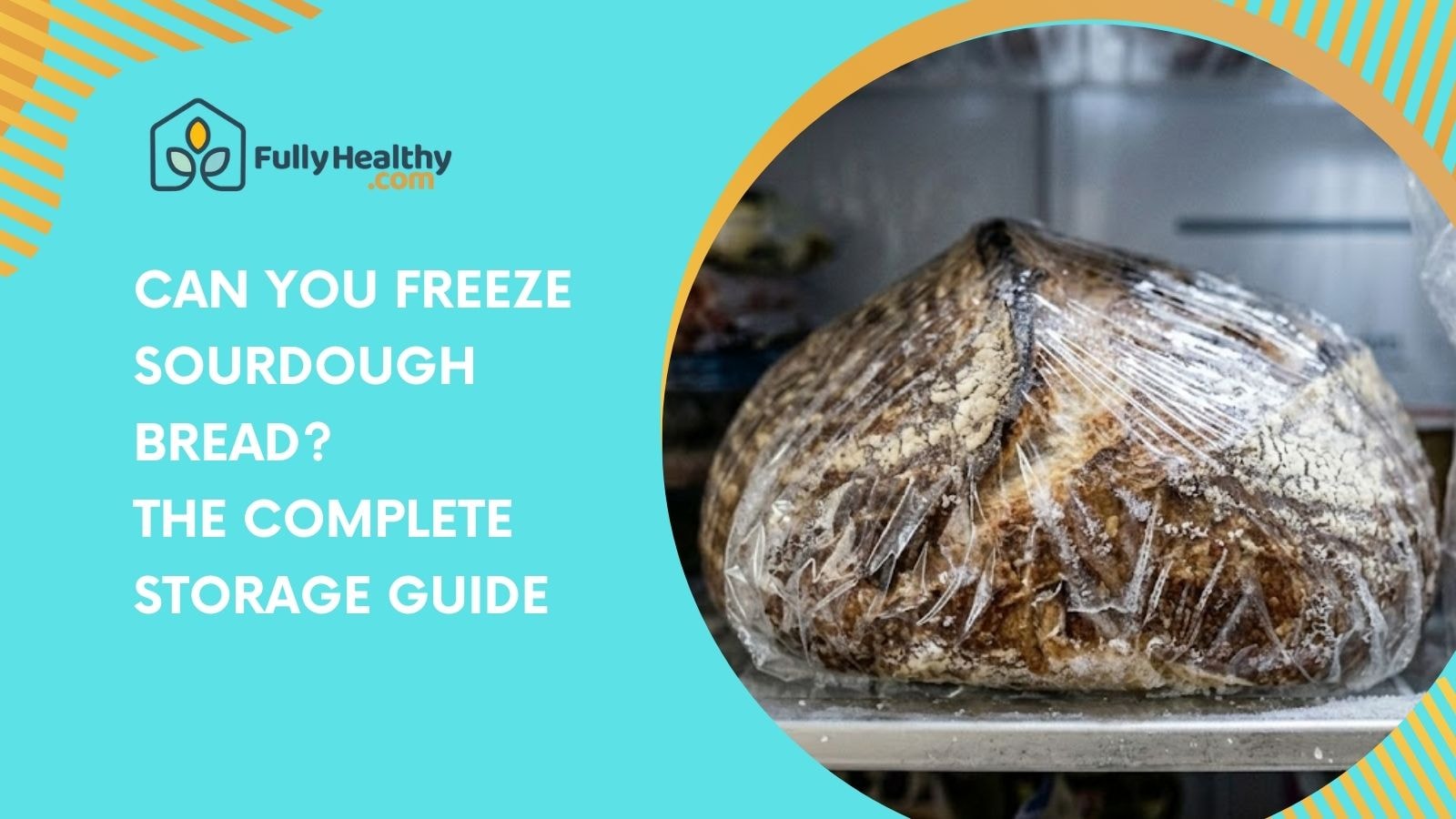
Can you freeze sourdough bread? Yes, and it is one of the easiest ways to keep sourdough bread fresh longer. Freezing bread helps keep it from going bad, keeps the crumb and crust safe, and keeps food from going to waste when you have an extra loaf.
This guide will teach you the right way to freeze, thaw, store, and reheat sourdough bread so that it keeps its taste and texture.
Featured Bakery Pick
Base Culture // Gluten Free Sourdough Bread - 16 oz
Loading...
Can You Freeze Sourdough Bread Properly?
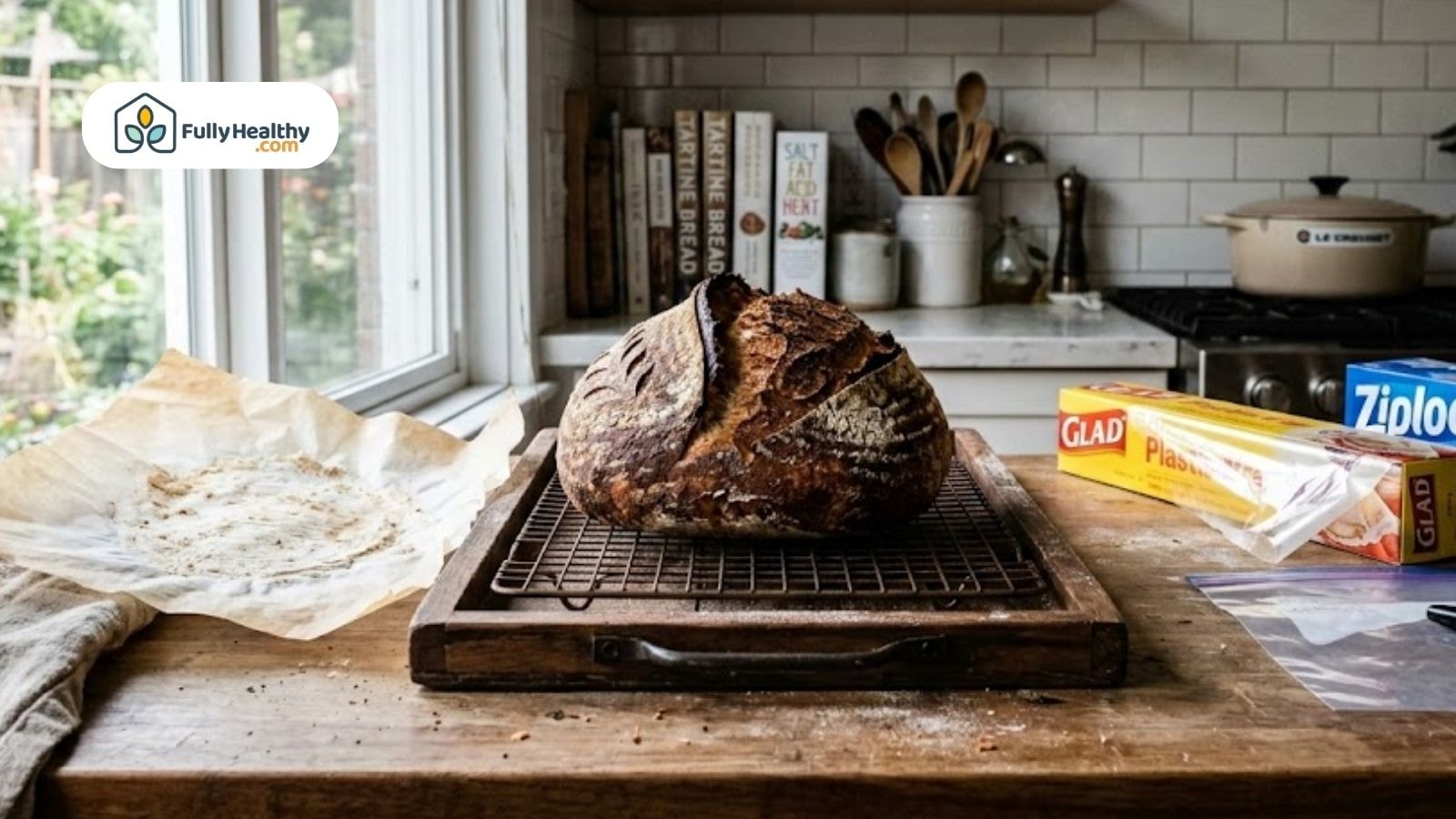
Freezing sourdough bread is practical when you bake extra or buy two loaves at once. This section explains the right method so your beautiful loaf keeps its crust, crumb, and flavor.
Freezing Baked Sourdough Bread Correctly
Yes, you can freeze sourdough bread. Freezing slows staling, which means the crumb firms up more slowly because moisture stays trapped instead of drying out at room temperature.
-
Cool Completely: Let freshly baked bread cool completely on the counter for hours before you freeze to prevent moisture from turning into freezer burn.
-
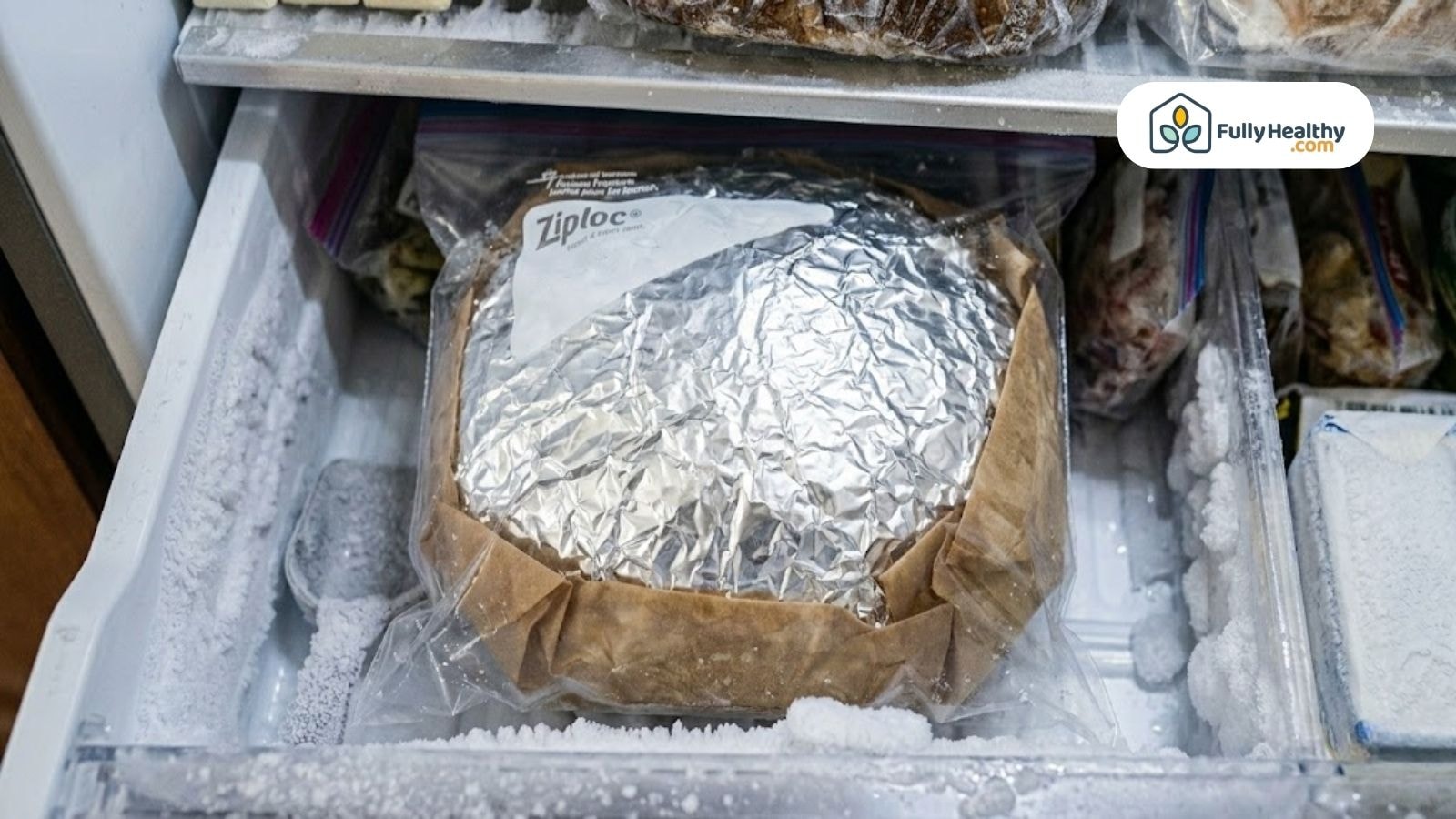
Wrap Bread Tightly: Wrap the entire loaf or smaller loaves in plastic wrap, then place in a freezer bag or large ziplock bag.
-
Double Bag: Use a plastic bag and then a ziplock bag to reduce freezer exposure and protect the crust.
-
Choose Format: Freeze a whole loaf, half, or individual slices depending on how you plan to eat or toast later.
-
Storage Time: For best flavor and texture, freeze sourdough bread for up to three months, though many bakers use it within a few weeks.
Freezing Sourdough Dough Versus Baked Bread
Freezing dough is different from freezing a sourdough loaf. Dough still contains active yeast and gas bubbles that support oven spring during baking.
-
Bulk Fermentation: Bulk fermentation is the first rise when dough develops gas cells, and freezing dough can weaken these cells.
-
Proofing Basket: Shaped dough can be frozen after resting in a proofing basket, then thawed and baked later.
-
Mix-Ins: Dough with olive oil, seeds, or add-ins can still freeze successfully.
-
Bake Later: Thaw frozen dough at room temp, allow it to rise again, then bake in a preheated oven.
-
Texture Impact: Freezing dough may slightly affect crumb structure, but the method still works for many home cooks.
How Do You Defrost Sourdough Bread?
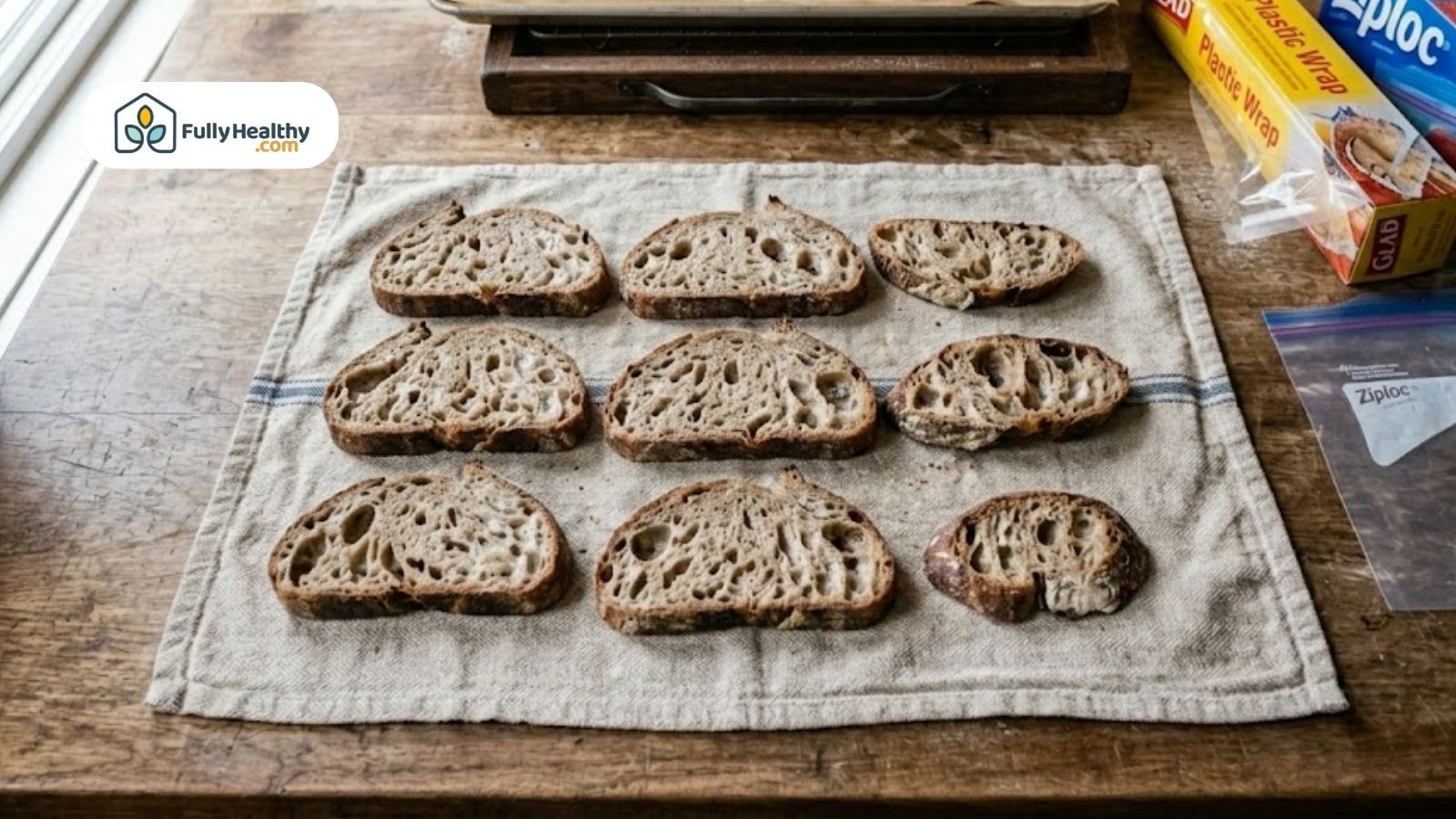
Proper reheating and thawing keep the loaf tasting fresh instead of stale. Defrosting depends on whether you froze a whole loaf or frozen slices.
Thawing Whole Loaves Safely And Evenly
Slowly thaw a whole loaf so that the crumb can soak up water evenly. Leave it in its bag overnight on the counter to thaw.
-
Room Temperature: Place the wrapped loaf at room temperature for several hours or overnight.
-
Counter Overnight: Leaving bread on the counter overnight allows gradual thaw without condensation soaking the crust.
-
Preheated Oven: Refresh the crust by placing the loaf in a preheated oven at 300°F for a few minutes.
-
Water Mist: Lightly mist with water before reheating to restore crisp texture.
-
Avoid Refreezing: Do not refreeze after thawing as texture may decline.
Reheating Frozen Sourdough For Crisp Crust
When you need a quick breakfast in the morning, frozen slices are great. Sourdough slices can go straight into the oven or toaster without having to wait.
-
Toaster Method: Place frozen slices in a toaster and toast as usual.
-
Oven Method: Heat slices on a rack in the oven for a few minutes.
-
Skillet Option: Warm slices in a pan for sandwiches or french toast.
-
Air Circulation: Reheating restores crust texture by evaporating surface moisture.
-
Serve Fresh: Eat immediately for best flavor and crumb softness.
What Is The Best Way To Store Sourdough Bread?
More than most people think, storage changes how long food lasts. If you do it right, bread won't go bad too quickly.
Short-Term Storage At Room Temperature
For the first day or two, fresh bread stays best at room temperature. Keep the side that was cut down on a board or in wrap that lets air pass through.
-
Paper Wrap: Use paper instead of plastic wrap to prevent trapped moisture.
-
Cut Side Down: Store sliced bread cut side down to protect the crumb.
-
Avoid Fridge: Refrigeration speeds up staling due to moisture migration.
-
Cool First: Always cool completely before storing.
-
Use Quickly: Eat within a week for peak flavor.
When Freezing Is Better Than Counter Storage
If you can't eat the bread within a few days, it's better to freeze it. This method keeps food fresh and stops waste.
-
Extra Loaf: Freeze an extra loaf if you bake two loaves at once.
-
Smaller Loaves: Smaller loaves thaw faster and are easier to manage.
-
Slices Or Whole: Freeze sourdough slices or the entire loaf depending on use.
-
Seal Well: Use a freezer bag and remove excess air.
-
Plan Ahead: Wait until the loaf is fully cool before freezing.
How Can You Tell If Sourdough Bread Has Gone Bad?
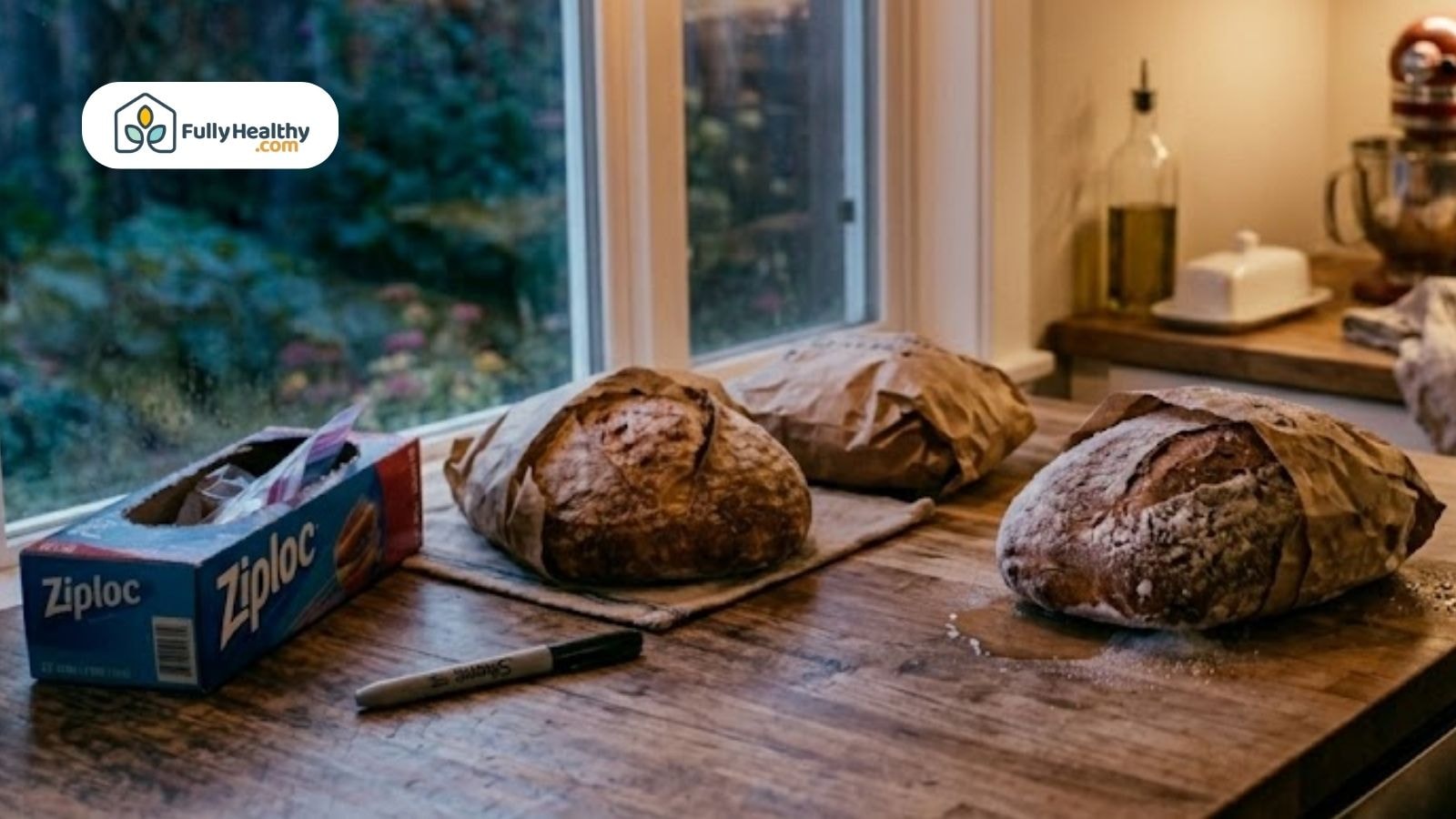
Even well-stored sourdough bread has limits. Knowing the signs helps protect your food safety and avoid eating spoiled bread.
Visible Mold And Texture Warning Signs
Mold is the clearest signal that sourdough bread is no longer safe to eat. It may appear as fuzzy green, blue, black, or white spots on the crust or crumb.
-
Fuzzy Growth: Any fuzzy patches on the loaf or slices mean discard immediately.
-
Strange Smell: A sharp, musty odor signals spoilage beyond normal sour flavor.
-
Slimy Surface: Sticky or slimy texture indicates moisture imbalance and bacterial growth.
-
Deep Cracks With Moisture: Excess moisture inside cracks can support mold.
-
Do Not Trim: Cutting off moldy sections does not make the rest safe.
Shelf Life Timeline And Storage Limits
Because it is naturally acidic, sourdough bread usually lasts longer than store-bought bread. Still, the way things are stored has a big effect on how long they last.
-
Room Temperature: Fresh sourdough lasts about 3 to 5 days on the counter.
-
Freezer Storage: Properly wrapped bread can stay good in the freezer for up to 3 months.
-
Humidity Factor: Warm, humid kitchens shorten shelf life.
-
Refrigeration Risk: The fridge can dry bread faster and alter texture.
-
Check Daily: Inspect crust and crumb before eating after several days.
About FullyHealthy
FullyHealthy focuses on specialty and allergen-friendly foods for people with dietary needs. Their approach centers on clean ingredients and thoughtful preparation.
Our Mission And Ingredient Standards
FullyHealthy helps consumers who need options that are gluten-free, grain-free, or careful with allergens. The company stresses how open they are about where their ingredients come from and how they are prepared.
-
Allergen Friendly: Products designed for sensitive diets.
-
Ingredient Transparency: Clear labeling and simple ingredient lists.
-
Quality Focus: Emphasis on clean food preparation.
-
Specialty Selection: Curated food options for dietary needs.
-
Online Access: Products available for convenient purchase.
Featured Product Base Culture Gluten-Free Sourdough
Base Culture Gluten-Free Sourdough Bread is a 16 oz product available through FullyHealthy. It is positioned as a gluten-free alternative inspired by classic sourdough bread flavor.
-
Gluten Free: Made without traditional wheat flour.
-
Sourdough Style: Crafted to resemble sourdough texture and taste.
-
16 Oz Size: Standard loaf portion for household use.
-
Freezer Friendly: Can be stored in the freezer to extend shelf life.
-
Versatile Use: Suitable for sandwiches, toast, and cooking recipes.
Final Thoughts
When you bake extra, freezing sourdough is a smart way to keep homemade bread fresh, cut down on waste, and save money. So that the slices don't stick, wrap the loaf tightly in parchment paper and a freezer bag. If the texture changes a bit, use the extra bread to make croutons.
Freezing keeps the taste and texture stable and slows the growth of mold and staling. Be careful where you store it, let it thaw slowly, and enjoy every slice with confidence.
FAQs
Can A Sourdough Loaf Be Frozen Without Losing Quality?
Yes, a sourdough loaf can be frozen successfully if wrapped tightly in parchment paper and sealed well so slices do not stick and quality remains stable.
How To Revive Sourdough After Freezing?
To revive sourdough after freezing, thaw at room temperature, mist lightly with water, and heat in a hot oven so crust crisps and crumb softens in a bit.
How Long Does Sourdough Bread Last In The Refrigerator?
Sourdough bread can last several days in the refrigerator, but cold storage speeds staling and may change texture compared to freezer storage.
Why Does Freezing Sourdough Make It Better For Your Gut?
Freezing sourdough does not increase probiotic content, but sourdough fermentation already supports gut health through organic acids and resistant starch.
Can I Eat 2 Week Old Sourdough Bread?
You should not eat 2 week old sourdough bread unless it was frozen properly, because mold can spread invisibly even if only a small bit is visible.
Leave a comment