

Are Peptides Legal? What the FDA Says
Are peptides legal? It depends on the peptide, how it is sold, and why you use it. Some peptide drugs are FDA-approved. Some may be compounded by licensed pharmacies under strict rules.
Others are sold online as “research” products and may fall into legal gray areas. Collagen peptides are different because they are usually sold as dietary supplements. This guide breaks down the rules, risks, drug testing concerns, and safer buying options.
Are Peptides Legal?

The short answer is yes, but not all peptides are legal in the same way. It depends on the product, its use, and its regulatory status. Some peptide medications have FDA approval. Others are compounded, under review, or sold as research only peptides. Because peptide regulation is changing, readers should know the difference before using any peptide for human consumption.
Are Peptides Legal Under Current FDA Rules?
The FDA treats peptide products differently based on their use and approval status. Some are an FDA approved drug. Others may be compounded under strict rules. Therapeutic peptides should only be used with medical oversight.
-
FDA approved: Only FDA approved peptides have completed the required clinical trials for specific medical uses.
-
Compounded peptides: A licensed compounding pharmacy may prepare compounded peptides only when federal and state rules allow it.
-
Research peptides: Many research peptides and research only peptides are not approved for human use or human consumption.
-
Amino acids: Peptides are short chains of amino acids, but their legal status depends on FDA rules, not just their structure.
Why Is Peptide Regulation Changing?
Recent FDA peptide reclassification news has caused confusion. In late 2023, 19 peptides were reclassified as Category 2 because of significant safety concerns. FDA continues to evaluate the regulatory status of certain bulk drug substances for compounding. Regulatory decisions remain subject to FDA review and published guidance.
-
Category changes: A category change may affect peptide compounding, but it does not automatically mean a peptide is FDA approved.
-
Bulk drug substances: The FDA is still reviewing bulk drug substances before deciding which ones may be used by compounding pharmacies.
-
FDA guidance: FDA guidance may change as the agency reviews evidence, safety data, and public comments.
-
Medical oversight: Patients should consult licensed healthcare providers before starting peptide therapy.
Can You Get in Trouble for Peptides?
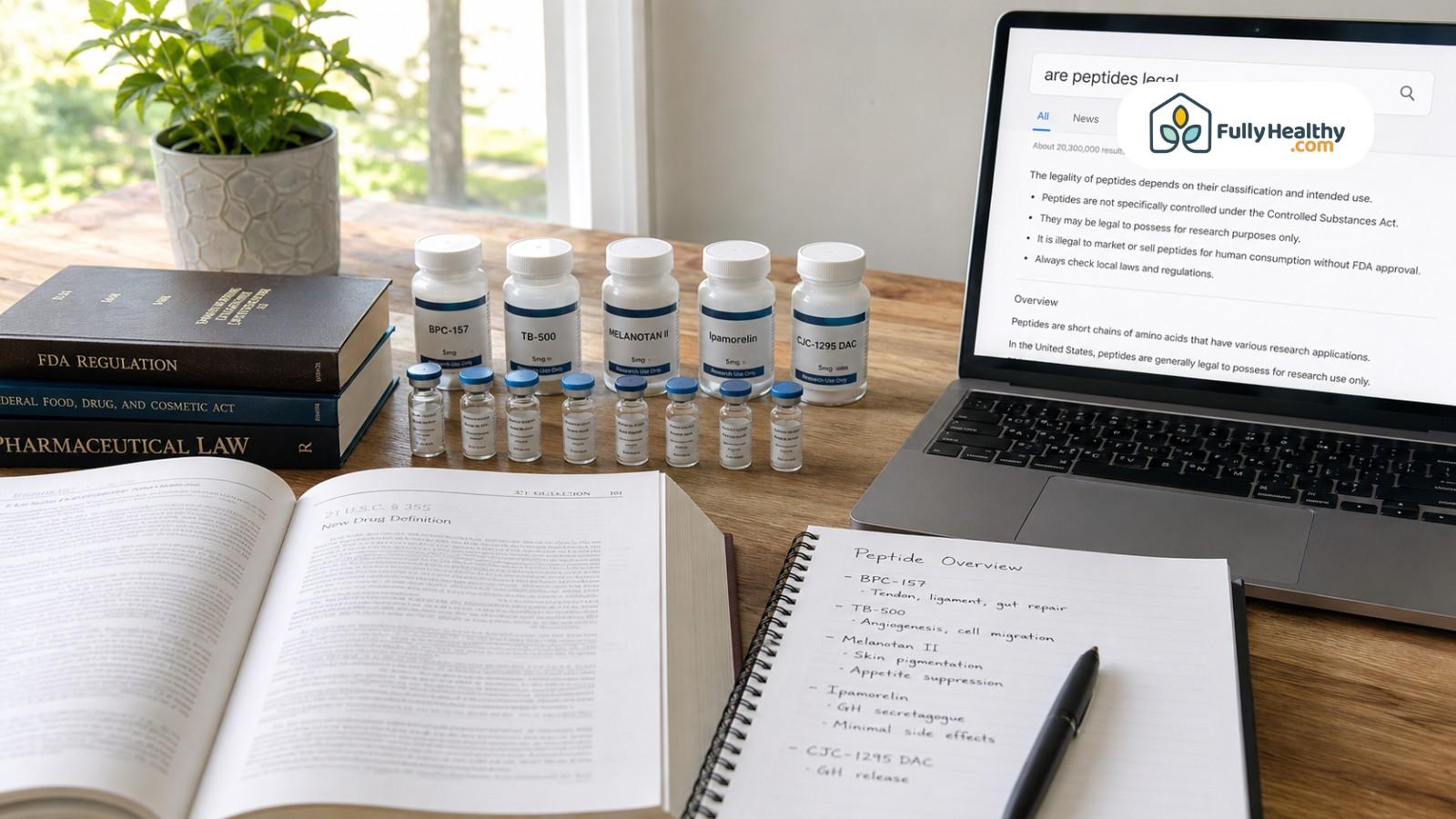
Most peptides are not controlled substances under federal law. Still, legal problems can happen if a peptide is sold, marketed, imported, or used in the wrong way. The biggest concern is whether the product follows FDA rules and comes from licensed pharmacies instead of gray-market sellers.
When Can Buying or Selling Peptides Create Legal Risk?
Not all peptides have the same legal pathway. Selling unapproved peptides for human consumption can create risk, especially when sellers make medical claims. Businesses involved in peptide compounding must follow federal and state laws.
-
Unapproved peptides: Products without proper authorization may face FDA enforcement, especially if sold for medical use.
-
Compounding pharmacies: Compounding pharmacies must follow strict rules when preparing eligible peptide products.
-
Licensed pharmacies: Buying from licensed pharmacies can reduce quality, safety, and compliance risks.
-
Healthcare organizations: Many healthcare organizations advise patients to use peptide therapy only through qualified medical providers.
Why Are Research Peptides Different From Prescription Peptides?
Research only peptides are usually meant for laboratory use, not human use. Prescription peptide medications are different because they are used under medical supervision when legally available.
-
Human clinical trials: Many unapproved peptides still need more human clinical trials before safety and benefit are clear.
-
Medical supervision: Peptides should only be used under medical supervision.
-
Significant safety risks: Using gray-market peptides poses significant safety risks because purity, sterility, and dosing may be unknown.
-
Tissue repair: Claims about tissue repair should be reviewed carefully because evidence varies by peptide.
Will Peptides Fail a Drug Test?
Peptide therapy does not always cause a failed drug test. Most standard workplace tests do not screen for peptides. However, athletic testing is different because certain peptides may be banned in sports.
Do Standard Workplace Drug Tests Screen for Peptides?
Routine employment drug tests usually look for common drugs of abuse. They are not designed to detect most therapeutic peptides.
-
Workplace testing: Standard panels usually do not include peptide compounds.
-
Human consumption: Even if a product is used legally, workplace policies may still apply.
-
Certain peptides: Specialized lab tests may detect certain peptides if the test is designed for them.
-
Regulatory status: Testing risk depends on the peptide, the test type, and the organization requesting the test.
Can Athletes Fail Anti-Doping Tests for Certain Peptides?
Sports testing can be much stricter than workplace testing. Some peptides are banned by anti-doping agencies, even when they may be used in medical settings.
-
Thymosin alpha 1: Different peptides have different rules, so athletes should check their sport’s current banned list.
-
Metabolic regulation: Some peptides affect metabolic regulation or recovery pathways, which can raise anti-doping concerns.
-
FDA approved peptides: FDA approved status does not always mean a peptide is allowed in competition.
-
Clinical trials: Athletes should verify rules with medical and anti-doping experts before using peptide therapy.
Is Taking Peptides a Steroid?
Peptides and steroids are often discussed together, but they are not the same. Peptides are short chains of signaling molecules made from amino acids, while steroids are hormone-based compounds with a different structure and function. Understanding this difference helps explain why their regulatory landscape, medical uses, and safety considerations are not identical.
What Makes Peptides Different From Steroids?
Peptides work by sending signals to cells, while steroids directly interact with hormone receptors. Some peptides are being studied for metabolic disease, insulin sensitivity, and body composition, but their FDA approval status depends on scientific evidence and regulatory approval.
-
Signaling molecules: Peptides act as signaling molecules that help regulate normal biological processes.
-
FDA approved medications: Some peptides are available as FDA approved medications, while many others remain research compounds.
-
Growth hormone secretagogues: Certain growth hormone secretagogues are peptides, but they are different from anabolic steroids.
-
Patient safety: Proper medical oversight is important because peptides may still cause side effects, including injection site reactions and immune reactions.
Why Do People Confuse Peptides With Steroids?
Many people associate peptides with bodybuilding because both may be discussed in fitness communities. However, their actions inside the body are different, and their regulatory environment is also different.
-
Body composition: Some peptides are studied for their effects on body composition, leading to common misunderstandings.
-
Banned peptides: Some banned peptides are prohibited in sports, even though they are not steroids.
-
Research purposes: Many peptides are intended only for research purposes and are not approved for routine medical treatment.
-
Regulatory framework: Healthcare professionals should rely on the current regulatory framework instead of marketing claims when evaluating peptide products.
How Can FullyHealthy Help If You're Looking for Collagen Peptide Products?
People searching for collagen peptides should know they are different from therapeutic peptide injections. FullyHealthy offers collagen peptide supplements from trusted brands that support everyday wellness. These products are nutritional supplements and should not be confused with pharmaceutical grade peptides or prescription peptide therapies.
Which Collagen Peptide Products Does FullyHealthy Carry?
FullyHealthy offers several collagen products from Great Lakes Wellness and Great Lakes Gelatin. These products support collagen synthesis and are sold as dietary supplements rather than injectable peptide treatments.
-
Marine Collagen Peptides: Made from wild-caught fish and provides 12 grams of collagen per serving.
-
Grass-Fed Bovine Collagen Peptides: Available in convenient single-serve packets for everyday use.
-
Grass-Fed Collagen Peptides: Provides 20 grams of collagen per serving in an unflavored powder that mixes easily into drinks.
-
Collagen synthesis: These products are designed to support collagen synthesis as part of a balanced diet.
Are Collagen Peptides the Same as Therapeutic Peptides?
Collagen supplements should not be confused with peptide injections or research compounds. They have different uses, different regulatory approval pathways, and different legal compounding status. Compounding pharmacies can prepare customized medications for patients, but most peptides are not on the FDA's bulk drug list.
-
Research use: Some products are peptides labeled for research use only and are not intended for human treatment.
-
Proper medical oversight: Patients should seek proper medical oversight before using therapeutic peptide products.
-
Companies selling peptides: Consumers should be cautious because one analysis reported that about 40% of online peptides contained incorrect dosages or undeclared ingredients.
-
Compliance infrastructure: Reputable sellers follow quality standards, while healthcare providers who prescribe medications rely on established compliance infrastructure.
Final Thoughts
Understanding peptide legality starts with knowing that different peptides follow different rules. Some have received FDA approval, while non approved peptides may only be available for research chemicals or limited medical settings.
Always follow peptide protocols and seek professional guidance because this article does not constitute medical advice. Injection site reactions and sterile abscesses are common adverse events that should not be ignored.
Outside the United States, the European Medicines Agency regulates peptides in Europe, while the Therapeutic Goods Administration strictly controls peptide sales and use in Australia. As discussions from HHS Secretary Robert F. Kennedy Jr. continue, including topics involving GHK Cu, staying informed about changing regulations is the best way to make safer decisions.
FAQs
Does peptide legality change between countries?
Yes. Peptide legality varies because different regulators, such as the European Medicines Agency and Australia's Therapeutic Goods Administration, have their own rules.
Can non-approved peptides still be used for research?
Yes. Many non approved peptides are sold as research chemicals for laboratory use only and have not received FDA approval for routine medical treatment.
`Why are peptide protocols important before treatment?
Peptide protocols help guide proper use, monitor immune function and glucose metabolism, and support safer medical decision-making under qualified supervision.
`What is the FDA category system for peptides?
An FDA category helps describe the regulatory status of certain compounded substances, but it does not automatically mean a peptide has received FDA approval.
Why are HHS Secretary Robert F. Kennedy Jr., HHS Secretary Robert, and GHK Cu discussed in peptide news?
Recent regulatory discussions involving HHS Secretary Robert F. Kennedy Jr., often shortened to HHS Secretary Robert, have increased public interest in peptides such as GHK Cu and their evolving regulatory status.
Leave a comment