

Can Dogs Eat Steak? Safe Portions, Cuts, and Real Risks Explained
Can dogs eat steak? Yes, but only if it is made the right way and given the right amount of food. Steak has protein, but it also has fat, bones, salt, and bacteria that can be bad for them. This guide goes over the differences between cooked and raw steak, safe portion sizes based on dog size, better cuts, and meats to avoid. That way, you can safely and easily decide if steak is okay for your dog's diet.
Featured Snack Pick
Epic // Pink Himalayan Sea Salt Oven Baked Pork Rinds - 2.5 oz
Loading...
Can I Feed a Dog Cooked Steak?

Cooked Steak: When It’s Considered Safe
Dogs can eat cooked steak that is made simply and given in small amounts. Dogs eat steak best when it is adapted from human foods into a form that supports the dog’s digestive system and overall health.
-
Plain preparation: Cooked steak should be unseasoned, free of harmful seasonings, and cut into bite sized pieces.
-
Fat trimming: Excess fat and steak fat increase gi upset, upset stomach, and long-term weight gain.
-
Bone safety: Dogs eat steak bones at risk because cooked bones splinter and damage the digestive system.
-
Salt control: Too much salt and excessive salt raise health risks and strain dog’s health.
-
Serving method: Place small bites in the dog's bowl instead of hand-feeding thick pieces.
-
Health context: Dogs with health conditions may need smaller portions or should avoid feeding steak.
Raw Steak: Why Guidance Is Divided
Dogs eat raw steak under some feeding approaches, but there is still a lot of disagreement about this because of safety concerns. Bacteria that can be harmful to dogs and cause bacterial infections can be found on raw steak and raw beef.
-
Bacteria risk: Raw meat may contain harmful bacteria that cause digestive issues and serious health issues.
-
Bone exposure: Raw bones and raw steak bones can break teeth or block the digestive system.
-
Food handling: Preparing raw beef near human foods raises contamination concerns.
-
Tolerance differences: One dog may eat raw steak without symptoms, while most dogs develop gi upset.
-
Health trade-off: Raw feeding may offer perceived health benefits, but health risks remain higher than cooked meat.
How Much Steak Should You Give a Dog?
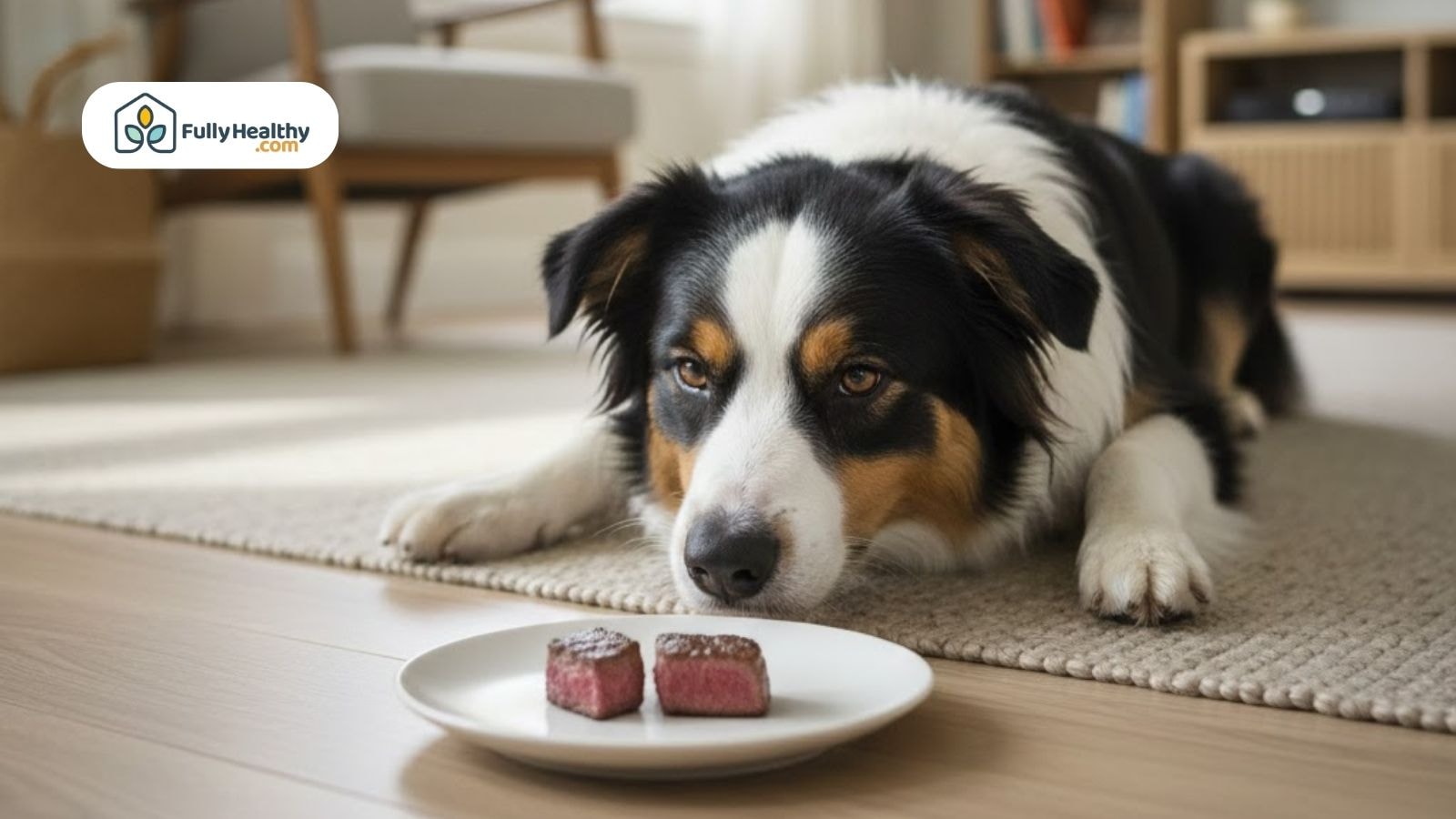
Steak Should Be Treated as an Occasional Extra
Steak should not be a regular part of a dog's diet, but it should be a treat every once in a while. Dogs love steak, but too much of it can cause stomach problems, weight gain, and other health issues.
-
Treat limit: Steak should stay under about 10% of a dog’s daily food intake.
-
Not a meal: Steak does not provide complete nutrition and should not replace pet food.
-
Digestive load: Rich flavor foods put extra strain on the dog’s digestive system when fed often.
-
Better proteins: Lean proteins from complete dog food better support dog’s muscle development.
-
Training use: Small bites of steak can work well for dog training without overfeeding.
Portion Size by Dog Size and Tolerance
A dog's body weight, activity level, and ability to digest food all affect how much steak it can eat. It's best to give all dogs small portions of steak, even if they are bigger, since larger dogs can handle more.
-
Small dogs (up to 20 lb): About 1 to 2 tablespoons of cooked steak per serving.
-
Medium dogs (20–40 lb): About 2 to 4 tablespoons of cooked steak per serving.
-
Large dogs (40–80 lb): About 1⁄4 cup of cooked steak per serving.
-
Extra-large dogs (80 lb+): Up to 1⁄3 cup of cooked steak, still not an entire steak.
-
New food rule: Introduce steak slowly and watch for upset stomach or gi upset.
-
Cut size: Always cut steak into small, bite sized pieces to reduce choking hazard.
-
Fat awareness: Dogs eat steak fat more easily than lean meat, increasing weight gain risk.
What Kind of Steak Is Good for Dogs?

Best Steak Cuts for Dogs
Lean cuts are the safest option when dogs eat steak because they provide protein without excess fat. Lean steak supports dog’s muscle development, red blood cells, healthy skin, and a shiny coat while placing less strain on the dog’s digestive system.
-
Lean cuts: Round steak and other lean cuts are easier for dogs eat and digest.
-
Fat reduction: Trimming excess fat lowers the risk of upset stomach, gi upset, and weight gain.
-
Protein value: Lean proteins support overall health without overwhelming the digestive system.
-
Portion control: Even steak good choices should be served in small amounts.
-
Avoid fatty cuts: Heavily marbled steak increases steak fat intake and health risks.
Safest Cooking Methods
Safely prepare steak by cooking it fully and keeping preparation simple. Steak and meat that haven't been cooked have more harmful bacteria than cooked steak. This lowers the risk of getting a bacterial infection.
-
Cooking level: Fully cooked meat is safer than rare or undercooked steak.
-
Seasoning avoidance: Harmful seasonings, excessive salt, garlic, and onion should be avoided.
-
Cooking methods: Grill, bake, or pan-cook without oil, butter, or sauces.
-
Cooling step: Let cooked steak cool before placing it in the dog's bowl.
-
Food handling: Clean surfaces to prevent contamination of human foods and pet food.
What Three Meats Should Dogs Avoid?

The Three Meats Commonly Flagged as Unsafe
Some meats are less healthy than others because of their fat content, how they are processed, or how they are cooked. These meats put extra stress on the dog's digestive system, raising the risk of digestive problems and more serious health issues.
-
Processed meats: Sausages, deli meats, and cured meats contain excessive salt, preservatives, and harmful ingredients.
-
Very fatty meats: High-fat cuts increase excess fat intake and raise the risk of upset stomach, gi upset, and weight gain.
-
Heavily seasoned meats: Meats prepared with harmful seasonings expose dogs to toxic compounds and health risks.
-
Cooked bones: Cooked bones splinter easily and create a choking hazard inside the digestive system.
Hidden Risks That Come With Meat Preparation
Meat might look like it's safe by itself, but making it in certain ways can add hidden dangers. These risks change how dogs eat and how healthy they are in the long run.
-
Garlic and onion: Common flavorings damage red blood cells and can cause serious health issues.
-
Salt overload: Too much salt and excessive salt disrupt fluid balance and strain organs.
-
Sauces and marinades: Added sugars and seasonings increase digestive system stress.
-
Bone fragments: Steak bones and cooked bones can lodge in the throat or intestines.
About FullyHealthy
A Marketplace for Specialty Foods
FullyHealthy is an online store that focuses on specialty foods for people with certain dietary needs. The platform chooses products that are made to meet ingredient standards and lifestyle needs for daily eating.
-
Marketplace focus: FullyHealthy offers a range of specialty food products for human consumption.
-
Dietary needs: Products support ingredient-aware and lifestyle-based food choices.
-
Shopping model: All items are available through a centralized online shopping experience designed for ease and consistency.
Steak Snacks by FullyHealthy
FullyHealthy makes steak snacks for people who want to eat meat that is quick and easy to make. These products are made to taste good and be easy to eat when you're busy.
-
EPIC Wagyu Beef Steak Strip (0.8 oz): A single-serve wagyu beef snack designed for portability and quick consumption.
-
EPIC Bar Bites Venison With Beef Bites (2.5 oz): A mixed meat snack combining venison and beef in a resealable pouch for convenience.
Final Thoughts
Dogs can eat steak safely if it is prepared correctly, cut into small pieces, and they are not allowed to eat too much. Steak can help dogs get more protein and B vitamins, but too much fat, bones, salt, and raw handling can quickly make health risks higher. Steak should be an occasional treat, not a regular part of your pet's diet. Make sure they eat a balanced diet with small portions of steak.
Some simple choices, like chicken instead of steak when it fits better, can help keep your furry friend safe and healthy. Read carefully, feed calmly, and choose what keeps dogs healthy.
FAQs
Can Dogs Eat Raw Beef?
Dogs eat raw beef under some feeding approaches, but raw beef carries harmful bacteria that can cause digestive issues and health risks, so cooked meat is generally safer for most dogs and easier on the digestive system.
Can I Give My Dog Steak Every Day?
Dogs eat steak daily increases excess fat, weight gain, gi upset, and health issues, so steak should stay an occasional treat in a balanced diet.
Which Is Better for Dogs, Steak or Chicken?
Chicken is usually easier on the digestive system than steak, with fewer health risks, less steak fat, and better fit for pet food and lean proteins.
Does Steak Give Dogs Gas?
Steak can cause gas, gi upset, and digestive issues in most dogs due to rich flavor, excess fat, and how dogs eat steak.
Can Steak Upset a Dog's Stomach?
Steak can upset a dog's stomach through harmful seasonings, excessive salt, cooked bones, steak bones, thick pieces, and how much steak is served.
Leave a comment