

What Are Glass Noodles Made Of? Facts Before You Eat
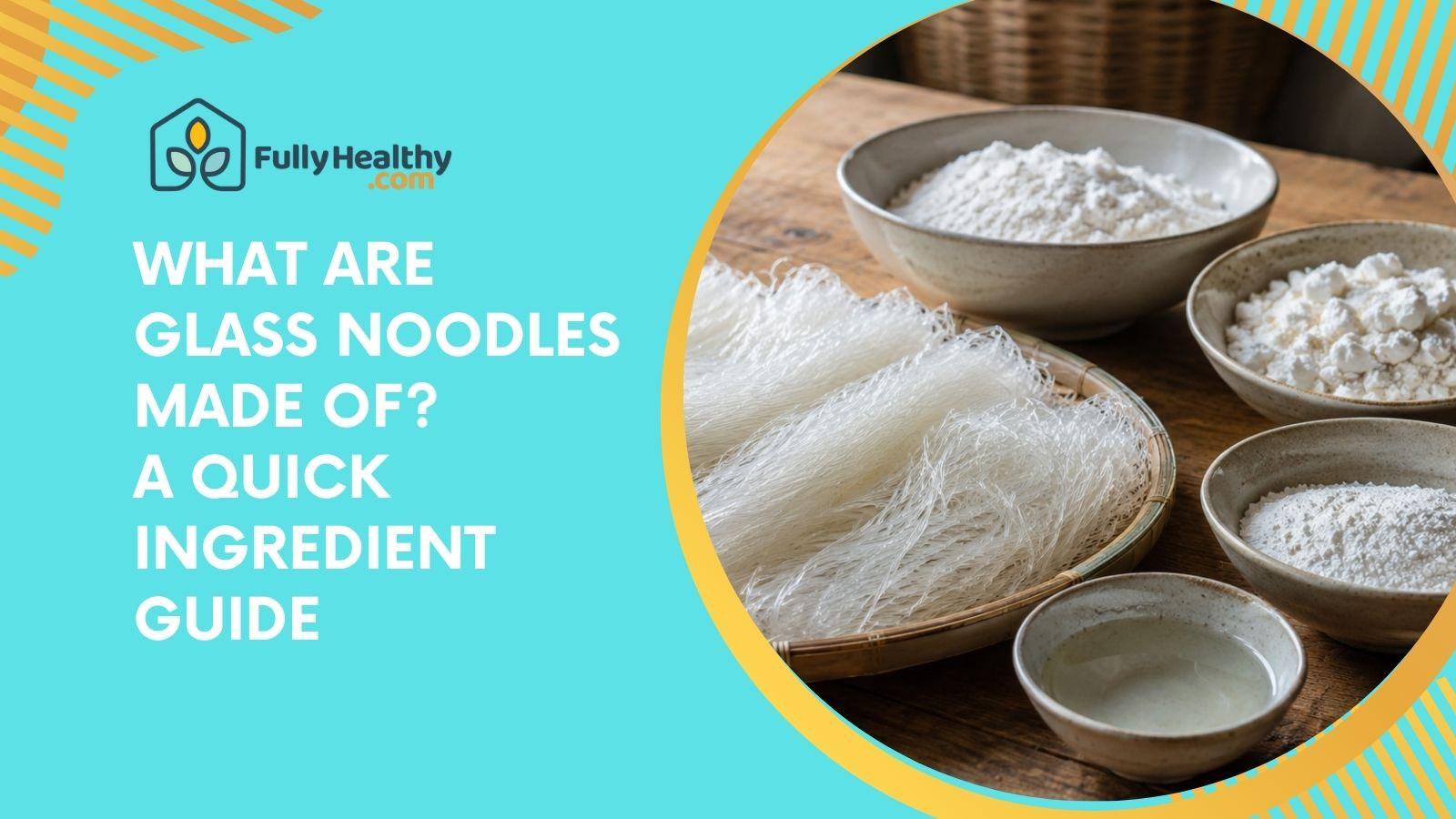
Glass noodles are translucent starch noodles made mainly from starch and water; their thickness varies considerably by type. Common starches include mung bean, sweet potato, and potato. Other formulations may use or blend starches such as tapioca/cassava, corn, or pea starch. They are often gluten-free, but labels matter. Their health value depends on the ingredients, portion size, and meal.
This blog explains what glass noodles are made of, how they compare with other noodles, and what to check before buying.
What Are Glass Noodles Made Of?
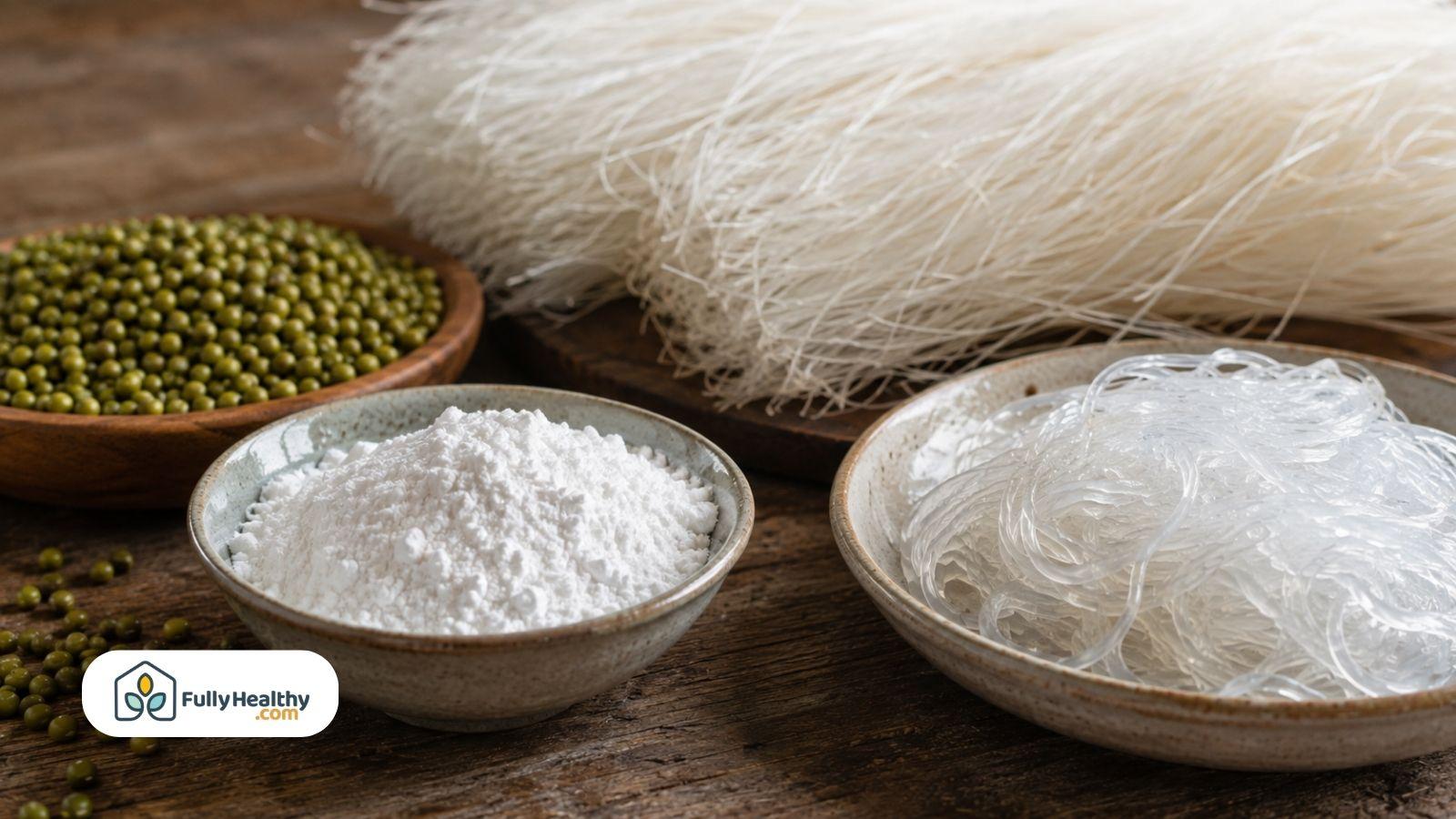
Glass noodles are made mainly from starch and water. According to Sporked, common Chinese varieties use mung bean starch or potato starch, while Korean and Japanese versions often use sweet potato starch.
Some varieties can also be made with tapioca or arrowroot starch. Once cooked, these noodles become clear or translucent, which gives them their “glass” appearance.
Which Starches Are Used To Make Glass Noodles?
The exact starch depends on the type and regional style. This means two packages labeled “glass noodles” may be made from different ingredients, even though they look similar after cooking.
-
Mung Bean And Potato Starch: These are common starches used in Chinese glass noodles.
-
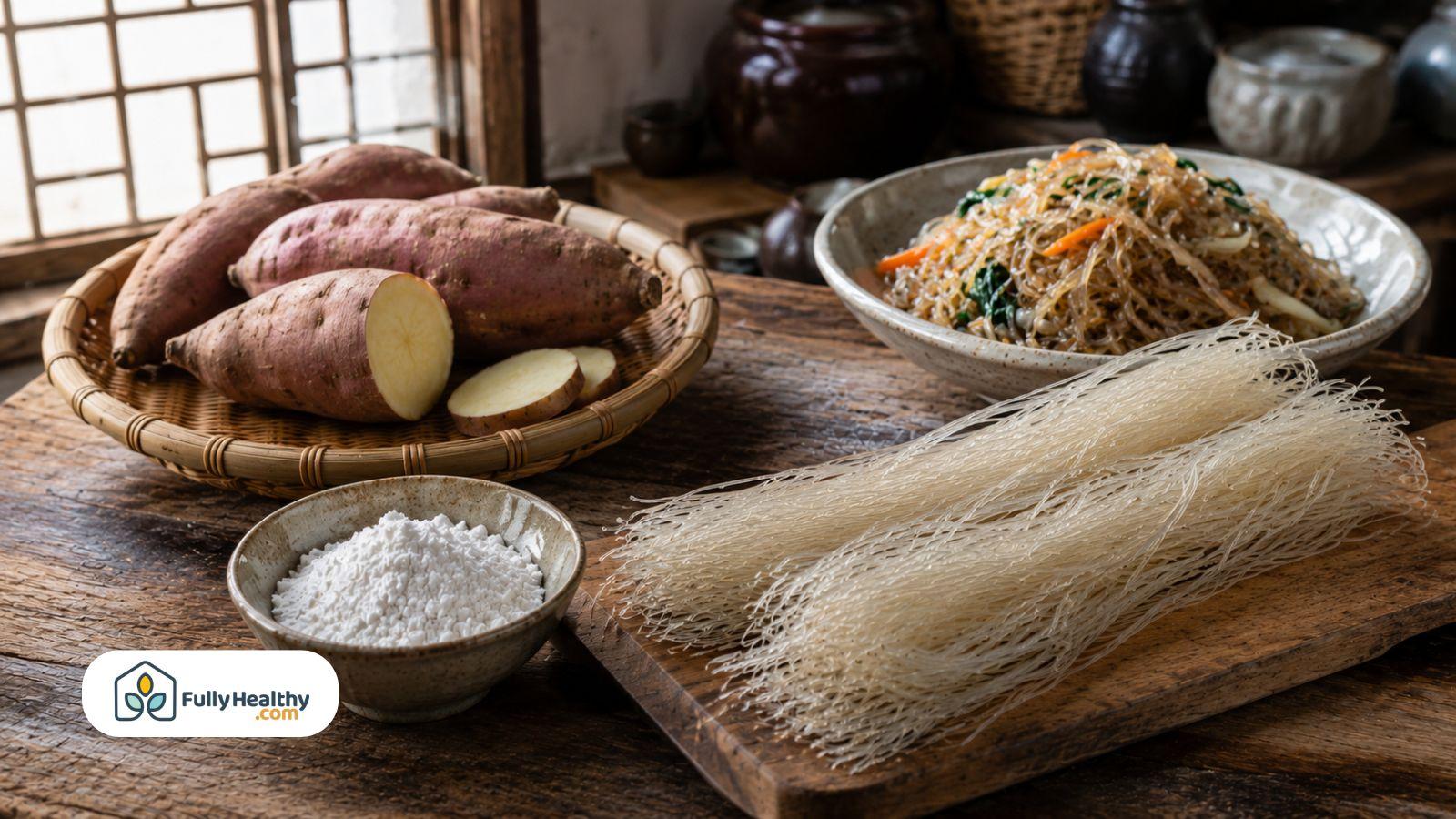
Sweet Potato Starch: Korean and Japanese glass noodles are commonly made with sweet potato starch.
-
Other Starches: Some varieties use tapioca or arrowroot starch instead.
How Are Glass Noodles Made?
Glass noodles begin with starch and water. Sporked explains that the ingredients are mixed into a slurry and combined with boiling water to create a translucent paste. The mixture is then cooled and formed into noodle strands.
-
Forming the Noodles: The starch mixture is pushed through a grate or sieve to create long strands.
-
Different Sizes: Glass noodles can range from very thin strands to wider, fettuccine-like noodles.
-
Fresh Or Dried: They may be sold fresh or dried and become characteristically translucent when cooked.
Are Glass Noodles Healthier Than Noodles?
Glass noodles can be part of a meal, but they are not always healthier. What are glass noodles made of matters. Glass noodles are made mainly from starch and water, often mung bean starch, sweet potato starch, or potato starch. Rice noodles and rice vermicelli use rice instead.
Are Glass Noodles Healthier Than Rice Or Wheat Noodles?
Cooking increases noodle water content, so nutrient values expressed per 100 g cooked food can appear lower than dry-weight values; comparisons should use equivalent portions or the same dry/cooked basis. The meal matters.
Vegetables, chicken, tofu, minced pork, soy sauce, and sesame oil can affect calories, protein, sodium, and fat.
-
Compare Equal Servings: Look at portion sizes instead of judging noodles by their thin or translucent appearance.
-
Review The Whole Dish: Stir-fried vegetables, broth, proteins, sauces, and oils all affect nutrition.
Does What Are Glass Noodles Made Of Affect Which Is Healthier?
Yes. Some glass noodles use 100% mung bean starch, while others include pea starch or starches. Sweet potato starch noodles use another base. Compare products by reading the ingredient list and Nutrition Facts label.
-
Check The Main Ingredient: Look for mung bean, potato starch, sweet potato starch, or another listed starch.
-
Know The Names: Cellophane noodles, bean thread noodles, bean thread vermicelli, mung bean vermicelli, Chinese vermicelli, and bean thread may describe related noodles.
Do Glass Noodles Healthy?
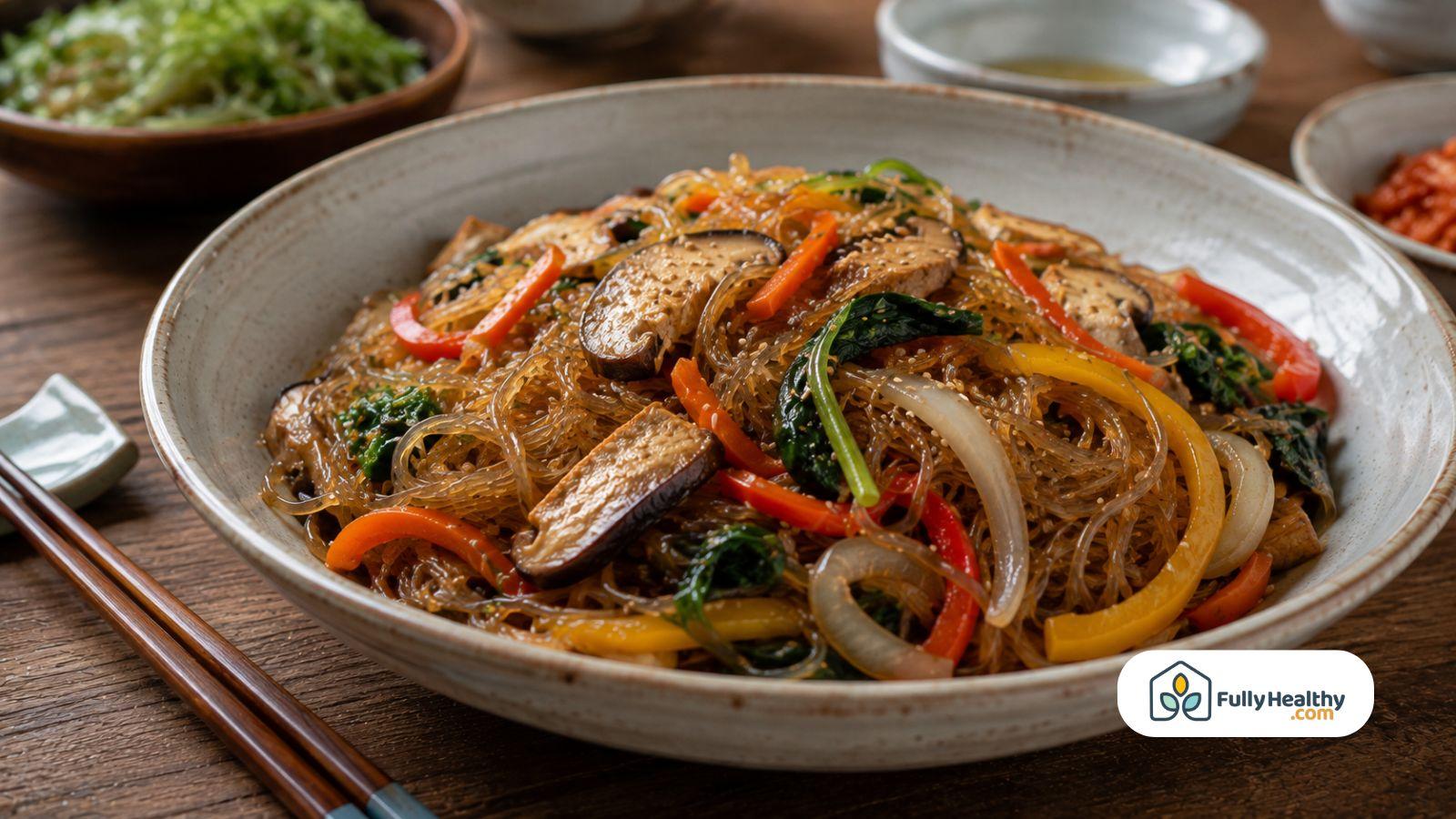
Glass noodles are versatile noodles used in soups, stir-fries, salads, cold salads, hot pots, and stir-fried dishes. They can be served hot or cold. Their value depends on portion size, ingredients, and preparation.
Are Glass Noodles Healthy On Their Own?
Most conventional glass noodles are predominantly starch and generally provide relatively little protein, fiber, vitamins, or minerals unless other ingredients are added.
Many are naturally gluten-free, but people avoiding gluten should check the package. Some products may contain added ingredients or face cross-contact during processing.
-
Read The Label: Do not assume every product has the same recipe, including products made with mung bean flour or blended starches.
-
Consider Preparation: Pad Thai, soups, stir-fries, and deep-fried noodle dishes can have different nutrition profiles.
Are All Glass Noodles Made From The Same Ingredients?
No. Noodles are made from different starches. Korean dang myun, called dangmyeon, commonly uses sweet potato starch. Products from China and Chinese markets may use mung bean starch or potato starch. Fresh noodles and dried noodles may need different cooking methods.
-
Prepare Glass Noodles Correctly: Soak noodles in hot water, boiling water, boiling hot water, or cold water when the package or recipe directs it.
-
Cook Glass Noodles Carefully: For stir-frying glass noodles, soak them when required, then add glass noodles and stir with vegetables, tofu, chicken, broth, or flavors until cooked.
Are Glass Noodles Gluten-Free?
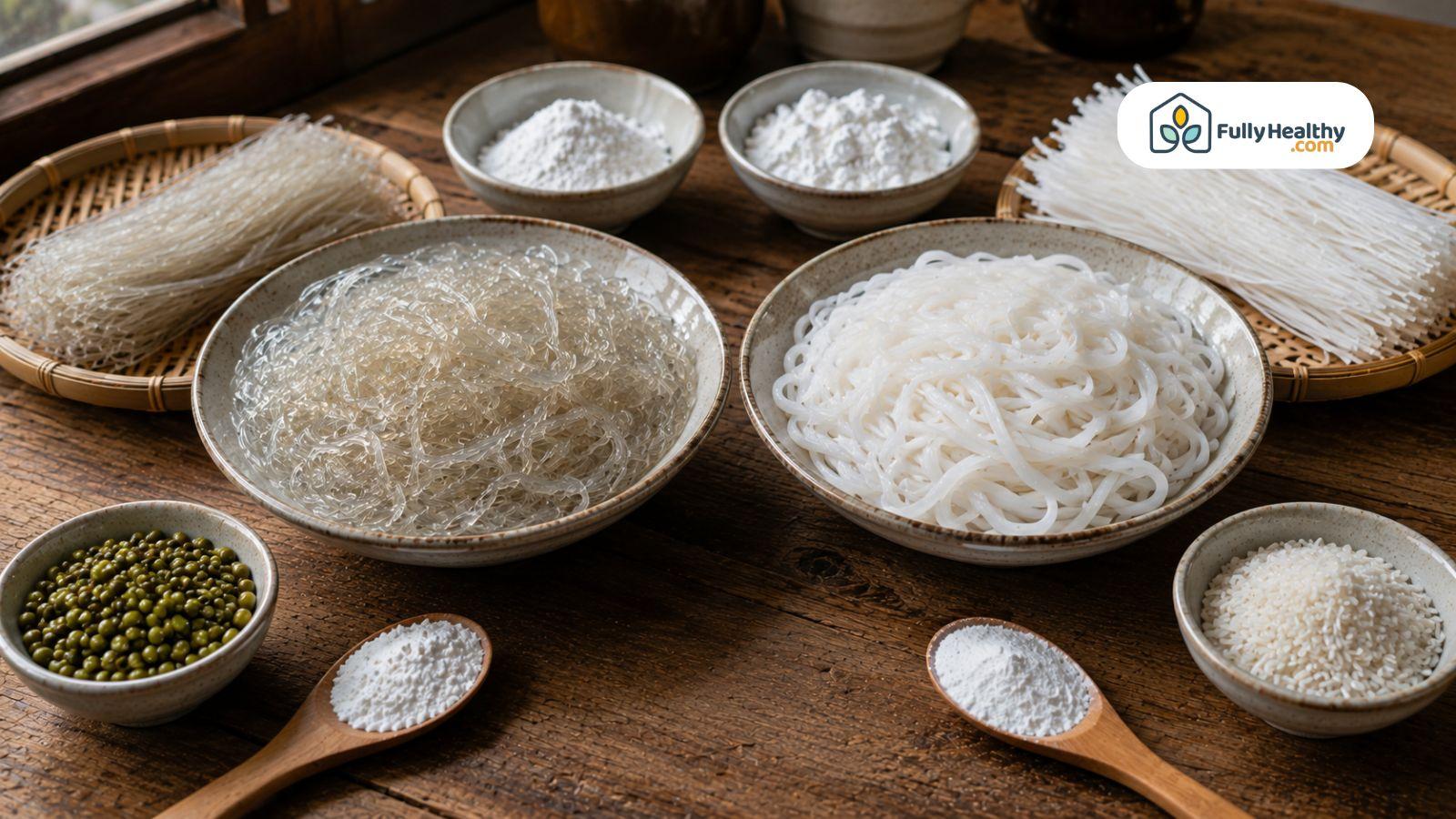
Many glass noodles made from mung bean, sweet potato, potato, cassava/tapioca, corn, or other gluten-free starches are naturally gluten-free; being ‘starch-based’ alone does not guarantee that a noodle is gluten-free.
Common choices include mung bean starch, sweet potato starch, potato starch, and other starches. However, the phrase “glass noodles gluten free” does not mean every product is safe for every gluten-free diet. Always check the label because other ingredients and processing methods can vary by brand.
Are Glass Noodles Naturally Gluten-Free?
Glass noodles made exclusively from naturally gluten-free starches and water contain no gluten ingredients, although commercial products may differ in formulation or be subject to cross-contact.
During cooking, starch gelatinization and formation of a starch-gel matrix produce the characteristic translucent appearance of glass noodles. Some noodles are very thin, while others are thick, depending on the type and brand.
-
Check The Main Starch: Mung bean, sweet potato, potato, tapioca, and arrowroot starch are common bases used to make glass noodles.
-
Read The Ingredient List: Some brands use starch blends or other ingredients, so do not assume every package has the same formula.
-
Look For Clear Labeling: People with celiac disease or gluten sensitivity should choose products that clearly meet their dietary needs.
Should You Check Glass Noodle Labels For Gluten?
Yes. A naturally gluten-free starch does not always mean the finished product is completely free from gluten. Cross-contact can happen during manufacturing, packaging, or handling. The product label gives more reliable information than the name “glass noodles” alone.
-
Check For Cross-Contact: For celiac disease, check the full ingredient list and a clearly stated gluten-free claim or certification when available; a wheat-allergen statement alone does not establish that a product is free of all gluten sources.
-
Verify Every Brand: Ingredients and production methods can change, so review the package each time you buy.
-
Build A Balanced Meal: Gluten-free glass noodles can be delicious when paired with vegetables, protein, broth, or a flavorful sauce.
How Can Fully Healthy Make Specialty-Diet Shopping Easier?
Fully Healthy is an online marketplace for people shopping for specialty-diet foods. It focuses on AIP, gluten-free, and allergen-conscious options.
The website groups products into clear collections, which can make shopping easier for people who want to find foods that match specific dietary needs without searching across many stores.
How Can FullyHealthy Help You Shop For Specialty-Diet Foods?
Fully Healthy lets shoppers browse products by dietary needs and AIP stages, including Elimination and Reintroduction Stages 1 through 4. The site also features categories such as Snacks, Breakfast, Bundles, Seasonings, Sweets, Personal Care, and New Products.
-
Shop By Dietary Need: Organized collections help you narrow down products that may fit your eating plan.
-
Browse By Category: Clear product groups make it easier to compare pantry items, snacks, baking mixes, and other available choices.
-
Check Product Details: Review ingredients, dietary labels, and availability before buying because product formulas and stock can change.
What Products Can You Find On FullyHealthy?
Verified products on Fully Healthy include Big Tree Farms Organic Brown Coconut Sugar, Bob’s Red Mill Organic Coconut Sugar, Coombs Family Farms Organic Maple Sugar, Coombs Family Farms Organic Maple Syrup, Date Lady Date Sugar, and EAT G.A.N.G.S.T.E.R baking mixes.
-
Sweetener Choices: Available examples include coconut sugar, maple sugar, maple syrup, and date sugar from brands listed on FullyHealthy.
-
Baking Choices: Verified EAT G.A.N.G.S.T.E.R products include “Cut-Out” Sugar Cookie Mix, Banana Bread Mix, and Chewy Choconot Brownie Mix.
-
Shop With Confidence: Check the product page for current ingredients, package sizes, dietary details, and availability before placing an order.
Final Thoughts
Glass noodles can be a useful choice for many meals because they are light, versatile, and easy to pair with vegetables, proteins, soups, and sauces. What are glass noodles made of depends on the product, but common ingredients include mung bean starch, sweet potato starch, and potato starch.
They are often gluten-free, but nutrition and ingredients vary. Check labels, compare serving sizes, and choose the option that best fits your diet and recipe.
FAQs
Are Glass Noodles Better Than Pasta?
Glass noodles are not automatically better than pasta because the healthier choice depends on ingredients, serving size, and the rest of the meal.
What Are The Unhealthiest Noodles?
There is no scientifically defined ‘unhealthiest noodle.’ Nutritional quality depends on the noodle’s composition, portion size, preparation method, and the sodium, saturated fat, fiber, protein, and other ingredients in the complete dish.
Do Glass Noodles Spike Blood Sugar?
Glass noodles contain digestible carbohydrate and can increase post-meal blood glucose. The magnitude varies with serving size, starch source and processing, resistant-starch content, and the composition of the overall meal.
What Is Better, Glass Noodles Or Rice Noodles?
Neither is always better, so compare ingredients, nutrition labels, serving sizes, and your dietary needs before choosing between glass noodles and rice noodles.
What Is The Healthiest Noodle To Eat?
There is no single healthiest noodle for everyone. Depending on dietary needs, noodles higher in fiber and/or protein may provide nutritional advantages, while portion size and the composition of the complete meal remain important.
Leave a comment