

What Is Kosher Food? How It Works and Why It Matters
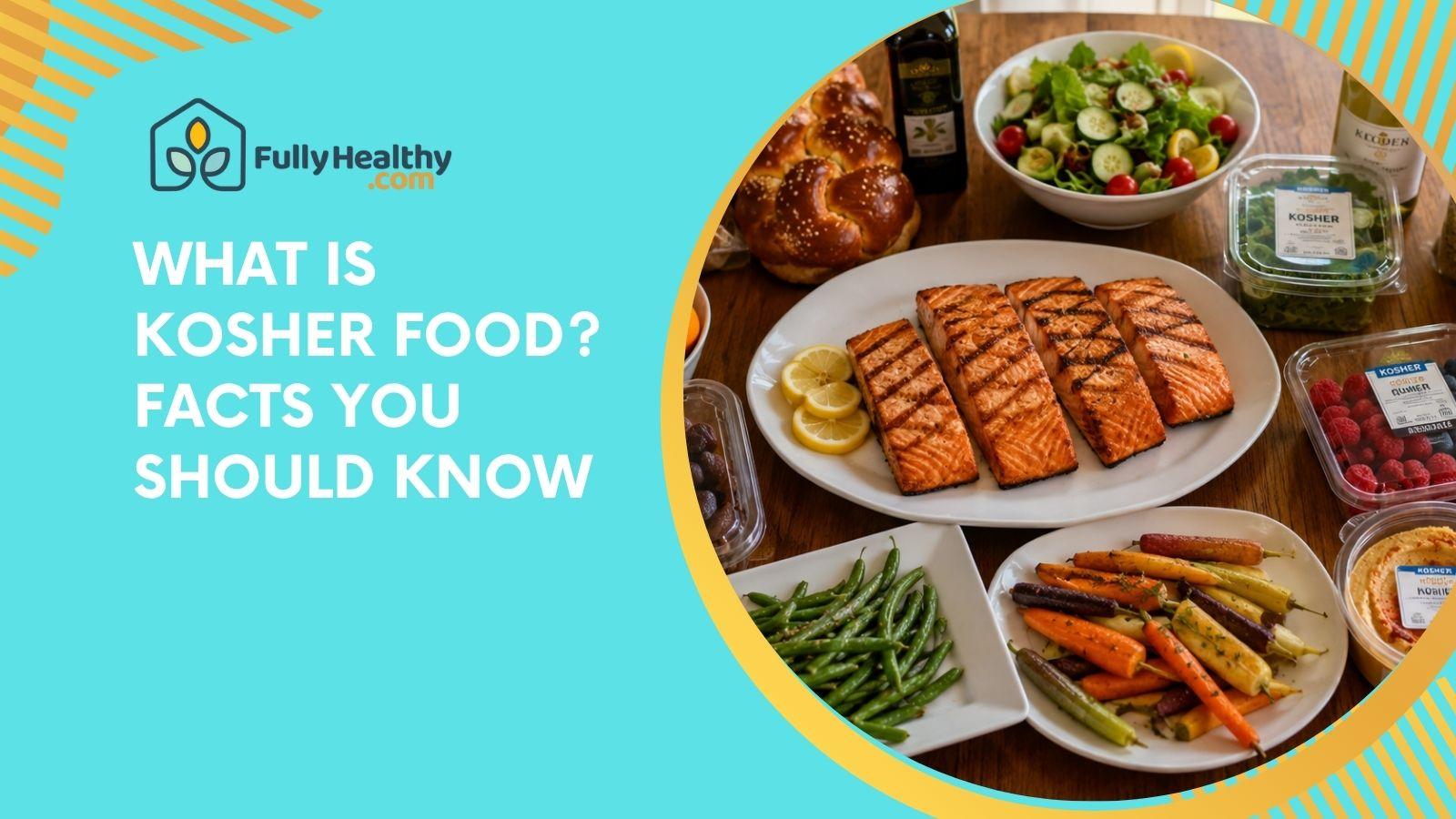
Kosher food follows Jewish dietary laws about allowed animals, preparation, and serving. It keeps meat and dairy separate and requires careful handling of ingredients and equipment. Kosher is not the same as halal, though both avoid pork and set slaughter rules.
Whether kosher-slaughtered meat is acceptable to Muslims varies among Islamic legal authorities and depends on factors including slaughter requirements, invocation, processing, ingredients, and local religious guidance; unavailability of halal food is not the sole criterion.
This article also explains the three main kosher rules and how FullyHealthy helps shoppers find specialty-diet products easily.
What Is Kosher Food?

What is kosher food? Kosher describes food that follows Jewish dietary law. The Hebrew term kasher means ‘fit’ or ‘proper’; ‘kosher’ is the common English form. A kosher diet covers ingredients, preparation, equipment, and serving.
Food is considered kosher only when it meets accepted kosher guidelines. It also helps protect religious identity across many Jewish communities.
What Does Kosher Mean?
Kosher food describes food that meets Jewish law. A kosher animal must meet specific rules before it can be eaten. Keeping kosher also means using kosher ingredients.
-
Meaning: Kosher means ‘fit’ or ‘proper’ and can describe food, ingredients, equipment, or preparation that complies with Jewish dietary law.
-
Certification: Kosher certification shows that food products meet recognized standards.
-
Labels: Certified kosher packaged foods often display trusted kosher symbols.
-
Reminder: Kosher does not automatically mean healthier food.
What Are the Three Categories of Kosher Food?
Kosher food has three categories: meat, dairy, and pareve foods. Under traditional Jewish law, meat and dairy may not be cooked or eaten together; many observant communities also require a waiting period between eating meat and dairy.
Pareve foods generally may be served with either meat or dairy, although additional rules and customs apply—for example, many observant Jews avoid eating fish together with meat.
-
Meat: Includes kosher meat, chicken, and meat products from kosher mammals and kosher birds.
-
Dairy: Includes milk, dairy foods, dairy products, kosher hard cheese, and other milk products.
-
Pareve: Kosher fish, eggs from kosher birds, and plant foods are generally pareve, provided they contain no meat or dairy ingredients and were processed on suitable equipment.
Is Kosher the Same as Halal?

Kosher and halal share some features. However, they are not the same. Jewish law and Islamic law use different food rules and slaughter methods.
What Similarities Do Kosher and Halal Share?
Both systems allow only certain foods and prohibit forbidden animals.
-
Common Rule: Both prohibit pork and control how meat is handled.
-
Inspection: Both may use trained inspectors and trusted certification.
-
Label Check: Buyers should review ingredient lists and recognized kosher or halal certification marks; tamper-proof packaging does not establish religious compliance.
What Makes Kosher Different From Halal?
Kosher rules require strict separation of meat and dairy. Halal rules do not use the same system. Kosher also has specific rules for grape juice, grape products, hard cheese, animal rennet, and certain foods.
-
Kitchen Practice: A kosher kitchen uses separate dishes for meat and dairy.
-
Meals: Meat and dairy cannot be served in one meal.
-
Utensils: The same dishes and the same utensils should not be used for both.
-
Certification: Kosher certification follows Jewish dietary standards, while halal certification follows Islamic standards.
What Are the Three Main Rules of Kosher?

Kosher law includes several interconnected requirements concerning permitted species, slaughter, removal of blood, meat–dairy separation, ingredients, equipment, insects, wine and grape products, and supervision; these should not be presented as an authoritative set of only three rules.
Which Animals Are Considered Kosher?
A kosher animal must meet clear biblical requirements. The Torah states that kosher mammals must have split hooves and chew their cud.
Kosher aquatic animals must possess fins and the type of removable scales recognized by traditional Jewish law. Shellfish and many other animals are forbidden. Kosher birds are accepted through established tradition.
-
Permitted Animals: Cattle, sheep, goats, chickens, and certain fish may be eaten.
-
Forbidden Animals: Pigs, shellfish, and other non-kosher species are not allowed.
-
Egg Inspection: Eggs may be checked for blood spots before use.
How Should Kosher Food Be Prepared?
Preparation matters as much as ingredients. Kosher mammals and birds must be slaughtered by a specially trained and religiously qualified slaughterer, called a shochet, and must also pass required inspection and blood-removal procedures.
Blood is removed through special preparation, including treatment of blood vessels. Food prepared with non-kosher equipment may lose its kosher status.
-
Kitchen Rules: Keep meat and dairy separate with separate dishes.
-
Equipment: Avoid non-kosher equipment during cooking and serving.
-
Cheese: Cheese generally requires reliable kosher certification because both its ingredients—including rennet—and its production conditions can affect kosher status; the issue is not limited to hard cheese or animal rennet.
-
Oversight: Kosher production may be supervised by a trained mashgiach or certification organization; the onsite supervisor is not necessarily a rabbi.
Can Muslims Eat Kosher?

Many people ask whether Muslims can eat kosher food. The answer depends on personal beliefs and religious guidance. Kosher laws and Islamic food laws share some rules, but they are not the same.
Some Muslims may choose kosher food when halal food is unavailable, while others follow stricter views. Because people practice their faith in different degrees, it is best to follow trusted religious advice.
When May Kosher Meat Be Acceptable to Muslims?
Some Muslims may eat kosher meat when halal options are not available. Both traditions prohibit pork and impose slaughter and blood-removal requirements, but their permitted species, slaughter procedures, invocation requirements, processing rules, and treatment of ingredients differ.
However, kosher food does not always meet halal rules. Personal beliefs, local customs, and guidance from religious leaders all matter when deciding what is suitable for eating meat.
-
Religious Guidance: Many Muslims ask an imam before choosing kosher products.
-
Shared Rules: Both traditions ban pork and value careful food preparation.
-
Key Difference: Kosher laws and Islamic food laws use different slaughter and ingredient standards.
-
Personal Practice: Choices may vary among people with different degrees of religious observance.
Which Kosher Ingredients May Still Be Unacceptable for Muslims?
A kosher label does not always mean a product is halal. Kosher-certified products may contain alcohol or ingredients such as kosher-certified gelatin that some Muslim authorities do not consider halal, so kosher certification alone does not establish halal status.
Muslims should read labels carefully to avoid food that does not meet their beliefs. This helps Muslim shoppers avoid ingredients or processing methods that may be non-halal; ‘non-kosher’ is a Jewish-law classification and should not be used as an Islamic-law category.
-
Check Ingredients: Look for alcohol, gelatin, animal fats, and other animal-based additives.
-
Review Processing: Processing requirements can affect whether a food is acceptable.
-
Read Labels: Check packaged foods before buying or eating them.
-
Ask for Help: Speak with a trusted religious leader when an ingredient source is unclear.
How Fully Healthy Can Help With Specialty-Diet Shopping?
Finding food for special diets can be difficult. Fully Healthy makes the process easier by offering products for people with specific dietary needs. The store is not a kosher retailer, but it gives shoppers useful product details. This helps buyers review ingredients and choose products that match their needs.
How Can FullyHealthy Help Shoppers Find Foods for Special Diets?
Fully Healthy arranges products into simple categories. This makes it easier to find items for different diets and lifestyles. The website also shares recipes and educational content. These resources can support better choices, but they do not replace medical or religious advice.
-
Simple Browsing: Shop by dietary category or AIP stage.
-
Helpful Categories: Find snacks, breakfast foods, seasonings, bundles, sweet treats, and personal care products.
-
Useful Resources: Read recipes and articles about specialty diets.
-
Smarter Choices: Compare product details and ingredients before buying.
Which Verified Products Can Shoppers Find on FullyHealthy?
Product availability, formulations, and certification status must be verified against current manufacturer labels and current retailer listings before publication. Product stock and ingredients may change, so shoppers should always check the latest details before ordering.
-
Natural Sweeteners: Options include Organic Brown Coconut Sugar, Organic Coconut Sugar, and Organic Maple Syrup.
-
Baking Mixes: Products include EAT G.A.N.G.S.T.E.R. Sugar Cookie Mix, Banana Bread Mix, and Chewy Choconot Brownie Mix.
-
Shopping Tip: Review ingredient lists, allergen notes, and dietary labels before purchasing.
-
Important Reminder: Specialty-diet labels are not the same as kosher certification, so check the product label when kosher status matters.
Final Thoughts
Understanding what is kosher food becomes much easier when you learn the basic rules behind it. This kosher primer explains how Jewish dietary laws guide food choices, preparation, and serving. These traditions come from the Hebrew Bible and remain an important part of Jewish culture for many Jewish people today.
From avoiding non-kosher animal species to not mixing meat with mother's milk, for many observant Jews, kosher practices express religious commitment, communal identity, and tradition; motivations and levels of observance vary. Always check reliable certification and ingredient labels before choosing kosher or other food products.
FAQs
How Do You Tell If Food Is Kosher?
Look for a trusted kosher certification symbol on the package, check the ingredient list, and make sure the product follows accepted kosher standards.
Are Eggs Kosher?
Eggs from kosher birds are generally kosher; traditional practice commonly includes checking cracked eggs for blood spots, although the consequences of a spot vary according to the egg type and religious authority.
Why Do Jewish People Keep Kosher?
Many Jewish people keep kosher because the Hebrew Bible contains dietary laws that are central to Jewish culture and religious practice.
What Makes a Food Kosher?
A food is considered kosher when it follows Jewish dietary laws, comes from permitted animals, is prepared correctly, and avoids mixing meat with milk.
What Foods Are Not Kosher?
Animal non-kosher species such as pigs and shellfish are not kosher, and any other food that breaks Jewish dietary laws or is prepared improperly is also not considered kosher.
Leave a comment