

How To Store Sourdough Bread For Maximum Freshness
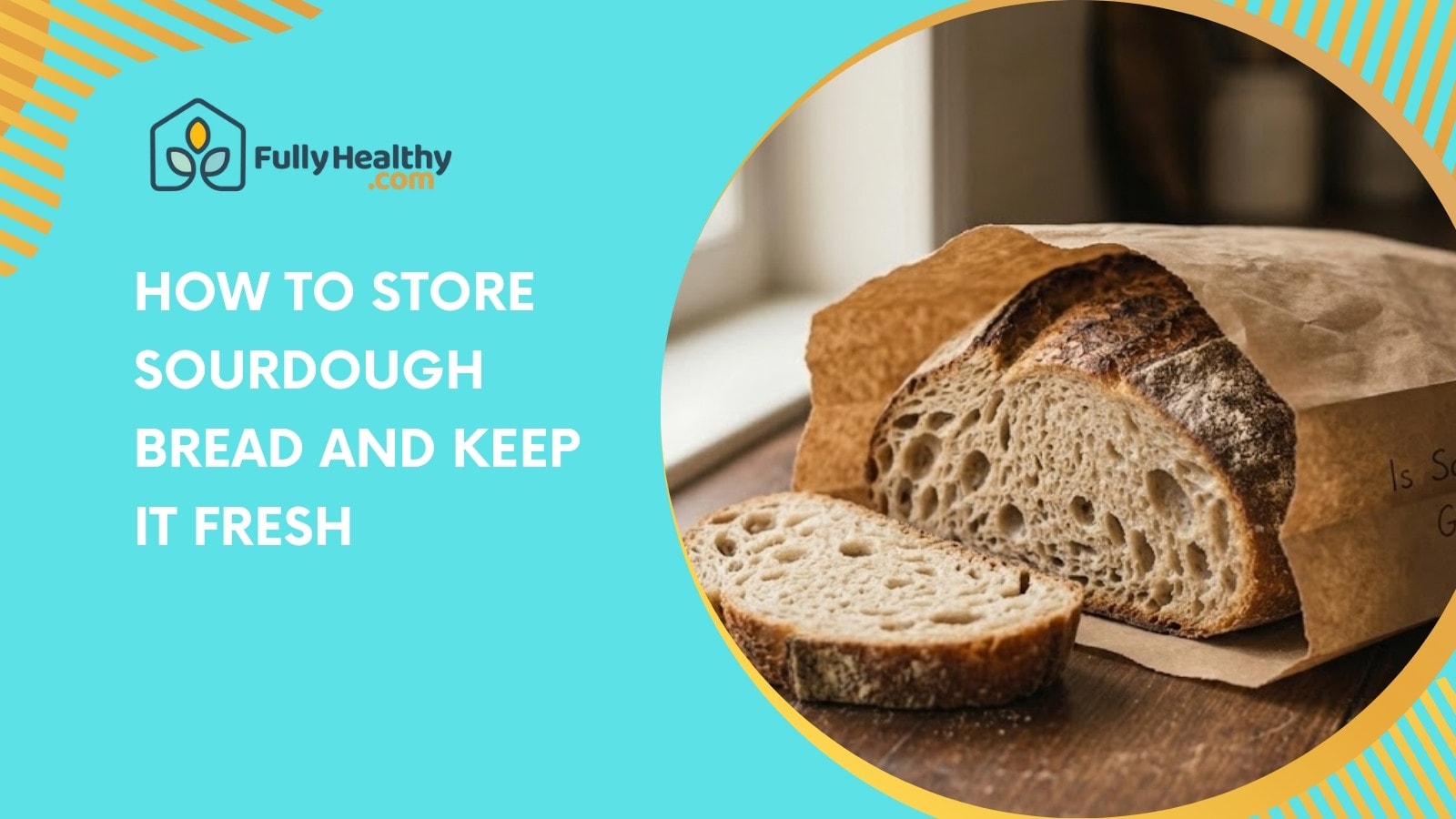
Wondering how to store sourdough bread so it stays fresh longer? You should use the right method for the loaf and the time you want to eat it. First, crusty sourdough needs air flow, and then it needs a light covering. A bag that keeps air out is best for soft sourdough.
If you can help it, don't put it in the fridge or wrap it while it's still warm. For longer storage, it's best to freeze. What to do and when to do it.
Featured Bakery Pick
Base Culture // Gluten Free Sourdough Bread - 16 oz
Loading...
How To Store Sourdough Bread?
For days, fresh sourdough bread will taste great if you know how to store it. If you want to eat the sourdough loaf quickly, the best way to store it will depend on the type of loaf. Sourdough bread made at home doesn't have any preservatives, so it's important to have a proper bread storage. Simple, tried-and-true steps will help you keep bread fresh and not waste it.
Best Way To Store Crusty Sourdough Bread
Fresh, crusty bread needs air first, then protection from light. The crust gets soft if it is sealed too soon. Bread goes bad if it's left out for too long. The crust needs to stay crisp while the crumb is kept safe.
-
Cool Completely: Let the sourdough loaf cool fully on a cutting board before covering to prevent trapped steam.
-
First 12–24 Hours: Leave the whole loaf uncovered at room temperature to maintain a crisp crust.
-
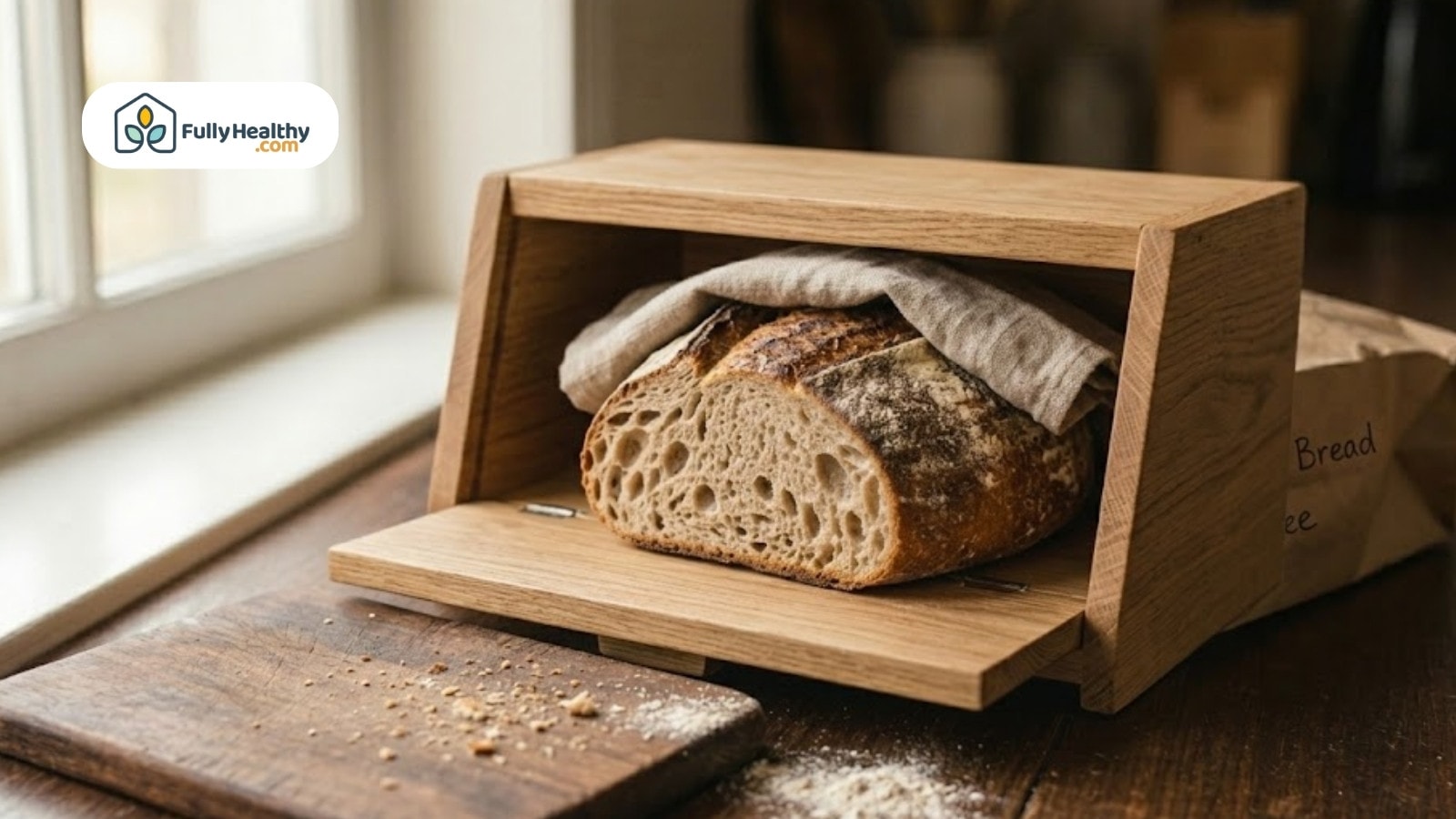
After 24 Hours: Place it in a paper bag, linen bag, or cloth bag to protect the inside while allowing airflow.
-
For Drier Climates: Use a plastic bread bag loosely closed to prevent the loaf from drying out too fast.
Best Way To Store Soft Sourdough Bread
Sandwich bread that is soft needs more moisture control than bread that is crusty. Since the crumb of sandwich bread is soft, it loses water faster when it comes in contact with air. This kind does better in storage that keeps air out.
-
Use A Plastic Bag: Store fresh bread in a plastic bag or bread bag to lock in moisture.
-
Avoid Tight Sealing While Warm: Never wrap warm bread in plastic wrap because condensation leads to mold.
-
Store At Room Temperature: Keep the loaf in a cool, dry place away from heat and sunlight.
-
Seal After Slicing: Press the bread cut sides together before placing it back into the bag.
How Long Does Sourdough Bread Last On The Counter?
The shelf life of homemade sourdough bread at room temperature is usually three to five days. Temperature and humidity affect how long it stays fresh. Dry air makes bread firm faster, while humid air increases mold risk. Knowing the timeline helps you plan how to store bread correctly.
Typical Shelf Life At Room Temperature
Fresh sourdough bread tastes best on the first day. The texture changes daily, but it remains safe to eat for several days when stored properly.
-
Day 1: Crisp crust and soft interior, ideal for serving.
-
Day 2: Slightly softer crust, still perfect for sandwiches.
-
Day 3–4: Drier texture, great for French toast or croutons.
-
Day 5: Noticeably firm and close to stale bread unless well protected.
Signs Your Sourdough Has Gone Bad`
Stale bread is dry but still usable. Spoiled bread must be thrown away. Learn to spot the difference to protect your health.
-
Visible Mold: Green, black, or fuzzy spots mean discard the loaf immediately.
-
Unusual Smell: A sharp odor different from normal sourdough tang signals spoilage.
-
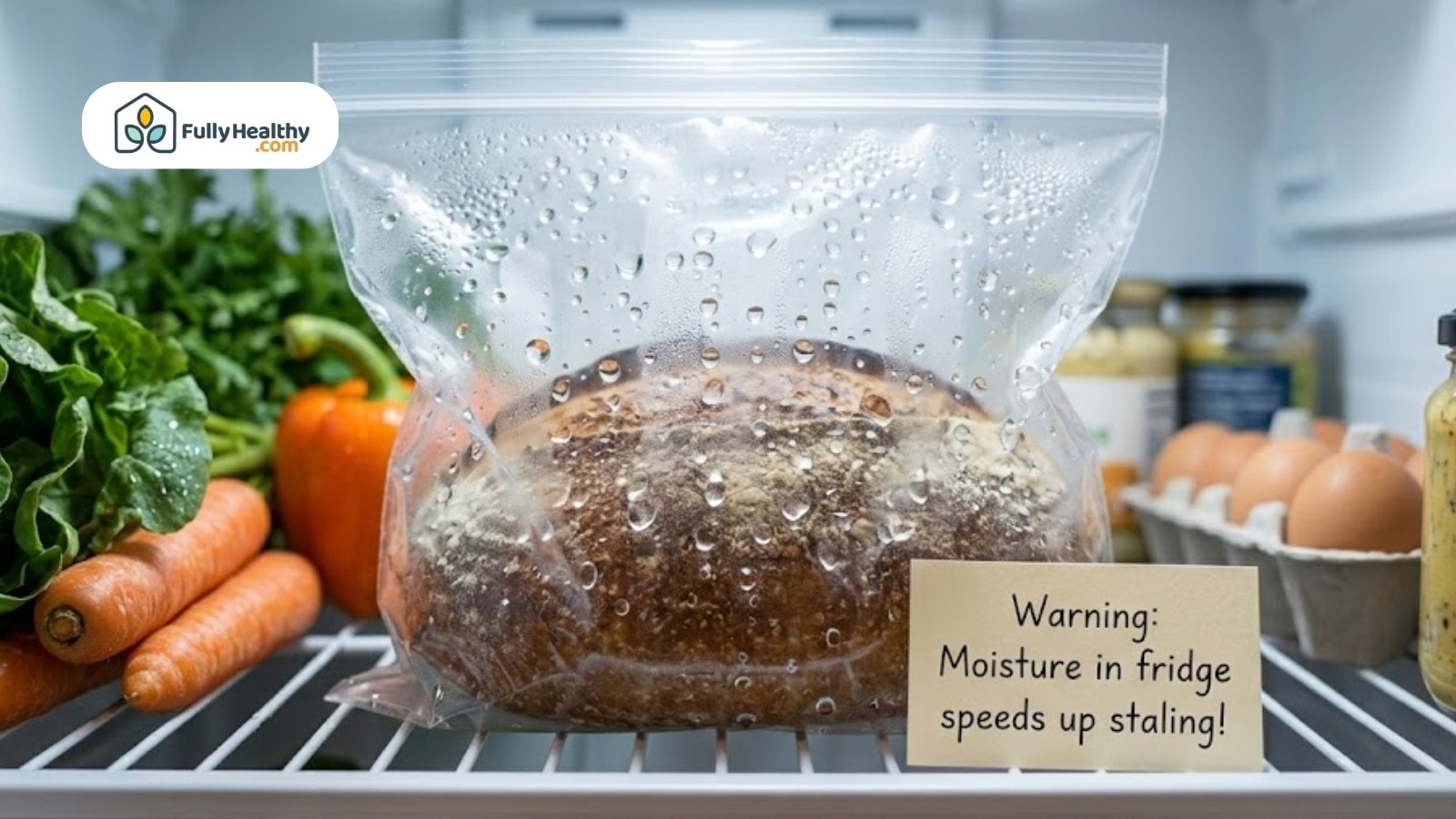
Excess Moisture: Water droplets inside a plastic bread bag or plastic wrap increase mold growth.
-
Freezer Burn: Dry white patches on frozen bread show moisture loss from poor sealing.
Is It Better To Store Sourdough Whole Or Sliced?
A whole loaf keeps moisture longer than sliced bread. Each slice exposes more surface area, which speeds up drying. If your goal is to keep bread fresh longer, store it whole whenever possible.
Why Whole Loaves Stay Fresher Longer
The crust acts as a natural shield. Once you slice it, air reaches the crumb and pulls moisture out quickly.
-
Natural Protection: The outer crust seals in moisture.
-
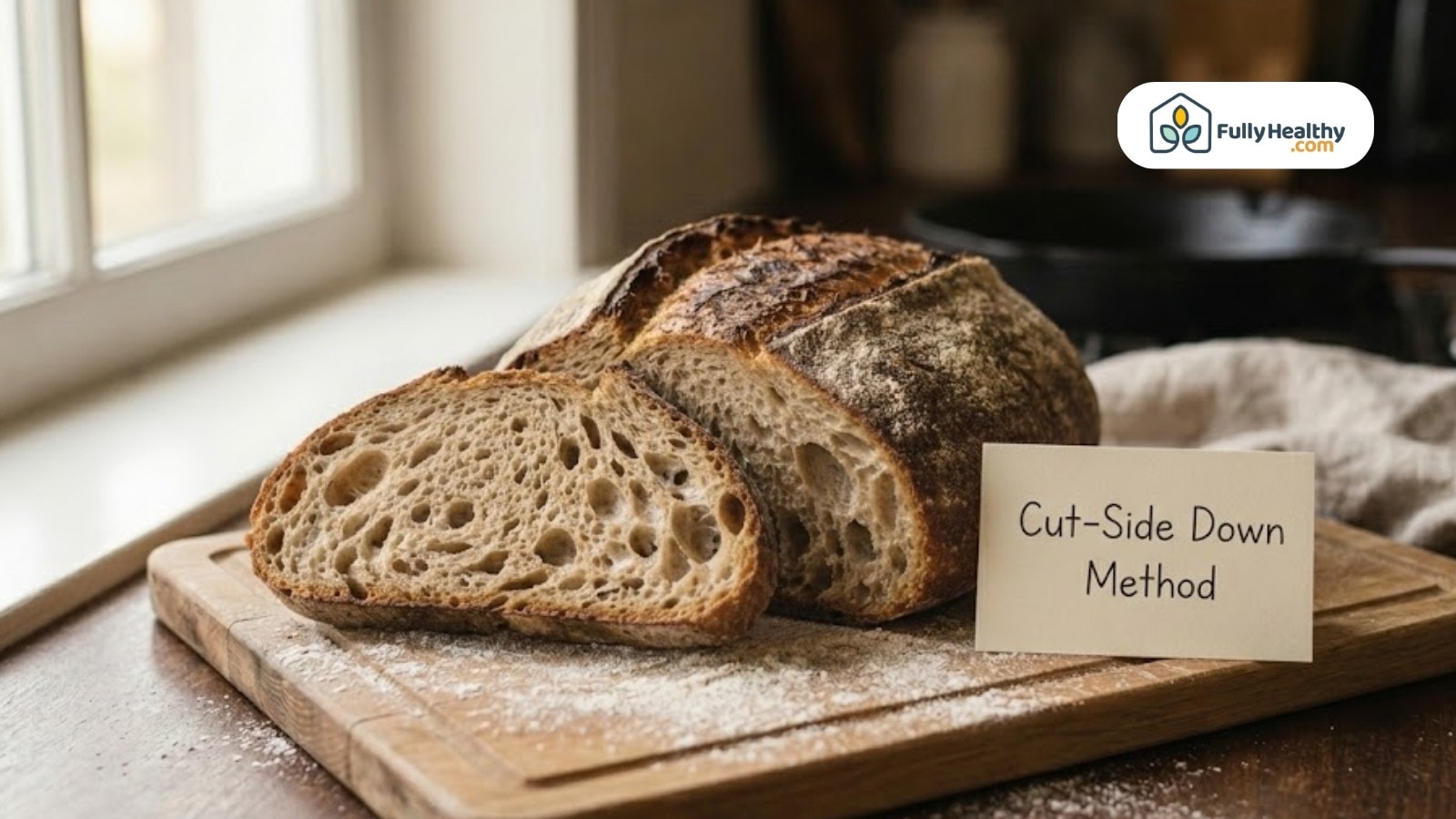
Cut-Side Down Method: Place the bread cut side down on a cutting board to reduce air exposure.
-
Fewer Exposed Areas: Keeping the loaf intact slows moisture loss.
When To Slice Before Storing
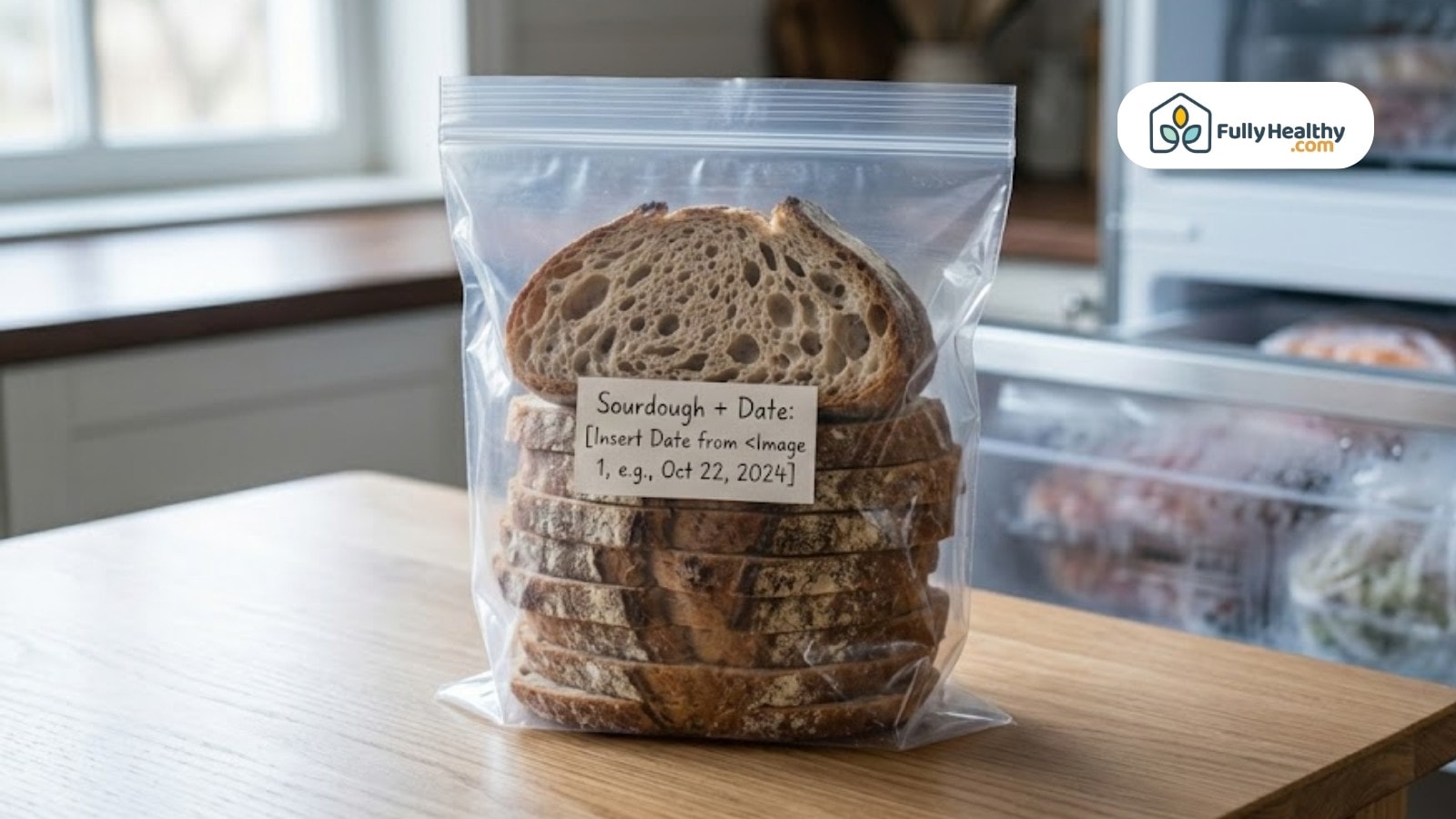
Pre-slicing works best when freezing for convenience. This method helps reduce waste and makes reheating easier.
-
Separate With Parchment Paper: Place parchment paper between slices to prevent sticking.
-
Use A Ziploc Bag: Remove excess air before sealing to prevent freezer burn.
-
Freeze Entire Loaves Or Slices: Frozen bread stays at good quality for one to two months.
-
Reheat Properly: Toast slices directly in a toaster oven for better texture.
What Are Common Sourdough Storage Mistakes?
Even skilled bakers can ruin a loaf with poor storage. After baking sourdough, how you handle the bread matters as much as how it was baked. If you do not let it cool properly or ignore airflow, the crust and crumb suffer. Avoiding common mistakes makes sense and protects the effort you put into your sourdough journey.
Why Refrigeration Ruins Sourdough
Many people place bread in the fridge to extend freshness. This actually dries it out faster than keeping it at room temperature. The texture changes quickly, especially in artisan loaves.
-
Cold Temperature Effect: Refrigeration speeds up staling and makes the crumb firm and dry.
-
Loss Of Texture: The crust stops being crispy and turns rubbery.
-
Moisture Imbalance: The fridge pulls moisture from bread, even from regular loaves.
-
Better Long-Term Option: Freeze the loaf instead of refrigerating it.
Airflow Vs. Moisture: Getting The Balance Right
Bread needs light air circulation, but not too much. Too much air causes dryness, while no airflow traps moisture and leads to mold.
-
Cool On A Cooling Rack: Always let bread cool properly after it is baked so steam can escape.
-
Avoid Sealing Warm Bread: Trapping steam inside plastic creates a soggy crust.
-
Use A Bread Box: A bread box supports gentle air circulation while protecting the loaf.
-
Choose Breathable Wraps: Beeswax wraps or cloth covers help control moisture without sealing it airtight.
How Fullyhealthy Can Support Your Bread And Dietary Needs
If you follow a restricted diet, finding safe bread options can feel overwhelming. During your sourdough journey, you may need alternatives to traditional wheat bread made from a sourdough starter. Fullyhealthy offers gluten-free and AIP-friendly products that help you enjoy bread without stress.
Convenient Gluten-Free And AIP Options
Fullyhealthy provides mixes and ready-made breads designed for special diets. These products give flexibility while keeping ingredients simple.
-
Gluten-Free Sourdough Bread: Store in the refrigerator after opening and freeze for longer storage.
-
Rustic Bread Mix: After baking sourdough-style bread, freeze individual slices in a ziplock bag if not eaten within a few days.
-
Pizza Dough Mix: Shelf-stable before baking, making meal planning easier.
-
Diet Support: Options fit AIP and paleo needs without complicated labels.
Smart Storage After Baking
Once these products are baked, proper storage keeps texture and flavor intact. The same principles apply as with homemade loaves.
-
Cool Completely: Place the loaf on a cooling rack before slicing to prevent trapped moisture.
-
Freeze The Right Way: Lay slices flat on a cookie sheet to freeze, then transfer to a ziplock bag.
-
Restore Crispiness: Lightly sprinkle cold water on the crust and warm in the oven for a crispy finish.
-
Portion Control: Freeze individual slices to reduce waste and simplify meals.
Final Thoughts
Learning how to store your sourdough the right way protects flavor, texture, and effort. Whether you bake weekly or are new to the craft, simple habits make a big difference. Always cool completely, choose breathable storage for short term, and freeze for longer needs.
You do not need fancy tools or additional cost solutions. A clean towel, bread box, or freezer-safe wrap often works well. If freezing, wrap tightly in foil or a sealed bag to prevent dryness. Good storage keeps crust crisp and crumb soft while reducing waste. With the right method, your bread stays enjoyable longer and your baking effort never goes to waste.
FAQs
How do I store your sourdough without extra tools?
Store your sourdough in a bread box, cloth bag, or wrapped in foil to avoid additional cost.
Does foil work better than plastic for storage?
Foil helps protect crust when freezing, but use a sealed bag for longer freshness.
Can I store your sourdough at room temperature?
Yes, keep it covered lightly and away from heat for short-term storage.
Is there additional cost to storing bread properly?
No, you can use simple foil, towels, or containers you already have.
What is the safest way to store your sourdough long term?
Wrap tightly in foil, place in a freezer bag, and freeze to maintain quality.
Leave a comment