

Is Chicken Kosher? What Makes It Kosher and Why It Matters

Chicken can be kosher, but only when it meets the standards of Jewish dietary law. Chicken, turkey, duck, and goose are among the bird species accepted as kosher by long-standing tradition, though a bird also has to be slaughtered correctly, checked for defects, and have its blood removed before it can carry kosher certification.
Below is a breakdown of what makes chicken kosher, how it's prepared, how it compares to halal chicken, and whether it tastes any different from regular chicken.
Is Chicken Kosher?

Chicken can be kosher, but only if it meets specific requirements under Jewish dietary law. Species, preparation, and rabbinic supervision all factor into its kosher status.
What Makes Chicken Kosher
A chicken only becomes kosher after clearing several requirements from start to finish. Beyond coming from an accepted species, it must be slaughtered through shechita, checked for internal and external defects, have its blood drawn out through the koshering process, and stay under recognized kosher supervision the whole way.
-
Accepted Species: Chicken belongs to a species accepted as kosher by tradition (mesorah), passed down rather than derived from a fixed set of biblical signs.
-
Shechita: A trained shochet performs the ritual slaughter with a single, swift cut using a specially prepared blade.
-
Inspection (Bedikah): Each bird undergoes prescribed inspections for defects that could make it non-kosher, including certain tendon, intestinal, hip, bone, and organ abnormalities.
-
Koshering: Soaking, salting, and rinsing remove blood that Jewish dietary law prohibits from being consumed.
-
Kosher Certification: A recognized supervising body confirms every step was followed correctly.
Why Chicken is Treated as Meat in Kosher Law
Chickens don't produce milk, but Jewish law still places poultry in the same category as meat. This comes from a rabbinic ruling that extended the biblical prohibition on cooking a young animal in its mother's milk to fowl as well, so people wouldn't get poultry and red meat mixed up at the table.
Because of that, chicken follows the same rules as beef and other kosher meat when it comes to meals and dairy.
-
Biblical Prohibition: The Torah prohibits cooking a young domesticated animal in its mother’s milk, expressed through the example of a kid.
-
Rabbinic Ruling: Poultry was later added to that category as a protective measure.
-
Meat Category: Chicken is treated the same as beef and lamb under kosher law.
-
Dairy Restriction: Chicken isn't eaten together with cheese, milk, or cream.
-
Kosher Kitchen: Meat and dairy are cooked and served with separate cookware and utensils.
How is Kosher Chicken Prepared?

Preparing kosher chicken involves more than cooking technique. Every stage, from slaughter to packaging, follows Jewish dietary law so the chicken stays kosher before it ever reaches a kitchen.
Ritual Slaughter and Inspection
Kosher chicken starts with shechita, a ritual slaughter carried out by a trained shochet according to Jewish law. Once slaughtered, each bird is checked to confirm it meets kosher standards before moving on to the next stage of processing.
-
Shechita: A trained shochet uses a perfectly smooth, specially prepared knife to make the prescribed uninterrupted neck cut.
-
Shochet: The trained individual who performs the slaughter.
-
Inspection: Each bird is checked for defects and signs of disease.
-
Permitted Birds: Only species accepted as kosher continue through processing.
-
Approval: Birds that fail inspection are classified as non-kosher.
The Koshering Process, From Blood Removal to Packaging
After inspection, the chicken goes through the koshering process to draw out as much blood as possible, since Jewish law forbids consuming blood. The meat is then packaged under kosher supervision so it stays certified until it reaches store shelves.
-
Soaking: The chicken is soaked in clean water first.
-
Salting: Coarse salt is used to draw blood out of the meat.
-
Rinsing: The meat is rinsed thoroughly after salting.
-
Packaging: Certified kosher products are packaged separately from non-kosher items.
-
Cooking Tip: Use less added salt in recipes, since the meat has already been salted.
Is Halal Chicken Also Kosher?
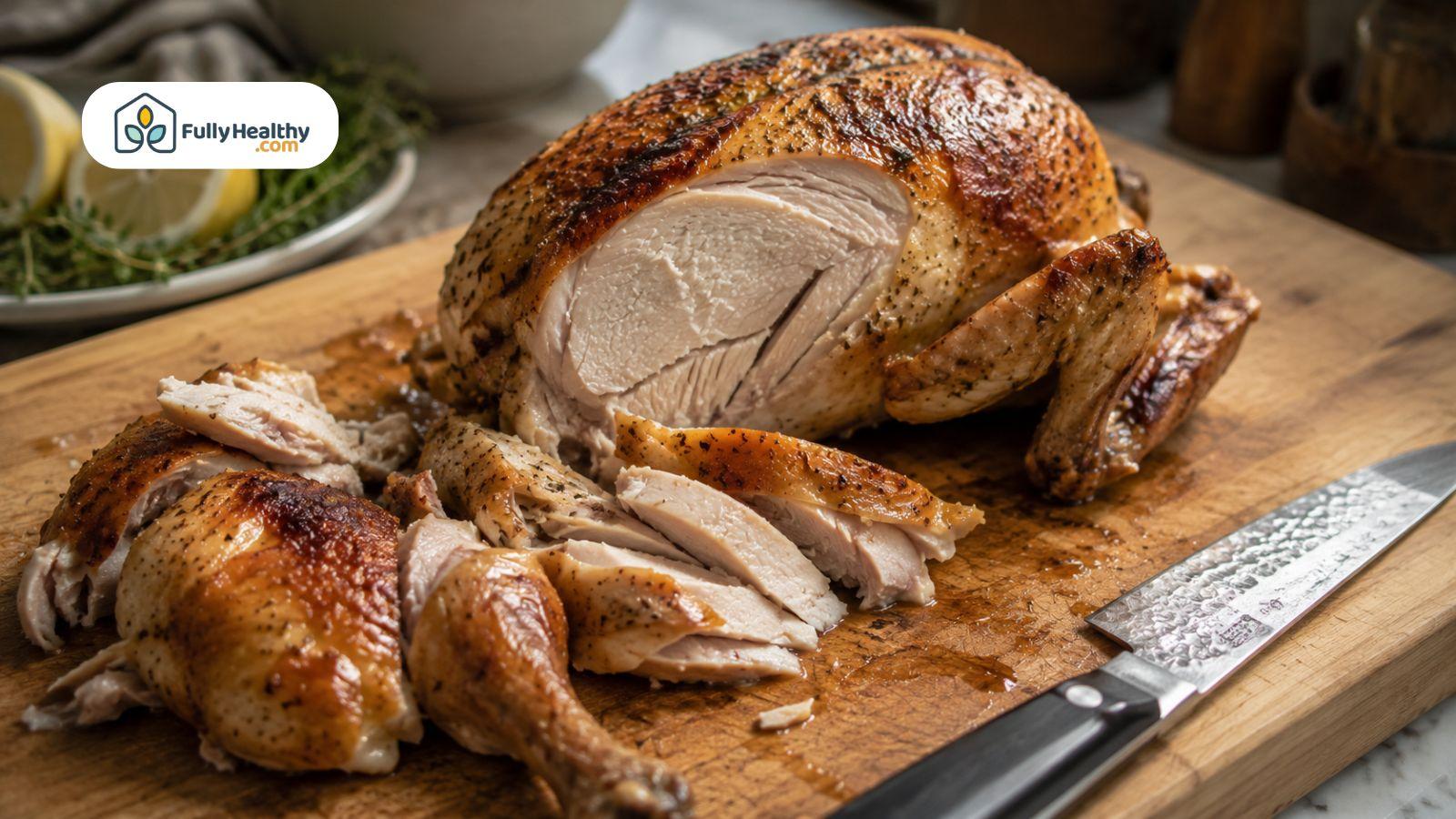
Kosher and halal share some common ground, but they're separate dietary systems. Chicken that's halal doesn't automatically count as kosher, since each tradition has its own set of religious requirements.
Key Differences Between Halal and Kosher Standards
Kosher processing includes requirements that differ from halal processing, including specific post-slaughter inspection and soaking-and-salting procedures. Halal chicken may satisfy Islamic dietary law without meeting Jewish law, so it is not considered kosher unless it also follows kosher requirements.
-
Religious Authority: Kosher follows jewish law, while halal follows Islamic law.
-
Certification: Kosher chicken normally carries kosher certification, while halal products carry halal certification.
-
Post-Slaughter Inspection: Kosher requires additional inspection of the bird after slaughter, while halal does not require the same inspection process.
-
Blood Removal: Kosher uses soaking and salting to remove prohibited blood, while halal does not require this koshering process.
-
Bottom Line: Halal chicken is not automatically kosher, even if both follow religious slaughter practices.
Similarities Between Halal and Kosher Chicken
Both kosher and halal require chicken to come from a permitted species and be slaughtered according to religious law. Both traditions also place value on humane treatment of the animal and careful food preparation.
-
Permitted Species: Both traditions allow chicken as a food source.
-
Religious Slaughter: Each follows its own religious slaughter procedure.
-
Blood Removal: Both discourage consuming blood.
-
Dietary Rules: Both come with a detailed set of food laws.
-
Shared Values: Humane treatment and cleanliness matter in both traditions.
Does Kosher Chicken Taste Different?

People often expect kosher chicken to taste different, but that depends a lot on how it's prepared and cooked. Some notice a subtle difference, while others find it tastes about the same as regular chicken once it's in a finished dish.
Flavor, Texture, and Cooking Characteristics
Kosher chicken can have a slightly firmer texture and a mild salty flavor, since it goes through the koshering process before packaging. Because the meat has already been salted to remove blood, it usually needs less added salt during cooking.
-
Flavor: Some people notice a slightly saltier taste.
-
Texture: The meat can feel a bit firmer after koshering.
-
Seasoning: Many recipes need less added salt.
-
Cooking: Cook it the same way as regular chicken, just adjust seasoning.
-
Preference: Whether the difference is noticeable comes down to personal taste.
Factors That Influence Taste Beyond Kosher Certification
Kosher certification is only one factor in flavor. Breed, diet, freshness, cooking method, and ingredients used all affect the final taste more than the kosher process itself.
-
Freshness: Fresher chicken generally tastes better.
-
Diet: What the bird was fed affects its flavor.
-
Cooking Method: Roasting, grilling, and frying each produce a different result.
-
Seasoning: Herbs, spices, and sauces shape the final dish.
-
Quality: Good ingredients matter as much as kosher status.
Why Choose FullyHealthy for Specialty Foods
Good ingredients make it easier to cook meals that fit your dietary needs. FullyHealthy carries a wide range of specialty foods, including certified kosher products and pantry staples for different lifestyles.
A Trusted Source for Specialty Pantry Staples
FullyHealthy carries foods for people following gluten-free, Paleo, AIP, low-carb, kosher, and other specialty diets. The store makes it easy to shop for pantry essentials, snacks, seasonings, and ingredients from established brands in one place.
-
Wide Selection: Shop foods for a range of dietary needs.
-
Established Brands: Choose products from well-known specialty food companies.
-
Easy Shopping: Browse pantry staples in one online store.
-
Diet-Friendly: Options fit a variety of eating plans.
-
Convenience: Products ship directly to your door.
Featured Kosher and Better-for-You Products
FullyHealthy carries products that fit right into everyday meals, snacks, and recipes. Popular picks include:
-
Real Salt Kosher Sea Salt Pouch 16 oz: A versatile kosher sea salt for seasoning meat, vegetables, and everyday recipes.
-
Real Salt Ancient Kosher Sea Salt Shaker 10 oz: An easy-to-use kosher sea salt shaker for everyday cooking and table use.
-
Bubbies Kosher Dill Pickle Snacking Chips 3.5 oz: Crunchy kosher dill pickle chips that make a flavorful snack or sandwich topping.
-
PAN'S Mushroom Jerky Teriyaki Mushroom Jerky 1 oz: A plant-based shiitake mushroom snack with a savory teriyaki flavor.
-
Jackson's Avocado Oil Sweet Potato Chips 5 oz: Crispy sweet potato chips cooked in avocado oil for a simple snack.
-
Barnana Organic Ridged Plantain Chips Himalayan Pink Salt 5 oz: Ridged organic plantain chips seasoned with Himalayan pink salt for a crunchy bite.
-
Jovial Cassava Spaghetti Pasta 8 oz: A gluten-free cassava pasta that works well in a variety of everyday meals.
Final Thoughts
Chicken can be kosher, but only when it follows the requirements of jewish dietary laws from slaughter to packaging. Understanding kosher chicken makes it easier to recognize why kosher certification and proper preparation matter.
Knowing these basics can help you make informed food choices and better understand how kosher practices shape everyday meals.
FAQs
What Makes a Chicken Kosher?
A chicken is considered kosher when it comes from an accepted bird species, is slaughtered according to jewish law, has its blood removed, and receives kosher certification.
Is Kosher Chicken Already Salted?
Yes, kosher chicken is already salted during the koshering process, so adjust recipes before you cook meat.
Which Birds Are Considered Kosher?
Chickens, turkeys, ducks, geese, and pigeons are traditionally considered kosher birds under jewish law
What is Kosher Meat?
Kosher meat comes from permitted animals and follows jewish dietary laws (kashrut).
Can You Eat Kosher Dairy With Chicken?
No. Chicken is treated as meat under kosher law, so it cannot be eaten with dairy products.
Leave a comment