

What is Masala Spices? Ingredients and How to Use It
What is masala spices? Masala refers to a mixture of spices used in Indian cooking to add flavor, aroma, warmth, and sometimes heat. It often combines cumin, coriander, cardamom, cinnamon, cloves, and black pepper, although the composition varies by recipe and region.
This guide explains common masala ingredients, different types, substitutes, popular dishes, and easy ways to use them in everyday cooking.
What is Masala Spices?
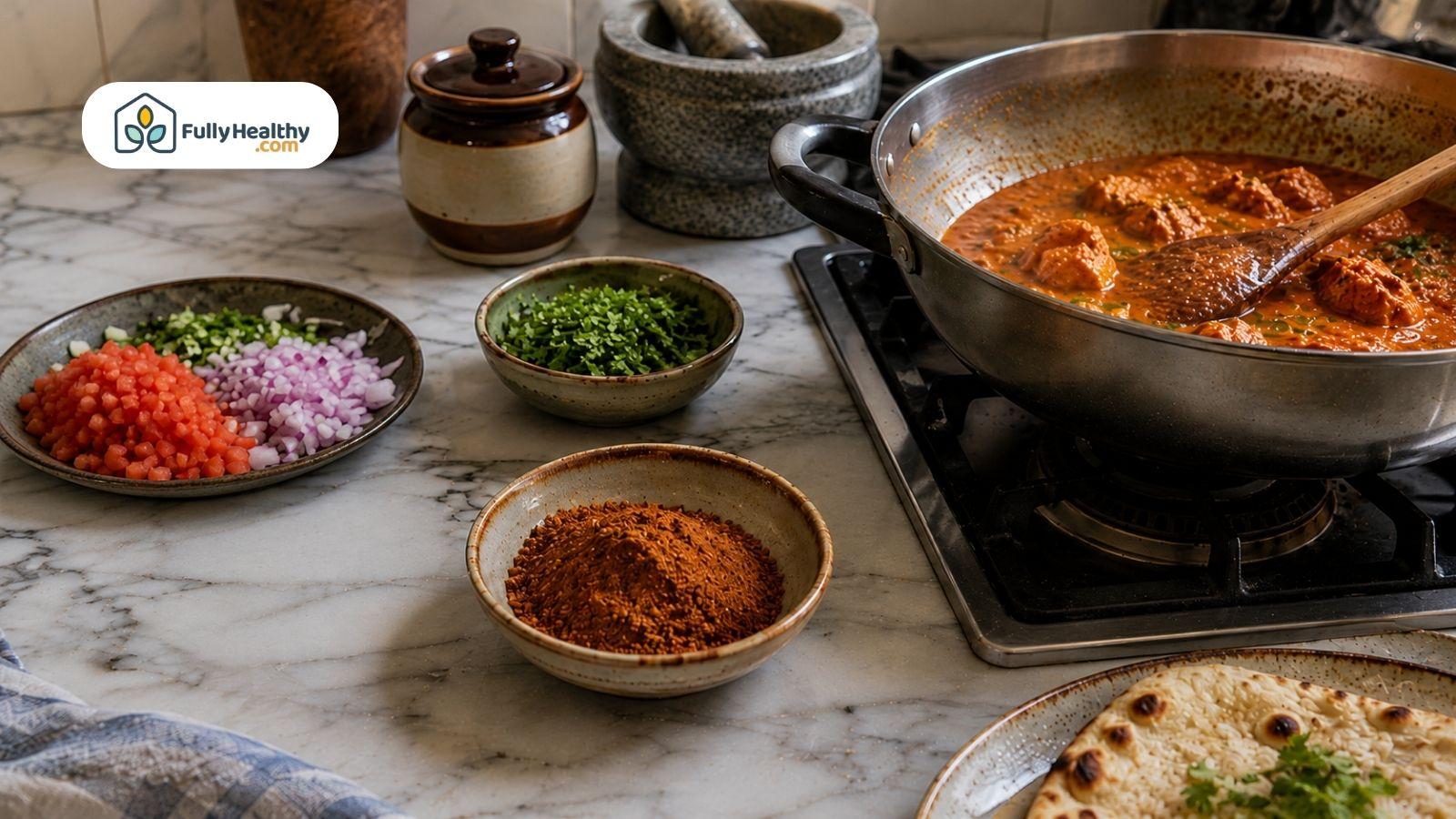
Masala is a spice mixture or preparation used in Indian cooking to build flavor and aroma. It is not one fixed spice blend, as the meaning, preparation, and use of masala can change depending on the region, household, and dish.
The Meaning of Masala in Indian Cooking
Masala means a mixture or preparation of spices rather than the name of one specific Indian spice. In Indian cuisine, the term covers many spice combinations developed for different cooking methods, regional traditions, and dishes.
-
Purpose: Masala builds layers of flavor and aroma throughout the cooking process.
-
Taste: A masala can be warming, earthy, fragrant, tangy, smoky, or hot depending on how it is prepared.
-
Heat: Masala does not automatically mean spicy, since chilli is not the defining feature of every spice mix.
-
Variation: Indian spice blends differ between regions, households, and recipes, so there is no universal masala formula.
-
Tradition: Masala reflects long-standing cooking traditions across the Indian subcontinent and remains central to Indian food today.
Dry, Whole, and Wet Masala Preparations
Masala can be prepared as whole spices, a dry fine powder, or a wet mixture blended with fresh aromatics. Each form behaves differently during Indian cooking, particularly in how and when it releases flavor into food.
-
Whole masala: Whole spices are added directly to hot oil or other cooking fat so their aromas infuse the dish.
-
Ground masala: Spices may be roasted and ground into a fine powder using a spice grinder or mortar and pestle.
-
Dry roasting: Traditional techniques may involve a dry roast in a dry skillet over medium heat before grinding to deepen aroma.
-
Wet masala: Spices can be combined with onion, garlic, ginger, tomato, or other fresh ingredients to create a paste or cooking base.
-
Storage: A dry spice blend should be kept in an airtight container away from heat, moisture, and direct light.
What Spices Are Usually in Masala?
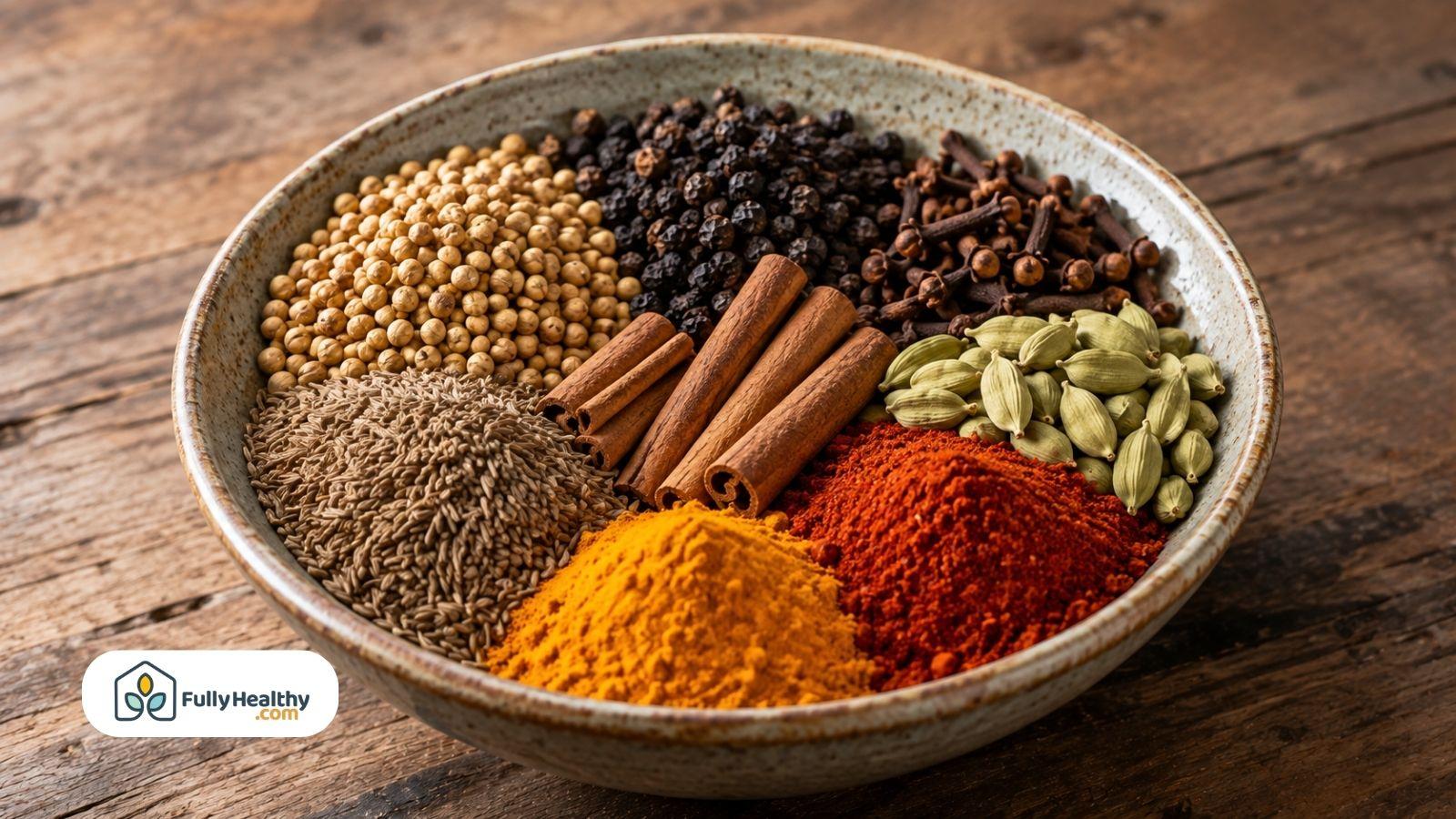
Masala can contain spices such as cumin, coriander, cardamom, cinnamon, cloves, and black pepper, but the ingredients depend on the specific blend, region, and dish.
Common Ingredients in Masala Spice Blends
A typical masala spice blend combines earthy, sweet, warming, and aromatic spices. Garam masala spice recipes favor fragrant ingredients, while other blends may use turmeric powder, chilli, fennel, fenugreek, or mustard.
-
Cumin: Cumin seeds or ground cumin add warm, earthy notes.
-
Coriander: Coriander seeds or coriander powder add mild, citrusy flavor.
-
Cardamom: Green cardamom is sweet and fragrant, while black cardamom is smokier.
-
Warming spices: Cinnamon sticks, cloves, and black peppercorns add warmth and aroma.
-
Additional spices: Fennel seeds, star anise, ground ginger, ground turmeric, and fenugreek leaves may be included.
Why Masala Recipes Vary by Region and Dish
Masala recipes vary because regions and individual dishes call for different flavors. Garam masala is especially associated with North Indian cooking, while sambar masala is characteristic of South Indian cuisine.
-
Garam masala: Uses warming, aromatic spices for various Indian dishes.
-
Tandoori masala: Adds warm, savory flavor to marinades and tandoori dishes.
-
Biryani masala: Provides a rich aroma to biryani and other rice dishes.
-
Sambar masala: Gives South Indian sambar its distinctive spice profile.
-
Homemade blends: Families often adjust spices and proportions to their preferences.
What is a Substitute for Masala Spice?
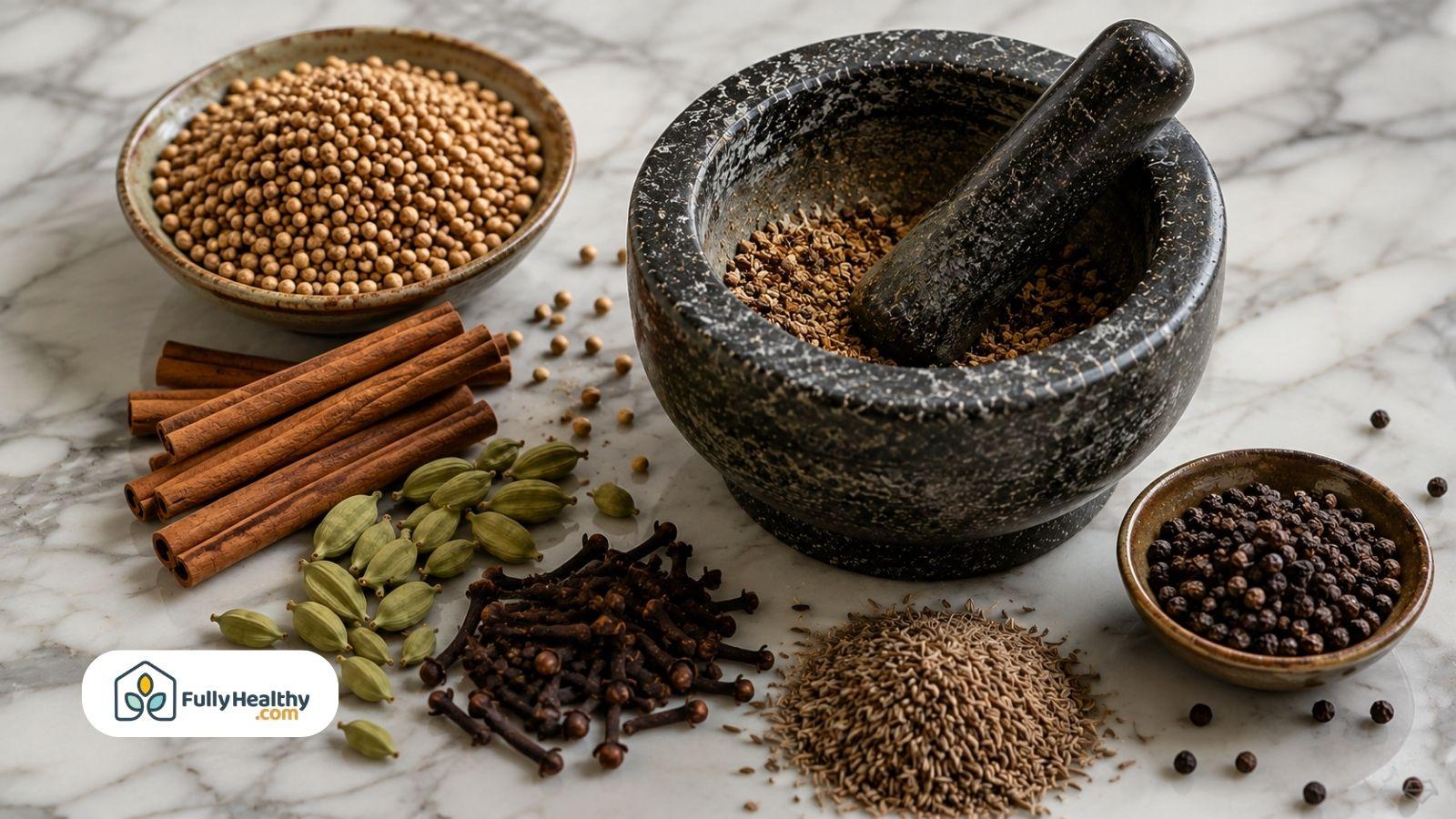
The best substitute depends on the type of masala required. For garam masala, homemade garam masala is the closest option, while curry powder can work when the original spice blend is unavailable.
Best Garam Masala Substitutes
Homemade garam masala is the closest substitute because its ingredients can be adjusted to resemble the original blend. Other warming spice combinations can work, but the final flavor may differ.
-
Homemade garam masala: Combine cumin, coriander, cardamom, cinnamon, cloves, and black pepper.
-
Whole spices: Toast and grind them for a fresher aroma.
-
Ground spices: Mix ground cumin, coriander, cinnamon, and other warming spices.
-
Small amounts: Add substitutes gradually and taste before adding more.
-
Fresh spices: Use fresher seasonings for a stronger aroma and flavor.
Curry Powder Versus Masala
Curry powder can substitute for garam masala in a pinch, but they are not the same. Curry powder commonly contains turmeric and chilli, which can change both the color and flavor of the dish.
-
Garam masala: Focuses primarily on warming and aromatic spices.
-
Curry powder: Often contains turmeric, cumin, coriander, fenugreek, and chilli.
-
Color: Ground turmeric usually gives curry powder a yellow appearance.
-
Flavor: Curry powder may taste earthier or hotter than garam masala.
-
Substitution: Add a small amount first, then adjust to taste.
What Dishes Use Masala Spices?
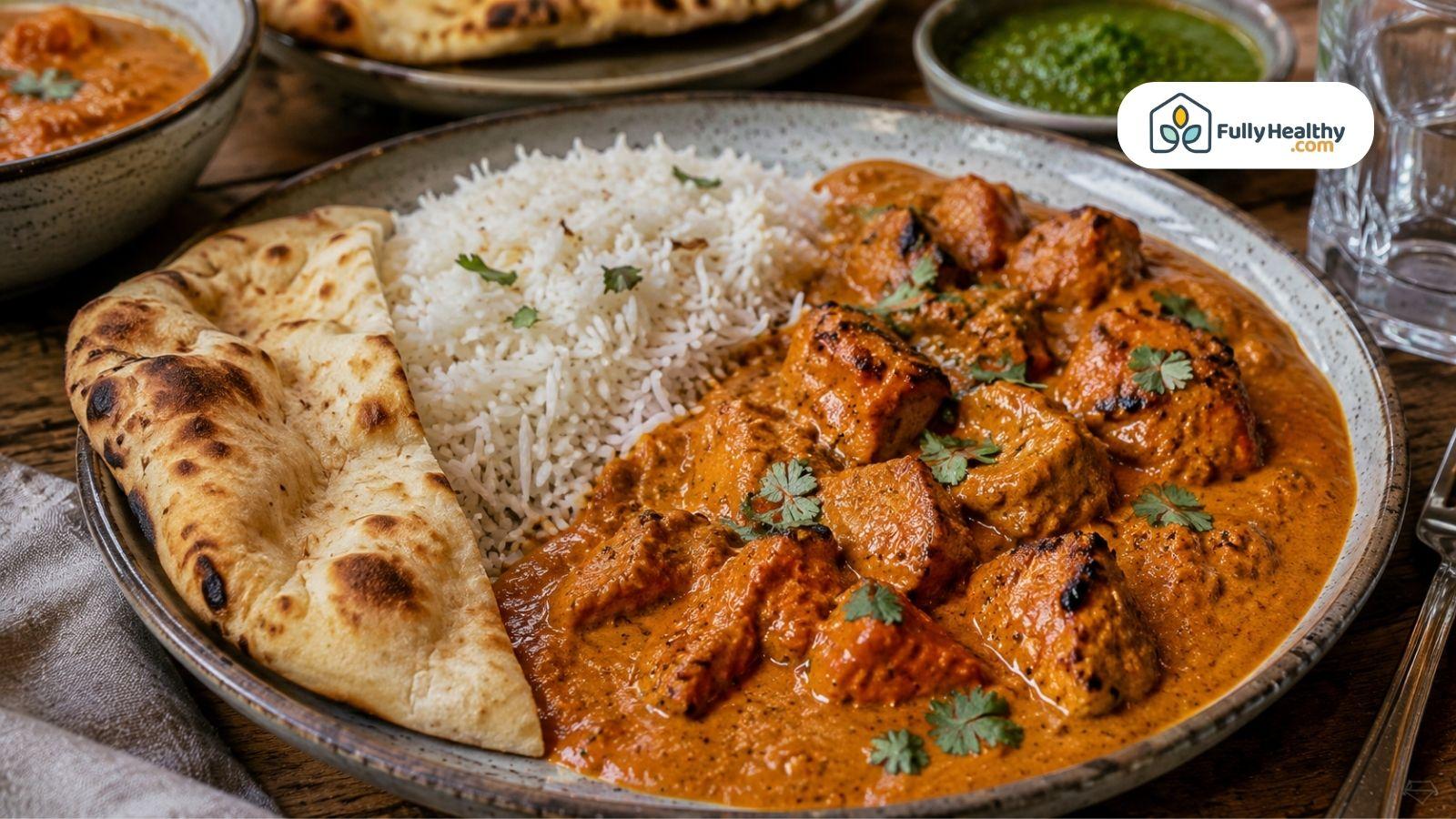
Masala spices are used in Indian curries, dal, biryani, grilled foods, vegetables, snacks, and tea. Different Indian spice blends are selected according to the flavor and cooking method of each dish.
Traditional Indian Dishes Made With Masala
Different Indian dishes call for different masalas. Garam masala seasons curries and dal, while biryani masala and tandoori masala are designed for specific rice dishes and grilled foods.
-
Chicken tikka masala: Uses aromatic spices in a rich tomato-based sauce.
-
Butter chicken: Combines warming spices with a creamy tomato sauce.
-
Biryani: Biryani masala adds fragrance to layered rice dishes.
-
Sambar: Sambar masala seasons this South Indian lentil dish.
-
Tandoori dishes: Tandoori masala flavors grilled meats and vegetables.
Everyday Ways to Cook With Masala
Masala can add flavor to foods beyond traditional Indian curries. Garam masala works especially well with vegetables, chickpeas, lentils, soups, rice, and simple marinades.
-
Vegetables: Add garam masala before roasting potatoes or cauliflower.
-
Legumes: Season chickpeas, beans, or lentils with a small amount.
-
Soups: Stir the spice mix into vegetable or lentil soups.
-
Rice: Add aromatic spices to plain rice or other grains.
-
Marinades: Mix masala with yogurt, oil, or coconut milk.
Masala-Friendly Foods and Seasonings at FullyHealthy
FullyHealthy carries specialty pantry foods, sauces, seasonings, and cooking ingredients for different dietary needs. Its selection includes masala-related products as well as general seasonings for everyday cooking.
Specialty Foods Available From FullyHealthy
FullyHealthy is an online specialty food store offering products for different dietary preferences and ingredient needs. Categories include pantry staples, sauces, seasonings, snacks, baking ingredients, and cooking essentials.
-
Pantry foods: Shop sauces, seasonings, oils, baking ingredients, and staples.
-
Diet options: Browse AIP, Paleo, gluten-free, keto, low-FODMAP, and vegan products.
-
Cooking products: Choose from ready-to-use foods and individual pantry ingredients.
Masala Sauces, Chai Spices, and Pantry Seasonings
FullyHealthy carries masala sauces, chai spices, and versatile seasonings for different styles of home cooking. These options range from ready-to-use tikka masala sauce to spice blends and everyday seasonings.
-
Get Saucy Tikka Masala: A ready-to-use coconut milk-based tikka masala sauce.
-
KC Natural Meat & Veggie All-Purpose Seasoning: An all-purpose seasoning made for meats and vegetables.
-
Frontier Co-op Organic Italian Seasoning: An organic herb blend for savory Italian-style dishes.
-
KC Natural Seasoned Sea Salt: A versatile seasoned sea salt for everyday cooking.
-
Ahara Rasa Chai Spice: An aromatic chai blend featuring cinnamon, cardamom, ginger, black pepper, and nutmeg.
Final Thoughts
Masala brings layers of flavor and aroma to Indian cooking, with each blend offering its own character. A garam masala blend may combine mustard seeds, ground cinnamon, and other warming spices, while other recipes use red chilli powder for extra heat.
Since no recipe includes all the spices in the same proportions, each masala can taste different. Try a blend that suits your dish and enjoy adding authentic Indian flavors to your cooking.
FAQs
What is the Difference Between Spices and Masala?
A spice is a single ingredient, while a masala combines several spices as a dry blend or wet paste to add flavor to a dish.
Is Masala Healthy or Unhealthy?
Masala is generally healthy when used in normal amounts, but packaged blends may contain added salt or other ingredients that affect their nutritional value.
What Does Masala Taste Like?
Masala can taste warm, earthy, fragrant, sweet, tangy, or hot depending on ingredients such as cumin, cardamom, ground cinnamon, and red chilli powder.
Is Garam Masala the Same as Masala?
No, garam masala is one specific type of masala, while masala is the broader term for different spice mixtures used in Indian cooking.
What Are the 7 Indian Spices?
There is no official list of seven Indian spices, turmeric, cumin, coriander, mustard seeds, cardamom, cloves or cinnamon, and red chilli powder are commonly used in Indian cooking.
Leave a comment